









- The China-US tariff arrangement has reached a preliminary consensus, and the trade association will be establishedJun 15, 2026View details
- What determines B2C cross-border e-commerce website development costs? A breakdown of features, interfaces, and deployment methodsJun 17, 2026View details
- China-Morocco zero-tariff access, a breakthrough in the cost of Moroccan goods exports to ChinaJun 11, 2026View details
- What signal should be released for the suspension of exports to JapanJun 10, 2026View details
- China's May LNG imports rebounded, with increased volumes from Russia and Canada filling the Middle East supply gapJun 10, 2026View details
- Will GEO change its SEO strategy?Jun 04, 2026View details
Cross-border e-commerce site building platform options: Shopify vs Global site building SaaS system, which is better for B2B?
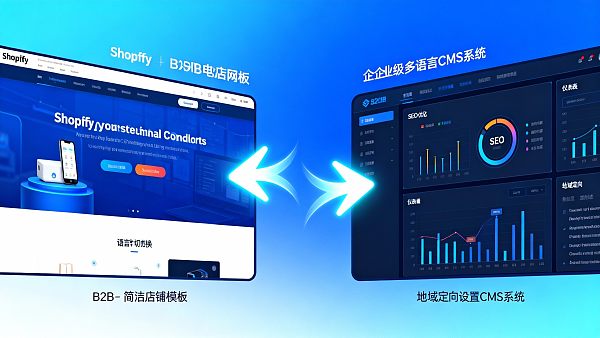
Which is better for B2B: Shopify or a global website building SaaS platform? This article helps you choose the right platform efficiently, from the perspectives of multilingual foreign trade website building systems and global SEO website building systems.
In globalized sales and enterprise-level procurement scenarios, information researchers and users often face the challenge of how to reduce technical maintenance costs and improve customer acquisition efficiency while ensuring compliance, security, and a localized experience. This article focuses on B2B business scenarios, comparing Shopify with global website building SaaS platforms centered on enterprise-level multilingual CMS in terms of cross-border e-commerce and cross-border foreign trade website building. It covers key dimensions such as multilingual foreign trade website building systems, global SEO website building systems, and regionally targeted website building solutions, helping operations and technology teams make actionable selection decisions based on business scenarios.
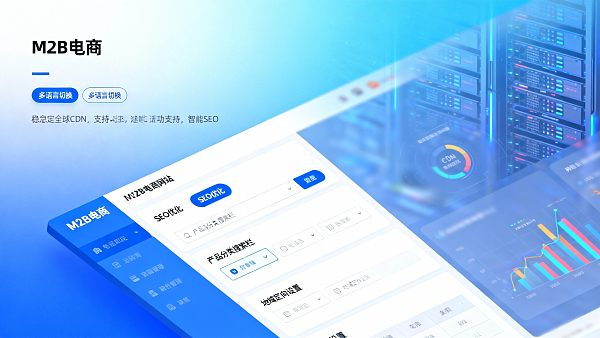
B2B website building requirements: priority given to multilingual capabilities, SEO, and enterprise-level integration.
In B2B scenarios, the core requirements for website building differ significantly from those in B2C: longer purchase decision cycles, buyers' preference for technical and compliance certifications, and a greater need for regional targeting and multilingual support. The primary evaluation dimensions for choosing a suitable platform include: the ability to support multiple languages across the entire site, whether it possesses enterprise-level multilingual CMS content governance capabilities, the site's visibility to search engines (i.e., global SEO website building system capabilities), whether it supports fine-grained regional targeting website building solutions, and its seamless integration with CRM/ERP, payment, and logistics systems.
Specifically, B2B websites typically require: 1) Pages and content that can be presented by country/language and retain independent URLs for indexing purposes; 2) Structured SEO for technical documentation and product specification pages for long-tail keywords and industry categories (such as auto parts, machinery, and building materials); 3) Support for multi-currency and tax rate display based on IP address or user selection; and 4) Provision of enterprise-level permissions and approval workflows for compliance and procurement process management. These capabilities are crucial for evaluating whether any responsive self-service website building system or global website building SaaS system is suitable for B2B.
Shopify's strengths and weaknesses in the B2B scenario: speed and ecosystem vs. enterprise-level customization
Shopify, as a mature e-commerce SaaS, boasts advantages such as rapid deployment, a rich ecosystem of templates and third-party applications, and a mature payment and settlement process, making it particularly friendly to small and medium-sized cross-border sellers. However, several limitations need to be noted in B2B scenarios: its basic version leans towards a B2C shopping experience, and multilingual support and enterprise-level content management often rely on plugins or the enterprise version (Shopify Plus), while plugin combinations increase operational complexity and costs. For B2B businesses requiring deep regionally targeted website building solutions, complex tax/invoice processes, or deep integration with localized ERP systems, Shopify's default capabilities may be insufficient.
From an SEO perspective, Shopify generally meets the needs of standard site optimization. However, for businesses requiring segmented sites (such as country-specific URLs or language-specific site clusters) and extensive technical documentation, the platform's URL structure and large-scale content governance capabilities may become bottlenecks. Furthermore, B2B buyers often require higher access stability, compliance verification, and custom forms (such as RFP forms), which sometimes necessitate custom development or third-party tools. In summary, Shopify is suitable for cross-border e-commerce businesses prioritizing speed and standardized e-commerce processes, but the cost of scaling should be assessed for complex enterprise-level scenarios.
Advantages of the Global Website Building SaaS System (Enterprise-grade Multilingual CMS): Full-stack capabilities for B2B

Compared to single e-commerce SaaS, enterprise-level global website building SaaS systems emphasize "globally controllable" multilingual foreign trade website building system capabilities: the built-in AI multilingual website building system can achieve automatic translation and localized semantic optimization, support real-time translation of 300+ languages and retain an editable localized thesaurus; the full-stack SEO engine module can automatically generate meta tags, site maps and semantic URLs, improve indexing efficiency and search visibility, and truly meet the long-term traffic growth needs of enterprise-level cross-border foreign trade websites.
Furthermore, enterprise-level platforms typically include built-in regionally targeted website building solutions, global CDN, automatic SSL and DDoS protection, ensuring stable access and security compliance in markets such as Southeast Asia, the Middle East, Europe, and the United States. Integrated CRM, customer behavior tracking, and multi-channel marketing (Google Ads, Facebook, TikTok) can create a closed loop from traffic to conversion, reducing the operational costs caused by fragmented channels. For B2B sellers who require standardized templates but also demand a localized experience, enterprise-level multilingual CMS and global website building SaaS systems offer greater controllability and long-term scalability. For example, in real-world projects, website building solutions that combine AI translation and intelligent recommendations can improve page loading speed and significantly increase conversion rates.
If your business scenario involves "cross-border sellers of apparel, home furnishings, and digital products in the Southeast Asian market" or "independent websites in the auto parts and building materials industry in the Middle East," enterprise-level platforms offer significant advantages in terms of localized templates, currency and tax rate display, and localized SEO. For easier implementation evaluation, please refer to the specific product solutions and technical verification link: YiYingBao B2C Cross-border Mall .
Selection Decision Framework: Three-Dimensional Assessment of Technical Architecture, Operational Capabilities, and Compliance Assurance
To simplify the selection process, a three-dimensional decision-making framework is recommended: technology (site performance, SEO, API and scalability), operations (content creation, channel placement, CRM and advertising integration), and compliance (data sovereignty, payment compliance, privacy and security). In the technology dimension, focus on whether it is an enterprise-grade multilingual CMS, whether it includes an AI-powered multilingual website building system and a full-stack SEO engine module; in the operations dimension, evaluate whether the platform supports a responsive self-service website building system with drag-and-drop editing, AI content assistants to generate product descriptions and TDKs, and multi-channel marketing automation; in the compliance dimension, confirm global CDN and cloud service provider support, automatic SSL and backup mechanisms, and whether it supports deploying independent nodes by region to meet local compliance requirements.
Implementation Recommendations: For the European and American markets, which are primarily driven by direct brand sales and high-frequency purchasing, prioritize platforms with enterprise-level SEO and content governance capabilities. For the Southeast Asian markets, which are mainly focused on market testing and SKU diversification, prioritize solutions that support rapid deployment, multi-currency compatibility, and integration with local social media. Regardless of whether you choose Shopify or a global website building SaaS platform, you need to do three things in advance: 1) Define your target market and SEO strategy; 2) Conduct pilot tests on traffic and conversion paths; 3) Evaluate long-term expansion and maintenance costs.
Practical checklist (for technical evaluation)
- Check the URL and language indexing strategy: whether it supports independent subdirectories/subdomains/independent sites for each language, and whether it can generate standardized tags and sitemaps.
- Test multi-currency and settlement processes: Can it automatically display the currency based on the IP address and support corporate payment terms or invoice functions?
- Verify performance and security: Global CDN nodes, automatic SSL and DDoS protection capabilities.
- Assess AI support: Does it have AI-powered keyword expansion, automatic TDK generation, and AI content assistant to improve content productivity and SEO efficiency?
By verifying each item on the above list, the vague "platform preference" can be transformed into clear technical acceptance criteria, reducing the risks of later migration or expansion.
Summary and Action Guidance
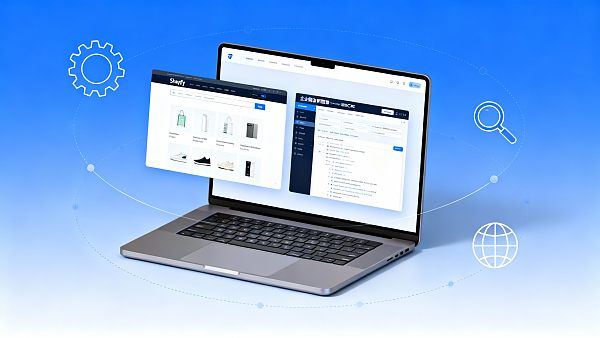
In summary, Shopify is suitable for cross-border e-commerce scenarios focused on speed and standardized transactions. However, for enterprise-level multilingual CMS, complex geographic targeting website building solutions, and comprehensive SEO governance, enterprise-level global website building SaaS systems offer greater controllability and long-term value. For B2B teams looking to create a closed loop between traffic, content, and advertising, platforms with AI-powered multilingual website building systems, full-stack SEO modules, CRM, and global CDN guarantees are preferable, as they better support cross-border expansion and compliant operations. If you are building an independent website for Southeast Asia, the Middle East, or Europe and America, choosing the right technology stack and vendor based on your business model is key to achieving stable growth.
For further practical solutions and technical verification, we offer a full-chain service from intelligent website building and AI-driven content creation to integrated Google/Meta advertising, supported by industry-leading success stories and technical patents. To learn more and begin evaluating your B2B scenario, please contact us immediately or visit the YiYingBao B2C cross-border e-commerce platform for specific verification solutions and pricing. Contact us now to learn more about our solutions and initiate a free technical evaluation.
- Foreign Trade Website Development
- B2B website
- Meta Ads
- TikTok
- Yiyingbao
- SEO
- Independent Website
- Smart Website Building
- AI Translation
- Multilingual Foreign Trade Website System
- Global Website Building SaaS Platform
- Cross-border E-commerce Website
- Responsive self-service website system
- AI multilingual website system
- Global SEO Website System
- Geo-targeted Website Solution
- Enterprise-Grade Multilingual CMS
- Cross-border E-commerce Website
- Global Website Building SaaS System
- Foreign Trade Website System
- Multilingual Website System
Related Articles
 The China-US tariff arrangement has reached a preliminary consensus, and the trade association will be established
 What determines B2C cross-border e-commerce website development costs? A breakdown of features, interfaces, and deployment methods
 China-Morocco zero-tariff access, a breakthrough in the cost of Moroccan goods exports to China

Related Products
 EasyCamp SaaS Smart Website Marketing SystemE-Yingbao SaaS Smart Website Marketing System: AI-powered, zero-code website building. Rapidly launch multilingual independent e-commerce sites in just 10 minutes. Global server acceleration and AI-driven SEO optimization empower businesses to efficiently connect with global markets. The seamless integration of technology and user-friendly operation makes building e-commerce sites incredibly simple.
 AI+SEM Intelligent Advertising Marketing SystemAI+SEM drives intelligent ad creation, empowering full-funnel precision advertising marketing. The system automatically generates weekly/monthly reports, AI recommends keywords and target countries, monitors core metrics in real-time with intelligent alerts, and enables one-click high-conversion ad solutions to help quickly acquire customers and improve ROI.
 AI+SEO Dual Engine Optimization ServiceEasyWin AI+SEO Dual Engine Optimization System leverages AI-powered keyword mining, content generation, and comprehensive technical optimization to help foreign trade enterprises acquire high-quality organic traffic, significantly improving search rankings and conversion rates.
 AI+SNS Social Media Marketing SystemYingbao AI+SNS Social Media Marketing System - Precision social capture for the social media era. Supports one-click content synchronization across major platforms like Facebook and LinkedIn. AI intelligently rewrites posts for enhanced relevance. 24/7 AI customer service and user profiling analysis empower businesses to efficiently expand into global markets.
 AI+SEO营销解决方案易营宝AI+SEO营销解决方案,通过AI批量写作、智能生成TDK、精准关键词扩词等功能,全面优化网站SEO效果,提升流量与转化率。助力企业构建高效智能网站新生态。
 AI+SEM Advertising Marketing SolutionsAI+SEM Advertising Marketing Solution leverages AI technology to deeply empower SEM ad campaigns. It automatically generates weekly/monthly reports using AI, presenting account data across multiple dimensions for comprehensive insights into campaign performance and trends. The system precisely recommends keywords and target countries, intelligently generates high-conversion ad copy, and enables one-click activation of efficient campaign plans to help businesses rapidly acquire customers. Simultaneously, it monitors core metrics in real time, intelligently identifies abnormal fluctuations, and issues timely alerts to ensure stable, high-return advertising results.
 Domain Name ServicesEasyWin provides professional domain name services, including intelligent queries, one-stop registration, brand protection, and full lifecycle management, helping businesses build a digital brand image.
 EasyOperate B2C Cross-Border E-Commerce Platform & Independent WebsiteEasyStore B2C Cross-border E-commerce Independent Store is an intelligent website building and cross-border e-commerce integrated solution independently developed by EasyStore Information Technology (Beijing) Co., Ltd. The system is specially designed for small and medium-sized as well as large export enterprises, integrating 'website building, operation, marketing, advertising, and conversion' into one, helping enterprises quickly establish cross-border e-commerce independent stores to achieve brand globalization and global sales growth.
The platform supports multiple languages, multiple currencies, and multi-channel marketing, with built-in AI intelligent translation and SEO optimization systems, suitable for mainstream markets such as Southeast Asia, Europe and America, Latin America, and the Middle East, assisting Chinese manufacturing enterprises in efficiently deploying international e-commerce strategies. SSL证书易营宝提供专业SSL安全证书服务,包括单域名和泛域名证书,确保网站数据传输加密、身份验证和完整性保护,助力企业建立安全可信的在线业务环境。









