









- What stages does the cross-border services ecosystem include? How do website building, promotion, payment, and compliance work togetherJun 22, 2026View details
- How will email marketing costs change in 2026Jun 22, 2026View details
- The China-US tariff arrangement has reached a preliminary consensus, and the trade association will be establishedJun 15, 2026View details
- Should overseas brand marketing start with ads or contentJun 21, 2026View details
- What determines B2C cross-border e-commerce website development costs? A breakdown of features, interfaces, and deployment methodsJun 17, 2026View details
- China-Morocco zero-tariff access, a breakthrough in the cost of Moroccan goods exports to ChinaJun 11, 2026View details
How Enterprises Can Improve ROI Through Digital Marketing Solutions in 2025: Cost vs. Delivery Cycle Comparison
introduction
How can businesses improve ROI with digital marketing solutions by 2025? This article compares the advantages of AI-powered intelligent advertising platforms, website acceleration, and performance optimization in terms of cost and delivery cycle, helping decision-makers make quick and accurate selections.
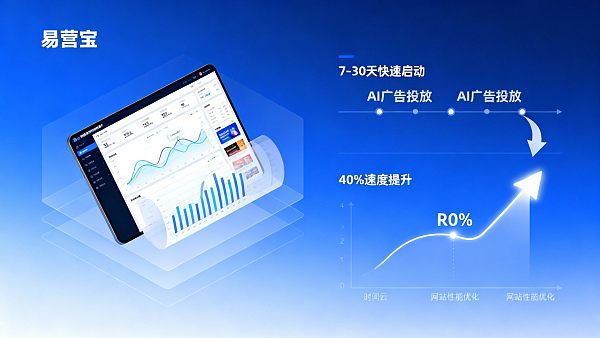
Against the backdrop of rising global traffic costs and fragmented user attention, businesses face the challenge of achieving higher conversion rates, shortening delivery cycles, and ensuring compliance and security within limited budgets. This article, aimed at information researchers, users, enterprise decision-makers, and operations and quality control personnel, focuses on comparing mainstream digitalization paths from four dimensions: cost structure, implementation cycle, technical risks, and measurability of results. It includes AI-based ad optimization, performance-centric website acceleration and optimization, and overall multilingual marketing systems and SaaS website building platform selection recommendations. The aim is to help project leaders and distributors make actionable selection decisions when expanding overseas or domestically.
AI-powered intelligent advertising platform: a trade-off between cost drivers and campaign agility
The core value of AI-powered advertising platforms lies in using big data and machine learning to optimize account structure, automate creative content, and iterate bidding strategies. For performance-driven advertising budget allocation, AI platforms can reduce customer acquisition costs in the short term through automated diagnostics and creative variation testing, while simultaneously improving conversion rates through dynamic keywords and high-CTR creatives. When evaluating such platforms, businesses should focus on three types of costs: fixed software or SaaS subscription fees, management fees based on a percentage of the budget, and the initial manpower costs for data integration and creative production. In terms of delivery time, mature platforms typically complete account migration, creative library setup, and initial algorithm training within 7 to 30 days, followed by continuous optimization. For project managers, when choosing an AI-powered advertising platform, it is essential to verify its deep integration capabilities with mainstream advertising ecosystems (Google Ads, Meta, Yandex, etc.) and whether it provides interpretable campaign reports and strategy retrospective mechanisms to provide a basis and controllable aspects during compliance and security reviews.
Website acceleration and performance optimization: Long-term ROI improvement from a one-time investment

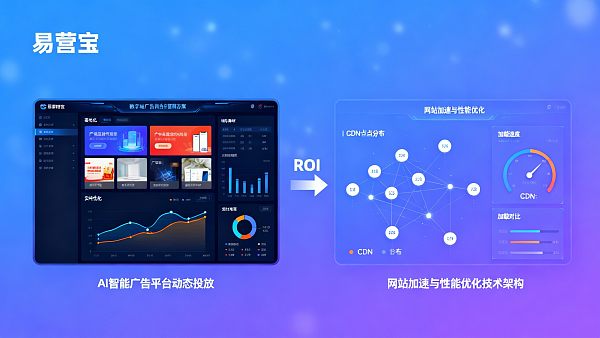
Website acceleration and performance optimization are not simply front-end engineering tasks, but crucial strategic assets that directly impact SEO, user experience, and conversion rates. Through global CDN deployment, resource compression and caching strategies, intelligent image cropping and lazy loading, and server-side rendering or edge computing optimization, businesses can achieve page load speed improvements of over 40%, resulting in immediate benefits for mobile retention and search engine rankings. Compared to the ongoing costs of advertising, performance optimization is often a one-time or periodic investment, with long-term returns manifested in improved organic traffic quality and reduced bounce rates. For quality control and security managers, it is crucial to assess the impact of optimization solutions on SSL, DDoS protection, and compliance, as well as the observability of performance monitoring. Implementation and delivery timelines are typically related to site complexity: enabling acceleration plugins on small SaaS website building platforms can take effect within one week, while large cross-domain e-commerce sites or multilingual independent websites may require a gradual rollout and A/B testing period of 30 to 90 days.
Multilingual Marketing Systems and SaaS Website Building Platforms: Balancing Localization Efficiency and Operating Costs
As businesses expand globally, choosing a multilingual marketing system and a multilingual automated website building system becomes crucial. A high-quality multilingual marketing system not only includes AI translation and semantic optimization but also covers localized SEO strategies, mirror site hosting, local payment, and compliant access. SaaS website building platforms offer significant advantages in reducing upfront development costs and accelerating launch, but their ability to support a massive number of product models needs to be evaluated, especially for electronic component companies that require parametric display and intelligent categorization. For example, for the implementation needs of the electronic component industry, the following integrated solution can be considered: using intelligent categorization and parametric display modules to efficiently display a large number of product models, thereby improving user search efficiency and page conversion rates; this type of solution can quickly generate multilingual product pages and automatically generate TDK (Title, Description, Keywords) metadata after importing the product database, significantly reducing international website operating costs. See the application ideas in electronic component industry solutions for example. For project managers and distributors, key considerations include the platform's SEO automation capabilities, whether it has built-in AI tools to improve website SEO ranking, and whether it provides multilingual website building tutorials and localized operational support.
Practical comparison and recommended approach of cost and delivery cycle
Comparing the three aforementioned technology paths within the same decision-making framework yields more actionable selection recommendations. If the goal is to achieve sales lead growth in the short term with the lowest controllable cost, prioritize using an AI-powered intelligent advertising platform, combined with a SaaS website building platform to quickly build landing pages. If the goal is to reduce customer acquisition costs and enhance brand equity in the long term, prioritize investing in website acceleration and performance optimization, as well as the infrastructure construction of a multilingual marketing system. A common combination in real-world projects is: Phase 1 (0-3 months): Use AI-based advertising tools to quickly verify market and product fit; Phase 2 (3-9 months): Simultaneously advance website performance and multilingual content system construction, gradually reducing reliance on paid traffic using AI tools to improve website SEO ranking; Phase 3 (9 months and above): Integrate automated advertising with content production systems to achieve a closed loop of "data-strategy-execution" and continuously improve efficiency. Regarding the common search intent "How is YiYingBao?", when evaluating service providers, companies should focus on whether they possess global CDN and compliant deployment capabilities, AI keyword expansion and TDK automatic generation capabilities, and official cooperation qualifications with mainstream media. These are all important indicators for measuring long-term delivery capabilities and risk control.
Summary and Action Guidance
In summary, choosing a digital marketing solution should not be based solely on single-point cost or delivery speed, but rather on a phased decision-making process that considers the company's growth cycle, budget structure, and compliance requirements. AI-powered intelligent advertising platforms are suitable for rapid trials and improving campaign efficiency, while website acceleration and performance optimization are the cornerstones for long-term organic traffic and user experience. Multilingual marketing systems and SaaS website building platforms provide the localization and scalability capabilities needed for cross-border expansion. As a recommendation, decision-makers are advised to conduct a Proof of Concept (POC) assessment that includes technical feasibility, cost breakdown, and delivery milestones, clearly defining short-, medium-, and long-term KPIs, and selecting a service provider that can offer interpretable data and localized support. To learn more about specific practical solutions tailored to electronic component display and parameterization needs, or to obtain a customized quote, please contact us immediately or request a product demo to learn more about our solutions and implementation paths.
- Website Development
- Website Builder Platform
- SEO Ranking
- Multilingual Independent Website
- Google Ads
- Yiyingbao
- SEO
- Independent Website
- AI Translation
- How is Yiyingbao?
- Multilingual Website Tutorial
- Multilingual Website Building
- Multilingual automated website construction system
- AI tools to improve website SEO ranking
- SaaS Website Platform
- Multilingual Marketing System
- AI Smart Advertising Platform
- Digital Marketing Solutions
- Website Acceleration and Performance Optimization
Related Articles


Related Products
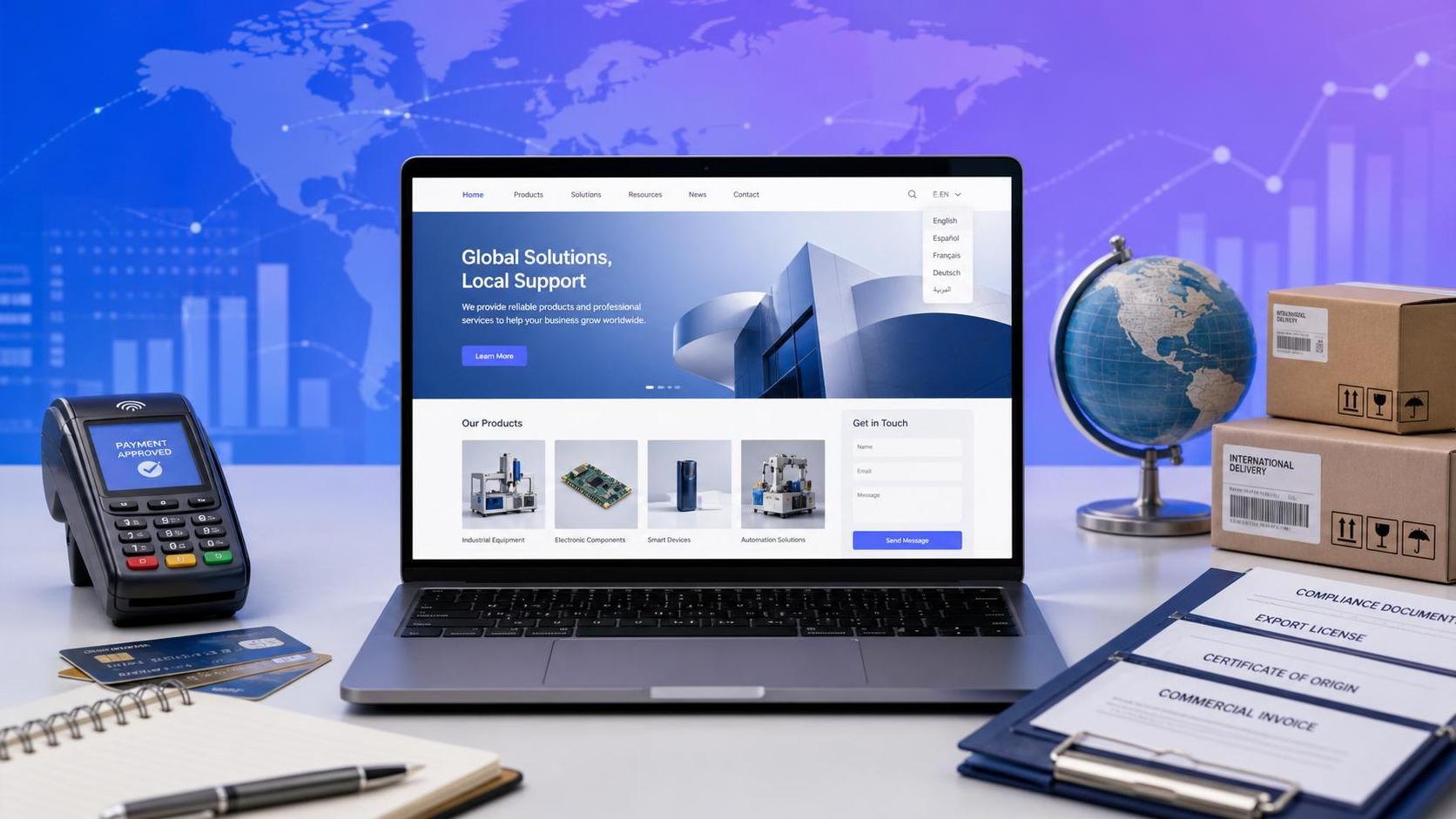
 EasyCamp SaaS Smart Website Marketing SystemE-Yingbao SaaS Smart Website Marketing System: AI-powered, zero-code website building. Rapidly launch multilingual independent e-commerce sites in just 10 minutes. Global server acceleration and AI-driven SEO optimization empower businesses to efficiently connect with global markets. The seamless integration of technology and user-friendly operation makes building e-commerce sites incredibly simple.
 AI+SEM Intelligent Advertising Marketing SystemAI+SEM drives intelligent ad creation, empowering full-funnel precision advertising marketing. The system automatically generates weekly/monthly reports, AI recommends keywords and target countries, monitors core metrics in real-time with intelligent alerts, and enables one-click high-conversion ad solutions to help quickly acquire customers and improve ROI.
 AI+SEO Dual Engine Optimization ServiceEasyWin AI+SEO Dual Engine Optimization System leverages AI-powered keyword mining, content generation, and comprehensive technical optimization to help foreign trade enterprises acquire high-quality organic traffic, significantly improving search rankings and conversion rates.
 AI+SNS Social Media Marketing SystemYingbao AI+SNS Social Media Marketing System - Precision social capture for the social media era. Supports one-click content synchronization across major platforms like Facebook and LinkedIn. AI intelligently rewrites posts for enhanced relevance. 24/7 AI customer service and user profiling analysis empower businesses to efficiently expand into global markets.
 AI+SEO营销解决方案易营宝AI+SEO营销解决方案,通过AI批量写作、智能生成TDK、精准关键词扩词等功能,全面优化网站SEO效果,提升流量与转化率。助力企业构建高效智能网站新生态。
 AI+SEM Advertising Marketing SolutionsAI+SEM Advertising Marketing Solution leverages AI technology to deeply empower SEM ad campaigns. It automatically generates weekly/monthly reports using AI, presenting account data across multiple dimensions for comprehensive insights into campaign performance and trends. The system precisely recommends keywords and target countries, intelligently generates high-conversion ad copy, and enables one-click activation of efficient campaign plans to help businesses rapidly acquire customers. Simultaneously, it monitors core metrics in real time, intelligently identifies abnormal fluctuations, and issues timely alerts to ensure stable, high-return advertising results.
 Domain Name ServicesEasyWin provides professional domain name services, including intelligent queries, one-stop registration, brand protection, and full lifecycle management, helping businesses build a digital brand image.
 EasyOperate B2C Cross-Border E-Commerce Platform & Independent WebsiteEasyStore B2C Cross-border E-commerce Independent Store is an intelligent website building and cross-border e-commerce integrated solution independently developed by EasyStore Information Technology (Beijing) Co., Ltd. The system is specially designed for small and medium-sized as well as large export enterprises, integrating 'website building, operation, marketing, advertising, and conversion' into one, helping enterprises quickly establish cross-border e-commerce independent stores to achieve brand globalization and global sales growth.
The platform supports multiple languages, multiple currencies, and multi-channel marketing, with built-in AI intelligent translation and SEO optimization systems, suitable for mainstream markets such as Southeast Asia, Europe and America, Latin America, and the Middle East, assisting Chinese manufacturing enterprises in efficiently deploying international e-commerce strategies. SSL证书易营宝提供专业SSL安全证书服务,包括单域名和泛域名证书,确保网站数据传输加密、身份验证和完整性保护,助力企业建立安全可信的在线业务环境。









