









- Cross-Border Marketing Trend Research: Why More and More Companies Are Starting to Deploy AI Search and GEO OptimizationJun 30, 2026View details
- Cross-Border Marketing Trend Research: How Independent Sites, AI Content, and Short-Video Customer Acquisition Are ChangingJun 30, 2026View details
- How Can a Brand Updates Page Be Made More SEO-Friendly? Analysis of Update Frequency, Content Structure, and Internal Linking StrategyJun 28, 2026View details
- What stages does the cross-border services ecosystem include? How do website building, promotion, payment, and compliance work togetherJun 22, 2026View details
- How will email marketing costs change in 2026Jun 22, 2026View details
- The China-US tariff arrangement has reached a preliminary consensus, and the trade association will be establishedJun 15, 2026View details
A Comprehensive Guide: How Website Acceleration and Performance Optimization Impact Foreign Trade Conversion Rates
Master Website Acceleration and Performance Optimization to Boost Foreign Trade Conversion Rates — E-Commerce Digital Marketing Solutions Help You Reduce Costs and Increase Efficiency.
In cross-border e-commerce and B2B foreign trade scenarios, page loading speed and stability directly impact purchasing decisions, form submissions, and ad landing page conversions. Market researchers expect reliable data, project managers need actionable optimization paths, and operations teams focus on long-term sustainability. This article targets enterprise decision-makers, technical implementers, and marketing teams, systematically explaining how website acceleration and performance optimization can enhance foreign trade conversion rates. It combines E-Commerce's practical experience in smart website building, AI-powered ad platforms, and multilingual marketing systems to provide landing strategies and measurable metrics, helping you choose the right digital marketing solution.

Why Website Speed Is the Core Variable for Foreign Trade Conversion Rates
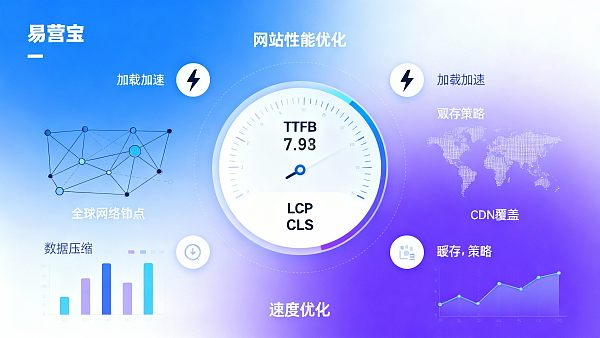
Page performance directly affects user experience and SEO performance, thereby determining traffic conversion efficiency. Research shows that every second of delay leads to a significant increase in bounce rates, and search engine rankings for loading speed also impact organic traffic. For foreign trade scenarios, international access faces cross-border network fluctuations, CDN coverage gaps, and multilingual compatibility issues. Without proper caching strategies, image/resource compression, or critical rendering path optimization, visitors may leave before submitting inquiries. Technically, focus on key metrics like Time to First Byte (TTFB), Largest Contentful Paint (LCP), and Cumulative Layout Shift (CLS), correlating them with business indicators such as form completion and order conversion rates. Commercially, speed optimization not only enhances single-visitor value but also lowers customer acquisition costs. Combined with AI ad platforms, it improves ad quality scores, reduces cost-per-click, and creates a positive cycle of ad delivery and conversion. E-Commerce's SaaS website platform and AI-powered SEO tools automatically diagnose performance bottlenecks and provide prioritized recommendations, aligning technical optimizations with market goals.
Technical Implementation Highlights: End-to-End Optimization from Architecture to Frontend
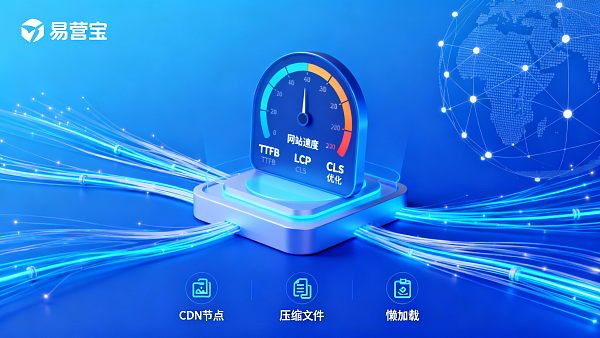
Truly reusable performance optimization must cover infrastructure, transmission links, and frontend rendering. For infrastructure, deploy multi-region servers and global CDN nodes, configure caching strategies, and enable compression with HTTP/2 or HTTP/3 to reduce handshake/request times. Optimize DNS resolution at the transmission layer, shorten lookup times, and use persistent connections. Frontend optimizations include resource loading sequences, WebP/AVIF image formats, lazy/on-demand loading, critical CSS extraction, and non-critical script deferral. Additionally, integrate Real User Monitoring (RUM) and Synthetics to segment data by geographic regions, device types, and channels, identifying problem areas and formulating rollback strategies. During implementation, developers should collaborate with marketing teams to incorporate A/B testing, ad sequences, and page changes into performance evaluations—ensuring AI marketing engines and multilingual automated website systems maintain conversion rates during adjustments. These measures allow enterprises to reduce page load times while steadily improving SEO and ad performance, realizing the synergistic value of digital marketing solutions.
Global Deployment and Multilingual Support: Enhancing Access Experience and Trust
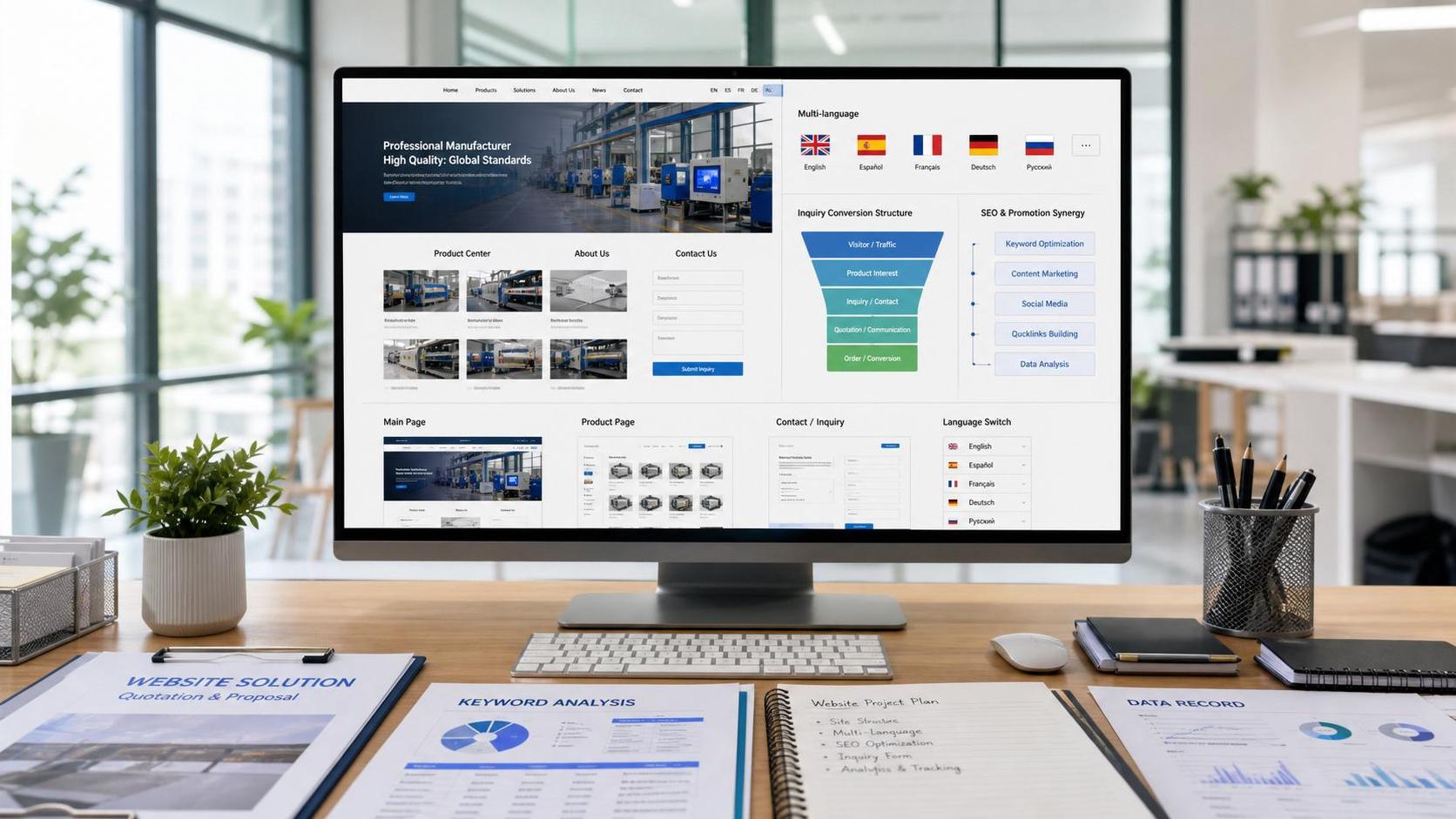
Another key for foreign trade websites lies in fast responsiveness across multiple languages and regions. Multilingual marketing systems must provide high-quality translations while ensuring consistent loading and SEO-friendliness across language versions. Deploy localized server clusters, region-specific caching, and intelligent routing to reduce cross-border latency. Built-in security mechanisms and end-to-end encryption protocols enhance corporate credibility—critical for B2B clients and large procurement scenarios. For network upgrades, modern protocols like IPv6 offer near-unlimited address space and efficient routing, ensuring stable, secure multi-region deployment at scale. Combined with smart website platforms' auto-generated multilingual pages and AI keyword expansion, enterprises can optimize loading strategies per market while maintaining content consistency, ultimately boosting search visibility and conversions.
E-Commerce Case Studies: From Smart Websites to AI Ads
E-Commerce’s manufacturing and foreign trade implementations demonstrate how systematic speed optimization paired with AI-driven content strategies significantly improves inquiry-to-order conversion. Through SaaS platforms and multilingual automation, we deployed global CDN, auto-compressed resources, semantic SEO-optimized TDK tags, achieving 40% faster page loads and 35% higher SEO scores. For ads, AI tools optimized creatives and audience targeting, doubling conversion rates while lowering acquisition costs. Technical and client teams co-developed implementation plans, monitoring performance at every step from traffic sources to landing pages—ensuring digital solutions deliver short-term ROI while safeguarding long-term brand equity. For decision-makers, this translates to measurable value: higher organic traffic, lower paid acquisition costs, and stable cross-border conversion pipelines.
Conclusion and Next Steps: Roadmap, Benefits, and Action
In summary, website acceleration and performance optimization are core to boosting foreign trade conversions, requiring systematic upgrades across infrastructure, protocols, frontend rendering, and multilingual distribution. Enterprises should prioritize conversion-impacting bottlenecks, combining technical optimizations with AI ad platforms, SEO tools, and multilingual systems to form sustainable growth loops. Leveraging smart websites, AI keyword expansion, and global traffic ecosystems, E-Commerce provides integrated detection-optimization-delivery solutions with enterprise-grade security. To reduce cross-border latency, improve form conversions, or explore detailed ROI assessments, contact us to learn how E-Commerce’s technology and localization services can help achieve global growth goals.
- Website Development
- Website Builder Platform
- SEO Ranking
- B2B Foreign Trade
- Yiyingbao
- SEO
- SEO Optimization
- Smart Website Building
- AI Marketing Engine
- Global Traffic Ecosystem
- Smart Website Platform
- cross-border e-commerce
- Multilingual automated website construction system
- AI tools to improve website SEO ranking
- SaaS Website Platform
- Multilingual Marketing System
- AI Smart Advertising Platform
- Digital Marketing Solutions
- Website Acceleration and Performance Optimization
Related Articles
 How Is the Price of Building a Zhejiang Foreign Trade Website Calculated? Features, Number of Languages, and Promotion Needs Are Key
 How should Chinese companies choose overseas marketing solutions?An evaluation from channel planning to local execution
 How Should Global Brand Marketing Services Approach the Southeast Asian Market? Analysis of Channel Selection and Localization Tactics


Related Products
 EasyCamp SaaS Smart Website Marketing SystemE-Yingbao SaaS Smart Website Marketing System: AI-powered, zero-code website building. Rapidly launch multilingual independent e-commerce sites in just 10 minutes. Global server acceleration and AI-driven SEO optimization empower businesses to efficiently connect with global markets. The seamless integration of technology and user-friendly operation makes building e-commerce sites incredibly simple.
 AI+SEM Intelligent Advertising Marketing SystemAI+SEM drives intelligent ad creation, empowering full-funnel precision advertising marketing. The system automatically generates weekly/monthly reports, AI recommends keywords and target countries, monitors core metrics in real-time with intelligent alerts, and enables one-click high-conversion ad solutions to help quickly acquire customers and improve ROI.
 AI+SEO Dual Engine Optimization ServiceEasyWin AI+SEO Dual Engine Optimization System leverages AI-powered keyword mining, content generation, and comprehensive technical optimization to help foreign trade enterprises acquire high-quality organic traffic, significantly improving search rankings and conversion rates.
 AI+SNS Social Media Marketing SystemYingbao AI+SNS Social Media Marketing System - Precision social capture for the social media era. Supports one-click content synchronization across major platforms like Facebook and LinkedIn. AI intelligently rewrites posts for enhanced relevance. 24/7 AI customer service and user profiling analysis empower businesses to efficiently expand into global markets.
 AI+SEO营销解决方案易营宝AI+SEO营销解决方案,通过AI批量写作、智能生成TDK、精准关键词扩词等功能,全面优化网站SEO效果,提升流量与转化率。助力企业构建高效智能网站新生态。
 AI+SEM Advertising Marketing SolutionsAI+SEM Advertising Marketing Solution leverages AI technology to deeply empower SEM ad campaigns. It automatically generates weekly/monthly reports using AI, presenting account data across multiple dimensions for comprehensive insights into campaign performance and trends. The system precisely recommends keywords and target countries, intelligently generates high-conversion ad copy, and enables one-click activation of efficient campaign plans to help businesses rapidly acquire customers. Simultaneously, it monitors core metrics in real time, intelligently identifies abnormal fluctuations, and issues timely alerts to ensure stable, high-return advertising results.
 Domain Name ServicesEasyWin provides professional domain name services, including intelligent queries, one-stop registration, brand protection, and full lifecycle management, helping businesses build a digital brand image.
 EasyOperate B2C Cross-Border E-Commerce Platform & Independent WebsiteEasyStore B2C Cross-border E-commerce Independent Store is an intelligent website building and cross-border e-commerce integrated solution independently developed by EasyStore Information Technology (Beijing) Co., Ltd. The system is specially designed for small and medium-sized as well as large export enterprises, integrating 'website building, operation, marketing, advertising, and conversion' into one, helping enterprises quickly establish cross-border e-commerce independent stores to achieve brand globalization and global sales growth.
The platform supports multiple languages, multiple currencies, and multi-channel marketing, with built-in AI intelligent translation and SEO optimization systems, suitable for mainstream markets such as Southeast Asia, Europe and America, Latin America, and the Middle East, assisting Chinese manufacturing enterprises in efficiently deploying international e-commerce strategies. SSL证书易营宝提供专业SSL安全证书服务,包括单域名和泛域名证书,确保网站数据传输加密、身份验证和完整性保护,助力企业建立安全可信的在线业务环境。









