









- Which customer acquisition channels will be affected by cross-border marketing trends in 2026?Sep 06, 2026View details
- Which homogenization risks should be considered in an analysis of the AI-powered website building industry?Aug 30, 2026View details
- How Will AI Marketing Trends 2026 Change Advertising Budget AllocationAug 28, 2026View details
- Is the EV SSL certificate market shrinking or upgrading? How should companies assess certificate procurement?Aug 11, 2026View details
- Why the old AMP SEO 2020 practices no longer work and what has changed in current optimization prioritiesAug 02, 2026View details
- How to Choose Topics for an Industry News Section to Attract More Organic Search TrafficJul 29, 2026View details
What Website Development Requirements Should Be Confirmed Before Building a Foreign Trade Website?
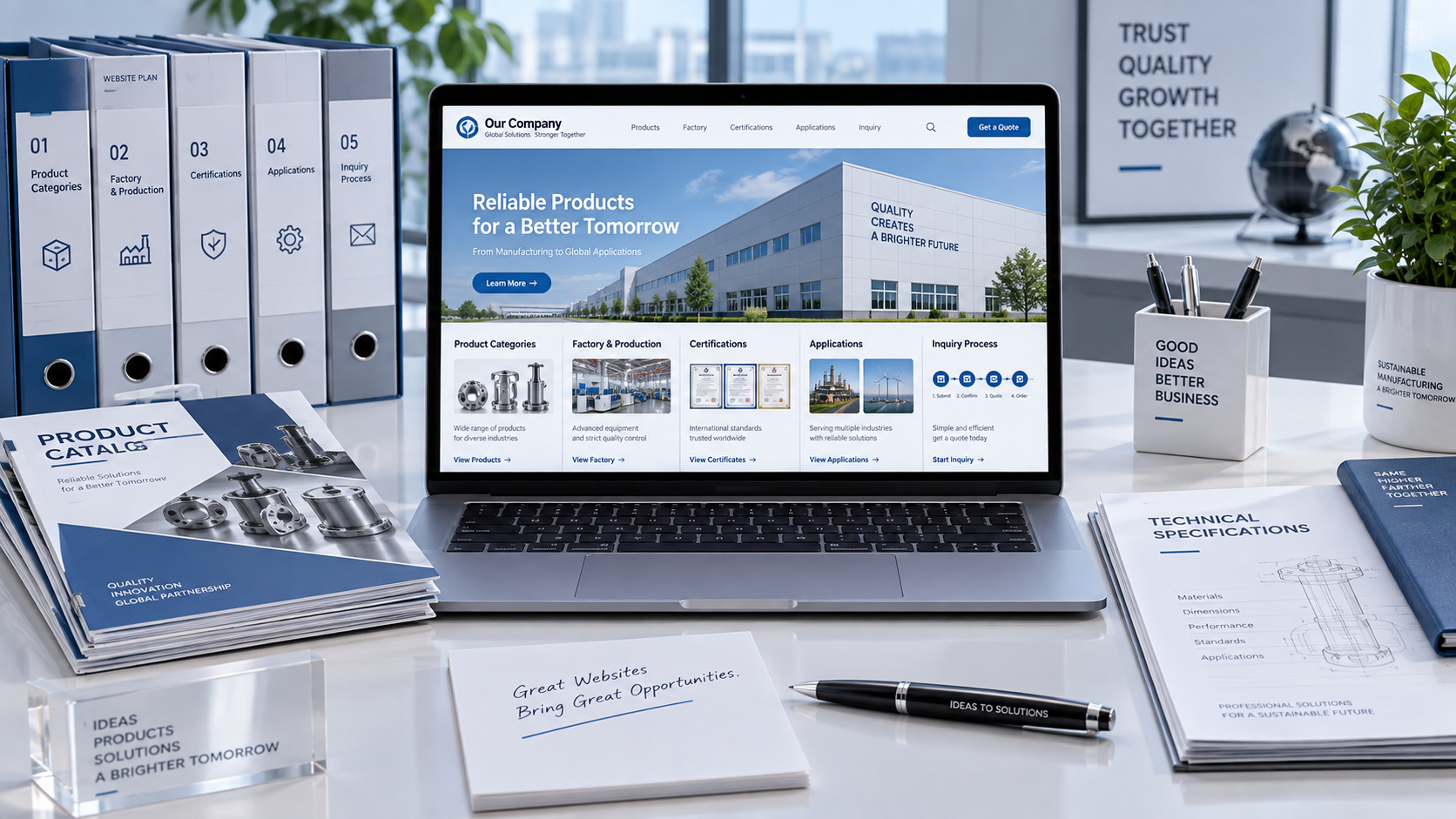
Before launching an overseas trade website, it is essential to clearly organize the requirements checklist for the website. This helps avoid rework, control the budget, and ensure that the website genuinely supports lead generation and conversion. When initiating a project, many companies interpret “building an official website” simply as a design and launch task. Only after implementation do they discover that language versions, inquiry distribution, SEO structure, compliance requirements, content update mechanisms, and coordination with advertising landing pages can all affect the project timeline and the effectiveness of subsequent campaigns. For managers responsible for advancing the project, website development is not a single procurement task, but an infrastructure project spanning marketing, technology, content, and operations.
The most common mistake in overseas trade website projects is not unattractive page design, but defining requirements too late. After the supplier has started creating prototypes, internal teams only then discuss whether “the website is mainly for brand presentation or for generating inquiries.” Before launch, they discover that they need to decide whether German and Spanish versions should be developed separately. When campaigns begin, they realize that form submissions cannot enter the CRM. None of these are purely technical issues; fundamentally, they result from a lack of early-stage decision-making.
First confirm: Is the website a corporate profile or a lead-generation tool?
Many projects get stuck at this point from the very beginning. Different departments within a company often have different expectations for the official website: management wants to demonstrate brand strength, the sales team focuses on the number of inquiries, the marketing department cares about Google indexing and advertising conversion, while IT is more concerned with security, permissions, and maintenance costs. If the project manager does not align these objectives first, the requirements will continue to shift later.
In overseas trade scenarios, the goals of an official website generally fall into three categories:
- Brand presentation: Suitable for companies with stable customer sources whose websites are mainly used to build credibility and present qualifications;
- Inquiry generation: Suitable for manufacturers and trading companies that rely on Google SEO, advertising, and social media traffic to acquire new customers;
- Channel conversion: Suitable for websites used in conjunction with trade shows, advertising, social media, WhatsApp, LinkedIn, and other channels.
The requirements for these three objectives are completely different. A brand presentation website can be relatively lightweight, but an inquiry-generation website must plan its page structure, conversion path, content layout, loading speed, tracking setup, and lead distribution in advance. If a project manager compares suppliers only by “number of pages” and “delivery price,” it is easy to discover later that although the website has gone live, the business cannot really use it.
The core of a requirements checklist is not the number of features, but the business scenarios
An actionable overseas trade website requirements checklist should begin by breaking down business scenarios, rather than starting with “how many pages and forms do I need?” Pages and features are only the results; scenarios determine how the website should be built.
Typical scenarios include:
- Overseas customers enter product pages through Google searches for industry keywords;
- Users from advertising campaigns enter landing pages directly and submit inquiries;
- Existing customers visit the website to view factory qualifications, case studies, and downloadable materials;
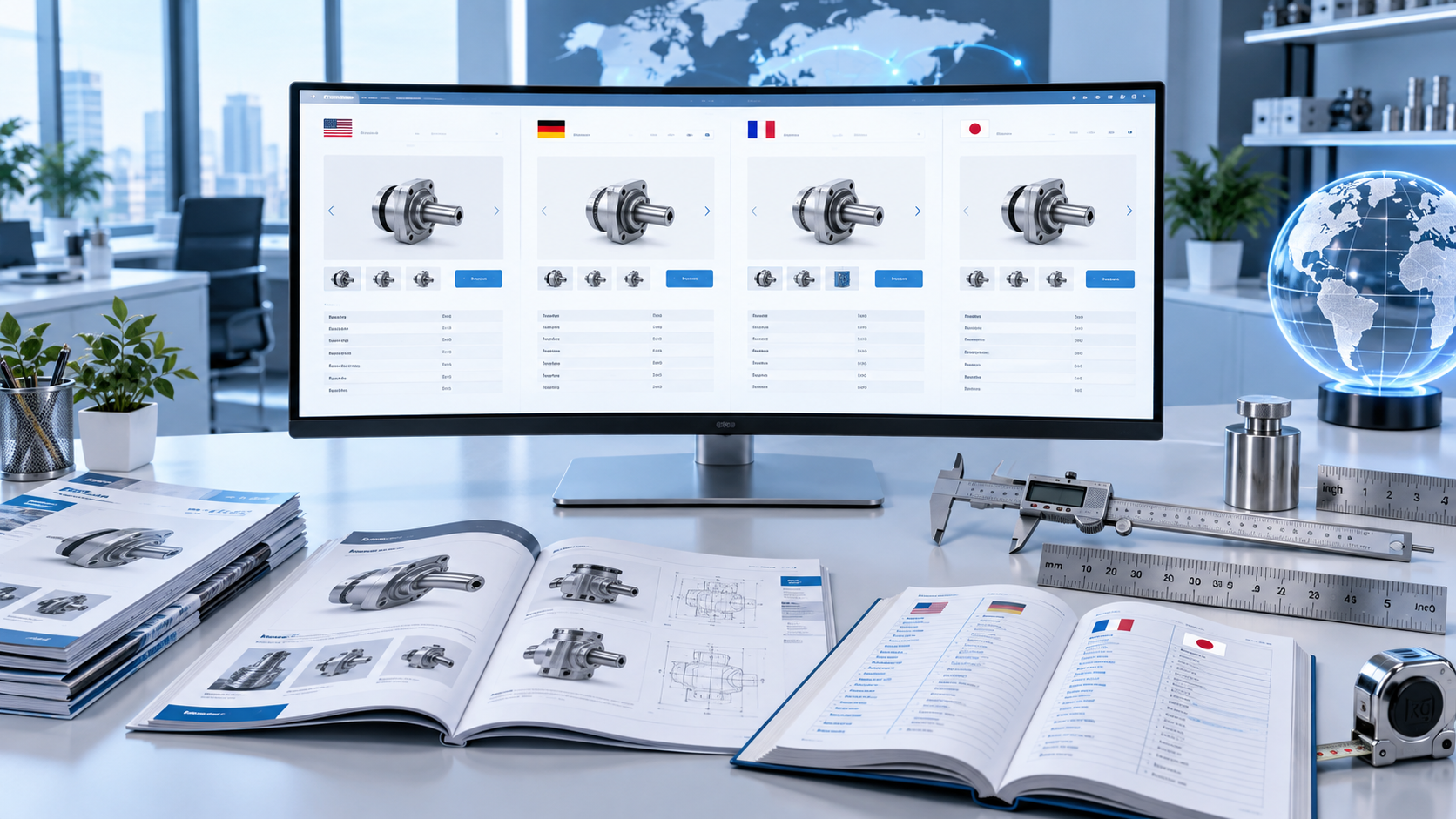
- Customers from different countries access pages in different languages;
- The sales team distributes inquiries according to region or product line;
- The marketing team continuously adds products, case studies, and news while expanding SEO content.
Once these scenarios are clearly listed, many requirements will naturally emerge: whether independent URLs are needed for different languages, whether lead capture should be required for material downloads, whether email notifications and a CRM should be integrated, whether a blog system is needed, whether product filtering is required, and whether PC and mobile conversion paths should be differentiated. During project implementation, the biggest concern is having “many features, but none that are genuinely useful for the core scenarios.”

Multilingual functionality is not merely a translation issue, but a structural issue
Multilingual functionality is often underestimated in overseas trade website projects. Many companies believe that they can simply translate the content later. In reality, multilingual decisions affect URL structure, SEO indexing, content maintenance, labor costs, and the launch schedule.
At the early stage of the project, at least three matters should be clarified:
- Is the target market global traffic in general, or specific priority countries?
- Is multilingual coverage intended as temporary machine-translated content, or as a localized website for long-term operation?
- Do different language versions require independent keyword and content optimization?
If a company mainly targets English-speaking markets, developing the English website in depth first is usually more realistic than launching more than ten languages at once. Conversely, if customers are concentrated in Spanish-speaking regions, Russian-speaking regions, the Middle East, or Japan and South Korea, an English-only website is often insufficient to support conversion. One misconception to avoid is that more languages do not necessarily produce better results. Multilingual pages that cannot be maintained may lead to content inaccuracies, gaps in updates, and declining indexing quality.
For project managers, multilingual requirements should be confirmed before procurement because they directly determine the project duration, translation process, content responsibilities, and subsequent budget.
SEO and advertising conversion must be included in the requirements before website development begins
Many companies regard SEO and advertising as work to be carried out after the website goes live. In overseas trade projects, this often comes at a high cost because the cost of retrofitting a website that is unsuitable for promotion is usually higher than designing it correctly from the beginning.
If the website will eventually use Google SEO, the following basic requirements should be confirmed during the development stage:
- Whether page URLs can be customized and follow clear rules;
- Whether basic elements such as titles, descriptions, H tags, and image Alt text can be configured independently;
- Whether product pages, case study pages, and article pages support continuous expansion;
- Whether the website has good mobile compatibility and loading speed;
- Whether it supports basic functions such as sitemaps, 301 redirects, and index control.
If Google Ads or social media advertising will also be used later, additional requirements will arise: whether landing pages can be quickly duplicated and built, whether conversion events can be tracked, whether forms support source tracking, and whether different campaigns can correspond to different pages. If these capabilities are missing, the marketing team can only bypass the official website and create pages separately, resulting in a disconnect between the website and the marketing system and preventing data from being accumulated.
From a project management perspective, the most important thing to confirm in advance is “who will maintain the website over the long term”
An overseas trade website project does not end upon delivery. The true value of a website is often determined during the six to twelve months after launch: whether products are continuously updated, case studies are regularly added, articles are consistently published, and pages are adjusted based on market feedback. Many websites perform poorly after completion not because the system is inadequate, but because there is no internal maintenance mechanism.
Therefore, the project manager should clarify the following points in advance in the website development requirements checklist:
- Who is responsible for content updates: marketing, sales, or a third party?
- Is a user-friendly backend required to avoid relying on technical staff for every change?
- Have product materials, images, certificates, and case study assets been organized?
- Who will proofread the English content, and is there a mechanism to ensure consistency in industry terminology?
- Will there be a data review and page iteration mechanism after launch?
These issues may appear operational, but they directly affect procurement and selection. If a company does not have a dedicated technical team, backend usability, template expansion efficiency, permission management, and service response speed are more important than certain complex custom functions.
Functional requirements should distinguish between “must-have” and “appears advanced”
When website projects exceed their budgets, the problem is often not the supplier’s quotation, but the continuous expansion of the requirements scope. A common situation among overseas trade companies is being attracted by various features during demonstrations: 3D displays, online chatbots, complex filters, animated interactions, membership systems, quotation systems, and more. After launch, however, the features most frequently used are often still product displays, case descriptions, inquiry forms, contact details, material downloads, and content updates.
A more prudent approach to procurement decisions is to divide requirements into three levels:
- Essential for launch: Company introduction, product system, cases/applications, inquiry entry points, multilingual functionality, basic SEO, mobile compatibility, and analytics tools;
- Essential for growth: Blog/news, landing page capabilities, lead tracking, form distribution, social media entry points, and advertising tracking;
- Features that can be postponed: Advanced interactions, complex membership systems, online quotations, and deep system integrations.
This approach allows the project to progress in stages and prevents the launch from being delayed in pursuit of an overly comprehensive solution. For engineering project managers, controlling scope is more important than pursuing complete functionality. This is particularly valuable when multiple departments are involved, as it can significantly reduce the time lost to repeated revisions.
Do not overlook the delivery model: templates, semi-custom development, and fully custom development differ significantly
When procuring an overseas trade website, companies often focus on price and visual effects while overlooking the delivery model itself. Template websites, semi-custom development, and fully custom development are suitable for different scenarios.
Template websites are suitable for companies with limited budgets, tight launch schedules, and relatively standardized content structures, but they provide limited support for differentiated structures, complex SEO planning, and subsequent expansion. Semi-custom development is more suitable for most overseas trade companies: it balances delivery efficiency with structural optimization based on industry characteristics. Fully custom development is suitable for companies with complex processes, a need for deep system integration, high branding requirements, or independent operations across multiple regions. Its risks, however, include a long development cycle, high communication costs, and greater dependence on the original service provider for later maintenance.
When comparing solutions, project managers may wish to focus on four questions: How are requirement changes charged? Can the backend be continuously expanded? Is it convenient to add languages or sections later? If the service provider is changed, can the data be migrated? Many projects appear to have controllable costs during procurement, but their real problems emerge during the second iteration.
Compliance, security, and basic performance cannot wait until before launch
An overseas trade website is accessed by users from different regions around the world. In addition to marketing performance, basic compliance and accessibility must also be considered. Different markets have different requirements regarding privacy, Cookie notices, and data collection disclosures. When EU users are involved, relevant privacy requirements require particular caution, and the specific scope of application should be further verified based on the business regions. If a company has a clear focus on the European market, it is advisable to confirm the privacy policy, Cookie management, and form data processing procedures before website development, rather than adding copy temporarily after advertising campaigns have started.
At the security level, at least HTTPS, backend access control, form spam protection, malicious login prevention, and data backup and recovery mechanisms should be considered. At the performance level, attention should be paid to overseas access speed, image compression solutions, code redundancy control, and the mobile opening experience. Overseas websites serve users across regions. If a page loads slowly, inquiry losses often occur before users have actually seen the content.
The truly practical procurement criterion is not “which provider is cheaper,” but which one is more suitable for execution
For project managers, the success or failure of an overseas trade website project often depends on whether the supplier can turn requirements into an actionable solution. A reliable service provider does more than provide page design; it also helps the company identify target markets, content preparation challenges, promotional requirements, and subsequent iteration paths during the early stages.
Therefore, during the website development procurement stage, it is advisable to focus on the following capabilities:
- Whether the provider understands the logic of B2B overseas trade lead generation rather than merely creating a corporate presentation website;
- Whether the provider can bring SEO, advertising, and content operations requirements into the website development stage;
- Whether there is a clear project process, delivery schedule, and requirements confirmation mechanism;
- Whether the provider can support subsequent multilingual expansion, the addition of marketing pages, and data tracking;
- Whether the provider offers ongoing service rather than ending the relationship immediately after launch.
From this perspective, an overseas trade website requirements checklist is not intended to “fill up the requirements,” but to make procurement decisions more closely aligned with actual business needs. Only by clarifying objectives, scenarios, content, promotion, maintenance, compliance, and scalability in advance can a website avoid becoming a one-time visual project and instead become a reusable foundational asset within the company’s overseas customer acquisition system.
If a company is currently preparing to launch an official website project, the most worthwhile first step is not to rush into price comparisons, but to complete a requirements confirmation form that both business and execution teams can understand. Clear requirements give suppliers a meaningful basis for comparison; unclear requirements can result in a website that “can go live but is difficult to use,” regardless of how high the budget is.
Related Articles

Related Products
 Yiyingbao SaaS Intelligent Website Building and Marketing SystemYiyingbao SaaS Intelligent Website Building and Marketing System, AI-powered no-code website building, rapid creation of multilingual B2B international websites in 10 minutes, global server acceleration, AI-powered SEO optimization, helping businesses connect efficiently with global markets. The perfect integration of technology and operation makes building an international trade website remarkably simple
 AI+SEM Intelligent Advertising Marketing SystemAI+SEM drives intelligent ad creation, empowering full-funnel precision advertising marketing. The system automatically generates weekly/monthly reports, AI recommends keywords and target countries, monitors core metrics in real-time with intelligent alerts, and enables one-click high-conversion ad solutions to help quickly acquire customers and improve ROI.
 AI+SEO Dual-Engine System Optimization ServicesYiyingbao’s AI+SEO dual-engine optimization system helps foreign trade enterprises acquire high-quality organic traffic through AI-powered keyword research, content generation, and comprehensive technical optimization, significantly improving search rankings and conversion rates.
 AI+SNS Social Media Marketing SystemYingbao AI+SNS Social Media Marketing System - Precision social capture for the social media era. Supports one-click content synchronization across major platforms like Facebook and LinkedIn. AI intelligently rewrites posts for enhanced relevance. 24/7 AI customer service and user profiling analysis empower businesses to efficiently expand into global markets.
 AI+SEO营销解决方案易营宝AI+SEO营销解决方案,通过AI批量写作、智能生成TDK、精准关键词扩词等功能,全面优化网站SEO效果,提升流量与转化率。助力企业构建高效智能网站新生态。
 AI+SEM Advertising Marketing SolutionsAI+SEM Advertising Marketing Solution leverages AI technology to deeply empower SEM ad campaigns. It automatically generates weekly/monthly reports using AI, presenting account data across multiple dimensions for comprehensive insights into campaign performance and trends. The system precisely recommends keywords and target countries, intelligently generates high-conversion ad copy, and enables one-click activation of efficient campaign plans to help businesses rapidly acquire customers. Simultaneously, it monitors core metrics in real time, intelligently identifies abnormal fluctuations, and issues timely alerts to ensure stable, high-return advertising results.
 Domain Name ServicesEasyWin provides professional domain name services, including intelligent queries, one-stop registration, brand protection, and full lifecycle management, helping businesses build a digital brand image.
 EasyOperate B2C Cross-Border E-Commerce Platform & Independent WebsiteEasyStore B2C Cross-border E-commerce Independent Store is an intelligent website building and cross-border e-commerce integrated solution independently developed by EasyStore Information Technology (Beijing) Co., Ltd. The system is specially designed for small and medium-sized as well as large export enterprises, integrating 'website building, operation, marketing, advertising, and conversion' into one, helping enterprises quickly establish cross-border e-commerce independent stores to achieve brand globalization and global sales growth.
The platform supports multiple languages, multiple currencies, and multi-channel marketing, with built-in AI intelligent translation and SEO optimization systems, suitable for mainstream markets such as Southeast Asia, Europe and America, Latin America, and the Middle East, assisting Chinese manufacturing enterprises in efficiently deploying international e-commerce strategies. SSL证书易营宝提供专业SSL安全证书服务,包括单域名和泛域名证书,确保网站数据传输加密、身份验证和完整性保护,助力企业建立安全可信的在线业务环境。









