









- Which customer acquisition channels will be affected by cross-border marketing trends in 2026?Sep 06, 2026View details
- Which homogenization risks should be considered in an analysis of the AI-powered website building industry?Aug 30, 2026View details
- How Will AI Marketing Trends 2026 Change Advertising Budget AllocationAug 28, 2026View details
- Is the EV SSL certificate market shrinking or upgrading? How should companies assess certificate procurement?Aug 11, 2026View details
- Why the old AMP SEO 2020 practices no longer work and what has changed in current optimization prioritiesAug 02, 2026View details
- How to Choose Topics for an Industry News Section to Attract More Organic Search TrafficJul 29, 2026View details
- Digital Marketing Shenzhen Market Insights: Why Are Companies Expanding Overseas Looking for Growth Teams in Shenzhen?Jul 31, 2026View details
- Can Zhejiang foreign trade independent websites still be developed today? Look at changes in traffic and lead generationJul 28, 2026View details
Why the old AMP SEO 2020 practices no longer work and what has changed in current optimization priorities
Why the Old amp seo 2020 Approach No Longer Works and What Has Changed in Current Optimization Priorities
When many companies look back at the amp seo 2020 approach today, they can see a clear gap: practices that brought advantages in clicks and crawling at the time may no longer deliver ranking benefits today, and may even leave websites facing high maintenance costs, limited page capabilities, and disconnected conversion paths. This is where the misconception lies. Many people assume AMP has become ineffective because it is “technically outdated.” More accurately, the focus of search engine evaluation has shifted, and AMP is no longer inherently equivalent to better search performance.
Around 2020, the reason AMP was widely discussed was not that it was particularly magical, but that mobile web pages were generally heavy, slow to load, and cluttered with scripts. Search platforms needed a more controllable lightweight page standard. At that time, many SEO teams focused on questions such as “Is there an AMP page?”, “Can AMP pages be indexed?”, and “Are news pages compatible with accelerated mobile versions?” These considerations had a practical basis then, but they were never an optimization logic that could stand independently over the long term.
Today, search engines care more about the overall page experience than about any specific technical label. In other words, AMP is no longer a shortcut. What truly determines performance is whether a website can provide stable loading, clear content, smooth interactions, and an understandable structure in real-world access environments. An ordinary page with a clean technical architecture, a well-controlled above-the-fold area, and solid content quality can perform better than an AMP page with thin content and confusing navigation.
Why the Old Approach Is Becoming Increasingly Difficult to Sustain
The problem with the old amp seo 2020 approach is usually not that it was “wrong,” but that it focused only on the most superficial layer that mattered at the time. The most common situations include treating AMP as a ranking tool rather than a performance management solution; creating two versions of a page without properly handling canonical tags, content consistency, and data tracking; and compressing only the front-end page size while overlooking server response times, image strategies, third-party scripts, and content production quality.
The issue of maintaining two versions is one that many older websites have experienced. One desktop version and one mobile AMP version may appear to provide “better compatibility with mobile search,” but in practice they can easily lead to unsynchronized content, missing structured data, missing conversion buttons, and reduced form functionality. This may be manageable for news websites, but for the many overseas lead-generation websites, B2B inquiry websites, and independent e-commerce sites operating today, this split approach can directly affect inquiry submissions, attribution tracking, and the speed of landing page iteration.
Another reason the old approach has become ineffective is that search engines now have a more nuanced understanding of what “fast” means. In the past, many teams looked only at opening speed. Today, they must also consider whether the page is stable, whether elements shift, whether users can interact immediately after clicking, whether core content appears first, and whether ads, pop-ups, and tracking scripts interfere with reading. This is why some websites still receive poor experience scores despite using lightweight page solutions. If a page is fast in an incomplete or unstable way, its results will be compromised.
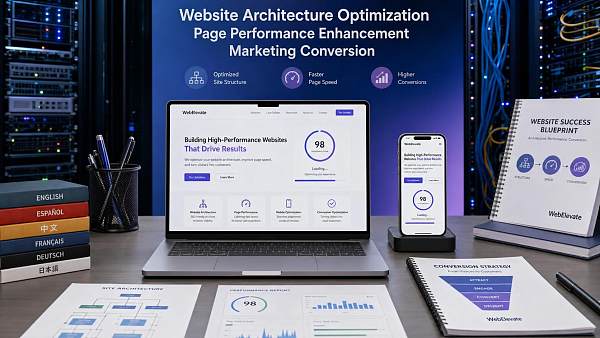
From the perspective of integrated website and marketing projects, it has become difficult for a single technical factor to explain SEO results on its own. Whether a page can attract sustained traffic often depends on whether several elements are connected: whether the website architecture supports crawling, whether multilingual versions are properly configured, whether the content genuinely answers search queries, whether the page supports conversions, and whether subsequent data feedback supports ongoing iteration. The reason service models such as 易营宝’s, which integrate AI website building, SEO, advertising, and multilingual operations, are increasingly accepted by businesses is that search optimization can no longer be solved by simply “adding a feature.” It is a matter of coordinating technology, content, and channels.
Current Optimization Priorities Have Shifted from AMP to Overall Website Capabilities
Put simply, today’s SEO evaluation logic can be summarized as follows: search engines no longer reward pages that merely “look optimized.” Instead, they tend to reward pages that are genuinely useful to users and technically reliable. This means that optimization priorities have changed in at least four ways.
First, page performance has shifted from “prioritizing special formats” to “prioritizing real user experience.” You do not necessarily need AMP, but you do need to control above-the-fold resources, reduce blocking scripts, optimize image delivery, compress redundant styles, and keep server response times within a reasonable range. For independent websites and corporate websites, this is more practical and sustainable than simply adding an AMP module.
Second, content quality standards have increased. In the past, some pages could achieve good rankings as long as their structure was complete and their keywords matched. Today, if content remains generic, assembled from repetitive material, or duplicated across pages, it becomes difficult to maintain stable rankings. Search systems are increasingly able to distinguish whether content is actually solving a problem, rather than merely identifying whether a particular term appears. Therefore, when companies create content, publishing articles is not enough. More important is building topic depth, industry expertise, and semantic relationships between pages.
Third, the focus of technical SEO has returned to the fundamentals. For example, is the URL structure clear? Are internal links organized hierarchically? Are pagination and filtered pages properly controlled? Is hreflang configured correctly? Do multilingual contents correspond to one another? Is structured data accurate? Have duplicate pages within the site been handled? These tasks may sound less novel than “AMP,” but they truly determine whether a website can be efficiently understood. For websites targeting overseas markets in particular, if there are no consistent rules between language sites, regional sites, product pages, and blog pages, adding more content later will often make the site increasingly disorganized.
Fourth, SEO is becoming more closely tied to conversion systems. In the past, some teams cared more about whether there was traffic. Today, they must also examine whether that traffic enters inquiry, form submission, lead capture, consultation, or purchase paths. Even if a page is technically lightweight, without trust-building information, clear calls to action, and a content hierarchy aligned with business intent, good search performance may still fail to create business value.
Which Considerations Matter More Than “Whether to Use AMP”
If a company is still discussing whether the amp seo 2020 approach should continue to be used, it is advisable to reframe the question first: Is my website an information site, a tool-based site, a brand site, or an inquiry-conversion site? The appropriate technical trade-offs differ by website type.
For news, blog, and content aggregation pages, lightweight performance remains important, but AMP may not be required to achieve it. For international corporate websites, manufacturing company websites, and multilingual independent websites, complete page functionality is often more important than the AMP format. These websites need to do more than simply be seen. They must also present products, display qualifications, support form submissions, communicate use cases, and adapt to access from multiple regions. Making a page excessively “lightweight” may instead reduce its inquiry-generation capabilities.
Another often-overlooked reality is that many companies’ content management, advertising, social media traffic acquisition, and SEO activities are no longer separate. Landing pages often need to support search crawling, advertising quality scores, and mobile conversion experience at the same time. If the front-end system is too strictly constrained by outdated AMP thinking, marketing teams may find it difficult to conduct A/B testing, implement event tracking, or perform remarketing tracking. A website is not built solely for indexing; it also serves as the infrastructure for growth experiments.
This is why many website development and marketing service providers now consider “indexable, promotable, and convertible” capabilities within a single system. Technical architecture does not exist in isolation. It determines whether content can be published efficiently, whether language versions for different regions can be synchronized, and whether subsequent AI-assisted content optimization, advertising landing page expansion, and data attribution can proceed smoothly. To some extent, discussing SEO today has become difficult without considering the capabilities of the entire website system.
Interestingly, this logic is not limited to the website industry. Many content studies that appear unrelated to SEO use similar methods. For example, in the organization of knowledge-based content, a topic such as Research on the Current Situation and Optimization Strategies of Human Resource Management in Public Hospitals has limited search value if it merely piles up concepts. Truly useful content must clearly explain the current situation, the boundaries of the problem, applicable scenarios, and optimization paths. Search engines’ evaluation of corporate website content is increasingly approaching this standard of whether it provides a genuinely effective explanation.
Several Areas More Worth Investing in Today
If budgets and resources are limited, it is more worthwhile today to prioritize the following instead of mechanically refurbishing old AMP pages: organize the information architecture of the entire website, handle relationships between multilingual and regional versions, improve the speed of core template pages, establish topic clusters, strengthen the explanatory depth of product and industry pages, and complete conversion paths and data tracking. The result will not only be more stable rankings, but also easier subsequent expansion into advertising, social media, and AI search visibility.
For websites that already have historical AMP pages, there is no need to eliminate them all at once. A more pragmatic approach is to first verify whether these pages still generate stable traffic, whether they duplicate content on the main site, and whether they affect data attribution. Then decide whether to retain, merge, or gradually migrate them. Technical decisions should not be based on emotion or on the assumption that “everyone in the industry does it this way.” Examining traffic structure, page functions, and maintenance costs is usually more meaningful than debating the concept itself.
Ultimately, amp seo 2020 represents a stage-specific optimization mindset: using a specific format to pursue search visibility. Today’s direction is closer to systematic operations: enabling the website itself to be understood, trusted, visited, and converted through complete capabilities. Those who shift to this logic first will no longer be led by outdated methods.
Related Articles


Related Products
 Yiyingbao SaaS Intelligent Website Building and Marketing SystemYiyingbao SaaS Intelligent Website Building and Marketing System, AI-powered no-code website building, rapid creation of multilingual B2B international websites in 10 minutes, global server acceleration, AI-powered SEO optimization, helping businesses connect efficiently with global markets. The perfect integration of technology and operation makes building an international trade website remarkably simple
 AI+SEM Intelligent Advertising Marketing SystemAI+SEM drives intelligent ad creation, empowering full-funnel precision advertising marketing. The system automatically generates weekly/monthly reports, AI recommends keywords and target countries, monitors core metrics in real-time with intelligent alerts, and enables one-click high-conversion ad solutions to help quickly acquire customers and improve ROI.
 AI+SEO Dual-Engine System Optimization ServicesYiyingbao’s AI+SEO dual-engine optimization system helps foreign trade enterprises acquire high-quality organic traffic through AI-powered keyword research, content generation, and comprehensive technical optimization, significantly improving search rankings and conversion rates.
 AI+SNS Social Media Marketing SystemYingbao AI+SNS Social Media Marketing System - Precision social capture for the social media era. Supports one-click content synchronization across major platforms like Facebook and LinkedIn. AI intelligently rewrites posts for enhanced relevance. 24/7 AI customer service and user profiling analysis empower businesses to efficiently expand into global markets.
 AI+SEO营销解决方案易营宝AI+SEO营销解决方案,通过AI批量写作、智能生成TDK、精准关键词扩词等功能,全面优化网站SEO效果,提升流量与转化率。助力企业构建高效智能网站新生态。
 AI+SEM Advertising Marketing SolutionsAI+SEM Advertising Marketing Solution leverages AI technology to deeply empower SEM ad campaigns. It automatically generates weekly/monthly reports using AI, presenting account data across multiple dimensions for comprehensive insights into campaign performance and trends. The system precisely recommends keywords and target countries, intelligently generates high-conversion ad copy, and enables one-click activation of efficient campaign plans to help businesses rapidly acquire customers. Simultaneously, it monitors core metrics in real time, intelligently identifies abnormal fluctuations, and issues timely alerts to ensure stable, high-return advertising results.
 Domain Name ServicesEasyWin provides professional domain name services, including intelligent queries, one-stop registration, brand protection, and full lifecycle management, helping businesses build a digital brand image.
 EasyOperate B2C Cross-Border E-Commerce Platform & Independent WebsiteEasyStore B2C Cross-border E-commerce Independent Store is an intelligent website building and cross-border e-commerce integrated solution independently developed by EasyStore Information Technology (Beijing) Co., Ltd. The system is specially designed for small and medium-sized as well as large export enterprises, integrating 'website building, operation, marketing, advertising, and conversion' into one, helping enterprises quickly establish cross-border e-commerce independent stores to achieve brand globalization and global sales growth.
The platform supports multiple languages, multiple currencies, and multi-channel marketing, with built-in AI intelligent translation and SEO optimization systems, suitable for mainstream markets such as Southeast Asia, Europe and America, Latin America, and the Middle East, assisting Chinese manufacturing enterprises in efficiently deploying international e-commerce strategies. SSL证书易营宝提供专业SSL安全证书服务,包括单域名和泛域名证书,确保网站数据传输加密、身份验证和完整性保护,助力企业建立安全可信的在线业务环境。









