

I. What Is hreflang: The Essential Markup Multilingual Websites Must Understand
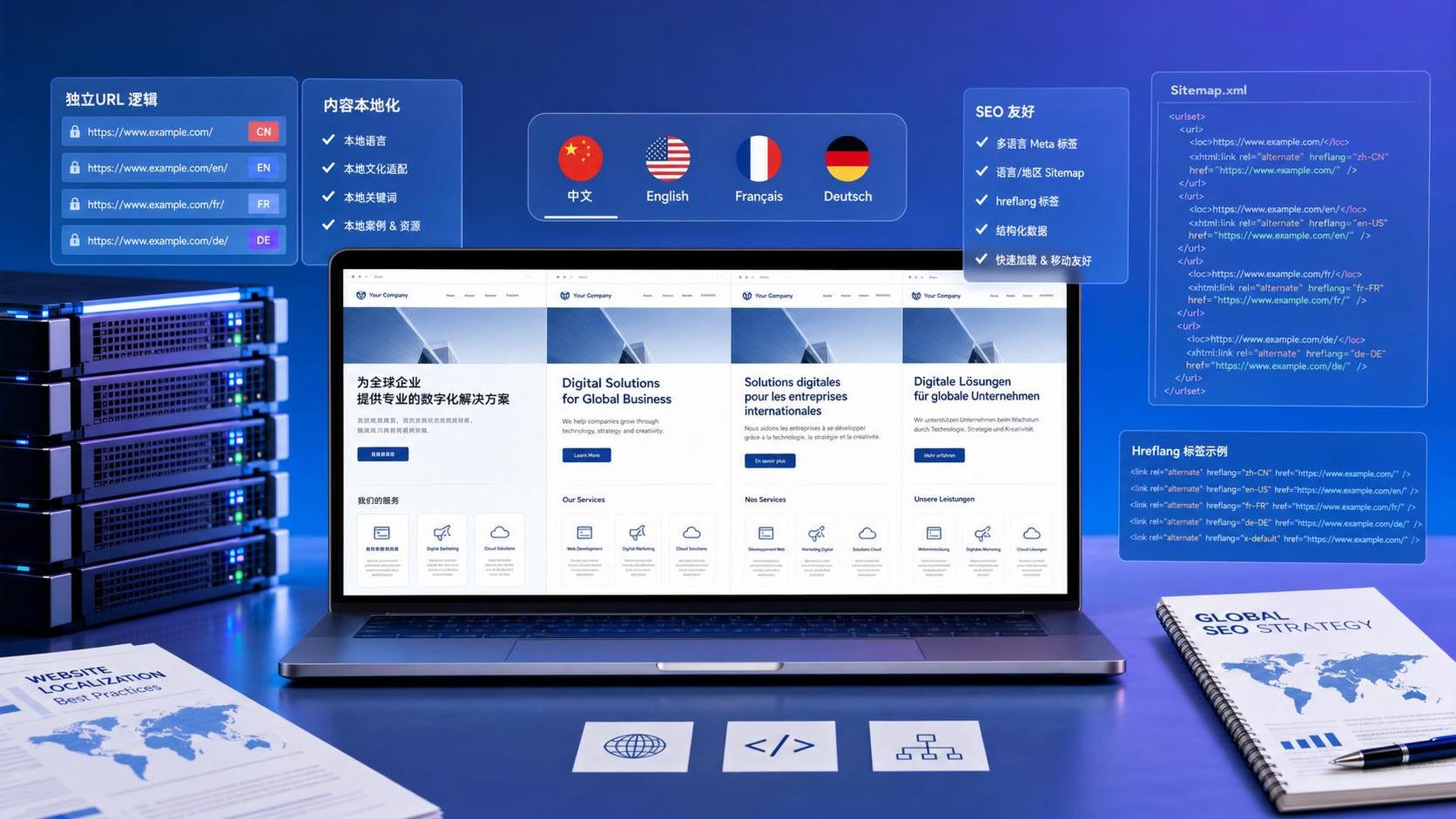
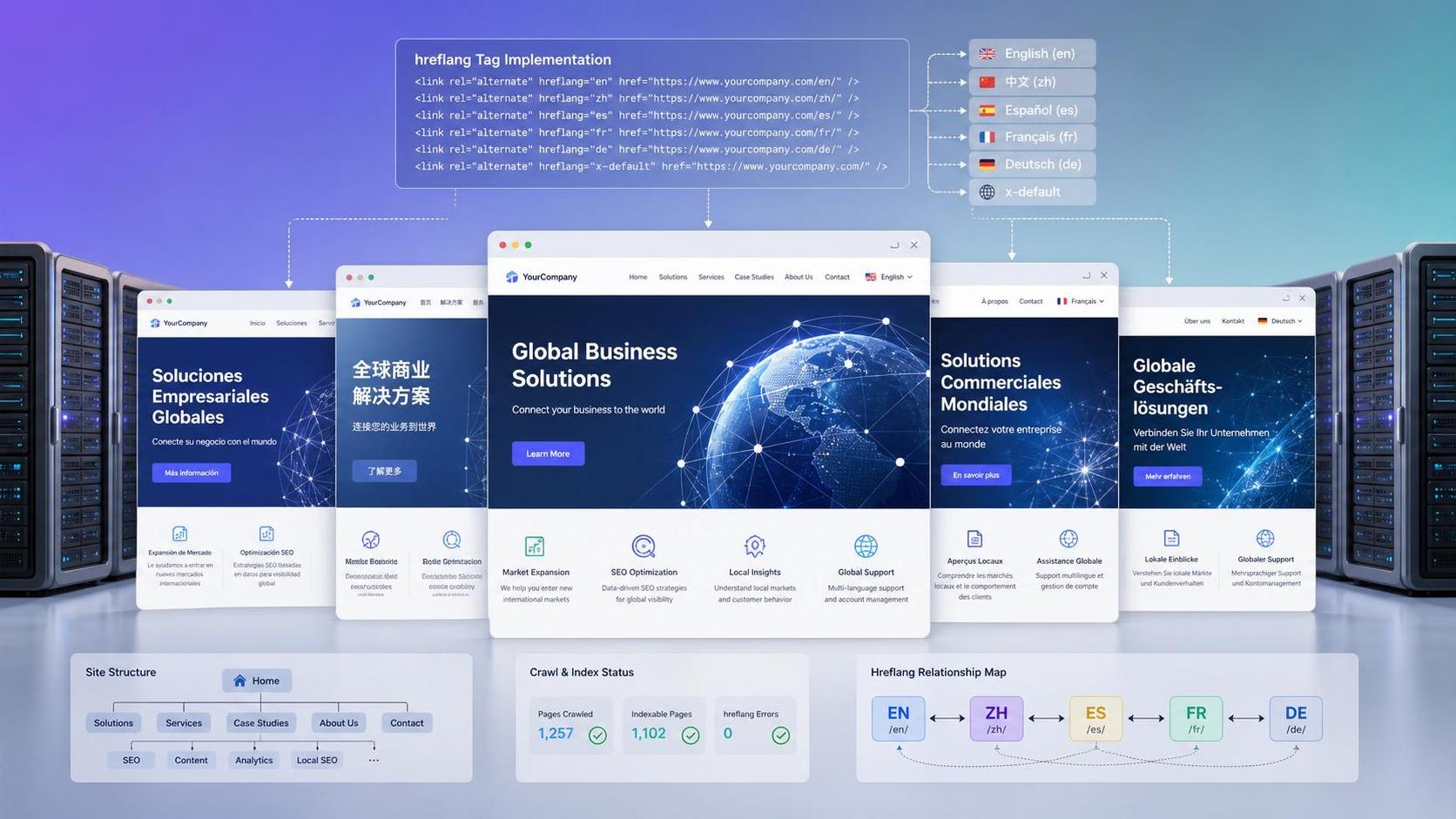
hreflang is a page markup mechanism that tells search engines which language and region a page is intended for. It is commonly used on multilingual corporate websites, cross-border e-commerce stores, region-specific service websites, and international brand websites. It is not a ranking factor itself, but it directly affects which users a page is matched to.
For foreign trade companies, if the English, German, Spanish, and Arabic versions of a website have similar content themes but lack hreflang coordination, search engines may display the wrong language version. This can increase the bounce rate, reduce time on site, and ultimately weaken inquiry conversion.
The core value of hreflang is not to “do something for programs,” but to help search engines establish language-to-region mapping relationships. This makes it easier for users in the United Kingdom to see the English UK page and for users in Mexico to see the Spanish regional page, reducing traffic mismatches at the source.
For large websites with product pages, case study pages, and solution pages, hreflang also explains relationships across site versions and is an important part of maintaining a clear international website structure.
II. How hreflang Works: Technical Principles and Search Engine Identification Logic
Search engines assess page language, URL structure, geographic signals, reciprocal references, and hreflang annotations to determine whether a group of pages represents different language or regional versions of the same topic. hreflang can work reliably only when clear corresponding relationships exist between the pages.
Standard implementation generally requires reciprocal references: Page A identifies Page B, Page B also identifies Page A, and each version should ideally reference itself. If return references are missing, language codes are incorrect, or a URL cannot be accessed, search engines may ignore the entire hreflang set.
In actual projects, hreflang is often used together with canonical. canonical handles the primary-version relationship between duplicate or similar content, while hreflang handles relationships between different language and regional versions. They serve different purposes, and configuration conflicts can cause page signals to become confused.
If a company operates Chinese, English, Russian, and French markets at the same time, while its page content comes from a unified product database, it is even more important to plan hreflang, canonical, and XML Sitemap uniformly at the template level instead of addressing them page by page after launch.
III. Main Deployment Methods and Applicable Scenarios: HTML, Sitemaps, and Systematic Management
The main implementation methods for hreflang include HTML head tags, XML Sitemap annotations, and HTTP Header instructions for a small number of file-based resources. For most corporate websites and foreign trade websites, the first two are the most common. The key is not the format itself, but the management cost and likelihood of errors.
When the number of pages is small, HTML head markup is convenient for direct inspection. As the number of product pages, article pages, and regional pages grows rapidly, relying on manual maintenance makes omissions more likely. At that point, using a sitemap to centrally output hreflang is generally more suitable for companies with large multilingual directory structures.
From a business perspective, hreflang can be deployed with subdirectories, subdomains, or separate domains. The best structure depends on whether the company needs to operate regional websites independently, the distribution of server resources, the efficiency of content team collaboration, and subsequent maintenance capabilities, rather than technical preferences alone.
In multilingual website development, 易营宝 incorporates hreflang, language paths, regional pages, and sitemaps into the basic internationalization configuration. This is more suitable for foreign trade companies that need to manage multiple languages, including English, Russian, Japanese, and Arabic, and can reduce the difficulty of subsequent bulk maintenance.
IV. Who Needs hreflang Most: Target Companies, Typical Scenarios, and Case Insights
Not every website must deploy hreflang. Its value becomes significant only when a website has different language versions or different pages in the same language for different national markets. Single-language websites and purely domestic websites generally do not need to prioritize it.
Those most in need of hreflang include foreign trade websites of manufacturing factories, B2B product showcase websites, cross-border e-commerce stores, independent websites for brands expanding overseas, and corporate websites serving markets across Europe, the Middle East, Latin America, and Asia. These websites often have multilingual product and content pages covering the same topics.
Taking industries such as machinery, chemicals, new energy, and heavy trucks as examples, overseas purchasing decisions involve long chains, and users are more inclined to read materials in their local language. If search results show an English page to a Spanish-speaking user, the company may lose the opportunity to communicate at the very first step, even if the product is suitable.
易营宝 has long served industries including laser engraving machines, steel, chemicals, machinery, and new energy, and has covered case types involving Haier, Ocom, Shandong Airlines, Little Duck Group, and Sinotruk. Such companies often have complex product systems and a large number of pages. hreflang needs to be planned together with website development, content, and promotion to genuinely support global customer acquisition.
V. Common Errors Explained: Why hreflang Has No Effect After Configuration
The most common problem is using incorrect language or region codes, such as confusing languages with countries or using nonstandard abbreviations. The second type of problem is incomplete reciprocal linking: some pages do not reference back, so search engines cannot confirm the page-group relationship and may ignore the entire hreflang markup set.
The third type of error comes from abnormal page status, such as a target URL returning a redirect or 404, being blocked from crawling by robots, or having canonical point to a version in another language. This can cause the hreflang signal to be overridden. Many companies think the problem lies in the tags themselves, when the actual root cause is inconsistent page accessibility and indexing strategies.
The fourth error is directly publishing pages in bulk after machine translation. Insufficient language quality makes it difficult for search engines to identify the actual target audience. hreflang can indicate “who the target language is,” but it cannot replace content localization itself. If the language is unnatural, conversion will still suffer.
Another frequent mistake is failing to update the hreflang set across the entire website after adding a new language, especially when products are launched in bulk or sections are migrated. As long as the update process is not systematized, errors will continue to accumulate as the website expands.
VI. Selection and Implementation: Criteria for Evaluating Website Development Systems and Operating Processes
When planning hreflang, companies should first determine whether the website development system supports multilingual content structures, independent URL rules, bulk sitemap generation, and unified template-level output. If the underlying architecture does not support these functions, relying on plugins or manual patches later will generally make maintenance costs increasingly high.
The second criterion is content management capability. Whether language versions can correspond one-to-one, whether pages can be published synchronously, and whether product parameters support multilingual fields will directly determine the accuracy of hreflang. If the system cannot establish mapping relationships, technical markup can easily become inaccurate.
The third criterion is coordination between technology and marketing. A truly usable international website solution should not merely output hreflang; it should also take page speed, mobile adaptation, content quality, inquiry access points, and subsequent SEO operations into account. Otherwise, having visibility without conversion still provides limited business value.
易营宝’s AI-powered website development, multilingual independent websites, and AI+SEO framework are more suitable for such scenarios: hreflang, canonical, content generation, page structure, and global access acceleration are considered simultaneously during website development, reducing repeated rework caused by fragmented technical configuration, translation management, and promotion.
VII. Maintenance Cycles, Cost Components, and ROI Evaluation: What Buyers Care About Most
From a total cost of ownership perspective, hreflang itself is not a high-cost project. The real differences come from website architecture, content localization, page mapping maintenance, quality checks, and ongoing operations. If a company uses scattered tools, manual translation, and manual data entry, costs will multiply each time an additional language is added.
A relatively reasonable maintenance schedule is usually as follows: design mapping rules before launching a new language; conduct a spot check after each bulk product launch or section adjustment; review the sitemap, crawling status, and error pages every month; and evaluate page performance in target countries based on traffic and inquiry data every quarter.
ROI should not be evaluated solely by rankings. It should also consider whether mismatched traffic has decreased, whether exposure of local-language pages has increased, whether the countries generating inquiries have become more concentrated, and whether sales follow-up efficiency has improved. For high-value B2B companies, even a small increase in qualified inquiries may make the investment worthwhile.
If a company also needs to conduct Google SEO, advertising, social media lead generation, and GEO content planning, choosing an integrated platform is often easier for controlling long-term costs than combining multiple suppliers. Because multilingual structures, content production, and data review are handled within the same system, collaboration efficiency is higher.
VIII. 2026 Trend Outlook: hreflang Is Evolving from a Technical Option into Infrastructure for International Growth
As 2026 begins, competition among multilingual websites is no longer simply about whether foreign-language pages exist, but whether language, region, content, and conversion pathways can remain consistent. As foundational markup, the importance of hreflang is rising from a technical detail to an underlying condition for scalable international business.
Future trends will place greater emphasis on automation and maintainability. The larger the number of pages, the more companies will rely on systems to automatically generate and validate hreflang, together with AI translation, localized content generation, synchronized sitemaps, and templated rule output to reduce the accumulation of errors caused by manual intervention.
Another trend is the integration of search and question-answering environments. Whether in traditional search results, AI summaries, or industry question-and-answer channels, the structural clarity of multilingual content will affect the opportunities for a brand to be understood and cited. hreflang is no longer merely an indexing aid; it also relates to whether global content assets can be correctly identified.
For companies planning to expand into overseas markets, the most practical approach is not to add tags temporarily, but to make hreflang part of the international architecture from the beginning of website development. Only in this way can the website, SEO, advertising, and inquiry conversion form a genuine closed loop.
 What’s the difference between full-site translation and machine translation? How should you choose before launching a multilingual websiteWhat’s the difference between full-site translation and machine translation? This article provides a comprehensive analysis of SEO indexing, URL structure, system compatibility, maintenance costs, and conversion performance to help you choose the right solution before launching a multilingual website and improve overseas lead generation efficiency.
 Why can’t Google SEO optimization rank? Common technical issue checklistWhy can’t Google SEO optimization rank long-term? This article organizes common technical issue checklists for crawling, indexing, speed, structure, canonical, hreflang, and more, helping you quickly identify bottlenecks and improve indexing efficiency and organic traffic performance.
 Yiyingbao vs. WordPress: Should foreign trade companies choose SaaS or open source for website buildingYiyingbao vs. WordPress: Should foreign trade companies choose SaaS or open source for website building? This article focuses on deployment speed, SEO capabilities, multilingual expansion, and maintenance costs to help you quickly determine the growth-oriented website solution that best fits your team.
 How do I set hreflang tags correctly? Common multilingual site errors and troubleshooting methodsHow do I set hreflang tags correctly? This article focuses on common multilingual site errors, canonical conflicts, code syntax, and troubleshooting workflows, helping you quickly clarify international SEO logic, reduce indexing confusion and traffic misrouting, and improve overseas market visibility and conversion performance.
 What key components are included in Google SEO servicesWhat key components are included in Google SEO services? From technical optimization, keyword research, content structure, to backlink building and data analysis, this comprehensively explains a website + marketing integrated SEO strategy to help improve indexing, traffic, and inquiry conversion.
 Will Canonical tag errors affect Google indexing? A guide to standardized URL auditsWill Canonical tag errors affect Google indexing? This article focuses on standardized URL audit guidelines, analyzing common errors, indexing drift, and authority dilution issues to help multilingual websites and marketing websites quickly locate anomalies and improve indexing efficiency and core page visibility.
 Why isn’t a website indexed by Google? Common causes and troubleshooting methodsWhy isn’t a website indexed by Google? This article explains common causes and troubleshooting methods in detail, covering key issues such as crawl restrictions, duplicate pages, content quality, and multilingual optimization, helping businesses quickly identify problems and improve indexing efficiency and overseas lead generation results.
 How to optimize Google indexing for a multilingual website: hreflang, canonical, and URL structure?How to optimize Google indexing for a multilingual website? This article focuses on hreflang, canonical, and URL structure, analyzing common mistakes and practical methods to help businesses improve indexing accuracy, overseas rankings, and lead conversion.