









- The U.S. has ended the $800 de minimis exemption for non-postal shipments; express courier packages must be formally declared.Nov 16, 2026View details
- ASEAN Signs Digital Economy Framework Agreement, Moving Toward Harmonized Cross-Border E-Commerce RulesNov 15, 2026View details
- Shenzhen Becomes the First City in Mainland China to Exceed RMB 5 Trillion in Foreign TradeNov 15, 2026View details
- Fujian Announces the First Batch of Provincial-Level Cross-Border E-Commerce Industrial Parks and Key Brands for CultivationNov 14, 2026View details
- Amazon Global Store Announces the Launch of the 2026 Black Friday Global Shopping SeasonNov 14, 2026View details
- CCTV.com Examines APEC’s Role in China’s Foreign TradeNov 12, 2026View details
What Should Be Checked Before Launching a Translated Export Website?
Before launching a foreign trade website translation, do not simply check whether the Chinese meaning has been translated. Overseas customers typically assess a company’s professionalism through product pages, specification pages, inquiry forms, and contact details; an inconsistent term, an incorrect link, or a price unit that does not match local conventions may cause them to leave before submitting an inquiry. Launch acceptance should treat translation as a complete localization review rather than merely copy proofreading.
First confirm: translation standards differ across page types
Homepage and brand introduction pages focus on whether the wording is natural and the positioning is clear; product detail pages place greater emphasis on the accurate correspondence of model numbers, specifications, materials, processes, and certification names; procurement terms, privacy policies, and after-sales instructions require rigorous wording and cannot be rewritten based on linguistic intuition. Applying the same proofreading standard to every page often results in high-risk content being overlooked.
Before launch, establish an acceptance checklist based on the purpose of each page and identify the source of the content. Product parameters should be based on official fields in technical documentation, drawings, or the ERP system; marketing copy may be adjusted in expression without changing the facts; legal and transaction-related texts should not be directly replaced by ordinary marketing translations. For materials that have not yet been confirmed, it is preferable to retain content pending completion rather than publish speculative foreign-language wording.
Terminology, units, and figures require “cross-page verification”
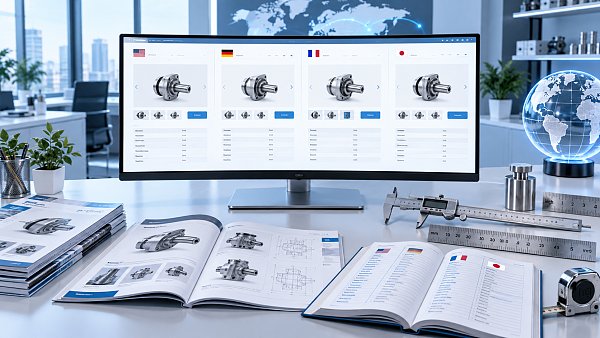
The most common issue in foreign trade website translation is not grammatical errors in individual sentences, but multiple translations for the same concept across different pages. For example, if product names, industry abbreviations, delivery methods, packaging units, and after-sales terms are expressed differently on detail pages, downloadable materials, and inquiry replies, customers may question whether the products are consistent, and the sales team may later struggle to follow up on leads.
It is recommended to create a shared glossary that includes at least the original Chinese term, the standard translation in the target language, prohibited translations, applicable pages, and notes. Focus on checking the following:
- Whether figures such as model numbers, part numbers, dimensions, power, capacity, quantity, and minimum order quantity are retained in full;
- Whether units such as mm, inch, kg, lb, bar, psi, ℃, and ℉ match the reading habits of the target market, and whether they remain consistent with the original materials after conversion;
- Whether qualifiers such as “customized,” “optional,” “compatible,” and “applicable” have been omitted, to avoid presenting optional configurations as standard configurations;
- Whether brand names, trademarks, certification names, patent names, and customer-specified designations retain their original wording;
- Whether the name of the same product is consistent across category pages, detail pages, PDF download pages, and inquiry forms.
Especially for manufacturing websites, product pages are frequently reused in search, advertising landing pages, and sales forwarding. Technical fields must be accurate first, and linguistic fluency should come afterward; this order must not be reversed.
Do not only review text in the backend; open each item on the live page
After translated content is added to a website, it is affected by templates, components, plugins, and device screens. Correct backend text does not necessarily mean the frontend displays properly. Acceptance should follow the actual access path of the target-language site: enter from the homepage, navigate through product categories, product details, contact pages, and inquiry pages, and complete the full user journey.
Pay particular attention to easily overlooked interface content, including menus, breadcrumbs, filters, pop-ups, Cookie notices, on-site search prompts, 404 pages, and email auto-replies. If the website has a language switcher, switching languages should keep users on the corresponding page rather than redirecting them back to the homepage or displaying a mixed-language page.
Links also need to be checked one by one: anchor text in the body content, image links, download buttons, footer policy links, social media entries, and post-submission thank-you pages may still point to Chinese pages, test domains, or invalid files. For pages targeting different markets, also confirm that the telephone country code, email address, address, business hours, currency, and shipping instructions are consistent with that language version.
Layout issues directly affect professionalism and readability
Text in English, German, Russian, and other languages is often longer than Chinese, while languages such as Arabic also involve right-to-left reading direction. Before launch, check on both desktop and mobile devices whether headings wrap abnormally, button text is truncated, parameter tables overflow, or text in images remains in Chinese. On mobile devices, pay particular attention to inquiry buttons, phone buttons, and drop-down menus, as space is limited in these areas and translations are most likely to affect usability.
Embedded text in images is another blind spot. Chinese text in product posters, flowcharts, dimension drawings, banners, and video covers will not switch with the language pack. If this content carries key selling points, specifications, or calls to action, corresponding language versions should be created; if it is only decorative text, it should still not conflict with the page language. Do not compress entire passages of foreign-language text into images just for convenience. Search engines cannot understand copy within images, and customers cannot copy or translate it.
Localization is not about sounding “more native”; it is about reducing the cost of understanding
Whether a translation sounds natural should be assessed in the customer’s decision-making context. B2B buyers typically care about application scope, technical capabilities, quality control, delivery time, packaging, customization boundaries, and contact channels; when Chinese source text emphasizes “strong capabilities” or “excellent quality,” a direct translation often has very low information density, and it is better to provide verifiable product and service descriptions. B2C pages, on the other hand, need clear information on prices, delivery, returns and exchanges, payment, and sizing.
At the same time, avoid excessive localization. Company names, core product models, official qualification names, and established trade terms should not be casually changed into approximate expressions used in the target market. A more appropriate approach is to keep the factual subject unchanged and explain its meaning using word order, measurements, and expressions familiar to local customers.
SEO and multilingual versions should be handled together before release
If the goal is to acquire traffic through search channels such as Google, translating the page body is not enough. Each language version should have an independent and accessible URL, and you should check whether the page title, description, image alt text, structured section names, and product links match that language. Do not let pages in multiple languages share a Chinese title, and do not force all language versions to redirect to the same page.
Corresponding relationships between multilingual pages need to be correctly established so that search engines can identify which market each page targets. Pages with incomplete translations should not be opened for indexing directly; otherwise, users may enter pages that are partly Chinese and partly foreign language from search results, which harms both the experience and their perception of the brand.
Conduct an “inquiry closed-loop” test before launch
The ultimate purpose of a language page is not display, but enabling customers to complete the next step. Submit a form using a test email address to confirm that required-field prompts, verification codes, privacy checkboxes, submission success messages, and auto-reply emails are all in the corresponding language, and verify that leads can enter the sales or customer service system. If the page is used for advertising, also verify that advertising link parameters, conversion events, and thank-you pages are not lost because of language switching.
When content from an independent website also needs to be synchronized to Facebook, LinkedIn, Instagram, or YouTube, on-site translations and social media copy must also be consistent. You can use the AI+SNS All-in-One Social Media Marketing System to adapt independent website content for different social media platforms, but before automatic synchronization, you should still confirm that product names, link landing pages, calls to action, and target-language versions are correct. Social media posts can be more concise, but product specifications or trade commitments must not be changed as a result.
Acceptance by risk priority is more effective than simply “reviewing every page”
When time is limited, prioritize pages that affect transaction completion and compliance understanding: product details, inquiry forms, quotation-related pages, logistics and payment instructions, privacy policies, and contact details; then review the homepage, category pages, downloadable materials, and social media links; finally, address news, historical articles, and low-traffic pages. After launch, continue monitoring bounce behavior on pages in different languages, form submission issues, and customer feedback, and add recurring issues back into the glossary and component rules.
A qualified foreign trade website translation acceptance process should enable customers to understand on any key page “what is being sold, who it is suitable for, what the terms are, and how to get in touch,” while ensuring that the information received by the sales team remains consistent with the website’s commitments. This is closer to what a promotable and conversion-oriented overseas website should be than simply pursuing polished wording.
Related Articles
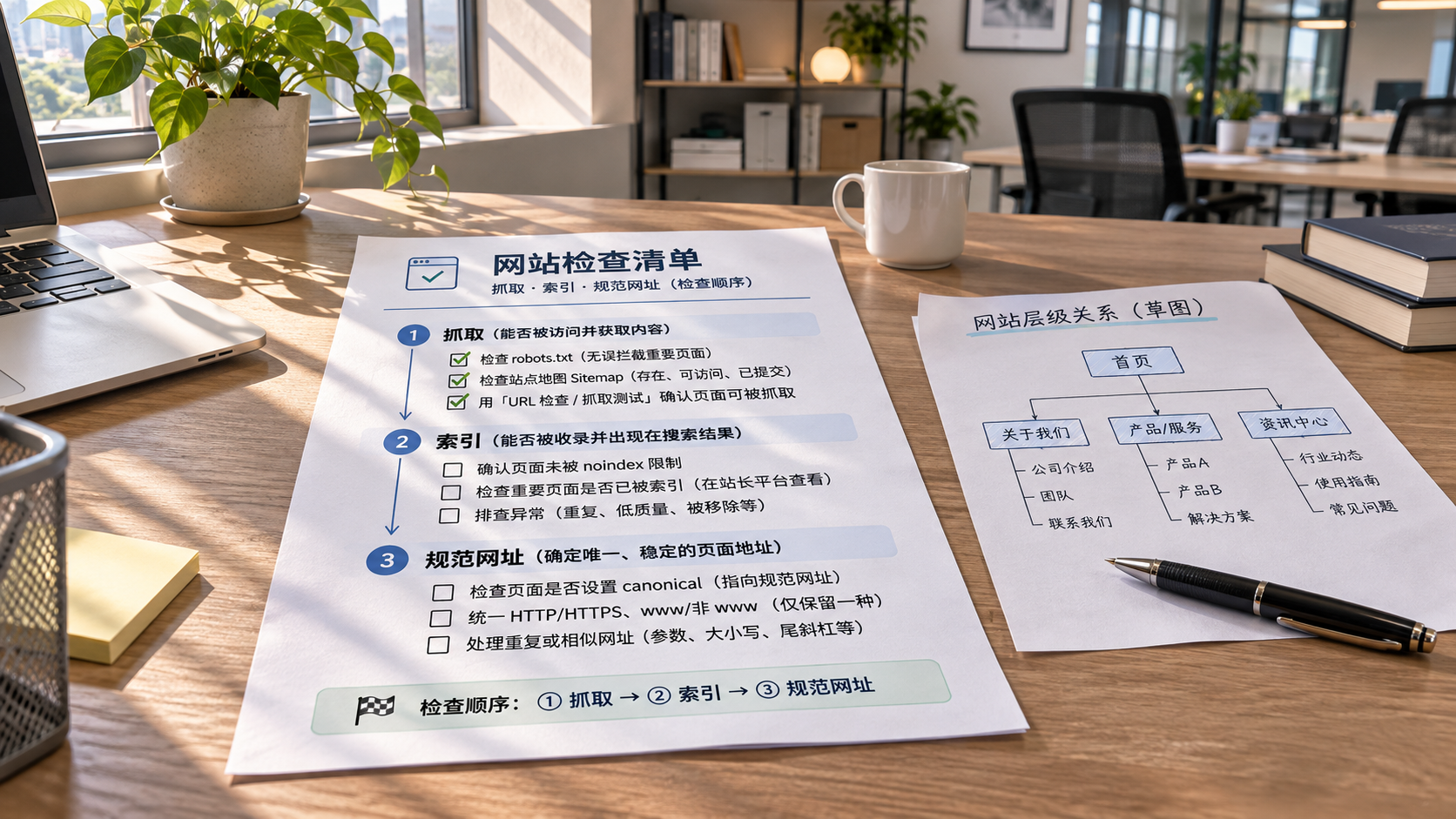
 Website SEO Checklist: Review Everything from Crawling and Indexing to Page Content
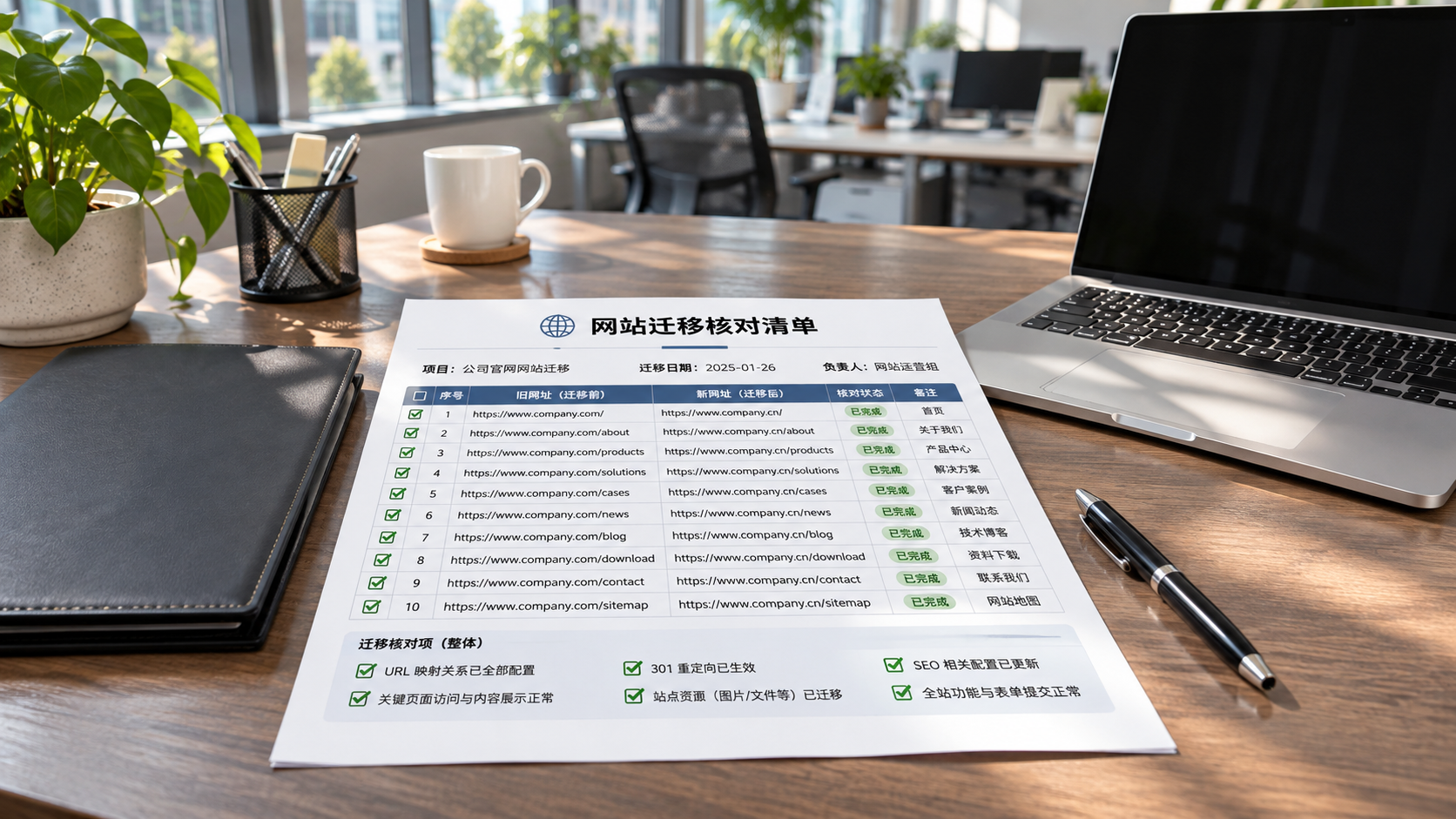
 How to Write an SEO Brief for a Website Redesign: Migration and Acceptance Checklist
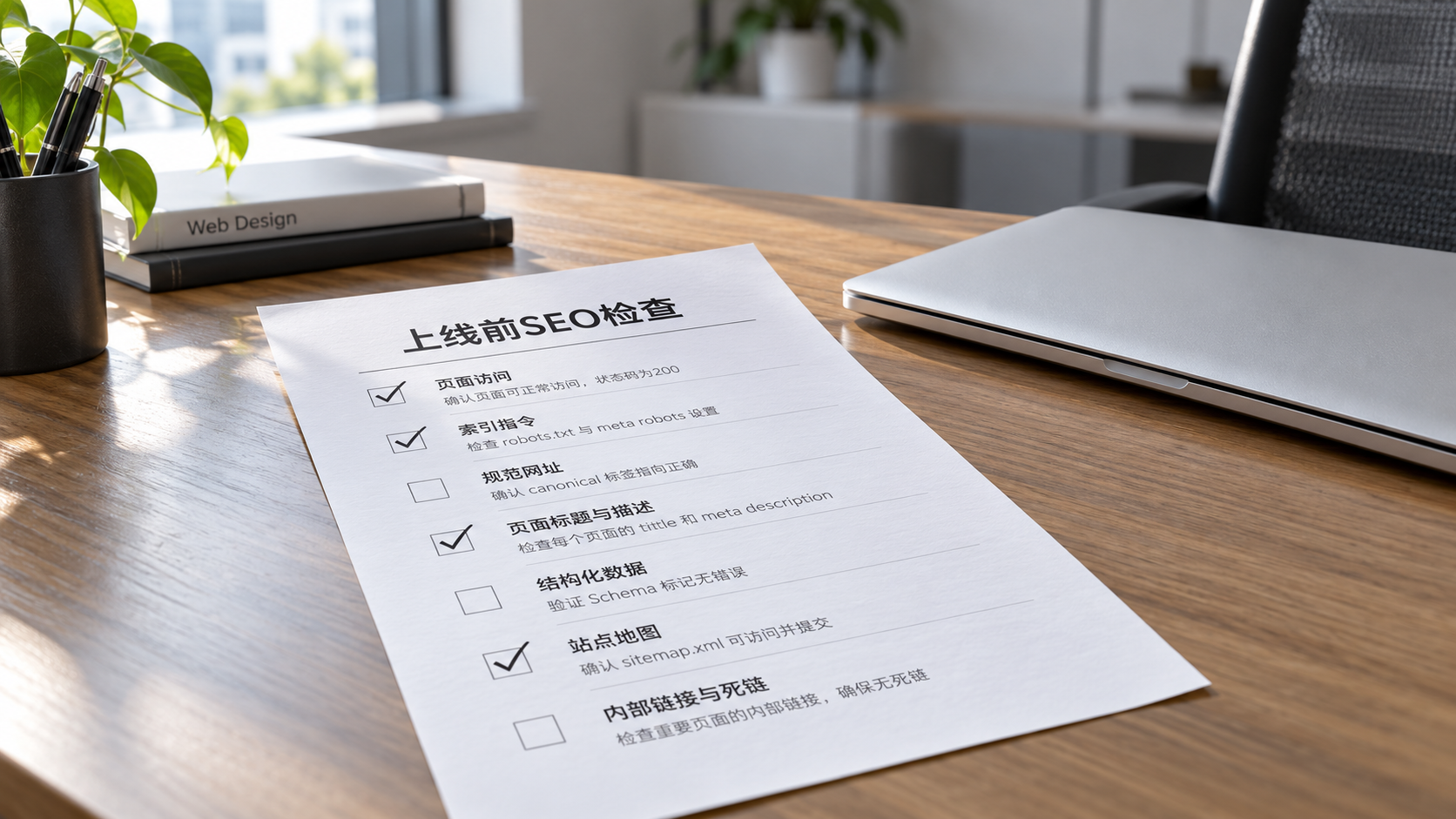
 Before launching a new website, how can you use an SEO checklist to identify indexing barriers?
Related Products
 Yiyingbao SaaS Intelligent Website Building and Marketing SystemYiyingbao SaaS Intelligent Website Building and Marketing System, AI-powered no-code website building, rapid creation of multilingual B2B international websites in 10 minutes, global server acceleration, AI-powered SEO optimization, helping businesses connect efficiently with global markets. The perfect integration of technology and operation makes building an international trade website remarkably simple
 AI+SEM Intelligent Advertising Marketing SystemAI+SEM drives intelligent ad creation, empowering full-funnel precision advertising marketing. The system automatically generates weekly/monthly reports, AI recommends keywords and target countries, monitors core metrics in real-time with intelligent alerts, and enables one-click high-conversion ad solutions to help quickly acquire customers and improve ROI.
 AI+SEO Dual-Engine System Optimization ServicesYiyingbao’s AI+SEO dual-engine optimization system helps foreign trade enterprises acquire high-quality organic traffic through AI-powered keyword research, content generation, and comprehensive technical optimization, significantly improving search rankings and conversion rates.
 AI+SNS Social Media Marketing SystemYingbao AI+SNS Social Media Marketing System - Precision social capture for the social media era. Supports one-click content synchronization across major platforms like Facebook and LinkedIn. AI intelligently rewrites posts for enhanced relevance. 24/7 AI customer service and user profiling analysis empower businesses to efficiently expand into global markets.
 AI+SEO营销解决方案易营宝AI+SEO营销解决方案,通过AI批量写作、智能生成TDK、精准关键词扩词等功能,全面优化网站SEO效果,提升流量与转化率。助力企业构建高效智能网站新生态。
 AI+SEM Advertising Marketing SolutionsAI+SEM Advertising Marketing Solution leverages AI technology to deeply empower SEM ad campaigns. It automatically generates weekly/monthly reports using AI, presenting account data across multiple dimensions for comprehensive insights into campaign performance and trends. The system precisely recommends keywords and target countries, intelligently generates high-conversion ad copy, and enables one-click activation of efficient campaign plans to help businesses rapidly acquire customers. Simultaneously, it monitors core metrics in real time, intelligently identifies abnormal fluctuations, and issues timely alerts to ensure stable, high-return advertising results.
 Domain Name ServicesEasyWin provides professional domain name services, including intelligent queries, one-stop registration, brand protection, and full lifecycle management, helping businesses build a digital brand image.
 EasyOperate B2C Cross-Border E-Commerce Platform & Independent WebsiteEasyStore B2C Cross-border E-commerce Independent Store is an intelligent website building and cross-border e-commerce integrated solution independently developed by EasyStore Information Technology (Beijing) Co., Ltd. The system is specially designed for small and medium-sized as well as large export enterprises, integrating 'website building, operation, marketing, advertising, and conversion' into one, helping enterprises quickly establish cross-border e-commerce independent stores to achieve brand globalization and global sales growth.
The platform supports multiple languages, multiple currencies, and multi-channel marketing, with built-in AI intelligent translation and SEO optimization systems, suitable for mainstream markets such as Southeast Asia, Europe and America, Latin America, and the Middle East, assisting Chinese manufacturing enterprises in efficiently deploying international e-commerce strategies. SSL证书易营宝提供专业SSL安全证书服务,包括单域名和泛域名证书,确保网站数据传输加密、身份验证和完整性保护,助力企业建立安全可信的在线业务环境。









