









- Fujian Announces the First Batch of Provincial-Level Cross-Border E-Commerce Industrial Parks and Key Brands for CultivationNov 14, 2026View details
- Amazon Global Store Announces the Launch of the 2026 Black Friday Global Shopping SeasonNov 14, 2026View details
- CCTV.com Examines APEC’s Role in China’s Foreign TradeNov 12, 2026View details
- China’s Tariff Commission of the State Council Adjusts Additional Tariffs on U.S. Goods: 24% Tariff Suspended for Two MonthsNov 10, 2026View details
- APEC Shenzhen Spotlight: Cross-Border E-Commerce Orders Promote Asia-Pacific Trade and Economic CooperationNov 08, 2026View details
- China-Europe Railway Express and CIIE Hold Business Matchmaking Event, Focusing on Cross-Border E-commerce B2B ExportsNov 07, 2026View details
How to Write an SEO Brief for a Website Redesign: Migration and Acceptance Checklist
How can you balance project timelines and search traffic during a website redesign? For an SEO requirements document for a website redesign, such as “cahier des charges seo refonte d'une site,” the project lead’s real challenge is not to write a few more optimization recommendations, but to ensure that the design, development, content, and marketing teams agree on the migration scope, delivery responsibilities, and acceptance criteria. Getting the pages to load is just the starting point. Whether existing traffic can reach the right new pages is what is most easily overlooked at launch.
Before work begins, document the existing site assets and the scope of the redesign
Don’t start the requirements document with “the new homepage needs to look better.” First confirm whether the redesign involves the visual design, content management system, domain, directory structure, or several of these at once. If neither the domain nor URL paths are changing, the focus may be on page content and technical implementation. If the domain is changing and multilingual directories are being restructured at the same time, migration testing and a post-launch monitoring period should be planned separately.
At a minimum, the existing-site inventory should cover current URLs, page types, titles, status codes, canonical URLs, and pages that generate organic search visits or inquiries. Verify the data using a combination of site crawl results, Google Search Console, web analytics tools, and records from the business team. Don’t look only at recent traffic: seasonal products and technical documentation with long purchasing cycles may also be worth retaining.
For pages scheduled for deletion, the requirements document should record the reason and how each page will be handled. For example, if a discontinued product has a replacement model, visitors can be directed to the relevant page. If there is no suitable replacement content, don’t redirect every page to the homepage just to eliminate errors. The business owner should confirm replacement options, the SEO specialist should assess search impact, and the developer should implement the changes—so there is no debate over who makes the decision on launch day.
Treat the migration map as a deliverable, not a last-minute launch attachment
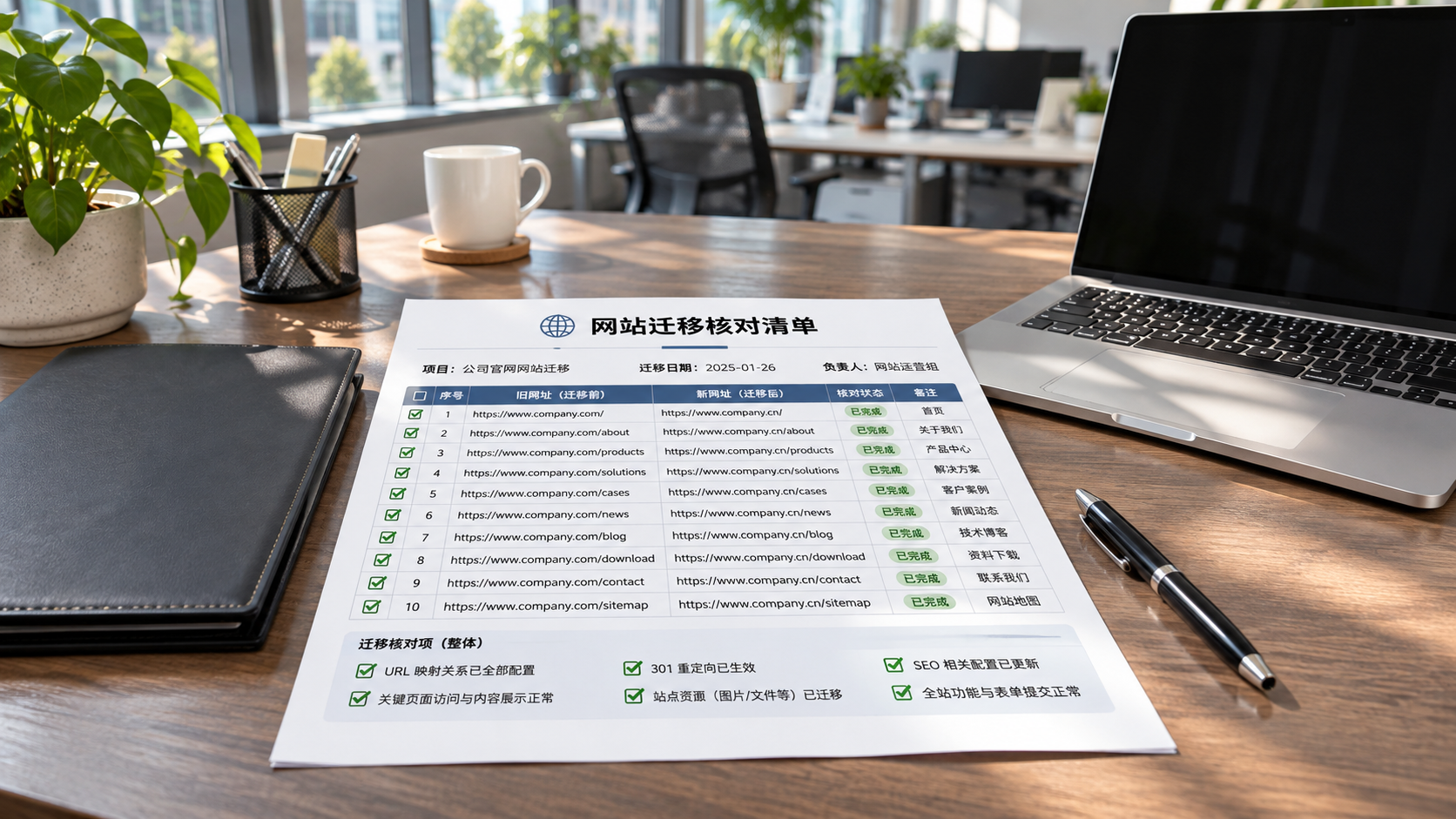
The migration map should list each old URL, new URL, page type, handling method, owner, and test result. Preserve existing paths wherever possible. When a URL must change, use a permanent 301 redirect from the old address directly to the most relevant new address. Avoid redirect chains, and don’t send multiple old pages with different user intents indiscriminately to the homepage.
The requirements document should also specify URL conventions: how to handle capitalization, trailing slashes, parameters, pagination, and canonical URLs. Redirects, internal links, canonical tags, and the sitemap should all point to consistent target URLs. Pages that have been permanently removed without suitable replacement content can return a 404 or 410 status code. Choose the appropriate option based on the actual maintenance approach; not every 404 should be treated as a fault.
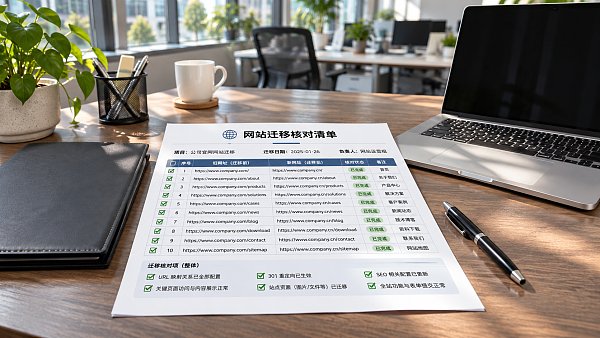
For international websites, language versions must be checked separately. Map the corresponding Chinese, English, and other-language pages individually; don’t redirect all old product detail pages to the homepage in another language on the new site. If you use hreflang, check the language and region codes, the relationships between pages, and the final URLs. Don’t invent a corresponding URL for a page that has no translation. Finalize multilingual URL paths before handing them over for translation and development in parallel; this will greatly reduce rework.
Write technical requirements as verifiable actions
“Search-engine-friendly pages” is not an acceptance criterion. The requirements document should specify whether important content and links can be accessed, whether pages return the correct status codes, whether titles and descriptions can be edited for each page, and who generates canonical tags, structured data, and the sitemap. Search engine access to the development environment should be restricted. At launch, remove any access restrictions, robots rules, and noindex tags that should not remain, checking each one individually.
After the design is approved, check the actual pages as well. If product specifications, use cases, and inquiry options exist only in images, they will be difficult for users to access and for the team to maintain. Key content loaded via scripts should be tested to confirm that search engines can access it. Don’t specify performance requirements simply as “loads fast.” Instead, select representative pages and test environments, record Core Web Vitals before and after launch, and assign responsibility for fixing any issues that fail to meet the requirements.
If the redesign involves changes to servers located in mainland China, the domain, or the hosting provider, include an ICP filing review in the project schedule. Whether an ICP filing, change, or hosting-provider connection procedure is required depends on the specific website and the requirements of the relevant authorities and hosting provider. Any applicable licensing requirements for commercial operations should be verified separately. If you need help organizing documents and reviewing the process, you can learn about the Domestic ICP Filing Service Number, but do not treat review times as a guaranteed launch date.
Conduct acceptance testing twice: check risks before launch and real-world signals afterward
Before launch, test at least the homepage, main category pages, key product pages, articles, and templates for each language. Verify high-traffic and high-inquiry pages, along with critical redirects, individually. Checks should cover not only page display, but also status codes, titles, canonical tags, internal links, form submissions, and mobile usability. Passing tests in the staging environment does not replace retesting in production.
After launch, submit the updated sitemap as soon as possible, check that important old URLs redirect as specified in the migration map, and continue monitoring crawling, indexing, and organic search performance. The requirements document should define the monitoring period, reporting frequency, escalation path for issues, and rollback conditions in advance. For example, if core pages become inaccessible or inquiry forms stop working, specify who decides whether to pause the release and who is responsible for restoring the site. Short-term fluctuations in rankings and traffic should not automatically be treated as proof of migration failure, but neither should they be used as a reason to ignore issues.
Don’t overlook acceptance testing for the marketing journey. Old ad landing pages, social media links, email links, and analytics events may still point to the previous URLs. Even if the pages redirect successfully, form attribution or conversion tracking may be interrupted. For projects that combine website development, SEO, and advertising operations, you can draw on the collaboration model of an integrated service such as 易营宝. Put URL migration, campaign links, and inquiry tracking on the same launch checklist instead of troubleshooting them separately after traffic problems arise.
Before finalizing the requirements document, ask the development, content, and marketing leads to sign off individually: Can they follow the plan? Who will supply missing materials? Which tasks will be affected by delays? In particular, it is better to spend more time checking the migration map and rollback plan during the design phase than to make these decisions on the day the domain is switched.
Related Articles
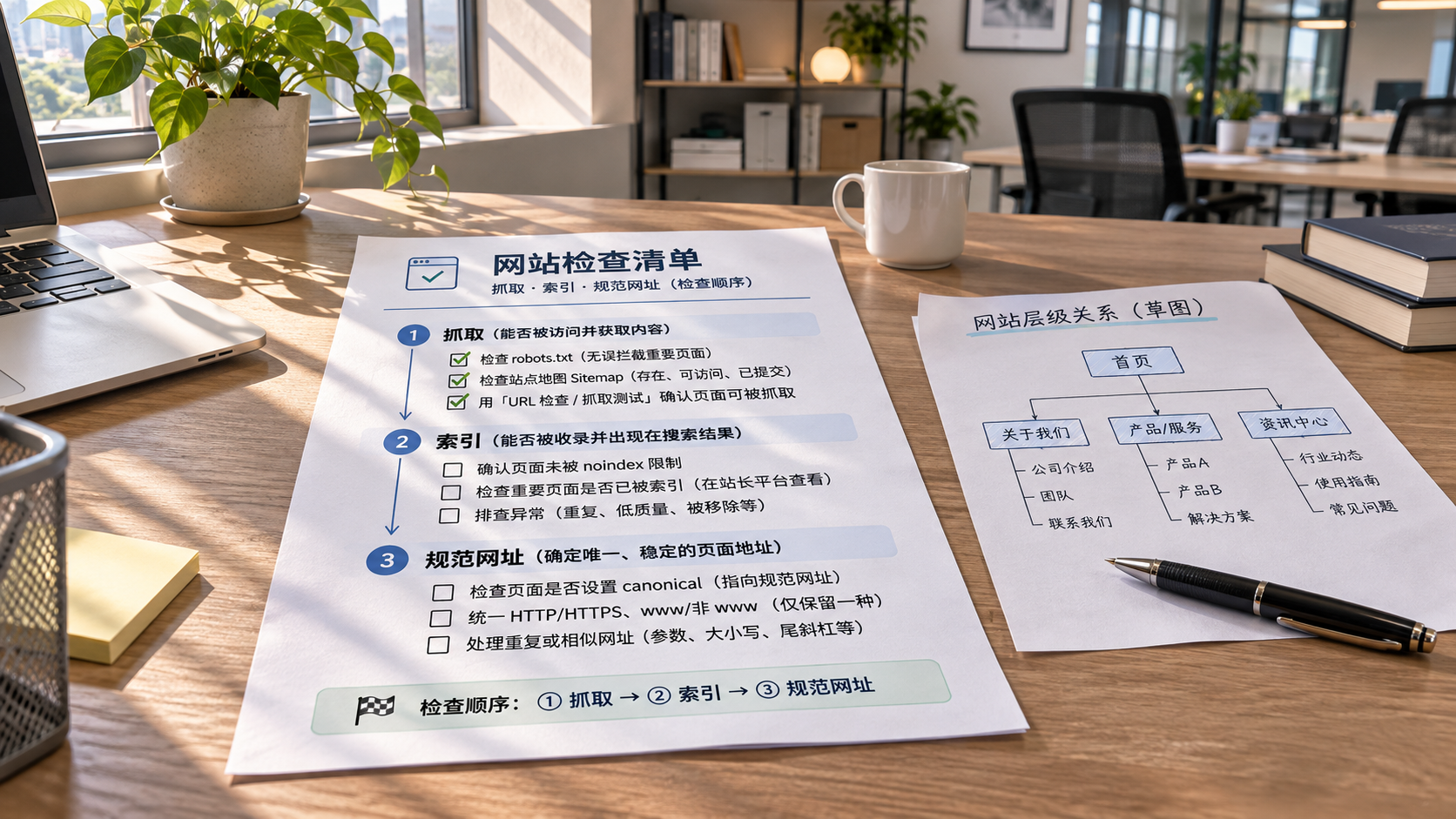
 Website SEO Checklist: Review Everything from Crawling and Indexing to Page Content
 How to Write an SEO Brief for a Website Redesign: Migration and Acceptance Checklist
 Before launching a new website, how can you use an SEO checklist to identify indexing barriers?

Related Products
 Yiyingbao SaaS Intelligent Website Building and Marketing SystemYiyingbao SaaS Intelligent Website Building and Marketing System, AI-powered no-code website building, rapid creation of multilingual B2B international websites in 10 minutes, global server acceleration, AI-powered SEO optimization, helping businesses connect efficiently with global markets. The perfect integration of technology and operation makes building an international trade website remarkably simple
 AI+SEM Intelligent Advertising Marketing SystemAI+SEM drives intelligent ad creation, empowering full-funnel precision advertising marketing. The system automatically generates weekly/monthly reports, AI recommends keywords and target countries, monitors core metrics in real-time with intelligent alerts, and enables one-click high-conversion ad solutions to help quickly acquire customers and improve ROI.
 AI+SEO Dual-Engine System Optimization ServicesYiyingbao’s AI+SEO dual-engine optimization system helps foreign trade enterprises acquire high-quality organic traffic through AI-powered keyword research, content generation, and comprehensive technical optimization, significantly improving search rankings and conversion rates.
 AI+SNS Social Media Marketing SystemYingbao AI+SNS Social Media Marketing System - Precision social capture for the social media era. Supports one-click content synchronization across major platforms like Facebook and LinkedIn. AI intelligently rewrites posts for enhanced relevance. 24/7 AI customer service and user profiling analysis empower businesses to efficiently expand into global markets.
 AI+SEO营销解决方案易营宝AI+SEO营销解决方案,通过AI批量写作、智能生成TDK、精准关键词扩词等功能,全面优化网站SEO效果,提升流量与转化率。助力企业构建高效智能网站新生态。
 AI+SEM Advertising Marketing SolutionsAI+SEM Advertising Marketing Solution leverages AI technology to deeply empower SEM ad campaigns. It automatically generates weekly/monthly reports using AI, presenting account data across multiple dimensions for comprehensive insights into campaign performance and trends. The system precisely recommends keywords and target countries, intelligently generates high-conversion ad copy, and enables one-click activation of efficient campaign plans to help businesses rapidly acquire customers. Simultaneously, it monitors core metrics in real time, intelligently identifies abnormal fluctuations, and issues timely alerts to ensure stable, high-return advertising results.
 Domain Name ServicesEasyWin provides professional domain name services, including intelligent queries, one-stop registration, brand protection, and full lifecycle management, helping businesses build a digital brand image.
 EasyOperate B2C Cross-Border E-Commerce Platform & Independent WebsiteEasyStore B2C Cross-border E-commerce Independent Store is an intelligent website building and cross-border e-commerce integrated solution independently developed by EasyStore Information Technology (Beijing) Co., Ltd. The system is specially designed for small and medium-sized as well as large export enterprises, integrating 'website building, operation, marketing, advertising, and conversion' into one, helping enterprises quickly establish cross-border e-commerce independent stores to achieve brand globalization and global sales growth.
The platform supports multiple languages, multiple currencies, and multi-channel marketing, with built-in AI intelligent translation and SEO optimization systems, suitable for mainstream markets such as Southeast Asia, Europe and America, Latin America, and the Middle East, assisting Chinese manufacturing enterprises in efficiently deploying international e-commerce strategies. SSL证书易营宝提供专业SSL安全证书服务,包括单域名和泛域名证书,确保网站数据传输加密、身份验证和完整性保护,助力企业建立安全可信的在线业务环境。









