









- The U.S. has ended the $800 de minimis exemption for non-postal shipments; express courier packages must be formally declared.Nov 16, 2026View details
- ASEAN Signs Digital Economy Framework Agreement, Moving Toward Harmonized Cross-Border E-Commerce RulesNov 15, 2026View details
- Shenzhen Becomes the First City in Mainland China to Exceed RMB 5 Trillion in Foreign TradeNov 15, 2026View details
- Fujian Announces the First Batch of Provincial-Level Cross-Border E-Commerce Industrial Parks and Key Brands for CultivationNov 14, 2026View details
- Amazon Global Store Announces the Launch of the 2026 Black Friday Global Shopping SeasonNov 14, 2026View details
- CCTV.com Examines APEC’s Role in China’s Foreign TradeNov 12, 2026View details
Should standalone website translation be charged by language or by page?
Should Independent Website Translation Be Charged by Language or by Page?
The pricing for independent website translation may seem to be simply a choice between charging “by language” or “by page,” but it actually involves budget criteria, website architecture, long-term maintenance costs, and whether overseas customer acquisition can truly get underway. During financial approval, it is easy to notice a quotation with a lower total price while overlooking whether it includes additional product pages, repeated fields within pages, SEO titles and descriptions, multilingual image text, technical deployment, and subsequent revisions. Adding these items after the website goes live is often more expensive and harder to control than planning for them upfront.
For manufacturing companies, foreign trade companies, or cross-border brands preparing to expand overseas, independent website translation is not as simple as converting Chinese into a foreign language sentence by sentence. It must serve the search habits, procurement terminology, and conversion paths of different markets. For example, the way “specifications,” “lead time,” “certifications,” and “after-sales service scope” for industrial equipment are organized may differ across English, German, and Japanese pages. If content is mechanically translated based on the Chinese page structure, it may be complete but may not necessarily generate inquiries effectively.
The Two Pricing Methods Essentially Purchase Different Delivery Scopes
Language-based pricing is generally suitable for projects where the main website content is already relatively mature, the number of pages is fairly fixed, and the company wants to complete versions for several markets at once. Service providers may use an “English website,” “Russian website,” or “Arabic website” as the pricing unit, and the quotation may include basic page translation, language package configuration, and some on-site content replacement. This approach is more approval-friendly: the budget is straightforward, and the project start and end points are clear. However, it is essential to clarify which pages are covered by “one language,” whether there is a quantity limit on product detail pages, and whether additional articles, downloadable materials, and campaign pages are charged separately.
Page-based pricing is more suitable for companies whose content is still being continuously adjusted, particularly those with many product models, frequent additions of marketing landing pages, or only a small number of key products promoted in different countries. Its advantage is that investment can be made in stages: translate the homepage, core product pages, solution pages, and inquiry pages first, then expand the content after validating market feedback. The issue is that a “page” is the billing unit most likely to cause differences in interpretation. Does one product detail page count as one page, or are specification tables, FAQs, downloadable files, and text in images all charged separately? If the quotation does not break these down, the risk of subsequent additional charges will be relatively high.
What Really Affects Costs Is Often Not the Number of Languages
Even when translating into English, the workload for a corporate website and a marketing-focused independent website can differ significantly. The former may only require processing a company profile and a limited product catalog; the latter also involves keyword planning, title hierarchy, rewriting product selling points, form fields, localized units of measurement, advertising landing page content, and internal links between different pages. If the website is intended for Google SEO or advertising conversion, pricing based solely on character count or page count often cannot reflect the actual quality required.
Language difficulty should not be generalized either. English content is relatively easier to establish a basic workflow for, but industries with high technical barriers still require terminology review; Arabic requires attention to right-to-left layout adaptation; markets such as Japanese and German generally have higher requirements for wording precision and information completeness; Russian, French, and Spanish also face regional differences. The finance department does not need to assess the merits of each language on behalf of business departments, but it should require service providers to specify in quotations whether translation, proofreading, localization rewriting, and technical adaptation are included separately.
When Approving a Quotation, Include at Least These Items in the Scope
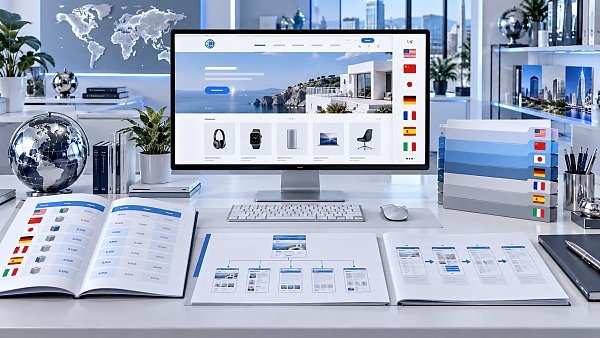
When comparing independent website translation quotations, it is not advisable to look only at the unit price. A more effective approach is to require suppliers to provide a page list specifying how fixed pages, product pages, news pages, forms, pop-ups, footers, SEO metadata, and downloadable materials are each counted. In particular, confirm the rules for handling dynamic content. For example, if the number of products increases from 50 to 200, is the additional portion calculated by template, by page, or by word count? After Chinese content is updated, does the multilingual version include one synchronized update?
Work beyond translation should also be listed separately. Multilingual URL rules, language-switching logic, search engine indexing settings, and on-site font and layout adaptation all fall under website development and technical configuration and are not automatically included in translation fees. If the supplier only delivers documents and the website team uploads them separately, the company must also evaluate internal staffing input and the risk of content mismatches. Delays in many projects are not caused by unfinished translations, but by unclear handover responsibilities among content, design, and development teams.
From a management perspective, the budget for a multilingual website should, like other digital projects, first define cost objects and then define deliverables that can be accepted. For teams that need to establish a framework for cost allocation and input-output analysis, the financial analysis approach discussed in Research on Optimizing Financial Analysis of Highway Maintenance Enterprises from a Big Data-Driven Perspective can also provide an insight: do not only record total expenditure; content development, technical implementation, promotional traffic acquisition, and ongoing maintenance should also be analyzed separately. The industries differ, but the logic for determining whether investment is out of control is the same.
Do Not Treat “Multilingual” as a One-Time Translation Purchase
If a company’s objective is only to display information, language-based packages are generally more convenient; if the objective is to acquire inquiries, support advertising, and conduct long-term organic search, a contract structure of “basic language package + additional key pages” is more advisable. First determine the core pages and technical configurations that must go live in the initial phase, then establish a separate budget pool for newly added products, content optimization, or expansion into new markets. This avoids translating a large number of low-value pages all at once while preventing repeated approval processes caused by temporary additional requirements.
Yiyingbao Information Technology (Beijing) Co., Ltd. has long provided integrated services including intelligent website development, multilingual website development, SEO optimization, advertising placement, and overseas social media operations. For companies that need to consider website development, translation, and overseas promotion simultaneously, the value of this kind of integrated delivery does not lie in placing all projects into one package, but in enabling content language, site structure, and customer acquisition channels to follow the same plan, reducing subsequent repetitive revisions. Its cloud-based intelligent website development and AI marketing capabilities for different overseas markets are also better suited to centrally managing multilingual content as a website continues to expand.
Ultimately, whether to charge by language or by page has no standard answer independent of project conditions. Before approval, focus on three questions: how many accessible pages need to go live in the current phase, which localization and technical tasks are already included, and how much content will be added over the next six to twelve months? By including these three items in the quotation appendix, the cost of independent website translation can shift from “a vague total price” to a budget that is comparable, verifiable, and able to withstand subsequent changes.
Related Articles
 Do Domain Restrictions on Free Website Builders Affect Foreign Trade Businesses?
 What Customization Requirements Can a Global Website-Building SaaS Platform Meet?
 How Can You Tell Whether a Service Provider Can Improve Your Foreign Trade Website’s Conversion Rate?
Related Products
 Yiyingbao SaaS Intelligent Website Building and Marketing SystemYiyingbao SaaS Intelligent Website Building and Marketing System, AI-powered no-code website building, rapid creation of multilingual B2B international websites in 10 minutes, global server acceleration, AI-powered SEO optimization, helping businesses connect efficiently with global markets. The perfect integration of technology and operation makes building an international trade website remarkably simple
 AI+SEM Intelligent Advertising Marketing SystemAI+SEM drives intelligent ad creation, empowering full-funnel precision advertising marketing. The system automatically generates weekly/monthly reports, AI recommends keywords and target countries, monitors core metrics in real-time with intelligent alerts, and enables one-click high-conversion ad solutions to help quickly acquire customers and improve ROI.
 AI+SEO Dual-Engine System Optimization ServicesYiyingbao’s AI+SEO dual-engine optimization system helps foreign trade enterprises acquire high-quality organic traffic through AI-powered keyword research, content generation, and comprehensive technical optimization, significantly improving search rankings and conversion rates.
 AI+SNS Social Media Marketing SystemYingbao AI+SNS Social Media Marketing System - Precision social capture for the social media era. Supports one-click content synchronization across major platforms like Facebook and LinkedIn. AI intelligently rewrites posts for enhanced relevance. 24/7 AI customer service and user profiling analysis empower businesses to efficiently expand into global markets.
 AI+SEO营销解决方案易营宝AI+SEO营销解决方案,通过AI批量写作、智能生成TDK、精准关键词扩词等功能,全面优化网站SEO效果,提升流量与转化率。助力企业构建高效智能网站新生态。
 AI+SEM Advertising Marketing SolutionsAI+SEM Advertising Marketing Solution leverages AI technology to deeply empower SEM ad campaigns. It automatically generates weekly/monthly reports using AI, presenting account data across multiple dimensions for comprehensive insights into campaign performance and trends. The system precisely recommends keywords and target countries, intelligently generates high-conversion ad copy, and enables one-click activation of efficient campaign plans to help businesses rapidly acquire customers. Simultaneously, it monitors core metrics in real time, intelligently identifies abnormal fluctuations, and issues timely alerts to ensure stable, high-return advertising results.
 Domain Name ServicesEasyWin provides professional domain name services, including intelligent queries, one-stop registration, brand protection, and full lifecycle management, helping businesses build a digital brand image.
 EasyOperate B2C Cross-Border E-Commerce Platform & Independent WebsiteEasyStore B2C Cross-border E-commerce Independent Store is an intelligent website building and cross-border e-commerce integrated solution independently developed by EasyStore Information Technology (Beijing) Co., Ltd. The system is specially designed for small and medium-sized as well as large export enterprises, integrating 'website building, operation, marketing, advertising, and conversion' into one, helping enterprises quickly establish cross-border e-commerce independent stores to achieve brand globalization and global sales growth.
The platform supports multiple languages, multiple currencies, and multi-channel marketing, with built-in AI intelligent translation and SEO optimization systems, suitable for mainstream markets such as Southeast Asia, Europe and America, Latin America, and the Middle East, assisting Chinese manufacturing enterprises in efficiently deploying international e-commerce strategies. SSL证书易营宝提供专业SSL安全证书服务,包括单域名和泛域名证书,确保网站数据传输加密、身份验证和完整性保护,助力企业建立安全可信的在线业务环境。









