









- Fujian Announces the First Batch of Provincial-Level Cross-Border E-Commerce Industrial Parks and Key Brands for CultivationNov 14, 2026View details
- Amazon Global Store Announces the Launch of the 2026 Black Friday Global Shopping SeasonNov 14, 2026View details
- CCTV.com Examines APEC’s Role in China’s Foreign TradeNov 12, 2026View details
- China’s Tariff Commission of the State Council Adjusts Additional Tariffs on U.S. Goods: 24% Tariff Suspended for Two MonthsNov 10, 2026View details
- APEC Shenzhen Spotlight: Cross-Border E-Commerce Orders Promote Asia-Pacific Trade and Economic CooperationNov 08, 2026View details
- China-Europe Railway Express and CIIE Hold Business Matchmaking Event, Focusing on Cross-Border E-commerce B2B ExportsNov 07, 2026View details
What Customization Requirements Can a Global Website-Building SaaS Platform Meet?
When preparing to launch an overseas website, businesses need to consider more than whether the pages will look good. They also need to determine how multiple languages will be managed, whether inquiry data can be integrated with existing systems, and whether future marketing activities will be constrained. Customization of global website-building SaaS platforms typically spans several areas, including pages, business processes, and marketing integrations, but platforms vary significantly in how open they are. The key to choosing a platform is to clearly distinguish between “configurable” and “customizable through development.”
Start by determining whether your requirements need configuration or development
Website-building SaaS platforms generally use standardized systems and meet common requirements through templates, components, and admin panels. Adjusting navigation, creating product sections, and configuring forms are typically handled through visual configuration. Changing the approval logic after a form is submitted, or enabling real-time data exchange between multiple systems, may require API integrations and custom development.
The difference between the two directly affects implementation timelines, costs, and ongoing maintenance. Technical evaluators can start by listing essential features, desired features, and future requirements, then ask the vendor to explain how each will be implemented: through direct configuration in the admin panel, integration via an existing interface, or additional development. In particular, confirm how custom features will be maintained after platform upgrades to avoid a situation where they work at launch but become difficult to iterate on a few months later.
What can be customized on a global website-building SaaS platform?
Multilingual support and localization: more than copying a page
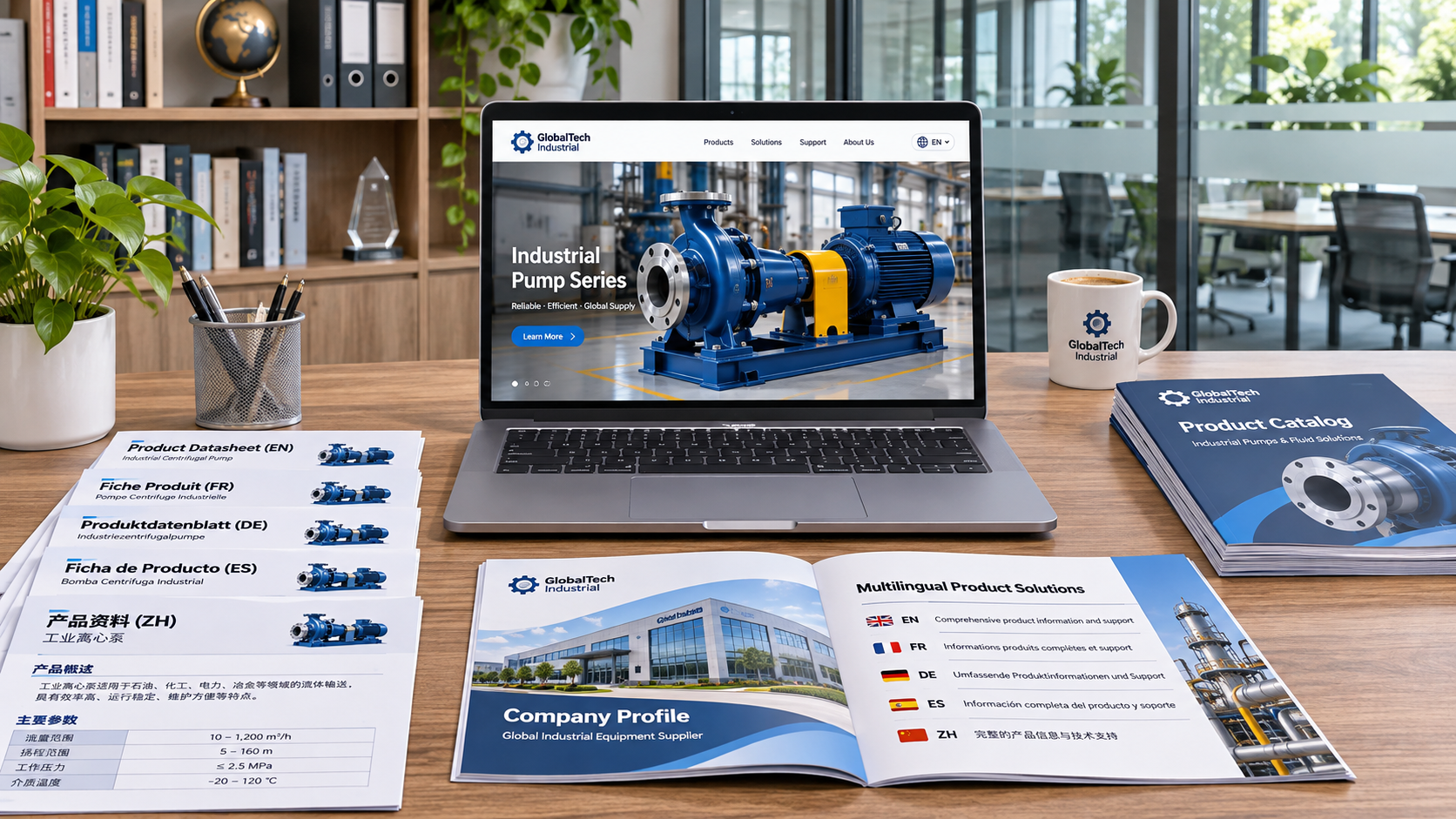
When serving multiple markets, a business may need to organize its website by language or region, for example, by providing different content for English-, German-, and Arabic-speaking visitors. During evaluation, confirm which language display options the platform supports, whether each language can have its own navigation, product descriptions, SEO information, and contact details, and whether the layout supports right-to-left reading.
Pay attention to domain and URL strategies as well: will language versions use separate domains, subdomains, or subdirectories, and can canonical links and hreflang tags be configured? Automatic redirects should also be used with care to avoid preventing visitors from switching languages or making it difficult for search engines to discover other versions. Who provides the translations, and how are items requiring translation identified when the source text is updated? These questions also affect day-to-day operating costs.
Pages and content models: from adapting displays to extending structures
A brand website may emphasize visual presentation, while an export-oriented manufacturer may focus more on product specifications, applications, and downloadable materials. Beyond colors, fonts, and page layouts, the technical team should check whether it can adjust the hierarchy of sections, create product categories, add specification fields, and import and update content in bulk.
More extensive customization may include custom components, scripts, and styles. Clarify the limits of the available permissions: can code be applied to a single page or the entire site? Does it affect the mobile display? Will it be overwritten during platform upgrades? If many pages depend on temporary code patches, the ongoing maintenance burden may outweigh the benefits of rapid website creation.
Business functions: different priorities for inquiry-generation sites and cross-border stores
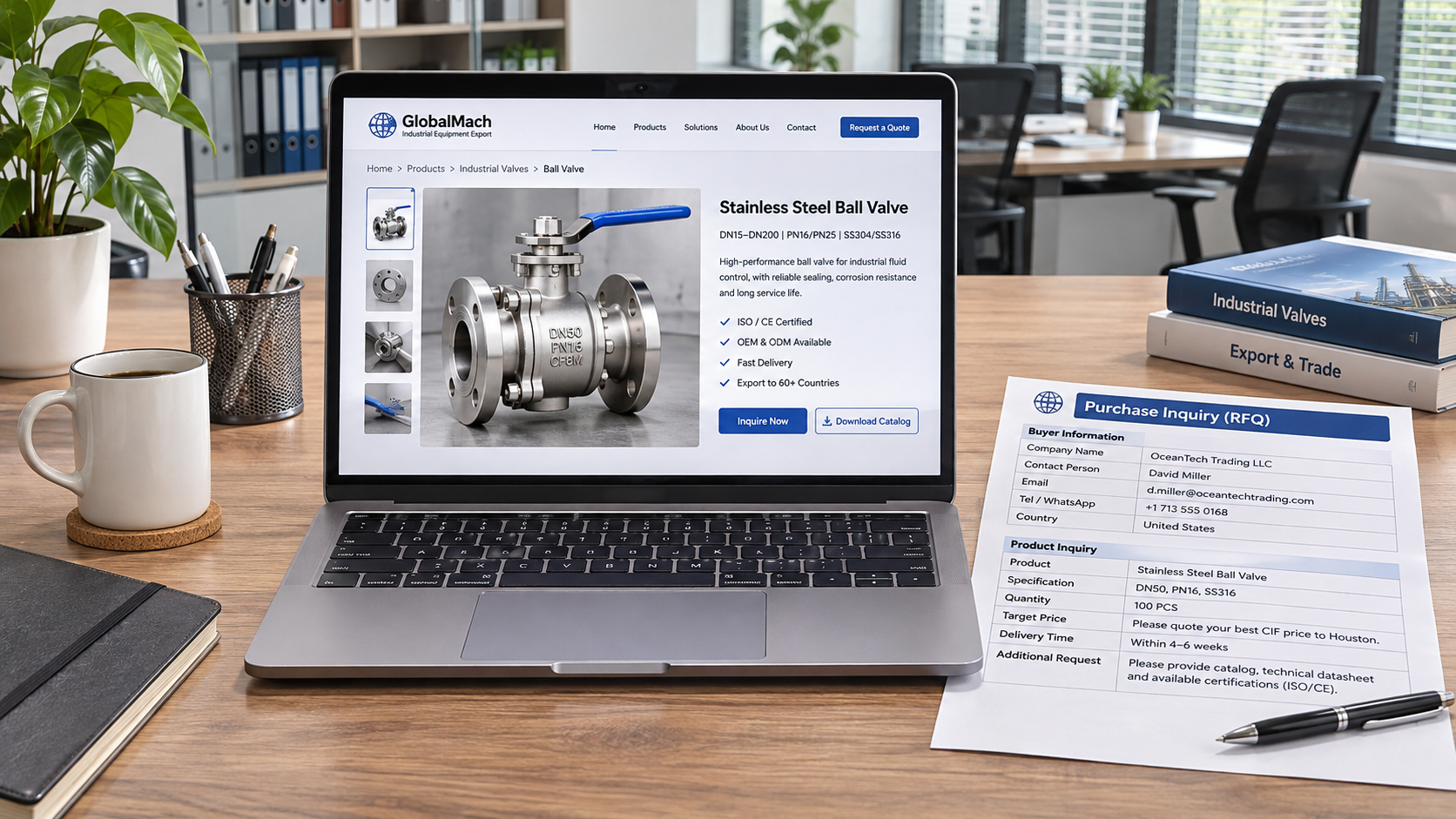
Common requirements for B2B websites include setting up inquiry forms by product or region, collecting purchasing information, and assigning leads to the appropriate sales representatives. During evaluation, test required-field validation, file uploads, spam prevention, notification methods, and data exports. If the business already uses a CRM, also confirm field mapping, duplicate lead handling, and procedures for manually entering data if synchronization fails.
B2C cross-border stores require further verification of capabilities such as product specifications, inventory, shipping fees, taxes, and order management. Confirm whether payment channels, settlement currencies, and logistics services cover the target markets based on the providers that can actually be integrated and the regions they serve. Do not assume that complex promotions, regional tax rules, or internal inventory policies can be implemented directly just because a demo site shows a shopping flow.
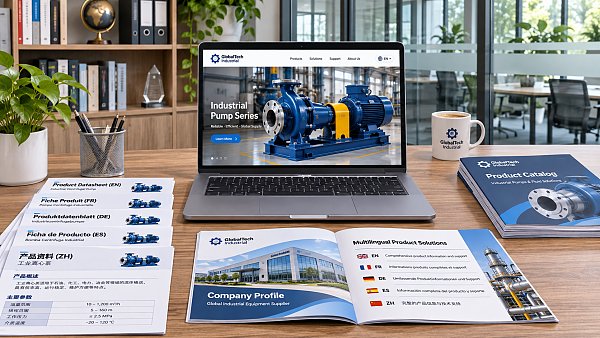
Marketing and data integration: connecting the website to the customer acquisition journey
After a website goes live, marketing teams typically need to connect traffic analytics, ad conversion tracking, and social media channels. Technical evaluation should cover whether the platform supports analytics tools and advertising event codes, whether it can distinguish key actions such as page views and form submissions, and whether data can be traced back by channel or landing page.
For SEO, check the level of control over page titles, descriptions, URLs, redirects, sitemaps, and robots settings, and verify that page content can be crawled by search engines. Content for AI search also needs a clear page structure and reliable information. However, website-building features alone cannot guarantee indexing, rankings, or visibility in generative search, whether for SEO or GEO.
If the website needs to connect with a CRM, marketing automation, or other internal systems, verify whether APIs, webhooks, or data exports are available, and whether the API documentation, usage limits, authentication methods, and error alerts meet requirements. If no existing interface is available, confirm whether alternative solutions are supported rather than treating “integration is possible” as a complete technical assessment.
Often-overlooked boundaries: security, compliance, and data ownership
Global websites involve collecting visitor information and serving visitors across regions. The technical team needs to assess privacy policies, cookie consent management, and data processing requirements in light of the laws applicable to target markets. The platform’s available configuration options are not the same as the business having fulfilled its compliance obligations; legal and security teams should be involved in the review when necessary.
Also confirm whether accounts support role-based access, activity logs, and revoking access for departing employees. Find out about safeguards for data transmission and storage, backup and recovery methods, and response procedures in the event of service interruptions. The contract should also clarify who owns the domain, whether content and customer data can be exported, which files can be retrieved after the service ends, and what restrictions apply when migrating to another platform.
Turn “customization supported” into a deliverable checklist through a validation round
Rather than relying solely on feature descriptions, a more effective approach is to validate a real business process: create a product page in one language, configure an inquiry form, connect test data, and then check search crawling and the mobile display. If possible, involve content, marketing, and sales staff to verify that the technical implementation fits their day-to-day work.
- Validate essential requirements: List the languages, pages, forms, and system integrations required for launch, and ask the vendor to specify the implementation method and any limitations for each.
- Clarify delivery responsibilities: Specify which items will be configured by the platform and which require the business to provide materials, third-party accounts, or development resources, and agree on acceptance criteria.
- Estimate long-term costs: In addition to initial implementation, consider the work involved in adding languages, maintaining integrations, changing features, and migrating data.
- Keep test results: Record results for scenarios involving permissions, performance, integration failures, and backup recovery to avoid accepting only the normal workflow.
For example, 易营宝 offers intelligent website building, multilingual websites, cross-border stores, and related services such as SEO and advertising. Businesses that need to assess website development alongside overseas marketing coordination can include it among their candidates and define specific testing requirements based on their target markets, business processes, and existing systems. The features, integrations, and delivery boundaries that can actually be customized still need to be confirmed for each project.
The right global website-building SaaS platform is not necessarily the one with the longest feature list. It is the website infrastructure that covers current critical processes, clearly defines the boundaries of future expansion, and enables the team to maintain it over time.
Related Articles
 What Customization Requirements Can a Global Website-Building SaaS Platform Meet?
 How Can You Tell Whether a Service Provider Can Improve Your Foreign Trade Website’s Conversion Rate?
 How can you evaluate the content quality of a Q&A content creation platform?

Related Products
 Yiyingbao SaaS Intelligent Website Building and Marketing SystemYiyingbao SaaS Intelligent Website Building and Marketing System, AI-powered no-code website building, rapid creation of multilingual B2B international websites in 10 minutes, global server acceleration, AI-powered SEO optimization, helping businesses connect efficiently with global markets. The perfect integration of technology and operation makes building an international trade website remarkably simple
 AI+SEM Intelligent Advertising Marketing SystemAI+SEM drives intelligent ad creation, empowering full-funnel precision advertising marketing. The system automatically generates weekly/monthly reports, AI recommends keywords and target countries, monitors core metrics in real-time with intelligent alerts, and enables one-click high-conversion ad solutions to help quickly acquire customers and improve ROI.
 AI+SEO Dual-Engine System Optimization ServicesYiyingbao’s AI+SEO dual-engine optimization system helps foreign trade enterprises acquire high-quality organic traffic through AI-powered keyword research, content generation, and comprehensive technical optimization, significantly improving search rankings and conversion rates.
 AI+SNS Social Media Marketing SystemYingbao AI+SNS Social Media Marketing System - Precision social capture for the social media era. Supports one-click content synchronization across major platforms like Facebook and LinkedIn. AI intelligently rewrites posts for enhanced relevance. 24/7 AI customer service and user profiling analysis empower businesses to efficiently expand into global markets.
 AI+SEO营销解决方案易营宝AI+SEO营销解决方案,通过AI批量写作、智能生成TDK、精准关键词扩词等功能,全面优化网站SEO效果,提升流量与转化率。助力企业构建高效智能网站新生态。
 AI+SEM Advertising Marketing SolutionsAI+SEM Advertising Marketing Solution leverages AI technology to deeply empower SEM ad campaigns. It automatically generates weekly/monthly reports using AI, presenting account data across multiple dimensions for comprehensive insights into campaign performance and trends. The system precisely recommends keywords and target countries, intelligently generates high-conversion ad copy, and enables one-click activation of efficient campaign plans to help businesses rapidly acquire customers. Simultaneously, it monitors core metrics in real time, intelligently identifies abnormal fluctuations, and issues timely alerts to ensure stable, high-return advertising results.
 Domain Name ServicesEasyWin provides professional domain name services, including intelligent queries, one-stop registration, brand protection, and full lifecycle management, helping businesses build a digital brand image.
 EasyOperate B2C Cross-Border E-Commerce Platform & Independent WebsiteEasyStore B2C Cross-border E-commerce Independent Store is an intelligent website building and cross-border e-commerce integrated solution independently developed by EasyStore Information Technology (Beijing) Co., Ltd. The system is specially designed for small and medium-sized as well as large export enterprises, integrating 'website building, operation, marketing, advertising, and conversion' into one, helping enterprises quickly establish cross-border e-commerce independent stores to achieve brand globalization and global sales growth.
The platform supports multiple languages, multiple currencies, and multi-channel marketing, with built-in AI intelligent translation and SEO optimization systems, suitable for mainstream markets such as Southeast Asia, Europe and America, Latin America, and the Middle East, assisting Chinese manufacturing enterprises in efficiently deploying international e-commerce strategies. SSL证书易营宝提供专业SSL安全证书服务,包括单域名和泛域名证书,确保网站数据传输加密、身份验证和完整性保护,助力企业建立安全可信的在线业务环境。









