









- Fujian Announces the First Batch of Provincial-Level Cross-Border E-Commerce Industrial Parks and Key Brands for CultivationNov 14, 2026View details
- Amazon Global Store Announces the Launch of the 2026 Black Friday Global Shopping SeasonNov 14, 2026View details
- CCTV.com Examines APEC’s Role in China’s Foreign TradeNov 12, 2026View details
- China’s Tariff Commission of the State Council Adjusts Additional Tariffs on U.S. Goods: 24% Tariff Suspended for Two MonthsNov 10, 2026View details
- APEC Shenzhen Spotlight: Cross-Border E-Commerce Orders Promote Asia-Pacific Trade and Economic CooperationNov 08, 2026View details
- China-Europe Railway Express and CIIE Hold Business Matchmaking Event, Focusing on Cross-Border E-commerce B2B ExportsNov 07, 2026View details
How Can GEO Optimization Increase the Chances of Content Being Cited in AI Search Results?
How can businesses make their content easier for AI search to discover and cite? This article combines GEO optimization, AI search optimization, semantic SEO, and entity SEO to introduce practical content optimization methods.
To increase the chances of content being cited in AI search, businesses should first ensure that target pages can be accessed and understood, then provide clear answers to specific questions, verifiable evidence, and clear brand information. Optimization can increase the likelihood of being discovered and selected, but cannot guarantee that any platform will cite the content.
First, Understand: Why Does AI Search Cite Your Content?
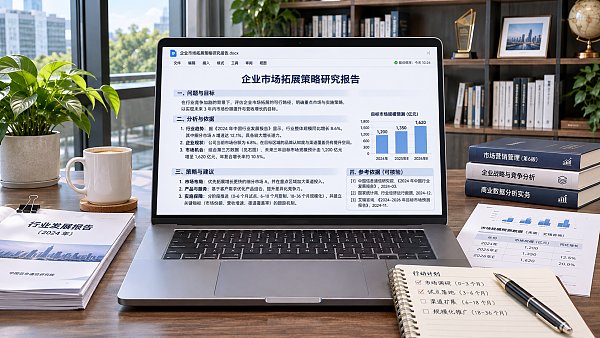
When answering users’ questions, AI search may combine search results, the model’s existing knowledge, and other data sources. Whether a citation is displayed also depends on the platform’s features, the query, and the information available at the time. Not every answer includes source links.
For practitioners, three conditions are worth checking first: whether the page is accessible to the target platform, whether the content directly answers the user’s question, and whether key conclusions are supported by credible evidence. Traditional search rankings are a useful reference, but a high ranking does not guarantee a citation.
For example, when a user searches “How do I choose materials for food packaging bags?”, a page listing material properties, suitable conditions, and testing references is generally more helpful in answering the question than a page containing only product images and promotional slogans.
Step 1: Identify Real Questions Worth Optimizing For
Start with customer inquiries, sales communications, on-site search terms, and query reports from search platforms to compile questions customers ask repeatedly. Prioritize questions related to your product capabilities that require professional judgment and are not clearly answered by existing pages.
Break broad keywords down into specific scenarios. For example, “industrial valves” can be narrowed down to “How do I choose a valve for a high-temperature steam pipeline?” or “What media are stainless steel valves suitable for?” The more specific the question, the easier it is to define the scope of the answer and identify the evidence needed.
Then organize content according to the user’s stage in the buying journey: selection questions are suited to guides or comparison pages, specification and delivery questions to product pages, and supplier evaluation questions to credentials and case study pages. A page can cover related questions, but there is no need to pack every topic into one article.
Step 2: Make Answers Clear, Complete, and Verifiable
Give a direct answer under the relevant subheading first, then add applicable conditions, steps, and exceptions. For example, when answering “How long is the delivery time?”, specify factors such as product type, order quantity, and destination to avoid misleading users with a fixed number of days.
When discussing specifications, certifications, prices, or test results, state the data source, scope of applicability, and update date. You can link to publicly available standards, testing organizations, or materials published by your company. Delete information that cannot be verified, or clearly label it as an example.
For product selection and comparison questions, consider using a table to present key differences and explain how each difference affects purchasing decisions. Give the table clear row and column headings, and explain important conclusions in the body text so readers can understand the context.
GEO optimization is not about repeatedly using words like “best” or “authoritative” on a page. A more effective approach is to provide specific evidence, such as material specifications, test methods, application scenarios, and limitations, and regularly verify that this information is still accurate.
Step 3: Use Semantic SEO to Cover Related Questions
Semantic SEO focuses on the relationship in meaning between users’ questions and content, not just the number of times a keyword appears. Adding related information that helps users make a decision around a clearly defined topic can make a page more complete and easier to understand.
For example, when describing packaging bag materials, cover not only the material names but also barrier properties, temperature resistance, food-contact requirements, minimum order quantities, and recycling conditions. Which topics to cover should depend on the target market and your actual product capabilities.
Use language familiar to customers and explain technical terms when necessary. English-language pages can use both commonly accepted industry names and familiar abbreviations, but avoid mechanically listing synonyms or adding unrelated topics to appeal to search engines.
Break in-depth content into topic-specific pages and connect them with clearly described internal links. For example, link from a material selection article to the relevant product specifications page, then to a testing information page. This helps readers and search systems understand the relationships between pages.
Step 4: Use Entity SEO to Explain Who the Company Is and What It Offers
Entity SEO can be understood as clearly describing a company, brand, and products, and the relationships between them. The website should provide verifiable company names, contact details, business scope, and product information, and keep this information consistent across key pages and external materials.
Complete the About Us and Contact pages, product details, and author or reviewer information. If you display certifications, patents, or customer cases, provide genuine identification numbers, scopes of applicability, or publicly available proof. When customer information is involved, first confirm that you have permission to display it.
Technical staff can also add structured data appropriate to the page content, such as organization or product information, and check that the markup matches the visible content. Structured data can help search systems understand a page, but does not guarantee a citation or enhanced display.
Multilingual websites should provide separate, accessible pages for each language. Have product specifications and after-sales terms reviewed by a human when translating them. Use applicable language and regional annotations to help search systems identify each version and reduce the risk of overseas customers seeing incorrect information.
Step 5: Check Whether Pages Can Be Discovered and Read Properly
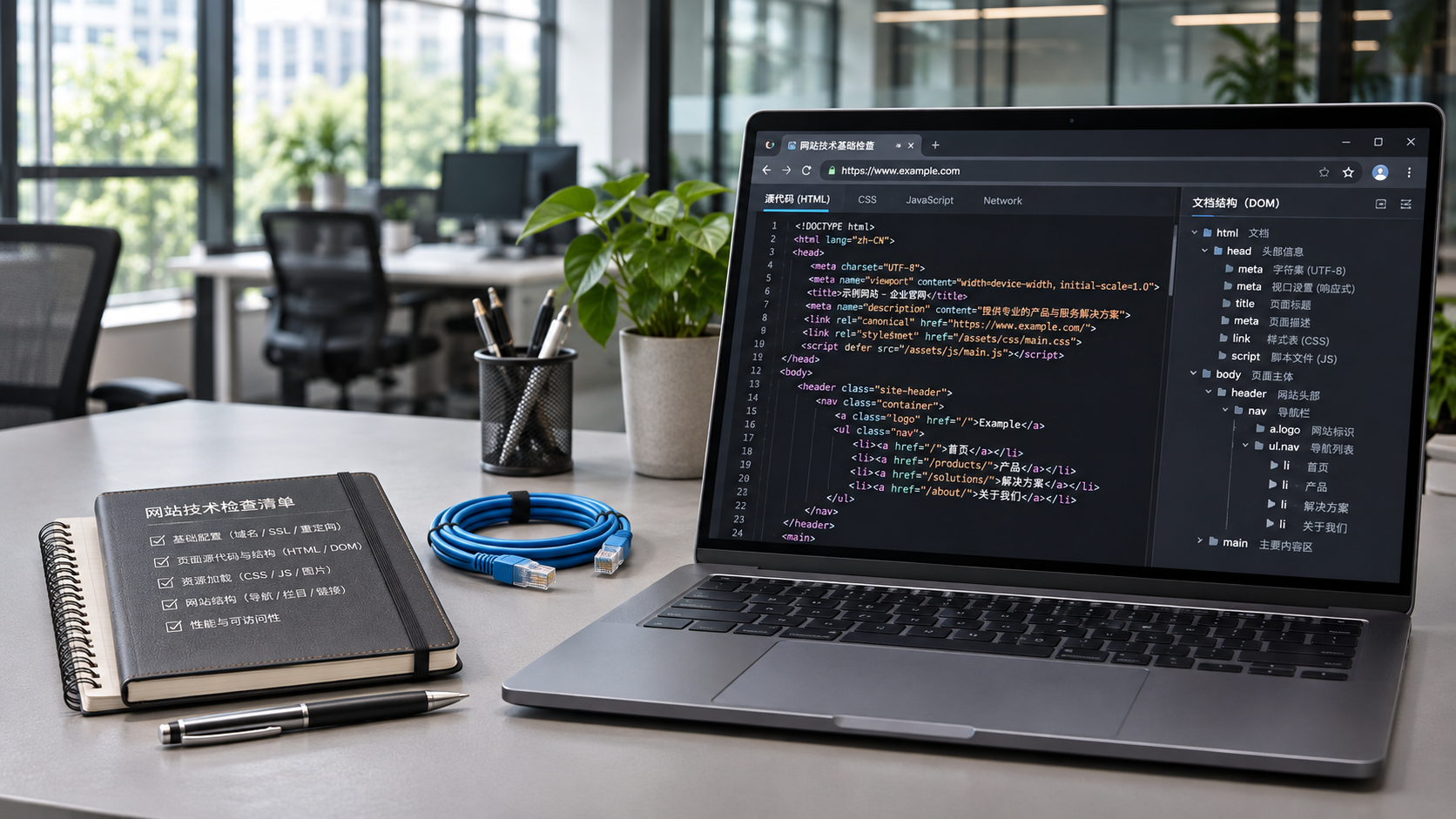
First, check whether the target page returns a normal status, allows relevant crawling, and can be discovered through internal links and the sitemap. If access is blocked by a login wall, incorrect crawl restrictions, or technical issues, even high-quality content may have difficulty entering the retrieval process.
When checking, distinguish search engine indexing rules from the crawling rules of different AI platforms: their access methods and purposes may differ. Configure rules according to the target platform’s published crawling guidance, then review server logs and feedback from relevant management tools after making changes.
Important text, specifications, and links should appear as readable page content rather than only in images. For pages that rely on scripts to load content, check that the rendered content is complete. Also pay attention to the mobile experience, loading speed, and broken links.
How Can You Assess Whether AI Search Optimization Is Working?
Create a fixed list of questions covering brand terms, product terms, and common customer selection questions. Record the test date, region, language, and platform used. Regularly observe whether answers mention the brand, cite target pages, and represent the cited content accurately.
A single test can be affected by platform updates, region, and phrasing, so repeat observations using the same set of questions to identify trends. Record questions that did not receive citations, then check whether the page lacks a direct answer, reliable evidence, or the necessary crawling conditions instead of simply counting mentions.
Also use website analytics tools to monitor identifiable visits from AI products, page engagement, and inquiry conversions. Some platforms do not fully pass on referral sources, so traffic data may underestimate the actual impact. Ultimately, assess the value of the investment based on the quality of qualified leads and business results.
Start with a Set of Priority Pages and Optimize Continuously
To get started, select a few pages related to inquiries that already have some traffic or content foundation. Add questions, answers, evidence, and company information in sequence, then complete technical checks and track results. Keep the revision date after updating so you can compare performance across different periods.
If your team manages a multilingual website, SEO, and overseas marketing at the same time, platforms such as 易营宝 that provide website building and marketing services can help coordinate execution. When selecting a service, carefully verify content ownership, the scope of optimization, data access permissions, and how performance reports are provided.
The key to increasing the chances of being cited in AI search is to make credible content easier to discover, understand, and verify in response to relevant questions. Combining customer questions, professional evidence, website technology, and ongoing evaluation can gradually build search visibility with real business value.
Related Articles
 How Can GEO Optimization Increase the Chances of Content Being Cited in AI Search Results?
 OpenAI tests Business in ChatGPT, allowing merchants to create profiles and business agents
 Google: Technical SEO Remains an Important Foundation for AI Search Visibility

Related Products
 Yiyingbao SaaS Intelligent Website Building and Marketing SystemYiyingbao SaaS Intelligent Website Building and Marketing System, AI-powered no-code website building, rapid creation of multilingual B2B international websites in 10 minutes, global server acceleration, AI-powered SEO optimization, helping businesses connect efficiently with global markets. The perfect integration of technology and operation makes building an international trade website remarkably simple
 AI+SEM Intelligent Advertising Marketing SystemAI+SEM drives intelligent ad creation, empowering full-funnel precision advertising marketing. The system automatically generates weekly/monthly reports, AI recommends keywords and target countries, monitors core metrics in real-time with intelligent alerts, and enables one-click high-conversion ad solutions to help quickly acquire customers and improve ROI.
 AI+SEO Dual-Engine System Optimization ServicesYiyingbao’s AI+SEO dual-engine optimization system helps foreign trade enterprises acquire high-quality organic traffic through AI-powered keyword research, content generation, and comprehensive technical optimization, significantly improving search rankings and conversion rates.
 AI+SNS Social Media Marketing SystemYingbao AI+SNS Social Media Marketing System - Precision social capture for the social media era. Supports one-click content synchronization across major platforms like Facebook and LinkedIn. AI intelligently rewrites posts for enhanced relevance. 24/7 AI customer service and user profiling analysis empower businesses to efficiently expand into global markets.
 AI+SEO营销解决方案易营宝AI+SEO营销解决方案,通过AI批量写作、智能生成TDK、精准关键词扩词等功能,全面优化网站SEO效果,提升流量与转化率。助力企业构建高效智能网站新生态。
 AI+SEM Advertising Marketing SolutionsAI+SEM Advertising Marketing Solution leverages AI technology to deeply empower SEM ad campaigns. It automatically generates weekly/monthly reports using AI, presenting account data across multiple dimensions for comprehensive insights into campaign performance and trends. The system precisely recommends keywords and target countries, intelligently generates high-conversion ad copy, and enables one-click activation of efficient campaign plans to help businesses rapidly acquire customers. Simultaneously, it monitors core metrics in real time, intelligently identifies abnormal fluctuations, and issues timely alerts to ensure stable, high-return advertising results.
 Domain Name ServicesEasyWin provides professional domain name services, including intelligent queries, one-stop registration, brand protection, and full lifecycle management, helping businesses build a digital brand image.
 EasyOperate B2C Cross-Border E-Commerce Platform & Independent WebsiteEasyStore B2C Cross-border E-commerce Independent Store is an intelligent website building and cross-border e-commerce integrated solution independently developed by EasyStore Information Technology (Beijing) Co., Ltd. The system is specially designed for small and medium-sized as well as large export enterprises, integrating 'website building, operation, marketing, advertising, and conversion' into one, helping enterprises quickly establish cross-border e-commerce independent stores to achieve brand globalization and global sales growth.
The platform supports multiple languages, multiple currencies, and multi-channel marketing, with built-in AI intelligent translation and SEO optimization systems, suitable for mainstream markets such as Southeast Asia, Europe and America, Latin America, and the Middle East, assisting Chinese manufacturing enterprises in efficiently deploying international e-commerce strategies. SSL证书易营宝提供专业SSL安全证书服务,包括单域名和泛域名证书,确保网站数据传输加密、身份验证和完整性保护,助力企业建立安全可信的在线业务环境。









