









- Fujian Announces the First Batch of Provincial-Level Cross-Border E-Commerce Industrial Parks and Key Brands for CultivationNov 14, 2026View details
- Amazon Global Store Announces the Launch of the 2026 Black Friday Global Shopping SeasonNov 14, 2026View details
- CCTV.com Examines APEC’s Role in China’s Foreign TradeNov 12, 2026View details
- China’s Tariff Commission of the State Council Adjusts Additional Tariffs on U.S. Goods: 24% Tariff Suspended for Two MonthsNov 10, 2026View details
- APEC Shenzhen Spotlight: Cross-Border E-Commerce Orders Promote Asia-Pacific Trade and Economic CooperationNov 08, 2026View details
- China-Europe Railway Express and CIIE Hold Business Matchmaking Event, Focusing on Cross-Border E-commerce B2B ExportsNov 07, 2026View details
Which pages should be included in an export-oriented website content checklist?
A content checklist for an export-oriented website should not be merely a table of “what copy needs to be prepared”; it should be a breakdown of the overseas customer’s decision-making journey. After entering the website through search, advertising, or social media links, customers typically assess in sequence: what the company sells, whether it has the capability to meet their needs, whether the products meet technical and market requirements, whether delivery can be reliably ensured, and how to make contact and obtain a quotation. Missing pages, information gaps, or insufficient evidence can make it difficult for a website to generate effective inquiries even if it receives traffic.
Therefore, the core of a content checklist for an export website is not the number of pages, but whether each type of page serves a clear purpose: product pages address matching needs, solution pages explain application value, trust pages reduce cooperation risks, and inquiry pages collect leads. At the same time, search engines must be able to understand the website’s thematic structure, providing a sustainable content foundation for subsequent SEO, advertising landing pages, and multilingual promotion.
First determine which business journey the website needs to support
Before preparing content, it is necessary to clarify whether the website primarily focuses on B2B inquiries, distributor recruitment, manufacturing capability presentation, or direct retail transactions. Different journeys determine page priorities. For industrial products, equipment, components, and customized products, visitors typically do not place orders directly during their first visit. The website needs to support model selection, technical confirmation, solution discussions, and quotation requests. If the homepage promotional logic of a consumer product standalone website is applied, key technical information is often obscured.
The same company does not need to place all businesses within a single page structure. Standard products and customized products, different regional markets, and different downstream industries have different purchasing priorities. The content checklist should first define the main product lines, key application markets, and primary customer acquisition methods, and then determine which content should be included in the main navigation and which should exist as advertising landing pages or topic pages. Otherwise, the most common outcome during website development is that materials continue to accumulate while the website hierarchy becomes increasingly confusing.
Basic corporate pages: enabling visitors to verify whether the business is trustworthy
The company profile page is not merely for presenting company history or culture. Overseas buyers are more concerned about the company’s role in the supply chain: whether it is a manufacturer, trading company, brand owner, or system integrator; the scope of its production or services; which capabilities it controls independently; and how the cooperation process is carried out. Page content should be organized around verifiable business facts and avoid generalized statements such as “leading,” “high quality,” and “professional team” that do not provide a basis for evaluation.
More complete corporate information generally includes company positioning, core business scope, factory or office location, production and quality control conditions, R&D or engineering support capabilities, markets served, and necessary contact details. Information involving establishment date, certifications, patents, production capacity, and customers should be confirmed by sales, legal, or relevant responsible departments regarding what may be publicly disclosed, with source materials retained. Key facts should also remain consistent across different language versions. Translation outsourcing or subsequent updates must not create disconnection and result in conflicting information between the English site and sites in other languages.
In addition to the “About Us” page, a contact page should be built separately. It should at least make clear to customers the available contact channels, location, working languages, and the basic information they need to provide after submitting a request. For cross-time-zone business, auto-replies, lead assignment rules, and designated persons responsible for replies are also part of page delivery, rather than temporary arrangements after the website goes live.
Product pages: transforming a display catalog into procurement information that supports evaluation
Product pages are usually the largest content section of an export-oriented website and are also the least suitable for simply copying from a brochure. A product image with a few lines of description cannot support search indexing, much less help customers determine whether a product is suitable. Each key product or product series should at least address its name, purpose, main specifications, materials or configuration, options, applicable environment, packaging or delivery format, and inquiry method.
Technical parameters in particular require consistent presentation standards. Units, terminology, test conditions, model naming, and drawing versions must be consistent with sales materials, catalogs, and quotations. For example, dimensional ranges and tolerances, rated parameters and actual operating conditions, and standard and optional configurations must not be mixed in the same field. If a product has clear customization limits, the page should also specify what can be adjusted and what input conditions are required, rather than using “OEM/ODM supported” as a general statement.
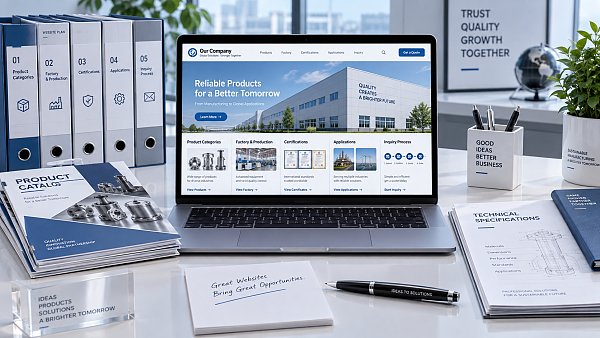
Product category pages serve navigation and comprehension purposes and should not contain only a set of images. They should explain the product range covered by the category, key selection criteria, and typical applications, while directing users to more specific series pages, model pages, or inquiry pages. For companies with a wide range of models, it is more prudent to first build core pages with search demand and sales value than to upload a large number of low-quality pages with highly similar information all at once. Pages with excessive duplication not only increase maintenance burdens but may also make it difficult for search engines to identify truly important content.
Solution and application pages: explaining why products are suitable for a specific scenario
Many export-oriented websites do not lack product information; what they lack is content that connects parameters with customer problems. Solution or application pages are suitable for addressing this gap: in a particular industry, process, equipment stage, or usage environment, what problems customers face, what functions the product performs, what conditions require attention during selection, and how supporting products can be combined. Such pages should not fabricate project results, but should explain matters based on product capabilities and application logic that can be publicly described.
For example, for conditions involving high temperature, corrosion, outdoor use, explosion-proof requirements, food contact, or high-frequency use, the key variables affecting selection should be explained rather than merely listing applicable industry names. If the company provides complete systems or equipment, it is also necessary to clarify which stages of early-stage requirement confirmation, technical communication, design and manufacturing, installation guidance, commissioning support, or after-sales service can be provided, and which must be undertaken by the customer or a third party. Clearly defining solution boundaries generally makes the quality of sales inquiries more controllable.
Trust-building pages should not contain certificate images alone
Quality control, certifications, testing capabilities, production equipment, delivery processes, downloadable materials, and frequently asked questions form the trust-information layer of an export-oriented website. They do not all need to be separate navigation sections, but they need to appear where customers are likely to have questions. When products involve specific market access requirements, certification pages should explain the product scope, validity, and applicable regions of each certificate, avoiding the generalization of a certification held by the company as meaning that all products comply with a particular standard.
The value of factory and quality pages does not lie in displaying the quantity of equipment, but in showing key control points: incoming material inspection, in-process inspection, finished-product inspection, traceability records, packaging inspection, or pre-shipment confirmation. For engineering or customized projects, delivery processes, sample confirmation, drawing confirmation, and change management reduce communication errors more effectively than stylized factory images.
A download center can include catalogs, specification sheets, installation manuals, maintenance guides, and drawing request portals, but version management must be implemented. Outdated materials, coexistence of different measurement systems, and files remaining available after products are discontinued all create additional costs for inquiries, quotations, and after-sales service. Confidential drawings or technical documents should not be publicly disclosed simply to add page content.
Inquiry pages should focus on information collection rather than simply providing an email address
The purpose of a B2B inquiry form is to reduce the cost of initial communication. In addition to name, company, email, and message, fields may include product model, estimated quantity, target market, technical requirements, delivery time, and attachment upload options based on product attributes. However, too many fields raise the submission threshold. Conditional supplemental fields can be used beyond the core fields: after a visitor selects a product category, the corresponding parameter requirements are displayed.
Form design must also align with internal processes. Which page a lead enters from, what the source channel is, who receives it, how quickly it is responded to, and how invalid leads are marked all affect whether the website truly has customer acquisition capability. Advertising landing pages in particular should avoid sending visitors to information-heavy homepages; instead, keywords, advertising commitments, product information, and form fields should remain consistent.
Before launch, turn the content checklist into deliverables that can be accepted
Delays in export-oriented website development are often not development issues, but rather unclear content responsibilities: the product department has not confirmed parameters, the marketing department lacks usable images, the sales department has not unified selling points, management has not confirmed disclosure boundaries, and multilingual translation lacks a terminology glossary. The content checklist needs to indicate page name, page objective, required materials, content owner, reviewer, language version, link destination, and completion status at the same time, rather than only making a rough count by “homepage, product pages, news pages.”
During acceptance, in addition to checking whether copy and images have been uploaded, page titles and descriptions, URL naming, internal links, form notifications, attachment downloads, mobile readability, language switching, and privacy-related pages should also be verified. Forms involving the collection of personal information should be configured with privacy statements and consent mechanisms consistent with actual business practices. When promoting to different regions, data collection and Cookie management methods should also be assessed according to applicable requirements in the target markets.
An effective content checklist for an export-oriented website is essentially a way to put in place, before launch, the information customers need for decision-making, the internal responsibilities for confirmation, and the page assets needed for subsequent promotion. Pages do not need to be built on a large scale all at once, but key products, core applications, credible evidence, and conversion paths must first form a complete closed loop. Only then does a website have the foundation to be indexed, promoted, and capable of handling genuine inquiries.
Related Articles
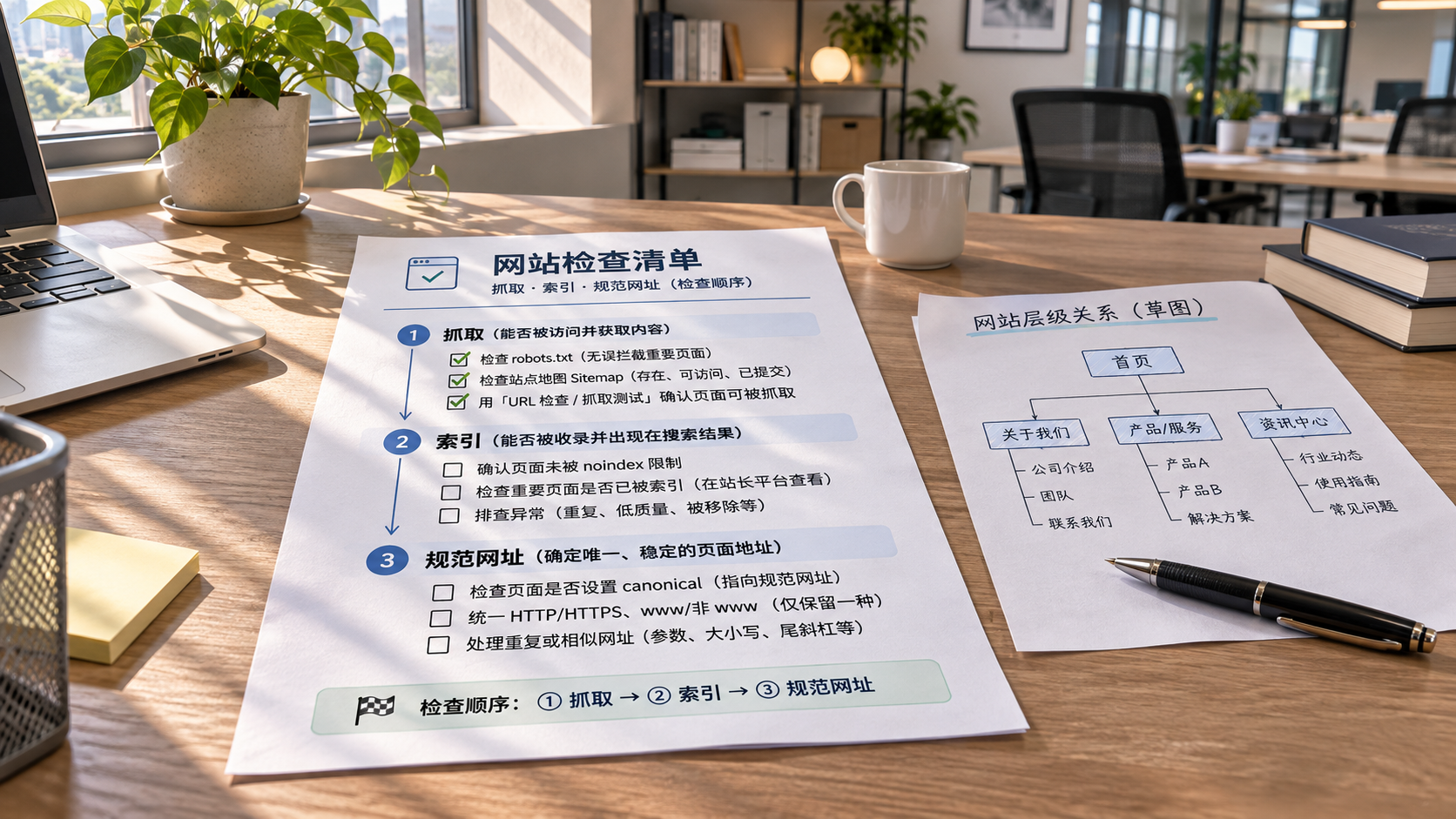
 Website SEO Checklist: Review Everything from Crawling and Indexing to Page Content
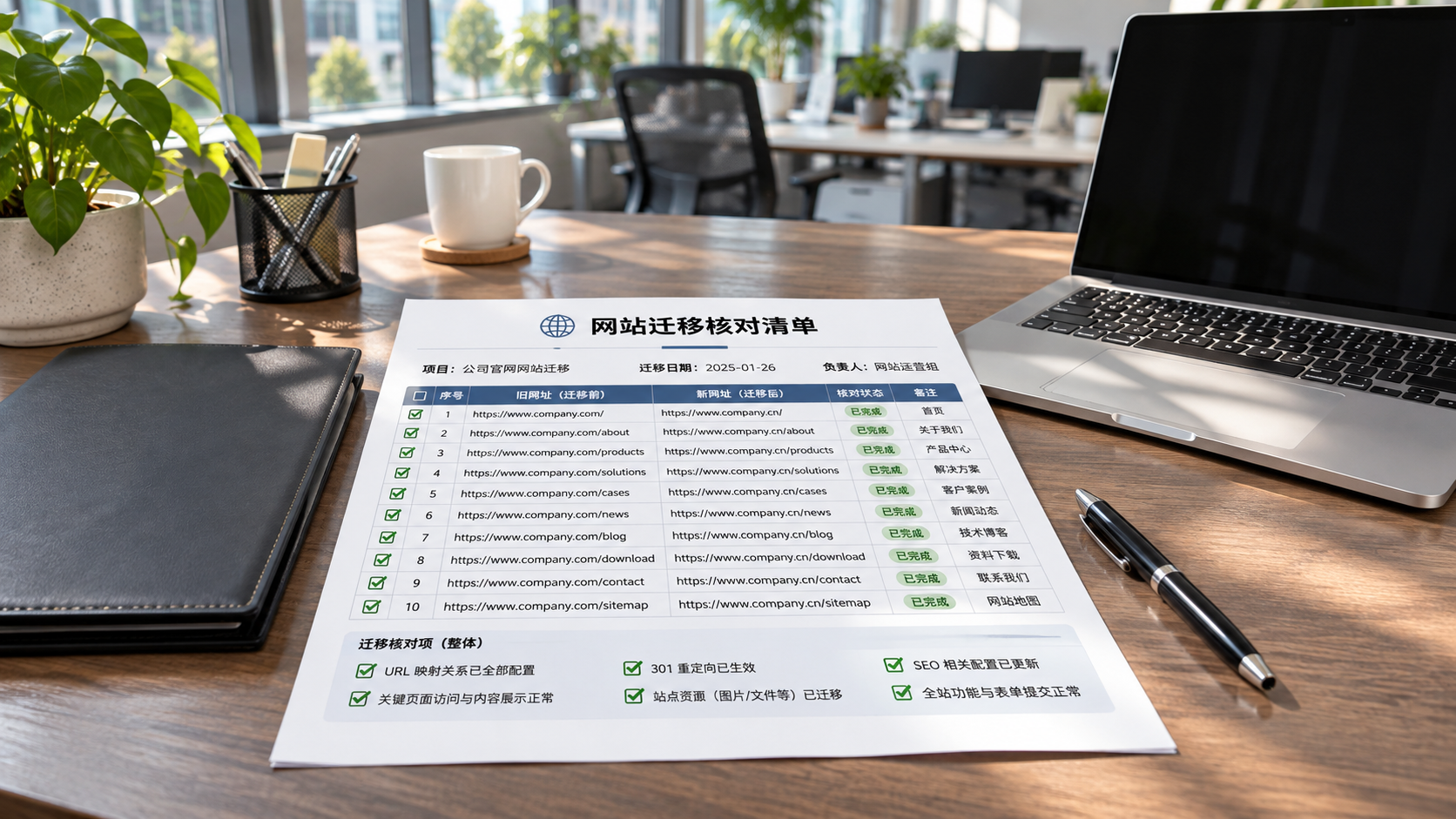
 How to Write an SEO Brief for a Website Redesign: Migration and Acceptance Checklist
 Before launching a new website, how can you use an SEO checklist to identify indexing barriers?

Related Products
 Yiyingbao SaaS Intelligent Website Building and Marketing SystemYiyingbao SaaS Intelligent Website Building and Marketing System, AI-powered no-code website building, rapid creation of multilingual B2B international websites in 10 minutes, global server acceleration, AI-powered SEO optimization, helping businesses connect efficiently with global markets. The perfect integration of technology and operation makes building an international trade website remarkably simple
 AI+SEM Intelligent Advertising Marketing SystemAI+SEM drives intelligent ad creation, empowering full-funnel precision advertising marketing. The system automatically generates weekly/monthly reports, AI recommends keywords and target countries, monitors core metrics in real-time with intelligent alerts, and enables one-click high-conversion ad solutions to help quickly acquire customers and improve ROI.
 AI+SEO Dual-Engine System Optimization ServicesYiyingbao’s AI+SEO dual-engine optimization system helps foreign trade enterprises acquire high-quality organic traffic through AI-powered keyword research, content generation, and comprehensive technical optimization, significantly improving search rankings and conversion rates.
 AI+SNS Social Media Marketing SystemYingbao AI+SNS Social Media Marketing System - Precision social capture for the social media era. Supports one-click content synchronization across major platforms like Facebook and LinkedIn. AI intelligently rewrites posts for enhanced relevance. 24/7 AI customer service and user profiling analysis empower businesses to efficiently expand into global markets.
 AI+SEO营销解决方案易营宝AI+SEO营销解决方案,通过AI批量写作、智能生成TDK、精准关键词扩词等功能,全面优化网站SEO效果,提升流量与转化率。助力企业构建高效智能网站新生态。
 AI+SEM Advertising Marketing SolutionsAI+SEM Advertising Marketing Solution leverages AI technology to deeply empower SEM ad campaigns. It automatically generates weekly/monthly reports using AI, presenting account data across multiple dimensions for comprehensive insights into campaign performance and trends. The system precisely recommends keywords and target countries, intelligently generates high-conversion ad copy, and enables one-click activation of efficient campaign plans to help businesses rapidly acquire customers. Simultaneously, it monitors core metrics in real time, intelligently identifies abnormal fluctuations, and issues timely alerts to ensure stable, high-return advertising results.
 Domain Name ServicesEasyWin provides professional domain name services, including intelligent queries, one-stop registration, brand protection, and full lifecycle management, helping businesses build a digital brand image.
 EasyOperate B2C Cross-Border E-Commerce Platform & Independent WebsiteEasyStore B2C Cross-border E-commerce Independent Store is an intelligent website building and cross-border e-commerce integrated solution independently developed by EasyStore Information Technology (Beijing) Co., Ltd. The system is specially designed for small and medium-sized as well as large export enterprises, integrating 'website building, operation, marketing, advertising, and conversion' into one, helping enterprises quickly establish cross-border e-commerce independent stores to achieve brand globalization and global sales growth.
The platform supports multiple languages, multiple currencies, and multi-channel marketing, with built-in AI intelligent translation and SEO optimization systems, suitable for mainstream markets such as Southeast Asia, Europe and America, Latin America, and the Middle East, assisting Chinese manufacturing enterprises in efficiently deploying international e-commerce strategies. SSL证书易营宝提供专业SSL安全证书服务,包括单域名和泛域名证书,确保网站数据传输加密、身份验证和完整性保护,助力企业建立安全可信的在线业务环境。









