









- Shopify's Third-Quarter Revenue and GMV Fall Short of Expectations, Sending Shares Tumbling Before the Market OpensNov 04, 2026View details
- Temu Sellers See a Decline in Traffic as the Platform’s Traffic Allocation ShiftsNov 04, 2026View details
- UK Regulator Requires E-Commerce Businesses to Clearly Display Total Prices Including Mandatory Delivery ChargesNov 04, 2026View details
- Amazon Reportedly Sends Exclusivity Warning Letters to Multiplatform SellersNov 03, 2026View details
- New TikTok Shop Cross-Border Returns Rules for Southeast Asia Take Effect on November 5Nov 03, 2026View details
- U.S. Tightens De Minimis Exemption Channel and Revises Section 321 Data PilotNov 03, 2026View details
How Should Units of Measurement for Different Markets Be Handled in Product Page Translation?
Units of measurement on product pages cannot be handled by translation alone: the same dimensions, weight, or capacity may be expressed using different units in the target market, and the values must be converted accordingly. When doing so, retain reliable original specifications, choose an easy-to-read presentation format for the market, and verify that conversions, rounding, and figures shown throughout the page are consistent.
It is especially important to distinguish between approximate values provided for ease of reference and specification values that determine whether a product can be installed or used. The former can be rounded to a reasonable degree; the latter require sufficient precision and should state any permitted tolerances or applicable conditions.
Identify what needs converting before choosing the display units
Before translating a product page, obtain the original values from the product specification sheet, drawings, or another verified data source, and record them together with their units, measurement conditions, and precision. A figure listed only as “Weight: 25” does not indicate whether the unit is kilograms or pounds, nor whether it refers to the product’s net weight or its weight including packaging.
When organizing specifications, list the product dimensions, installation dimensions, and package dimensions separately, as well as the net and gross weights. For dimensions given in length, width, and height order, clearly label each dimension so that readers are not left to guess which direction each number refers to after translation.
Choose display units based on the target market and the product’s intended use, rather than simply applying the same unit changes across the page. For example, pages targeting the U.S. market may prioritize inches and pounds, while markets using the metric system may favor millimeters, centimeters, kilograms, or liters. A language may be used across multiple countries, so it should not be assumed that all visitors share the same unit preferences.
For pages serving multiple markets, displaying both units can help prevent misunderstandings, for example, “Length: 1,200 mm (approx. 47.24 in).” The primary unit should match the page’s main target market, and converted values in parentheses should be generated according to consistent rules.
How to convert dimensions, weight, and capacity
Before converting, confirm that the original and target units measure the same physical quantity. The following are common conversions used on product pages. The number of decimal places to display should still be determined based on the precision of the original data and its intended use:
- Length: 1 inch (in) = 25.4 millimeters (mm); 1 foot (ft) = 12 inches. For example, 500 mm is approximately 19.69 in.
- Weight: 1 kilogram (kg) is approximately 2.20462 pounds (lb). For example, 10 kg is approximately 22.05 lb.
- Liquid capacity: 1 liter (L) is approximately 0.26417 U.S. liquid gallons or 0.21997 Imperial gallons. 10 L is approximately 2.64 U.S. gallons, or 2.20 Imperial gallons.
Do not write “gal” alone and assume that all readers will interpret it the same way: U.S. and Imperial gallons are different. For products involving liquid capacity, specify which type is used where appropriate. For flow rates, retain the time unit as well; when converting L/min to U.S. liquid gallons per minute, for example, do not omit “per minute.”
Area and volume cannot be converted by applying a length conversion factor directly. When a length is scaled by a factor, area changes by the square of that factor and volume by its cube. For example, 1 square meter is approximately 10.764 square feet, not 3.281 square feet.
Rounding must not change the meaning of a specification
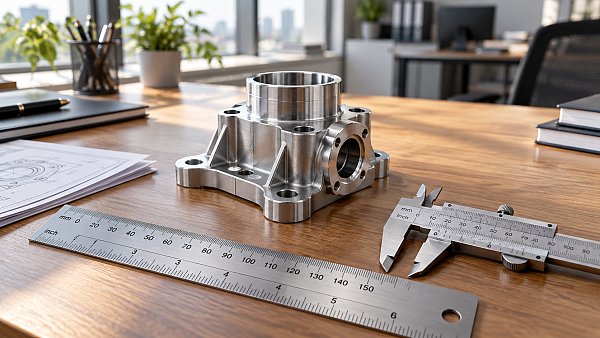
More decimal places do not necessarily make a displayed value better. If the original dimension is only “approximately 50 cm,” converting it to “19.6850 in” suggests a level of precision that the source data does not support. In this case, “approximately 19.7 in” better reflects the precision of the original information.
Conversely, parameters such as mounting-hole spacing, interface dimensions, and clearance fits should not be rounded excessively for the sake of a simpler page. If a drawing specifies a hole spacing of 25.4 mm, displaying it as 1 in is accurate. But if the original value is 25 mm, displaying it directly as “1 in” would conceal a difference of approximately 0.4 mm. For these specifications, retain an appropriate number of decimal places and use the drawing or a clearly specified reference value as the basis for final confirmation.
For values with tolerances, convert both the nominal value and the tolerance. For example, 25.4 ± 0.2 mm can be approximated as 1.000 ± 0.008 in. The number of decimal places retained should meet the precision requirements of the product drawing. Do not convert only the nominal value and omit the permitted deviation, or treat an approximate display value as a new production reference.
Convert both ends of a range separately and make the comparison clear. For example, “Operating temperature: 0–40 °C” can be written as “32–104 °F.” Temperature conversion is not a simple multiplication or division: to convert Celsius to Fahrenheit, use “°F = °C × 9/5 + 32.”
Identify specifications that cannot be converted by value alone
Not every item that looks like a unit of measurement is suitable for automatic conversion. Thread specifications, nominal pipe sizes, wire gauges, and nominal screen diagonal sizes may follow industry conventions or standards. A nominal size does not necessarily equal the actual measured dimension. Mechanically converting and replacing a number in a specification name may lead to incorrect product selection.
For these parameters, retain the original specification name and its applicable standard. If a reference dimension in another unit is needed, it must be based on the relevant drawing or specification documentation, with nominal values distinguished from measured values. Similarly, package quantities and the number of items per carton are not weights or capacities; they should not be included in unit conversion just because the fields contain numbers.
Parameters such as pressure and power also require their full conditions to be retained. For example, pressure must be identified as gauge or absolute pressure, and it must be confirmed whether a power value is rated or peak power. Changing only the unit while omitting these conditions can alter the meaning of a parameter, even if the arithmetic is correct.
Check consistency across all instances of the data before publishing
Product information may appear in titles, specification tables, image annotations, downloadable materials, product variants, and quotation attachments. After updating the main text, check other locations where the same parameter appears. If the specification table says “10 kg” but the image still says “10 lb,” readers cannot tell which value is correct.
As a practical measure, maintain a single, consistent parameter record that includes the original value, original unit, data source, target unit, converted value, rounding rule, and review status. Generate results for different language pages from the same original value rather than reconverting an already rounded value, which can cause errors to accumulate.
When checking how values appear on the page, also pay attention to number formatting. Conventions for decimal points and thousands separators vary by region. “1,250” may be understood as one thousand two hundred fifty or as one point two five. Use consistent number formatting for the target market, and clarify key parameters that could be ambiguous by considering their units, context, and page language.
After completing the updates, verify the calculations using a few boundary cases: check the smallest dimension, the largest capacity, a parameter with a tolerance, and data that can be easily confused, such as gallons or temperature. Recalculate each from the original value. If the page supports switching units, also check that the values, unit labels, and variant information change in sync. Before publication, compare key specifications that affect installation, safety, or order confirmation against the original drawings or verified product documentation, item by item.
Related Articles
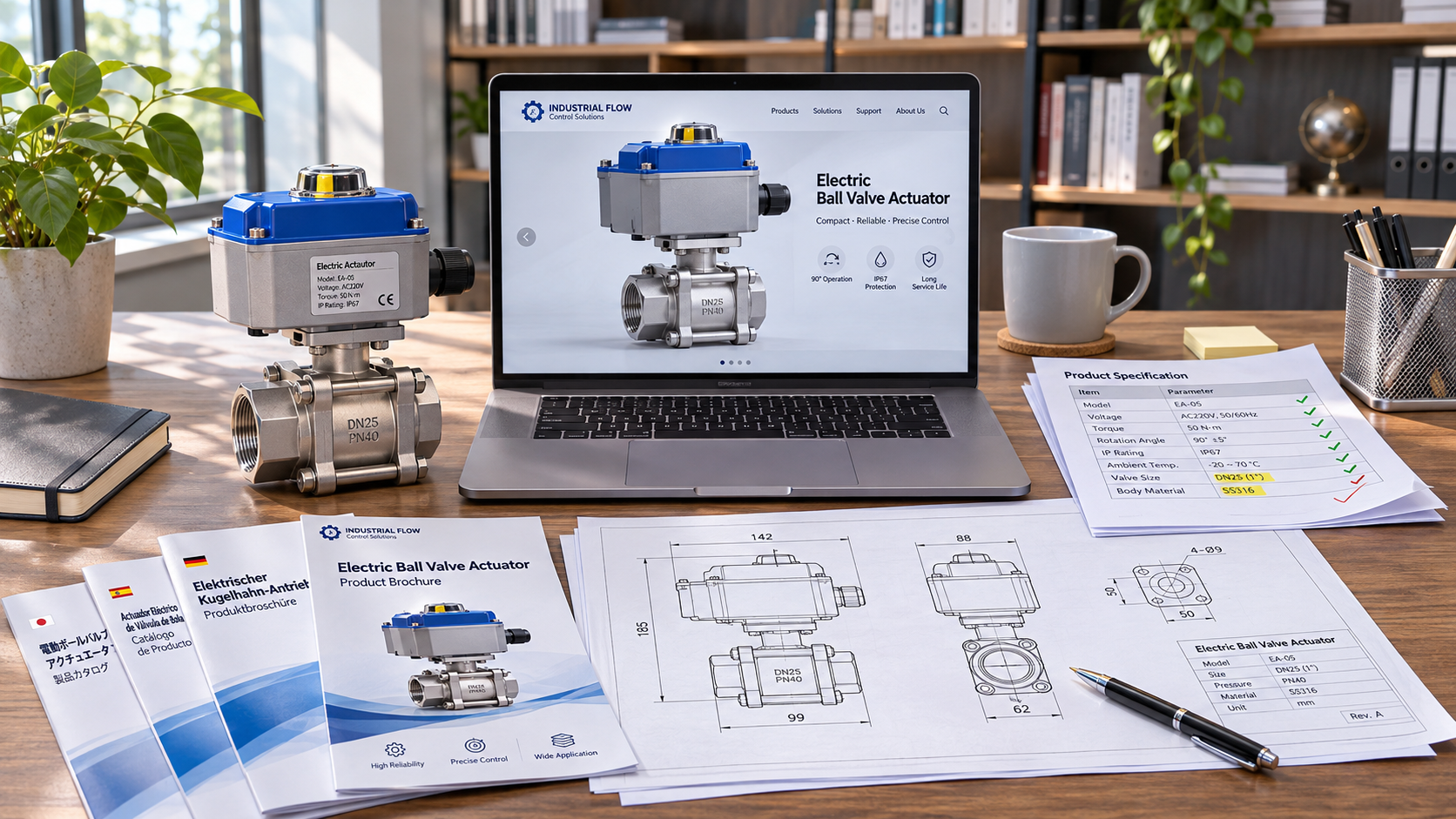
 How Can You Ensure Multilingual Product Pages for International Trade Are Translated to Suit Local Conventions?
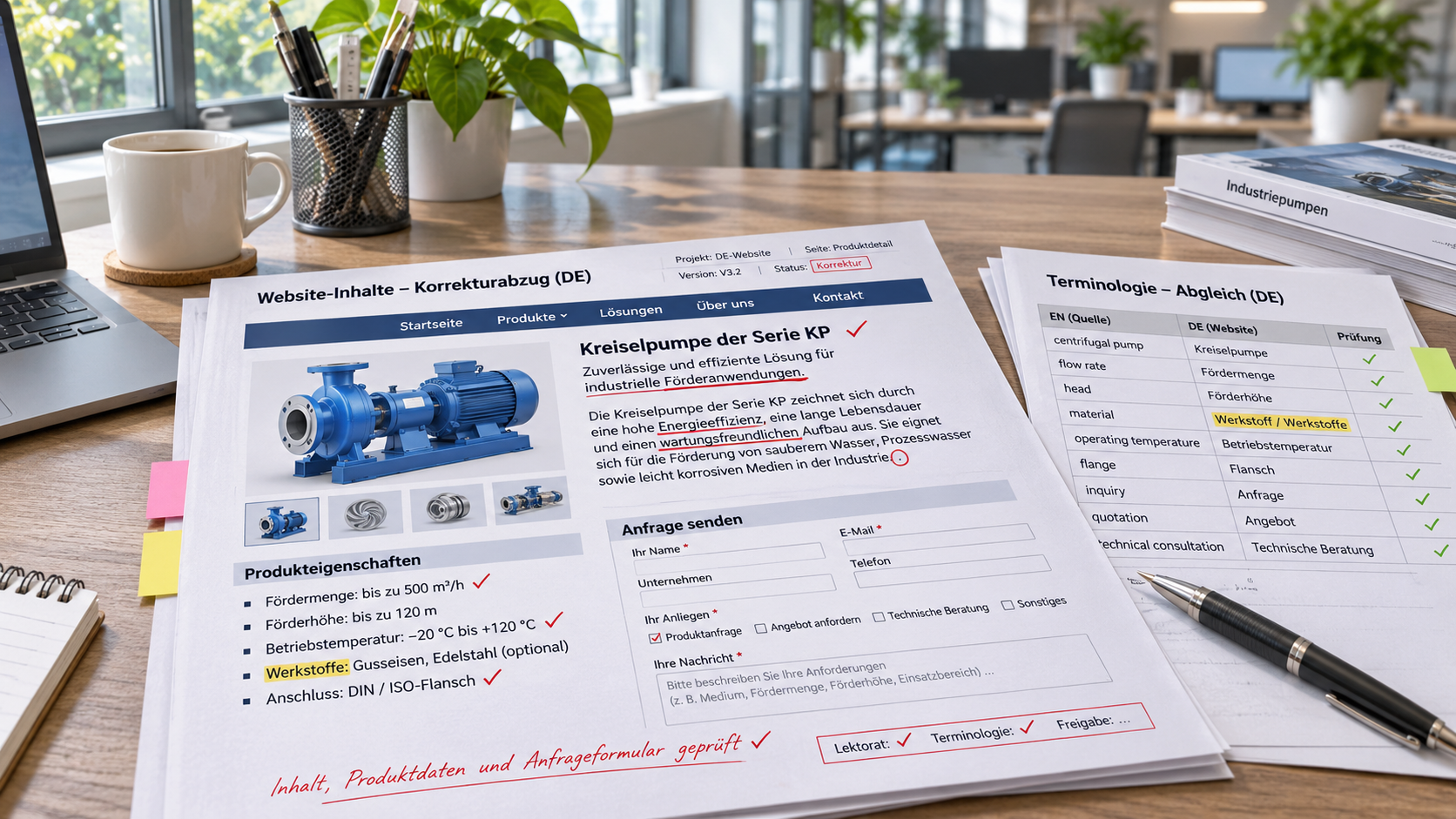
 How Can German Website Development Avoid the Impact of Machine Translation on Inquiries?
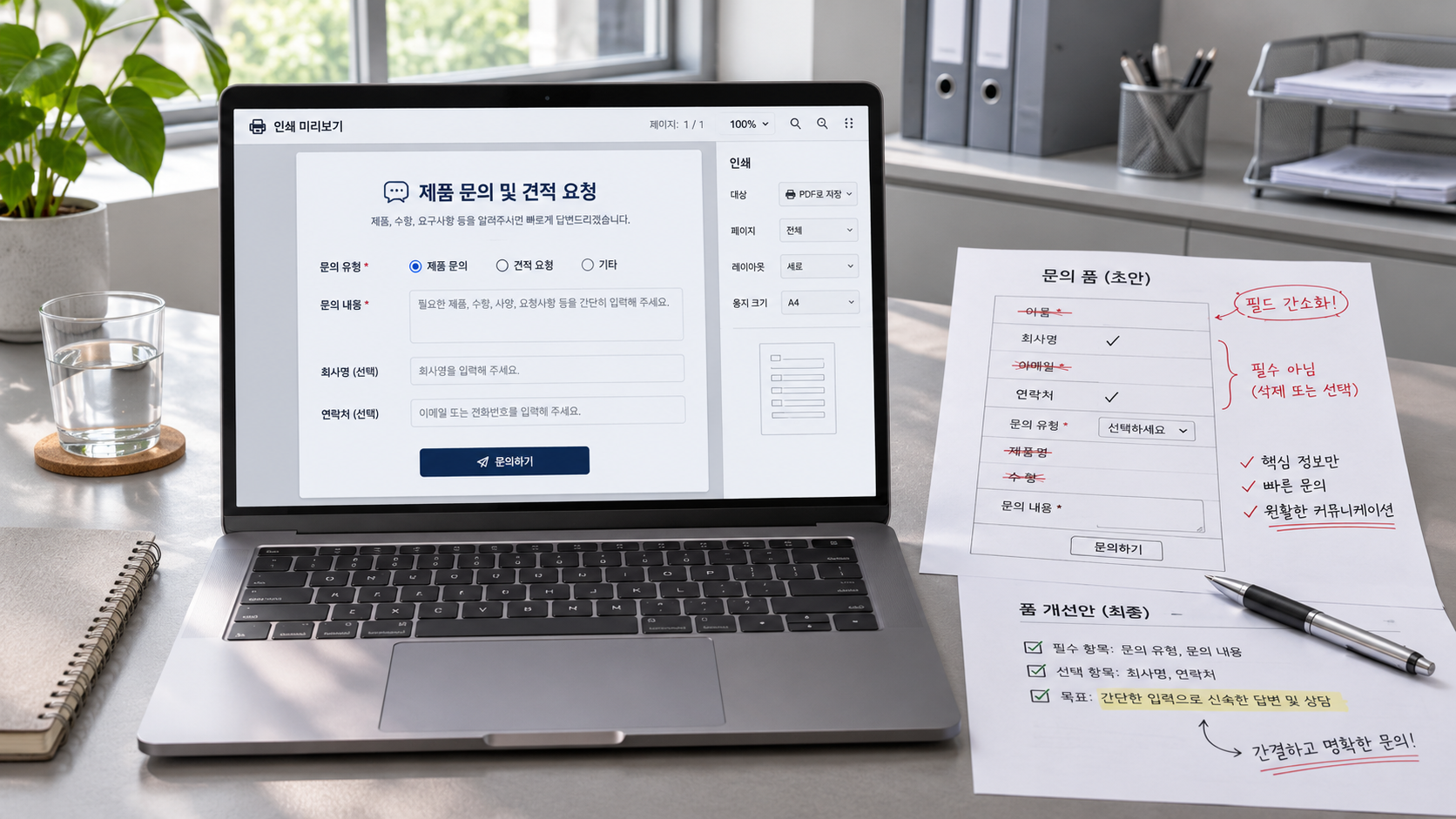
 How should inquiry forms be designed for Korean-language websites?
Related Products
 Yiyingbao SaaS Intelligent Website Building and Marketing SystemYiyingbao SaaS Intelligent Website Building and Marketing System, AI-powered no-code website building, rapid creation of multilingual B2B international websites in 10 minutes, global server acceleration, AI-powered SEO optimization, helping businesses connect efficiently with global markets. The perfect integration of technology and operation makes building an international trade website remarkably simple
 AI+SEM Intelligent Advertising Marketing SystemAI+SEM drives intelligent ad creation, empowering full-funnel precision advertising marketing. The system automatically generates weekly/monthly reports, AI recommends keywords and target countries, monitors core metrics in real-time with intelligent alerts, and enables one-click high-conversion ad solutions to help quickly acquire customers and improve ROI.
 AI+SEO Dual-Engine System Optimization ServicesYiyingbao’s AI+SEO dual-engine optimization system helps foreign trade enterprises acquire high-quality organic traffic through AI-powered keyword research, content generation, and comprehensive technical optimization, significantly improving search rankings and conversion rates.
 AI+SNS Social Media Marketing SystemYingbao AI+SNS Social Media Marketing System - Precision social capture for the social media era. Supports one-click content synchronization across major platforms like Facebook and LinkedIn. AI intelligently rewrites posts for enhanced relevance. 24/7 AI customer service and user profiling analysis empower businesses to efficiently expand into global markets.
 AI+SEO营销解决方案易营宝AI+SEO营销解决方案,通过AI批量写作、智能生成TDK、精准关键词扩词等功能,全面优化网站SEO效果,提升流量与转化率。助力企业构建高效智能网站新生态。
 AI+SEM Advertising Marketing SolutionsAI+SEM Advertising Marketing Solution leverages AI technology to deeply empower SEM ad campaigns. It automatically generates weekly/monthly reports using AI, presenting account data across multiple dimensions for comprehensive insights into campaign performance and trends. The system precisely recommends keywords and target countries, intelligently generates high-conversion ad copy, and enables one-click activation of efficient campaign plans to help businesses rapidly acquire customers. Simultaneously, it monitors core metrics in real time, intelligently identifies abnormal fluctuations, and issues timely alerts to ensure stable, high-return advertising results.
 Domain Name ServicesEasyWin provides professional domain name services, including intelligent queries, one-stop registration, brand protection, and full lifecycle management, helping businesses build a digital brand image.
 EasyOperate B2C Cross-Border E-Commerce Platform & Independent WebsiteEasyStore B2C Cross-border E-commerce Independent Store is an intelligent website building and cross-border e-commerce integrated solution independently developed by EasyStore Information Technology (Beijing) Co., Ltd. The system is specially designed for small and medium-sized as well as large export enterprises, integrating 'website building, operation, marketing, advertising, and conversion' into one, helping enterprises quickly establish cross-border e-commerce independent stores to achieve brand globalization and global sales growth.
The platform supports multiple languages, multiple currencies, and multi-channel marketing, with built-in AI intelligent translation and SEO optimization systems, suitable for mainstream markets such as Southeast Asia, Europe and America, Latin America, and the Middle East, assisting Chinese manufacturing enterprises in efficiently deploying international e-commerce strategies. SSL证书易营宝提供专业SSL安全证书服务,包括单域名和泛域名证书,确保网站数据传输加密、身份验证和完整性保护,助力企业建立安全可信的在线业务环境。









