









- Amazon Reportedly Sends Exclusivity Warning Letters to Multiplatform SellersNov 03, 2026View details
- New TikTok Shop Cross-Border Returns Rules for Southeast Asia Take Effect on November 5Nov 03, 2026View details
- U.S. Tightens De Minimis Exemption Channel and Revises Section 321 Data PilotNov 03, 2026View details
- Amazon FBA Fuel and Logistics Surcharge in 10 European Countries to Increase to 2% on November 2Nov 02, 2026View details
- EU Customs Code reform to take effect on November 1, with new handling fees for direct-mail small parcelsNov 01, 2026View details
- EU Plans to Raise Tax on Incoming Small Parcels to €5Oct 31, 2026View details
U.S. Tightens De Minimis Exemption Channel and Revises Section 321 Data Pilot
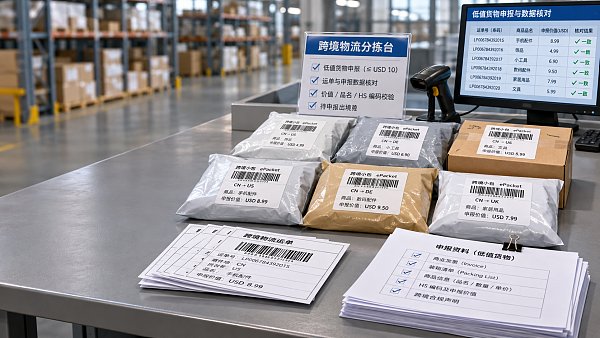
The November 2 cross-border trade briefing mentioned a tightening of the duty-free arrangement for low-value goods outside the U.S. Postal Service network, while Customs and Border Protection (CBP) also revised the Section 321 data pilot. The specific effective date of these changes was not stated in the input. For cross-border e-commerce sellers and small-parcel logistics providers, changes to duty-free treatment and data submission arrangements may affect cost calculations, document preparation, and delivery planning.
Suspension of the Low-Value Duty Exemption and Changes to the Data Pilot
According to the news summary provided, the duty-free treatment of goods valued under $800 shipped outside the U.S. Postal Service network has been suspended indefinitely. The summary also notes that the exemption from vessel fees for China-related ships is due to expire on November 9.
At the same time, CBP revised the Section 321 data pilot by adding optional data elements, expanding eligibility, and extending the filing period. The input does not specify the effective date of these changes or provide details on the data elements, eligibility requirements, or filing-period adjustments.
What Changes Could the Small-Parcel Trade Chain Face?
Sellers Need to Reassess Duty-Free Expectations
From an industry perspective, cross-border e-commerce sellers shipping low-value goods to the United States through channels outside the postal network may need to reassess how changes to duty-free treatment could affect order costs and pricing. Whether specific goods qualify for the relevant arrangements, and how any fees are calculated, should be verified against the implementation guidance once clarified; declared value alone is not enough to determine this.
Data Coordination in Logistics and Filing
The addition of optional data elements and expanded eligibility under the Section 321 data pilot may bring greater attention to data handoffs among logistics providers, filing service providers, and sellers. Participants can verify the scope of the pilot, the specific optional data elements, and changes to filing deadlines. The summary provided is not sufficient to determine which documents must be submitted or whether all businesses are required to participate in the pilot.
The Vessel Fee Deadline May Affect Shipping Assessments
The November 9 expiration of the exemption from vessel fees for China-related ships may be a factor for businesses to consider when assessing costs and delivery plans for relevant shipping arrangements. However, the input does not specify what will happen after the exemption expires or establish a direct connection with small-parcel logistics costs, so it should not be taken as confirmation that fees will change.
Verify Duty-Free Treatment and Filing Arrangements
Identify Affected Shipping Routes
Relevant businesses are advised to distinguish between shipping channels inside and outside the postal network, verify how changes to duty-free treatment apply based on the value of goods and actual business arrangements, and recalculate related order costs once the rules are clarified.
Check Pilot Eligibility and Data Requirements
Businesses planning to participate in or monitoring the Section 321 data pilot can continue to verify eligibility, the extended filing deadline, and the newly added optional data elements, and confirm document handoff arrangements with their logistics or filing service providers. Whether a particular business party needs to provide any optional data element should be determined according to the applicable rules and actual arrangements between the parties.
Monitor Developments After the Vessel Fee Exemption Expires
Businesses involved in relevant shipping arrangements can monitor official updates after November 9 and assess potential impacts based on specific quotes and delivery arrangements from carriers or logistics providers. At this stage, the expiration of the exemption should not be taken as proof of a definite change in fees or transit times.
Implementation Details Still Need to Be Verified
The reported suspension of the duty-free treatment and revision of the data pilot indicate significant rule changes affecting both low-value goods channels and filing arrangements. However, since the input does not provide specific effective dates, application details, or links to official sources, these developments are best treated as regulatory updates and implementation signals requiring further verification. Subsequent official guidance, actual trade practices, and industry feedback may affect businesses’ assessments of costs, document preparation, and delivery arrangements.
Adjust Business Arrangements Based on Verified Information
This update highlights the need for cross-border e-commerce small-parcel businesses to monitor both duty-free treatment and filing data requirements. For now, businesses can first identify potentially affected goods and business processes, then adjust cost calculations and documentation workflows based on verified regulatory details. Where implementation outcomes remain unclear, businesses should avoid making definitive assumptions.
Information Basis and Further Verification
This article is based on the news headline, event date, and event summary provided by the user. No specific links to official sources were included in the input, so the information should continue to be verified. Businesses can consult official announcements, customs agency information, and reports from authoritative media, while monitoring policy details, trade practices, business implementation, and industry feedback.
Related Articles
 Amazon Reportedly Sends Exclusivity Warning Letters to Multiplatform Sellers
 New TikTok Shop Cross-Border Returns Rules for Southeast Asia Take Effect on November 5
 U.S. Tightens De Minimis Exemption Channel and Revises Section 321 Data Pilot

Related Products
 Yiyingbao SaaS Intelligent Website Building and Marketing SystemYiyingbao SaaS Intelligent Website Building and Marketing System, AI-powered no-code website building, rapid creation of multilingual B2B international websites in 10 minutes, global server acceleration, AI-powered SEO optimization, helping businesses connect efficiently with global markets. The perfect integration of technology and operation makes building an international trade website remarkably simple
 AI+SEM Intelligent Advertising Marketing SystemAI+SEM drives intelligent ad creation, empowering full-funnel precision advertising marketing. The system automatically generates weekly/monthly reports, AI recommends keywords and target countries, monitors core metrics in real-time with intelligent alerts, and enables one-click high-conversion ad solutions to help quickly acquire customers and improve ROI.
 AI+SEO Dual-Engine System Optimization ServicesYiyingbao’s AI+SEO dual-engine optimization system helps foreign trade enterprises acquire high-quality organic traffic through AI-powered keyword research, content generation, and comprehensive technical optimization, significantly improving search rankings and conversion rates.
 AI+SNS Social Media Marketing SystemYingbao AI+SNS Social Media Marketing System - Precision social capture for the social media era. Supports one-click content synchronization across major platforms like Facebook and LinkedIn. AI intelligently rewrites posts for enhanced relevance. 24/7 AI customer service and user profiling analysis empower businesses to efficiently expand into global markets.
 AI+SEO营销解决方案易营宝AI+SEO营销解决方案,通过AI批量写作、智能生成TDK、精准关键词扩词等功能,全面优化网站SEO效果,提升流量与转化率。助力企业构建高效智能网站新生态。
 AI+SEM Advertising Marketing SolutionsAI+SEM Advertising Marketing Solution leverages AI technology to deeply empower SEM ad campaigns. It automatically generates weekly/monthly reports using AI, presenting account data across multiple dimensions for comprehensive insights into campaign performance and trends. The system precisely recommends keywords and target countries, intelligently generates high-conversion ad copy, and enables one-click activation of efficient campaign plans to help businesses rapidly acquire customers. Simultaneously, it monitors core metrics in real time, intelligently identifies abnormal fluctuations, and issues timely alerts to ensure stable, high-return advertising results.
 Domain Name ServicesEasyWin provides professional domain name services, including intelligent queries, one-stop registration, brand protection, and full lifecycle management, helping businesses build a digital brand image.
 EasyOperate B2C Cross-Border E-Commerce Platform & Independent WebsiteEasyStore B2C Cross-border E-commerce Independent Store is an intelligent website building and cross-border e-commerce integrated solution independently developed by EasyStore Information Technology (Beijing) Co., Ltd. The system is specially designed for small and medium-sized as well as large export enterprises, integrating 'website building, operation, marketing, advertising, and conversion' into one, helping enterprises quickly establish cross-border e-commerce independent stores to achieve brand globalization and global sales growth.
The platform supports multiple languages, multiple currencies, and multi-channel marketing, with built-in AI intelligent translation and SEO optimization systems, suitable for mainstream markets such as Southeast Asia, Europe and America, Latin America, and the Middle East, assisting Chinese manufacturing enterprises in efficiently deploying international e-commerce strategies. SSL证书易营宝提供专业SSL安全证书服务,包括单域名和泛域名证书,确保网站数据传输加密、身份验证和完整性保护,助力企业建立安全可信的在线业务环境。









