









- AliExpress Announces New Service Rules for Russia, Linked to Wildberries Product IntegrationOct 28, 2026View details
- Black Friday Preparations Enter the Final Sprint Week as Cross-Border E-Commerce Platforms Roll Out Their PlansOct 28, 2026View details
- CBP Finalizes Electronic Rail Export Manifest Rule, Effective October 26, 2026Oct 26, 2026View details
- Amazon’s 2026 peak season surcharge takes effect on October 25Oct 26, 2026View details
- AI Is Eating SaaS: Three Real-World Cases in One AfternoonOct 25, 2026View details
- Exiger CEO: The SaaS Apocalypse Is Real, but It Means Something DifferentOct 25, 2026View details
How to Conduct Keyword Research and Expansion: Find High-Converting Long-Tail Keywords from Core Keywords
The goal of keyword research and expansion is not to find a string of terms with “seemingly high search volume,” but to determine which terms can bring the right people to the right pages and encourage them to submit inquiries, place orders, or learn about solutions. This is especially important for foreign trade websites, standalone websites, and multilingual content, where traffic keywords and conversion keywords are often not the same group of terms. If content is created only around broad keywords, pages may gain exposure but struggle to generate qualified business opportunities.
A practical principle is: first use core keywords to define business boundaries, then use search intent to filter directions, and finally use long-tail keywords to match specific pages and actions. Only then can a keyword database truly be used for website development, SEO content, advertising landing pages, and subsequent optimization.
Identify “core business keywords” first; do not start with tool lists
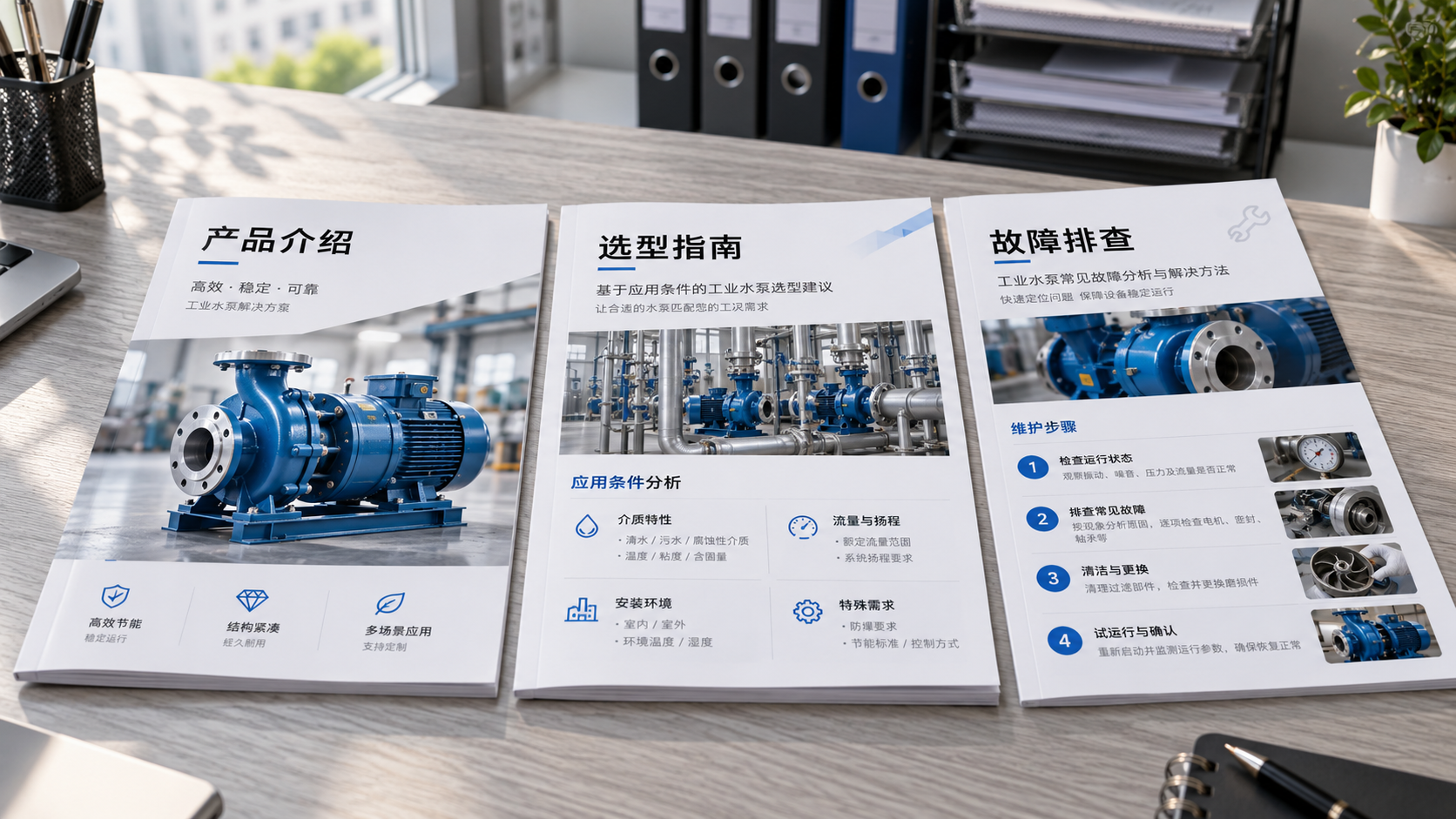
Core keywords are phrases users use to describe products, services, or problems. They are usually short and broad in scope. For example, for a manufacturing company selling industrial water pumps, core keywords may include “industrial water pump”; for a provider of overseas website development services, core keywords may include “B2B website design” and “multilingual website.”
However, core keywords are not necessarily the terms that should be prioritized in competition. Their main purpose is to help establish a starting point for keyword expansion. In practice, seed keywords can be listed from three directions:
- Product or service names: product categories, models, materials, processes, and service types.
- Problems customers need to solve: such as “reduce warehouse costs,” “find OEM supplier,” and “improve website conversion.”
- Procurement or decision-making scenarios: such as “manufacturer,” “supplier,” “custom,” “bulk,” “pricing,” and “for distributor.”
Taking “industrial water pumps” as an example, searching only for the product name will generate very broad results. More valuable expressions emerge only after adding application and procurement conditions, such as “chemical resistant industrial water pump,” “industrial water pump manufacturer,” and “water pump for irrigation system.” These terms may not have the highest search volume, but they are closer to specific needs.
At this stage, do not rush to remove terms that seem unpopular. In the early stages of keyword research and expansion, the focus is to collect as comprehensively as possible the language users may use, including spelling habits in different countries, industry colloquialisms, use-case descriptions, and problem statements. For English-language websites, attention should also be paid to singular and plural forms, British and American spelling differences, and whether customers more often use procurement-oriented terms such as “supplier,” “factory,” and “manufacturer.”
Search intent determines whether a keyword should be targeted and where it should be placed
The same product keyword can reflect completely different search purposes. If a page does not match that purpose, bounce rates and conversions may be poor even if it ranks highly.
When determining intent, the search results page itself is highly informative. After searching a term, if the leading results are mostly tutorials and explanatory articles, users are likely still in the research stage. If results are concentrated on product pages, supplier directories, and quotation pages, commercial intent is usually stronger. Do not use a generic educational article to serve users who clearly want to find suppliers, and do not direct “how to choose” queries straight to product pages that contain only an inquiry form.
The value of high-conversion long-tail keywords comes from this type of alignment. They usually include more specific qualifiers, such as product features, regions of use, target industries, purchase quantities, specifications, or delivery requirements. Searching for “B2B website” may indicate only initial research, while searching for “B2B website design for machinery manufacturer” already reveals industry and service needs. The page should therefore be organized around product presentation for machinery manufacturers, multilingual content, inquiry paths, and case-study materials.

Expand long-tail keywords from core keywords by “modifier dimensions,” not intuition
The issue with many keyword databases is not insufficient volume, but a lack of logic between terms. A more reliable approach is to add fixed modifier dimensions to each core keyword, then combine and filter them.
Product dimension: turn broad categories into purchasable items
Models, materials, functions, dimensions, certifications, compatible objects, processes, and customization conditions can be added. Examples include “stainless steel valve,” “custom metal fabrication,” and “OEM plastic injection molding.” These terms are suitable for product pages or category pages because users need to see specifications, applications, production capabilities, and inquiry entry points.
Application dimension: describe products through customers’ tasks
Users do not always search according to a company’s internal product categories; they often search by use case. Examples include “packaging machine for coffee beans” and “LED display for retail store.” Application keywords are suitable for use with industry solution pages and can also help operations teams identify missing scenario-based content on the website.
Region and language dimension: multilingual websites cannot rely on direct translation alone
When targeting different markets, the way terms are expressed changes. Some regions are more accustomed to using “vendor,” while some buyers prefer “manufacturer”; the same function may also have commonly used industry expressions in different languages. The focus of multilingual SEO is not to translate one keyword into multiple languages, but to separately confirm how local users search, what page types appear in the results, and what questions pages need to answer.
Decision-making dimension: identify signals closer to conversion
Modifiers such as “price,” “quote,” “bulk order,” “MOQ,” “custom,” and “supplier” often indicate that users have begun evaluating cooperation terms. These words may not be suitable for every article title, but they should be clearly addressed on the relevant product pages, service pages, or advertising landing pages. The premise is that the page can genuinely provide relevant information or a next-step path; without customization capabilities, “custom” should not be included among primary target terms simply for traffic.
Do not treat a keyword list as a content plan
After keyword expansion is completed, the most common mistake is “one keyword, one page.” Creating separate pages for similar terms often causes duplicate content and pages to compete with one another, while rapidly increasing maintenance costs. A more reasonable approach is to group keywords first: place different expressions that share the same intent and should be answered by the same page into one group.
For example, “industrial valve manufacturer,” “industrial valves supplier,” and “industrial valve factory,” if all target customers looking for suppliers, can be handled by one clear category or supplier page. “How to select industrial valve” and “industrial valve types,” however, are more suitable for knowledge content, which can then guide users to relevant product pages through internal links.
Each group should ideally clarify four things: what the primary keyword is, what the user wants to accomplish, what type of page should be used, and what action the page is expected to encourage the user to take. In this way, keywords can become an actionable content map rather than merely a spreadsheet.
- First retain terms directly related to the core business and target market.
- Complete grouping by intent, such as information discovery, comparison and evaluation, and procurement inquiries.
- Assign one primary page to each group to avoid multiple pages competing for the same intent.
- Check whether the page has content, supporting evidence, and conversion entry points that can answer the keyword query.
- After launch, continuously add keywords based on search terms, page dwell time, and inquiry quality instead of finalizing everything at once.
High search volume does not necessarily deserve priority
Keyword priority cannot be based on search volume alone. For operations teams, a more practical assessment considers four factors together: relevance, intent, competitiveness, and the ability to support the traffic.
Relevance refers to whether the term accurately corresponds to the business; intent determines how close it is to generating an inquiry; competitiveness involves existing website content, domain authority, and competition on the results page; and the ability to support traffic concerns whether the website has suitable pages, product information that can be presented, and smooth form or contact paths.
A low-volume but highly specific long-tail keyword, if fully answered by a professional page, is usually more likely to generate effective visits than a broad, high-volume keyword. Conversely, high-volume industry terms may attract students, job seekers, maintenance personnel, or end consumers, who will not become target leads after entering the website.
It is also important to avoid completely conflating advertising keywords with SEO keywords. Advertising can quickly test the click-through and lead quality of certain high-commercial-intent terms, while SEO is better suited to continuously building content assets around topics. They share keyword research findings, but their landing pages, budget logic, and evaluation cycles differ.
Website development, content, and promotion should use the same keyword database
If keyword research remains solely within the SEO department, its effectiveness will be reduced. Product naming, navigation categories, page titles, case-study tags, blog topics, advertising copy, and social media content should ideally be developed around the same screened keyword database, while each serves a different purpose.
For example, core commercial keywords should be included on category pages and product pages; question-based long-tail keywords should be used for articles and FAQ content; comparison keywords are suitable for solution pages; and regional and language keywords should be used on standalone pages for the corresponding markets. Internal links should follow users’ decision-making journey: knowledge content links to solution or product category pages, and product pages then guide users to inquiry, quotation, or contact pages.
Yiyingbao provides integrated services including intelligent website development, multilingual websites, SEO, advertising placement, and social media marketing. The practical value of these capabilities lies in enabling keyword planning to influence not only a single article, but also site structure, content production, and customer acquisition pages simultaneously. For companies planning to enter overseas markets, first clarifying target countries, product lines, and inquiry objectives, and then determining which keyword groups each language site should cover, is usually more effective than generating pages in bulk first.
If a company is also in the financing preparation stage, keyword research can help clarify market positioning, target customers, and customer acquisition paths. This information will affect how the market is presented in a business plan. To understand financing strategies for early-stage small technology enterprises from an investment analysis perspective, you can further read Research on Financing Strategies for Early-Stage Small and Micro Technology Enterprises from an Angel Investment Perspective.
Before getting started, confirm these three questions
First, what type of conversion does the website most want to obtain: product inquiries, sample requests, distribution partnerships, direct orders, or demo bookings? Different conversion objectives determine which keywords are more valuable.
Second, how will target customers describe their needs? Internal product terminology does not necessarily equal the language customers use in searches. Especially in cross-border business, it should be continuously refined based on customer questions, inquiry records, competitor pages, and search results.
Third, does the website have the ability to support traffic? If product pages lack basic specifications, application descriptions, trust information, and clear calls to action, even highly precise keywords will struggle to convert consistently.
Keyword research and expansion are not one-time tasks. New products, entry into new markets, advertising data feedback, and changes in customer questions all create new keyword and page requirements. First use core keywords to establish direction, then use long-tail keywords to address users’ specific questions, and website traffic will gradually move closer to truly valuable inquiries.
Related Articles
 How Can an SEO Content Strategy Prevent Keyword Cannibalization?
 Website Rankings Stuck on Page Two? How to Find Opportunities for Improvement
 SEO traffic suddenly dropped. How can you identify the affected pages?


Related Products
 Yiyingbao SaaS Intelligent Website Building and Marketing SystemYiyingbao SaaS Intelligent Website Building and Marketing System, AI-powered no-code website building, rapid creation of multilingual B2B international websites in 10 minutes, global server acceleration, AI-powered SEO optimization, helping businesses connect efficiently with global markets. The perfect integration of technology and operation makes building an international trade website remarkably simple
 AI+SEM Intelligent Advertising Marketing SystemAI+SEM drives intelligent ad creation, empowering full-funnel precision advertising marketing. The system automatically generates weekly/monthly reports, AI recommends keywords and target countries, monitors core metrics in real-time with intelligent alerts, and enables one-click high-conversion ad solutions to help quickly acquire customers and improve ROI.
 AI+SEO Dual-Engine System Optimization ServicesYiyingbao’s AI+SEO dual-engine optimization system helps foreign trade enterprises acquire high-quality organic traffic through AI-powered keyword research, content generation, and comprehensive technical optimization, significantly improving search rankings and conversion rates.
 AI+SNS Social Media Marketing SystemYingbao AI+SNS Social Media Marketing System - Precision social capture for the social media era. Supports one-click content synchronization across major platforms like Facebook and LinkedIn. AI intelligently rewrites posts for enhanced relevance. 24/7 AI customer service and user profiling analysis empower businesses to efficiently expand into global markets.
 AI+SEO营销解决方案易营宝AI+SEO营销解决方案,通过AI批量写作、智能生成TDK、精准关键词扩词等功能,全面优化网站SEO效果,提升流量与转化率。助力企业构建高效智能网站新生态。
 AI+SEM Advertising Marketing SolutionsAI+SEM Advertising Marketing Solution leverages AI technology to deeply empower SEM ad campaigns. It automatically generates weekly/monthly reports using AI, presenting account data across multiple dimensions for comprehensive insights into campaign performance and trends. The system precisely recommends keywords and target countries, intelligently generates high-conversion ad copy, and enables one-click activation of efficient campaign plans to help businesses rapidly acquire customers. Simultaneously, it monitors core metrics in real time, intelligently identifies abnormal fluctuations, and issues timely alerts to ensure stable, high-return advertising results.
 Domain Name ServicesEasyWin provides professional domain name services, including intelligent queries, one-stop registration, brand protection, and full lifecycle management, helping businesses build a digital brand image.
 EasyOperate B2C Cross-Border E-Commerce Platform & Independent WebsiteEasyStore B2C Cross-border E-commerce Independent Store is an intelligent website building and cross-border e-commerce integrated solution independently developed by EasyStore Information Technology (Beijing) Co., Ltd. The system is specially designed for small and medium-sized as well as large export enterprises, integrating 'website building, operation, marketing, advertising, and conversion' into one, helping enterprises quickly establish cross-border e-commerce independent stores to achieve brand globalization and global sales growth.
The platform supports multiple languages, multiple currencies, and multi-channel marketing, with built-in AI intelligent translation and SEO optimization systems, suitable for mainstream markets such as Southeast Asia, Europe and America, Latin America, and the Middle East, assisting Chinese manufacturing enterprises in efficiently deploying international e-commerce strategies. SSL证书易营宝提供专业SSL安全证书服务,包括单域名和泛域名证书,确保网站数据传输加密、身份验证和完整性保护,助力企业建立安全可信的在线业务环境。









