- What is the role of HTTPS for websites? Why is the decision-making level increasingly emphasizing digital trust systems2026-01-15View details
- What is Global CDN Acceleration? Key Considerations for Enterprise Selection from Architecture to Cost2026-01-16View details
- EasyYunbao Usage Evaluation: The Real Performance of Intelligent Website Building Platforms in B2B Official Website Applications2026-01-15View details
- The Era of GEO Has Arrived: Rankings No Longer Matter, Appearing in AI Responses is the Key to Foreign Trade Lead Generation2026-01-14View details
- EasyOperate GEO Layout: How to Become the 'Priority Recommendation' of AI Engines Through Structured Brand Semantics?2026-01-15View details
- Seize the AI Featured Snippet: EasyYun GEO Service Helps You Build Unsurpassable Digital Assets2026-01-16View details
- How to Choose the Right Global Website SaaS Platform for Your Business? The Latest 2023 Selection Guide2026-01-13View details
- City Partner Program Explained: How to Achieve Business Growth Through Global Website Building SaaS Platform2026-01-13View details
2025 B2B Marketing KPI Guide: SEO+SEM Integrated Marketing ROI and Conversion Tracking
This guide focuses on enterprise KPIs for B2B marketing, providing a comprehensive analysis of ROI and conversion tracking methods for integrated SEO+SEM and social media marketing. It covers Google Ads optimization, the construction of foreign trade independent websites, multilingual independent websites, and collaborative strategies with social media channels like TikTok, YouTube, and Facebook, along with their performance indicators. This section serves as an introductory overview, explaining to researchers and decision-makers why SEO, SEM, social media marketing, and multilingual independent websites are core growth pathways for foreign trade. It outlines a closed-loop strategy from traffic acquisition to attribution tracking and customer repurchase, helping users and project managers quickly establish a quantifiable KPI framework and implementation roadmap.

Definition and Overview
In the context of B2B marketing, integrated SEO+SEM means complementing organic search with paid search, maximizing conversion rates and reducing customer acquisition costs through keyword coverage, landing page matching, and bidding strategies. Social media marketing serves as a supplementary channel for brand and demand-side outreach, handling interest-based engagement and remarketing tasks on platforms like TikTok, YouTube, and Facebook. For foreign trade projects, the synergistic use of multilingual independent websites and Google Ads optimization can effectively improve landing page quality scores, lower CPC, and boost conversion rates. This section provides basic definitions and introduces key terms such as ROAS, LTV, CAC, conversion leakage, and multi-touch attribution models, establishing a common language for post-sales support and operational teams.
Industry Background and Market Analysis
In recent years, global digital advertising costs have shown an upward trend, while multilingual search behavior and social media purchase intent have grown significantly. Foreign trade marketing scenarios now demand higher capabilities for building independent websites and multilingual content. EasyBao Information Technology (Beijing) Co., Ltd., founded in 2013 and headquartered in Beijing, has been deeply involved in the industry for a decade. Driven by AI and big data, it adopts a "technological innovation + localized service" strategy, offering full-chain solutions for smart website building, SEO optimization, social media marketing, and ad placements. It has helped over 100,000 enterprises achieve global growth. In 2023, it was listed among China's top 100 SaaS companies, maintaining an average annual growth rate exceeding 30%, providing clients with industry credentials and technical assurance for Google promotions and cross-border advertising. At the market level, it is recommended that businesses balance search intent and social media exposure when selecting channel combinations, allocating budgets to Google Ads optimization and social media marketing to achieve short- and medium-term conversion balance.
Application Scenarios and Product Integration Examples

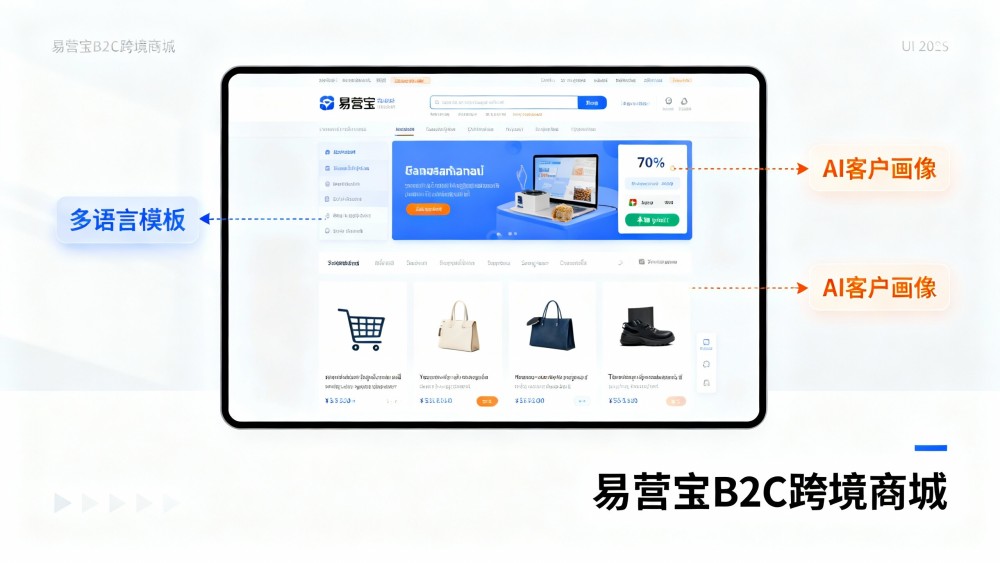
Different target markets require differentiated KPI settings for application scenarios. For example, Southeast Asian markets for apparel and digital sellers prioritize conversion rates and low-cost order placement, while Middle Eastern machinery and building material manufacturers emphasize inquiry quality and compliant payment processes. European and American brand direct sellers focus on branded search and repurchase rates. To achieve end-to-end conversion for these scenarios, it is recommended to use a unified platform supporting multilingual capabilities, user tag management, and Google Ads smart placements. In practice, platform products can be selected for unified tracking and automated optimization, such as EasyBao B2C Cross-Border E-Commerce, which features built-in AI translation, full-stack SEO engines, and customer behavior tracking modules. These tools connect foreign trade marketing assets like multilingual websites, Google Ads optimization, and Facebook/TikTok marketing, forming a visualized data flow from content production to ad placements to CRM closed loops, enabling refined operations for distributors and agents.
Technical Performance and Implementation Points
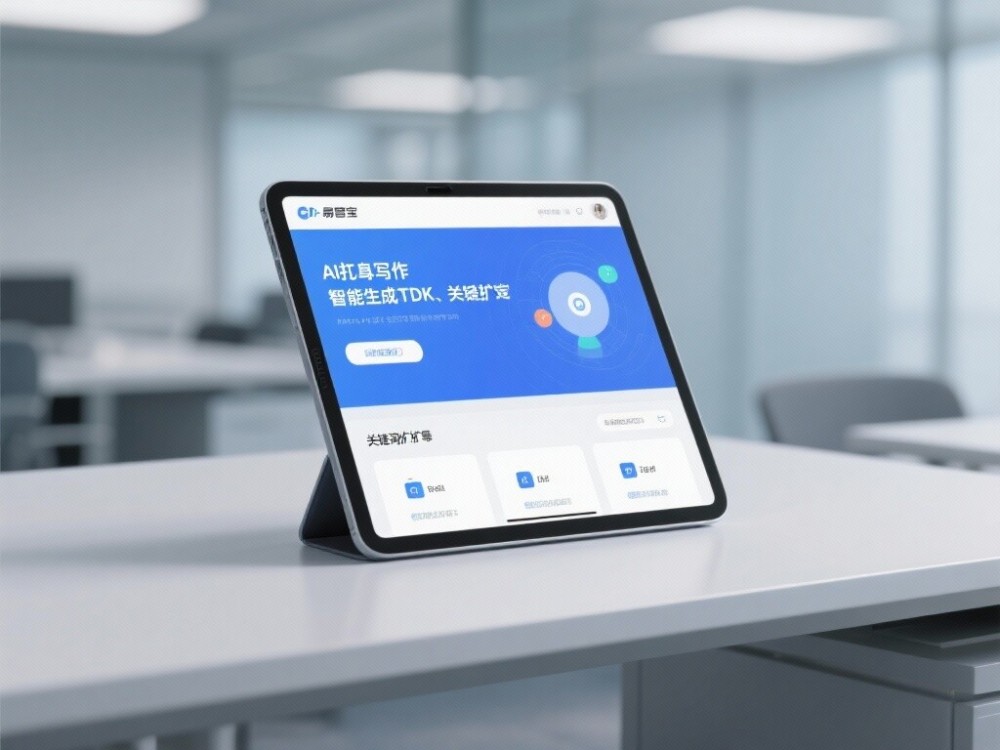
Technically, the key lies in data collection and attribution capabilities. It is advised to deploy server-side events and front-end pixel dual tracking while enabling CDP or tag managers to support user segmentation and cross-device identification. Multilingual independent websites should feature automatic recognition of 300+ languages and URL standardization, ensuring site structures favor search engine crawling and SEO scoring. AI keyword expansion, automated TDK generation, and AI image creation can continuously produce high-quality content in daily placements, with creative factory models improving efficiency and reducing labor costs. For Google Ads optimization, common practices include keyword layering, audience retargeting, landing page A/B testing, and value-based bidding. Meta data, site maps, and structured data should be managed automatically by SEO engine modules to ensure bidirectional optimization of Google promotions and on-site experiences.
Client Cases, KPI Frameworks, and Common Pitfalls
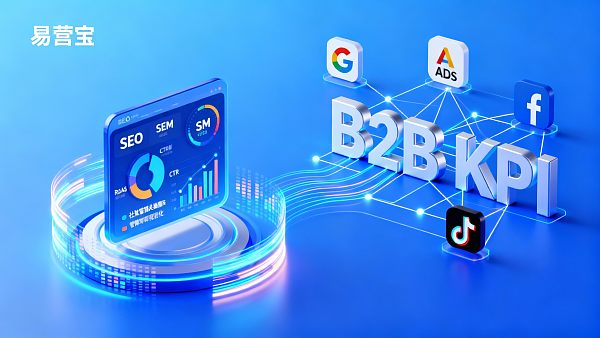
Successful practices show that breaking down marketing KPIs into visitor quality indicators and commercial conversion metrics can significantly improve ROI. Recommended B2B marketing KPIs include coverage rate, CTR, CR, CPL, deal cycle, and LTV/CAC ratios. Common pitfalls include focusing solely on click volume while ignoring landing page experience, single attribution leading to budget misallocation, and neglecting multilingual content localization resulting in high bounce rates. In one case, a manufacturing company targeting Europe and America used AI ad management and multilingual website optimization to double Google Ads conversion rates and reduce ad costs by 30%, relying on refined keyword pools, multivariate creative testing, and closed-loop execution of customer behavior tagging. This section provides actionable inspection checklists and improvement suggestions for project managers, users, and post-sales teams.
Trends and Why Choose Us / Contact Us
In the next three years, cross-border advertising will increasingly rely on multimodal AI generation, real-time attribution, distributed CDN, and compliant payment integrations. Collaborative placements between social short-video platforms and search engines will become standard. Reasons to choose EasyBao are clear: a decade of deep industry expertise + AI-driven technical backend, global media partnerships, and one-stop product capabilities help enterprises achieve "website-building - lead generation - conversion" closed loops. Contact us for industry-specific KPI diagnostics and pilot plans. EasyBao offers full-cycle services from strategy formulation to technical implementation and operational outsourcing, providing decision-makers and project leads with ROI prediction models and free preliminary ad assessments. Click or scan to inquire about customized solutions.
- Social Media Marketing
- Multilingual standalone site
- Independent Foreign Trade Website Construction
- Standalone site optimization
- Google Ads
- Inquiry quality
- Google Ads
- Google Ads Optimization
- SEO+SEM Integrated Marketing
- Independent website construction
- Youtube
- TikTok
- Campbell (name)
- SEO
- Independent site
- SEO Optimization
- Smart Website
- Foreign trade independent website
- Multilingual website
- Multilingual Website for Foreign Trade Marketing Tools
Related Articles
 The demand for website construction in Chengdu and Chongqing is growing rapidly. What new opportunities are emerging in the Southwest market?
 Why should businesses create multilingual websites? Evidence-based analysis on reducing after-sales costs
 How to Utilize Google SEO Monitoring and Optimization to Continuously Improve B2B Website Inquiry Quality Post-Sale


Related Products
 EYB SaaS Intelligent Station Building and Marketing SystemYiyingbao SaaS intelligent station building and marketing system, AI-driven zero-code station building, 10-minute rapid construction of multi-language foreign trade independent station, global server acceleration, AI intelligent SEO optimization, help enterprises efficiently connect to the global market. The perfect fusion of technology and operation, so that foreign trade station building simple to the extreme!
 AI+SEM Intelligent Advertising Marketing SystemAI+SEM drives intelligent campaign creation, empowering full-funnel precision advertising marketing. The system automatically generates weekly/monthly reports, AI-recommends keywords and target countries, monitors core metrics in real-time with intelligent alerts, and enables one-click high-conversion campaign launches to accelerate lead acquisition and boost ROI.
 AI+SEO Dual-Engine System Optimization ServiceE-Yingbao AI+SEO Dual-Engine Optimization System leverages AI-powered keyword mining, content generation, and comprehensive technical optimization to help export-oriented enterprises capture high-quality organic traffic, significantly boosting search rankings and conversion rates.
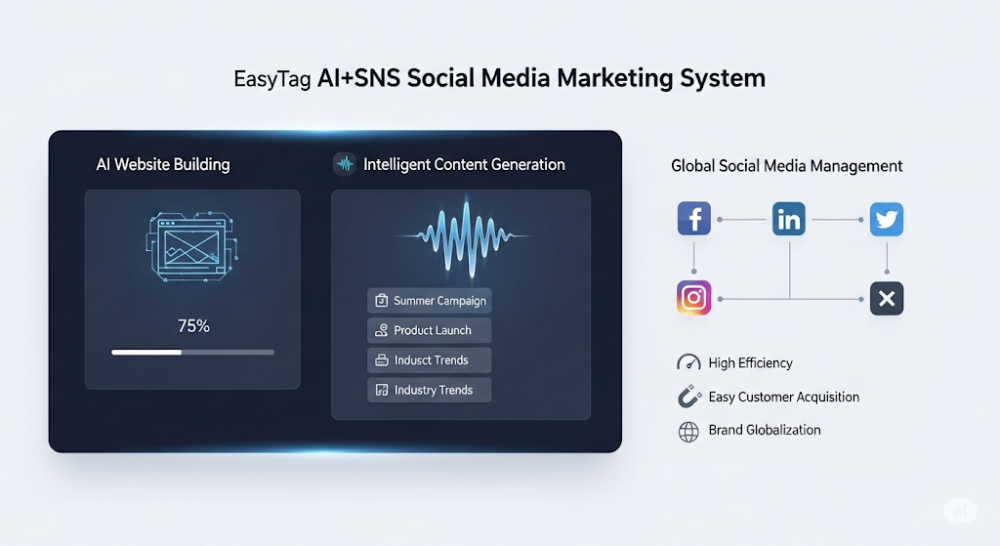
 AI + SNS Social Media Full Intelligence Marketing SystemEYBao AI+SNS Social Media All Intelligent Marketing System - Precise social capture in the era of social media, supporting one-click synchronization of content on mainstream platforms such as Facebook, LinkedIn, etc., AI intelligent rewriting of postings to enhance the degree of adaptability, 24/7 intelligent customer service and user profile analysis, helping enterprises to efficiently expand the global market.
 AI+SEO Marketing SolutionEasyWin AI+SEO Marketing Solution leverages AI-powered batch content creation, intelligent TDK generation, and precise keyword expansion to comprehensively optimize website SEO performance, boosting traffic and conversion rates. Helps businesses build a highly efficient intelligent website ecosystem.
 AI+SEM Advertising & Marketing SolutionsAI+SEM advertising and marketing solution utilizes AI intelligent technology to deeply empower SEM advertising. Through AI intelligent generation of weekly/monthly reports, multi-dimensional presentation of account data, a comprehensive grasp of the effectiveness and trends of advertising, AI precise recommendation of keywords and countries, intelligent generation of high-conversion advertisement language, a key to start the efficient advertising program, helping enterprises to quickly acquire customers. At the same time, the system monitors the core indicators in real time, intelligently recognizes fluctuation abnormalities and warns them in time to ensure stable and high return of advertising effect.
 Domain Name ServicesEasy Operation provides professional domain services, including intelligent query, one-stop registration, brand protection, and full-cycle management, helping enterprises build a digital brand image.
 EasyStore B2C Cross-border E-commerce Platform, Independent SiteEasyStore B2C Cross-border E-commerce Independent Store is an intelligent website building and cross-border e-commerce integrated solution independently developed by EasyStore Information Technology (Beijing) Co., Ltd. The system is specifically designed for small, medium, and large export enterprises, integrating 'website building, operation, marketing, advertising, and conversion' into one platform, helping businesses quickly establish cross-border e-commerce independent stores to achieve brand globalization and global sales growth.
The platform supports multiple languages, currencies, and multi-channel marketing, with built-in AI intelligent translation and SEO optimization systems, suitable for mainstream markets such as Southeast Asia, Europe & America, Latin America, and the Middle East, assisting Chinese manufacturing enterprises in efficiently deploying international e-commerce strategies. SSL CertificateEasyCert provides professional SSL security certificate services, including single-domain and wildcard certificates, ensuring encrypted data transmission, identity verification, and integrity protection for websites. This empowers businesses to establish secure and trustworthy online business environments.