I. The Authoritative Definition, Strategic Positioning, and Development History of SEO+SEM Integrated Marketing
1. The Authoritative Definition and Core Elements of SEO+SEM Integrated Marketing
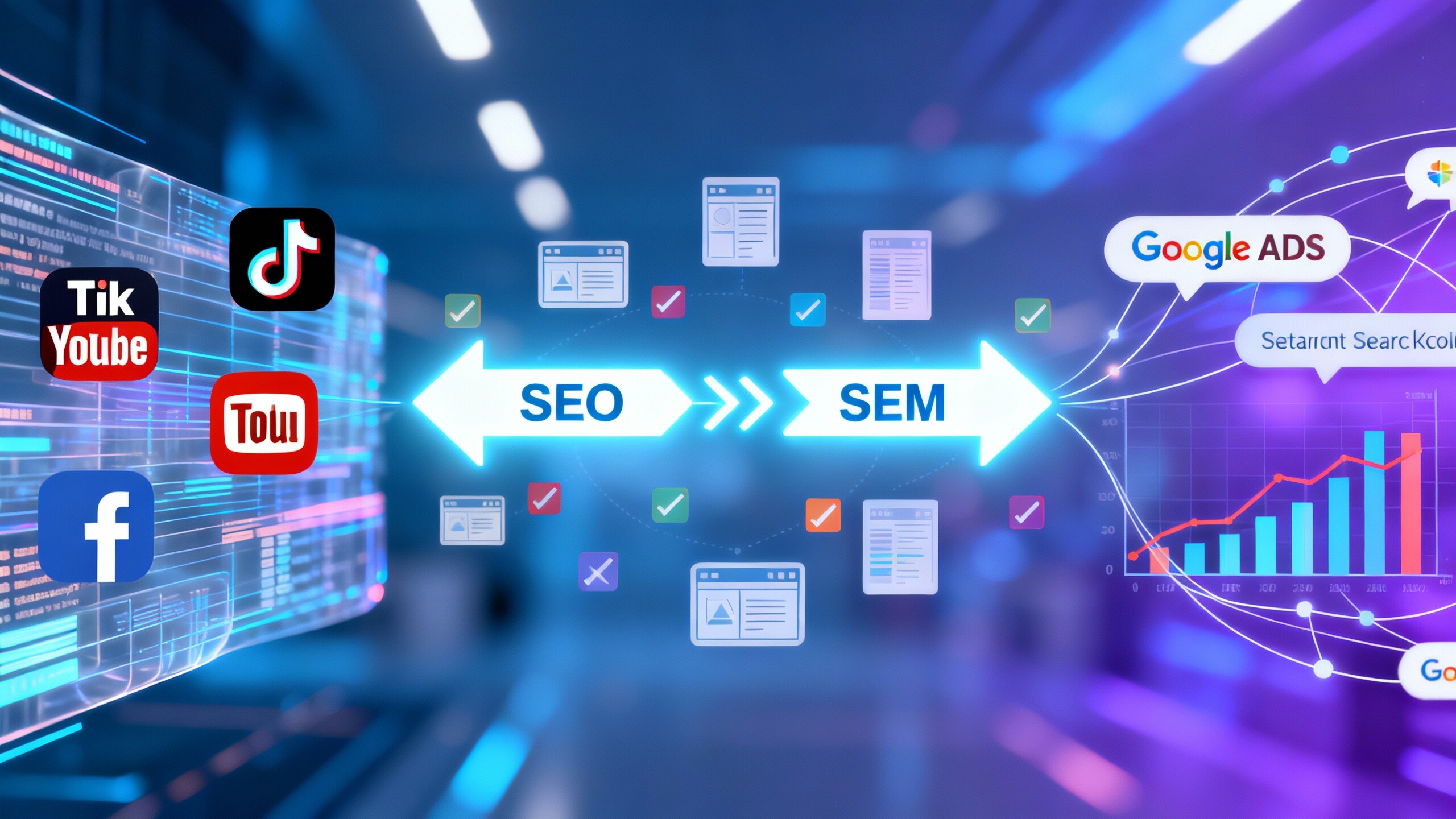
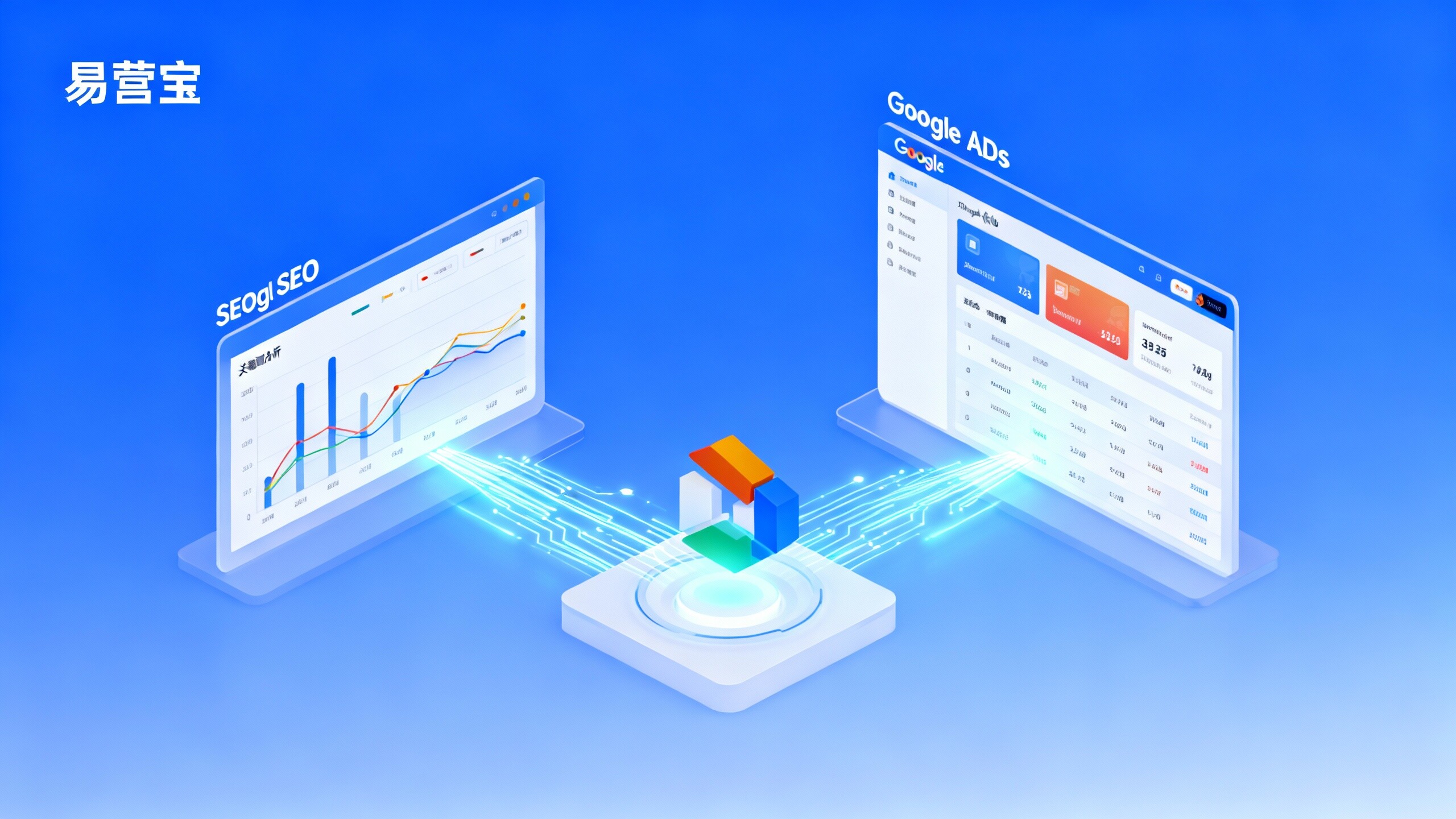
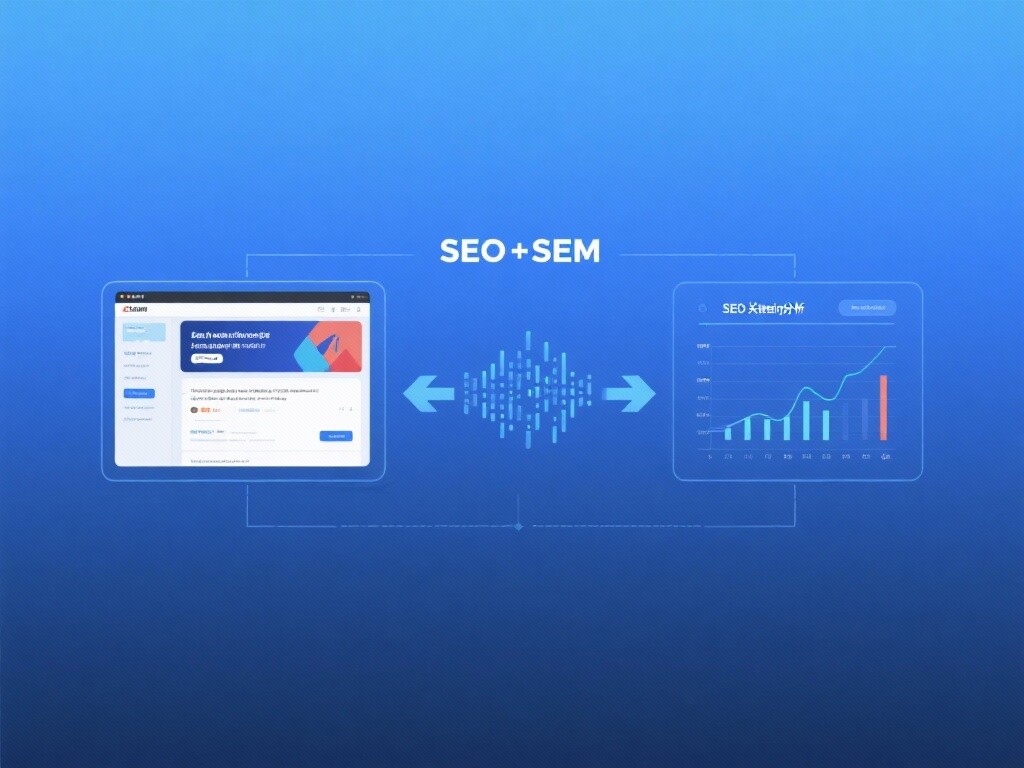
SEO+SEM Integrated Marketing (Integrated SEO and SEM Marketing) refers to treating **search engine optimization (SEO)** and **search engine paid marketing (SEM/PPC)** as a unified, data-interconnected whole within the lead generation system of foreign trade independent websites. The goal is to maximize **brand exposure rate** on search engine results pages (SERPs), optimize **total lead acquisition cost (CAC)**, and improve **overall conversion volume**. Core elements include: **data sharing, keyword synergy, content co-creation, and brand consistency**.
2. The Three Irreplaceable Strategic Values of Integrated Marketing
Integrated strategies offer advantages unattainable by single channels:
- **Accelerated Learning Curve:** Leverage SEM’s rapid feedback data (conversion rates, CPC) to guide SEO keyword selection and content prioritization, significantly shortening SEO effectiveness cycles.
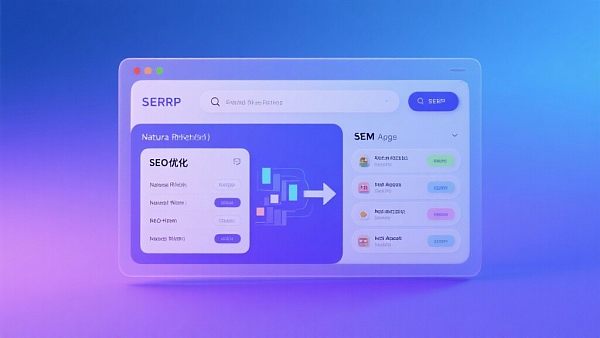
- **Absolute Control of Search Engine Results Pages (SERPs):** For high-intent core keywords, simultaneously occupy paid ad slots, organic ranking positions, and knowledge cards, creating **“double exposure”** to drastically squeeze competitors’ visibility.
- **Risk Hedging and Cost Optimization:** Use SEM to capture keywords not yet ranked by SEO. Once SEO rankings improve, gradually reduce SEM bids, shifting traffic costs from paid to free.
3. The Development History and Evolution of SEO+SEM Integrated Marketing Strategies
Early Stage (2000s): SEO and SEM were **completely independent** departments competing for budgets and traffic. Mid-Stage (2010s): Began recognizing the importance of **branded terms**, with SEO and SEM collaborating to protect them. Modern Era (2020s–Present): Strategies have evolved into **data-driven, full-process integration**, focusing on **full-funnel conversion goals**, emphasizing **PPC data feedback for content strategies and technical SEO**, and leveraging AI tools for collaborative bidding and content optimization.
II. The 5 Core Technical Principles of SEO+SEM Integrated Marketing: Synergistic Flywheel and Data Feedback
The technical core of integrated marketing lies in seamless data and strategy alignment:
1. SEM Data Feedback for SEO Prioritization Principle
Principle: SEM ads can quickly test **real conversion rates (CVR) and cost per acquisition (CPA)** for keywords. Technical Application: Use **“low-competition, high-conversion”** long-tail keywords from SEM reports as the **highest priority** for SEO content cluster development. This ensures SEO teams allocate resources to themes with proven profitability potential.
2. Landing Page Collaborative Optimization Principle
Principle: **Google SEM Quality Score** heavily depends on landing page relevance and experience; **Google SEO** prioritizes page experience (CWV). Technical Application: SEO and SEM teams must co-create **unified, CWV-compliant landing pages**. SEM copy and keywords must **closely match** SEO page content to simultaneously boost ad quality scores and organic ranking potential.
3. Full-Funnel Keyword Matrix Coverage Principle
Principle: Ensure every stage of the customer journey is reachable via SEO or SEM. Technical Application:
- **Top of Funnel (ToFu - Awareness):** Use SEO for **industry knowledge and solutions**, supplemented by SEM **low-cost, broad display ads**.
- **Bottom of Funnel (BoFu - Decision):** Use SEM for **high-bid, exact-match product/quote keywords**, while optimizing SEO **product detail pages and case studies** to capture traffic.
4. Branded Keyword Synergy Protection Principle
Principle: Dominate **branded searches** with absolute advantage. Technical Application:
- **SEO Task:** Ensure brand sites occupy Top 3 organic rankings.
- **SEM Task:** Use **low-cost branded keyword ads** for **24/7 protection**, preventing competitors from stealing high-intent traffic.
5. Remarketing Lists (RLSA) and Content Browsing Behavior Integration Principle
Principle: Add users who visited specific SEO content pages (e.g., blogs, technical docs) to SEM **remarketing lists (RLSA)**. Technical Application: These users show topic interest but no inquiries. Target them with **high-intent offers or product ads** to convert MQLs to SQLs at minimal cost.
III. The 4 Core Technical Features and Applications of SEO+SEM Integrated Marketing
1. Technical Feature: Double Exposure and Trust Stacking Effect
Feature: When a company’s organic link and paid ad appear together on SERPs, it’s seen as **dual validation**. Application: Double exposure significantly boosts **brand recall and trustworthiness**, with **total CTR far exceeding single-channel performance**.
2. Practical Application: Competitor Keyword SEO-Assisted SEM
Application: When bidding on competitor branded terms, SEM faces lower quality scores and higher CPCs. The integrated solution: Create a **dedicated landing page for competitor keywords** with **comparative advantages**, simultaneously **SEO-optimized**. This improves ad **relevance** while capturing competitor organic traffic.
3. Practical Application: SEM Risk Hedging During SEO Downgrades
Application: When algorithm updates or technical issues cause temporary SEO ranking drops, **increase SEM budgets and coverage** to compensate for lost organic traffic. Once SEO recovers, revert SEM budgets to optimization mode for continuity.
4. Practical Application: Cross-Channel Conversion Path Attribution Analysis
Application: Use **Google Analytics 4 (GA4)** to track full conversion paths. For example, a user might first visit via **SEO blog**, then convert days later via **SEM remarketing ads**. Integrated marketing requires precise analysis of such **“SEO assist, SEM final push”** paths to allocate budgets effectively.
IV. Comparative Analysis and Industry Scenarios for SEO+SEM Integrated Marketing vs. Independent Channels

1. Integrated Marketing vs. Independent Channel Marketing Comparative Analysis
2. Typical Foreign Trade Industry Scenarios for Integrated Marketing
Integrated strategy applications across industries:
- **B2B High-Ticket Machinery/Equipment:** Use SEM to quickly test **product-customized** long-tail keywords. Once validated, allocate SEO resources to **in-depth technical articles**, building professional authority.
- **Cross-Border B2C Product Launches:** Initially, use **high-bid SEM to dominate Top 1 exposure**, while SEO teams rapidly build product pages and review Schema. As SEM budgets taper, SEO sustains traffic.
- **Medical/Electronic Components:** Protect **branded and certification keywords** via SEM, while using SEO blogs for **industry knowledge dissemination**, ensuring brand authority and reliability.
3. Certification and Professional Standards for Integrated Marketing
Professional SEO+SEM integration must adhere to:
- **Team Collaboration Standards:** Establish **cross-department communication mechanisms**, with SEO and SEM managers regularly sharing keywords and conversion data.
- **Data Integration Certification:** Master **Google Analytics 4, Google Ads, and Google Search Console** for data integration and attribution analysis.
- **Landing Page Standards:** Follow Google’s **CWV/E-E-A-T guidelines**, ensuring consistent high-quality experiences for paid and organic traffic.
V. Implement SEO+SEM Integrated Strategy Now for a Quantum Leap in Lead Generation ROI!
Are your marketing channels still operating in silos, wasting budgets and underperforming? It’s time to break barriers and launch **data-driven SEO+SEM integrated marketing**! Our expert team specializes in **keyword synergy matrices, landing page CRO optimization, and cross-channel attribution analysis**. We help convert paid traffic into SEO insights and organic traffic into remarketing audiences, building a sustainable, high-ROI global lead generation flywheel. Book a **free “SEO+SEM Integration Potential Assessment”** now for a professional synergy strategy and ROI roadmap!
Click for Free Integration Potential AssessmentFAQ
1. Does integrated marketing mean we have to cut SEO or SEM budgets?
Answer: Not necessarily. The goal of integrated marketing is **optimizing budget allocation and efficiency**. During stages with poor SEO rankings, SEM budgets should be appropriately increased. Once SEO rankings stabilize, SEM budgets can be reduced to focus solely on **brand protection and remarketing**, redirecting saved funds to the next SEO strategy theme to achieve efficient resource recycling.
2. How to avoid internal competition (Cannibalization) between SEO and SEM for the same keyword?
Answer: Internal competition can be resolved through **keyword intent segmentation**: 1) **High commercial intent keywords** (e.g., "buy [product name]") should lean toward SEM. 2) **Informational/research intent keywords** (e.g., "how to solve [problem]") should favor SEO. 3) For **branded keywords**, prioritize SEO with low-cost SEM protection. Avoid simultaneous bidding and ranking for highly competitive terms.
3. How can SEM Quality Score help improve SEO rankings?
Answer: SEM Quality Score (determined by landing page experience) is highly correlated with SEO's **Core Web Vitals (CWV)**. Optimizing landing pages to improve Quality Score (e.g., faster loading speeds, enhanced relevance) also meets Google's **user experience requirements for SEO**, indirectly boosting organic rankings.
4. In foreign trade, should we prioritize SEO or SEM first?
Answer: **Both should launch simultaneously**. SEM can **quickly validate markets and capture initial inquiries/conversion data** in the early business stages, while SEO should immediately begin **technical infrastructure and content cluster development** to build a foundation for long-term free traffic growth. The integrated strategy is **short-term SEM rapid activation, long-term SEO sustained growth**.

Customer Reviews
General Manager Zhang, European Industrial Automation Equipment Exporter
"Previously, our SEO and SEM teams operated separately and blamed each other. After implementing the integrated strategy, we used SEM to identify **long-tail keywords with conversion rates up to 8%** and immediately allocated SEO resources to create in-depth content. As a result, we secured **a large volume of high-quality free inquiries** within 6 months. **Overall customer acquisition cost (CAC) dropped by 35%**—the efficiency is astounding."
Manager Wang, North American High-End Consumer Electronics Brand
"By achieving **dual exposure of 'paid + organic' for core keywords**, our brand's search click-through rate increased by **70%** compared to single-link campaigns. More importantly, through **RLSA lists**, we remarketed to users who browsed our SEO blog pages, achieving **a remarketing ad ROAS of 500%**. The integrated strategy truly delivered 1+1>2 results."
 How Distributors Can Improve B2B Website Inquiry Conversion Rates Through Facebook Marketing and Google PromotionCombining Facebook Marketing with Google Promotion for B2B Standalone Site Optimization to Enhance Inquiry Quality and Conversion; Achieve Precise Traffic Through Google SEO, Yandex Promotion, and Google Ads Optimization, Build an Integrated SEO+SEM Marketing and Foreign Trade Marketing Tool for Multilingual Websites, Immediately Obtain Customized Growth Solutions, and Help B2B Websites Achieve High-Quality Inquiry Conversion.
 How can businesses use integrated SEO+SEM marketing with Google Ads optimization to enhance foreign trade lead generation within 90 days?SEO+SEM integrated marketing with Google Ads optimization achieves short-term Google Ads scaling and long-term SEO sedimentation within 90 days through multilingual independent sites and foreign trade website construction (foreign trade marketing tools like multilingual websites). Combined with TikTok, YouTube, and Facebook social media marketing and automated ad placements, it rapidly reduces CPA while boosting foreign trade lead conversion. A free 90-day executable plan is available.
 How to Choose a Foreign Trade Website and Advertising Team? Multilingual Independent Sites and Google Ads Optimization Procurement ListSEO+SEM Integrated Marketing, Foreign Trade Independent Site Construction and Google Ads Optimization Strategy: Providing Multilingual Independent Sites and Social Media Advertising (TikTok, YouTube, Facebook) Procurement List, Cost and Landing Evaluation, Helping You Quickly Identify Teams and Achieve Quantifiable Growth, Covering Google Promotion and Foreign Trade Marketing Tools Multilingual Website Features, Including Practical Tips to Reduce CAC and Increase LTV, Free Download of Procurement List and Trial Consultation.
 B2B Lead Generation Combo: Integrating TikTok/YouTube/Facebook Social Media Marketing with Google Ads OptimizationSEO+SEM Integrated Marketing: Combining TikTok, YouTube, Facebook Social Media Marketing with Google Ads Optimization and Google Promotion, Supporting Multilingual Independent Sites and Foreign Trade Independent Site Construction, Creating a Multilingual Website for Foreign Trade Marketing, Quickly Improving Traffic and Conversion, Reducing Customer Acquisition Costs, View Practical Landing Pages and KPI Settings.
 Case Study: How to Quickly Enter the Southeast Asian Market Through TikTok and Facebook Social Media Marketing Combined with Multilingual Independent SitesSEO+SEM Integrated Marketing, TikTok and Facebook Social Media Marketing Synergy, Combined with Multilingual Independent Sites and Foreign Trade Independent Site Construction, Achieving Google Ads Optimization and Google Promotion Closed-Loop Enhancement; Case Study Practical Strategies, YouTube Long-Form Content Supplementation and Placement Models, Helping You Quickly Enter the Southeast Asian Market, Free Customized Placement Solutions.
 10 Common Mistakes in Google Ads Optimization: How to Avoid Budget Waste in Google Promotion for Foreign Trade Independent WebsitesGoogle Ads Optimization and Foreign Trade Independent Website Construction: Integrating Multilingual Websites with SEO+SEM Marketing, AI Ad Diagnostics to Avoid Budget Waste, Improve Conversion and ROI; Building Remarketing Funnels Through Social Media Marketing (TikTok, YouTube, Facebook). Click for Free Diagnostics to Quickly Reduce CPA.
 Short-term effective foreign trade marketing tools: Key points for multilingual website + Google promotion implementation and acceptanceMultilingual website + Google promotion: With Google SEO and Google Ads optimization as the core, combined with B2B independent site optimization, Facebook marketing, and Yandex promotion, implement localized domain names, landing pages, and form optimization, build SEO+SEM integrated marketing and data closed-loop, and quickly improve inquiry quality and conversion rate. View the implementation and acceptance points immediately for rapid results.
 Technology Flow to Improve Inquiry Quality: Synergistic Strategies of Google SEO and Google Ads Optimization for B2B WebsitesSEO+SEM Integrated Marketing Combines Google SEO and Google Ads Optimization to Significantly Enhance Inquiry Quality and Overseas Conversion for B2B Websites. Integrates Multilingual Independent Sites, Facebook Marketing, and Yandex Promotion, Quickly Acquires High-Intent Leads and Reduces Customer Acquisition Costs Through Data-Driven and Automated Diagnostics. Click to View Implementation Strategies and Success Cases.