









- How Can a Brand Updates Page Be Made More SEO-Friendly? Analysis of Update Frequency, Content Structure, and Internal Linking StrategyJun 28, 2026View details
- What stages does the cross-border services ecosystem include? How do website building, promotion, payment, and compliance work togetherJun 22, 2026View details
- How will email marketing costs change in 2026Jun 22, 2026View details
- The China-US tariff arrangement has reached a preliminary consensus, and the trade association will be establishedJun 15, 2026View details
- Should overseas brand marketing start with ads or contentJun 21, 2026View details
- What determines B2C cross-border e-commerce website development costs? A breakdown of features, interfaces, and deployment methodsJun 17, 2026View details
- China-Morocco zero-tariff access, a breakthrough in the cost of Moroccan goods exports to ChinaJun 11, 2026View details
- What signal should be released for the suspension of exports to JapanJun 10, 2026View details
How Middle East Website Building System Features Affect Conversion Performance
The conversion gateway of the Middle East market is being redefined by website-building capabilities
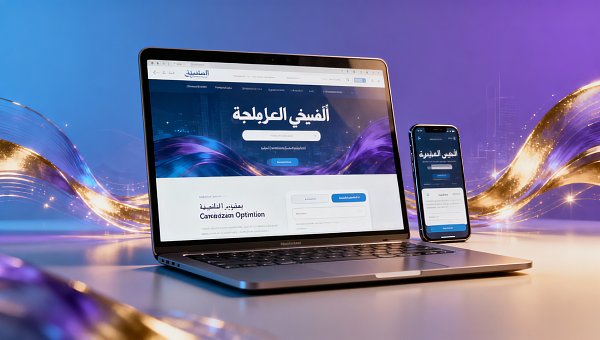
The functions of a Middle East website building system often determine whether visitors stay, inquire, or leave. For business decision-makers, only website-building capabilities that balance localized experience, conversion paths, and marketing coordination can truly amplify customer acquisition efficiency and business returns.
In the past two years, the online business environment in the Middle East has been rapidly upgrading: mobile traffic continues to rise, competition for cross-border inquiries is intensifying, advertising costs keep climbing, and users' expectations for website professionalism, access speed, and trust are also increasing accordingly. In this context, when companies discuss the functions of Middle East website building systems, it is no longer just about “whether it can go live,” but “whether it can convert.” A seemingly ordinary language switch, payment guidance, form design, or page loading optimization may directly affect inquiry rates, lead capture rates, and deal-closing probability.
For the integrated business model of website + marketing services, a website is not an isolated tool, but the central hub connecting search, advertising, social media, public traffic, and private-domain lead nurturing. Whether the functions of a Middle East website building system are complete and aligned with local user habits will directly determine whether marketing investment can be effectively amplified. E-business Treasure Information Technology (Beijing) Co., Ltd. has been deeply engaged in global digital marketing for many years. By building comprehensive solutions around intelligent website building, SEO optimization, social media marketing, and advertising placement, it is essentially helping enterprises improve overseas growth efficiency with more suitable digital infrastructure.
After traffic becomes more expensive, why the functions of Middle East website building systems become a key variable
In the past, many companies regarded websites as brand display windows, as long as the pages looked good and the basic content was complete. But now the competitive logic of the Middle East market has changed: traffic acquisition increasingly relies on refined campaign placement, user decision journeys are getting shorter, and websites must have the ability to “quickly understand needs—build trust—drive action.” This means that the functions of a Middle East website building system are not just technical configurations, but part of the conversion model.
Especially in an Arabic-language environment, layout direction, content hierarchy, cultural visual preferences, mobile adaptation, and local communication methods all affect whether users are willing to interact further. If the website building system only supports simple translation, but cannot support bilingual switching, right-to-left layout, localized forms, marketing tracking tags, and lead attribution, then even a high advertising budget can easily be wasted by inefficient pages.
Core factors driving change
The Middle East website building system functions that truly affect conversion results are concentrated at these levels
From the perspective of conversion outcomes, whether the functions of a Middle East website building system are effective depends not on the “number of functions,” but on “whether the functions serve conversion goals.” Many websites fail not because of poor design, but because key parts are not configured specifically for the browsing habits of Middle East users.
- Multilingual and Arabic right-to-left layout support: it is not enough to translate content alone; navigation, forms, buttons, and visual structure must also align with reading habits.
- High-performance access and regional node optimization: if the functions of a Middle East website building system can improve loading speed, first-screen bounce can be significantly reduced.
- Smart forms and instant communication entry points: simplifying fields, highlighting contact methods, and integrating commonly used local communication channels help improve lead capture rates.
- SEO and landing page coordination: only by supporting independent landing pages, keyword layout, structured content, and tracking tags can organic traffic and paid traffic be amplified together.
- Trust endorsement modules: certificates, case studies, partner brands, regional service capabilities, logistics, and after-sales explanations are all important elements in increasing willingness to close deals.
When sorting out operational logic, some companies also draw on cross-domain management methods, for example through application strategies of lean cost concepts in enterprise inventory management content like this to understand how to allocate resources more efficiently. In overseas marketing scenarios, the same applies: the functions of a Middle East website building system are not about blindly stacking features, but about focusing on the key nodes that most affect conversion and investing the budget in modules that can truly improve results.
The impact on different business links is often more direct than expected
The strengths and weaknesses of Middle East website building system functions affect not only the website team itself, but also create a chain reaction in customer acquisition, sales conversion, brand building, and data-driven decision-making. First, in the customer acquisition stage, both search optimization and advertising placement require stable and scalable page support capabilities. If the system does not support high-quality SEO structure, rapid page duplication, multi-version testing, and lead attribution, marketing actions will be difficult to iterate continuously.
Second, in the sales conversion stage, the website must undertake the tasks of “pre-qualification” and “building trust.” A website with strong Middle East website building system functions can help potential customers enter the communication stage more quickly through industry case studies, FAQ, quotation guidance, service descriptions, and quick inquiry entry points, thereby shortening the deal cycle. Conversely, if the user experience is fragmented, the sales team will have to spend more time explaining basic information, and overall conversion efficiency will naturally decline.
Furthermore, from a branding perspective, Middle East users’ perception of a company’s credibility is often built on details. Whether the page style is professional, whether the content is localized, whether the contact path is clear, and whether the mobile experience is smooth—users will judge all of these very quickly. Precisely because of this, Middle East website building system functions have already become part of a brand’s internationalized expression, rather than just a technical backend.
What deserves more attention next is not “website building,” but “growth coordination after website building”
In the future, the competitive focus of Middle East website building system functions will shift from basic setup to data-driven, intelligent, and marketing-coordinated capabilities. If enterprises hope that their websites will continue generating inquiries instead of remaining idle for a long time after launch, they should focus on the following directions:
- Whether it supports independent landing page management for different countries, different advertising campaigns, and different product lines.
- Whether it has a clear data dashboard that can track source channels, on-site behavior, form conversions, and inquiry quality.
- Whether it facilitates continuous content updates to meet the long-term SEO operation needs of the Middle East market.
- Whether it can form a unified chain with social media marketing, advertising placement, and customer management to avoid data silos.
- Whether it has subsequent expansion capabilities to support multi-site, multilingual, and multi-scenario operations.
Evaluation and response suggestions
If a website still remains at the display level, then no matter how good the campaign placement is, it can only bring short-term visits; if the functions of a Middle East website building system have already been upgraded around local experience, conversion efficiency, and marketing linkage, then the website will become a stable growth asset. Whether entering the Middle East market for the first time or preparing to optimize an existing site, companies should first examine website-building capabilities from the perspective of the conversion chain, rather than only looking at the page surface.
A more practical next step is to conduct a systematic audit of the existing website: check language and layout adaptation, access speed, mobile interaction, form design, SEO fundamentals, data tracking, and ad landing page performance. Only by evaluating Middle East website building system functions in real customer acquisition scenarios can you clearly see which problems are dragging down conversion and which optimizations are most worth prioritizing. Such adjustments often bring more certain growth than simply increasing the budget.
Related Articles
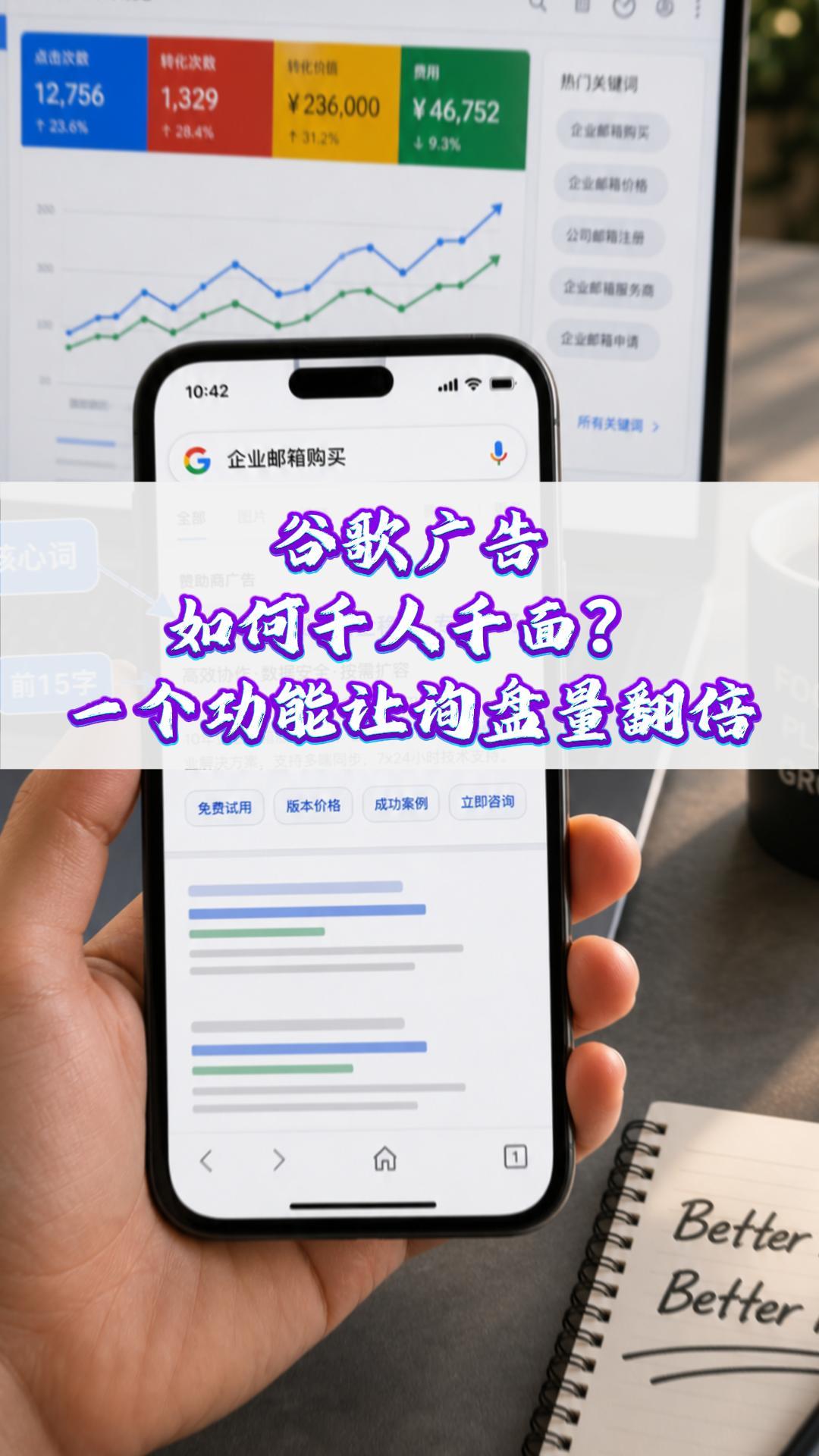
 How can Google Ads deliver one-to-one personalization? One feature can double your inquiry volume#ExportMarketing#OverseasPromotion#GoogleAds#SocialMediaMarketing#ForeignTradeIndependentWebsite
 Why a Google-optimized independent website is essential for trailer exports
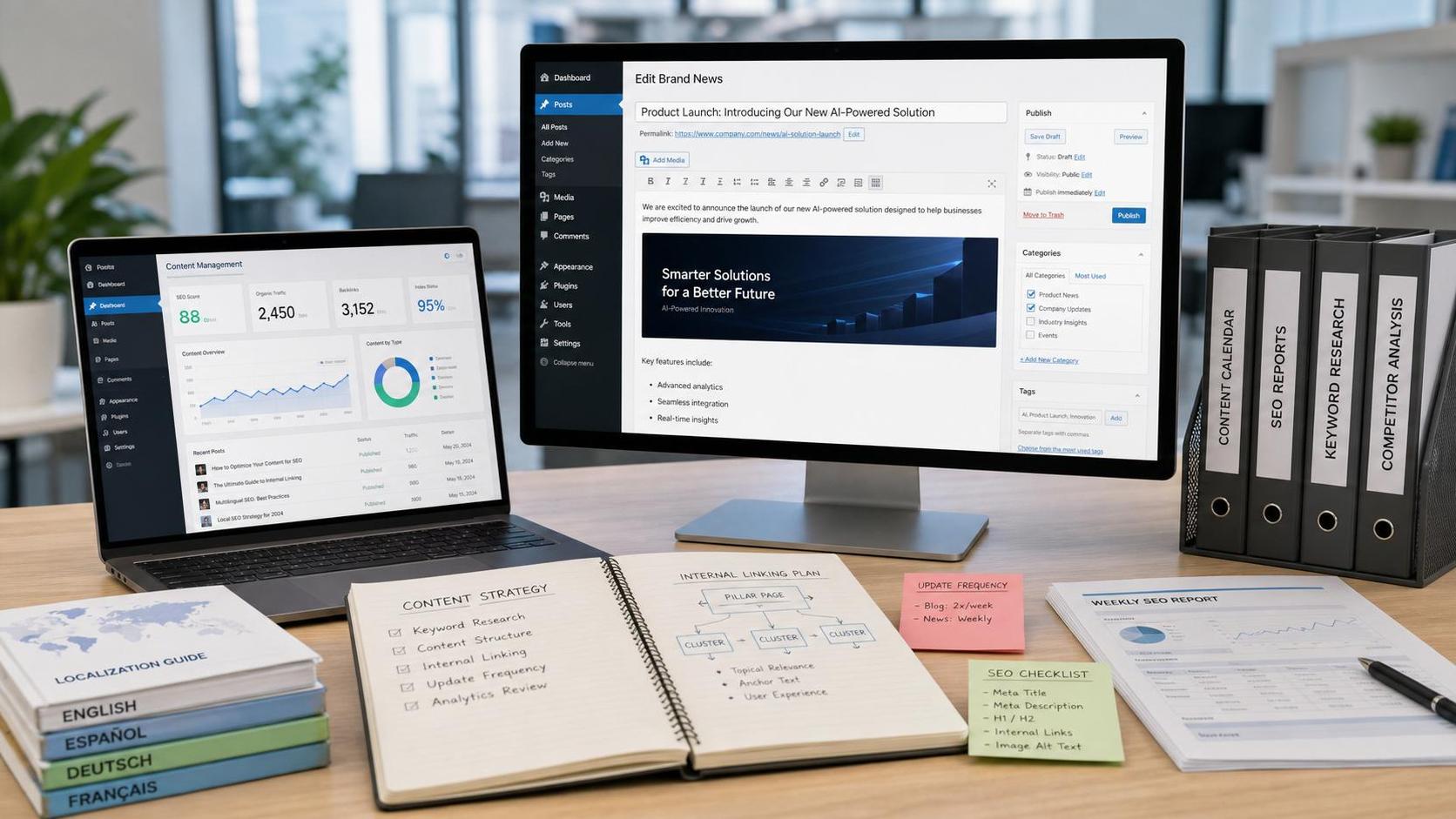
 How Can a Brand Updates Page Be Made More SEO-Friendly? Analysis of Update Frequency, Content Structure, and Internal Linking Strategy

Related Products
 EasyCamp SaaS Smart Website Marketing SystemE-Yingbao SaaS Smart Website Marketing System: AI-powered, zero-code website building. Rapidly launch multilingual independent e-commerce sites in just 10 minutes. Global server acceleration and AI-driven SEO optimization empower businesses to efficiently connect with global markets. The seamless integration of technology and user-friendly operation makes building e-commerce sites incredibly simple.
 AI+SEM Intelligent Advertising Marketing SystemAI+SEM drives intelligent ad creation, empowering full-funnel precision advertising marketing. The system automatically generates weekly/monthly reports, AI recommends keywords and target countries, monitors core metrics in real-time with intelligent alerts, and enables one-click high-conversion ad solutions to help quickly acquire customers and improve ROI.
 AI+SEO Dual Engine Optimization ServiceEasyWin AI+SEO Dual Engine Optimization System leverages AI-powered keyword mining, content generation, and comprehensive technical optimization to help foreign trade enterprises acquire high-quality organic traffic, significantly improving search rankings and conversion rates.
 AI+SNS Social Media Marketing SystemYingbao AI+SNS Social Media Marketing System - Precision social capture for the social media era. Supports one-click content synchronization across major platforms like Facebook and LinkedIn. AI intelligently rewrites posts for enhanced relevance. 24/7 AI customer service and user profiling analysis empower businesses to efficiently expand into global markets.
 AI+SEO营销解决方案易营宝AI+SEO营销解决方案,通过AI批量写作、智能生成TDK、精准关键词扩词等功能,全面优化网站SEO效果,提升流量与转化率。助力企业构建高效智能网站新生态。
 AI+SEM Advertising Marketing SolutionsAI+SEM Advertising Marketing Solution leverages AI technology to deeply empower SEM ad campaigns. It automatically generates weekly/monthly reports using AI, presenting account data across multiple dimensions for comprehensive insights into campaign performance and trends. The system precisely recommends keywords and target countries, intelligently generates high-conversion ad copy, and enables one-click activation of efficient campaign plans to help businesses rapidly acquire customers. Simultaneously, it monitors core metrics in real time, intelligently identifies abnormal fluctuations, and issues timely alerts to ensure stable, high-return advertising results.
 Domain Name ServicesEasyWin provides professional domain name services, including intelligent queries, one-stop registration, brand protection, and full lifecycle management, helping businesses build a digital brand image.
 EasyOperate B2C Cross-Border E-Commerce Platform & Independent WebsiteEasyStore B2C Cross-border E-commerce Independent Store is an intelligent website building and cross-border e-commerce integrated solution independently developed by EasyStore Information Technology (Beijing) Co., Ltd. The system is specially designed for small and medium-sized as well as large export enterprises, integrating 'website building, operation, marketing, advertising, and conversion' into one, helping enterprises quickly establish cross-border e-commerce independent stores to achieve brand globalization and global sales growth.
The platform supports multiple languages, multiple currencies, and multi-channel marketing, with built-in AI intelligent translation and SEO optimization systems, suitable for mainstream markets such as Southeast Asia, Europe and America, Latin America, and the Middle East, assisting Chinese manufacturing enterprises in efficiently deploying international e-commerce strategies. SSL证书易营宝提供专业SSL安全证书服务,包括单域名和泛域名证书,确保网站数据传输加密、身份验证和完整性保护,助力企业建立安全可信的在线业务环境。









