









- How Can a Brand Updates Page Be Made More SEO-Friendly? Analysis of Update Frequency, Content Structure, and Internal Linking StrategyJun 28, 2026View details
- What stages does the cross-border services ecosystem include? How do website building, promotion, payment, and compliance work togetherJun 22, 2026View details
- How will email marketing costs change in 2026Jun 22, 2026View details
- The China-US tariff arrangement has reached a preliminary consensus, and the trade association will be establishedJun 15, 2026View details
- Should overseas brand marketing start with ads or contentJun 21, 2026View details
- What determines B2C cross-border e-commerce website development costs? A breakdown of features, interfaces, and deployment methodsJun 17, 2026View details
- China-Morocco zero-tariff access, a breakthrough in the cost of Moroccan goods exports to ChinaJun 11, 2026View details
- What signal should be released for the suspension of exports to JapanJun 10, 2026View details
Middle East Website Building System Feature Checklist: Review These Before Launch
Pre-launch Preparation First: Which Middle East Website Building System Features Must Be Confirmed Early

When preparing to launch a website for the Middle East market, first clarifying the features of the Middle East website building system can significantly reduce later rework and compliance risks. This article will help technical evaluators quickly build a selection framework by covering language adaptation, performance and security, marketing integration, and localized experience.
For integrated website + marketing service projects, a website is not just a display page, but the core infrastructure for capturing search traffic, advertising campaigns, lead conversion, and brand building. Especially in the Middle East market, different countries show clear differences in language, payment habits, regulatory requirements, access environments, and mobile device usage preferences. If the Middle East website building system features are not systematically reviewed before launch, common follow-up problems often break out all at once: Arabic display misalignment, forms that cannot be submitted, pages loading too slowly, broken marketing tracking, and even promotion being affected due to inadequate privacy compliance handling.
Therefore, truly high-quality Middle East website building system features should not only be judged by whether they can “build the website,” but also by whether they support multilingual, multi-site, multi-channel marketing, and ongoing optimization. For companies hoping to enter the Gulf countries, North African Arabic-speaking regions, or Middle East English-speaking markets, early system selection determines the efficiency of future growth.
When Facing Different Market Entry Paths, the Evaluation Criteria for Middle East Website Building System Features Are Not the Same
Even when building websites for the Middle East, different business scenarios require different Middle East website building system features. If the main goal is brand presentation, the focus should be on language switching, visual presentation, form conversion, and basic SEO; if the main goal is customer acquisition through advertising, more attention should be paid to landing page duplication, pixel tracking, ad attribution, and content update efficiency; if it involves online inquiries, distributor systems, or parallel operations across multiple countries, permission management, site group structure, data isolation, and unified multi-domain maintenance capabilities are also required.
This is also why many projects have smooth communication in the early stage, but keep adding requirements after going live. On the surface, it looks like a website building issue, but in essence, it is because the boundaries of Middle East website building system features were not defined according to the scenario. Only by classifying scenarios before launch can you avoid a distorted feature list.
Scenario 1: When Brand Presentation Is the Main Focus, First Look at Language and Visual Adaptation Capabilities
When a brand website enters the Middle East market, the most easily overlooked factor is Arabic environment adaptation. Mature Middle East website building system features should support switching between left-to-right and right-to-left layout logic, ensuring that navigation, buttons, forms, carousels, and image-text modules do not become misaligned in the Arabic interface. If the system only supports machine translation, but does not support layout mirroring and component-level adjustment, the visual experience after the page goes live is usually poor.
In addition, font compatibility, date format, local titles, contact information display, and map positioning modules should also be checked. For brand websites, whether Middle East website building system features support independent editing of Arabic content, English content, and landing pages for different countries directly affects later SEO and brand credibility. Middle East users are sensitive to page professionalism, and inadequate handling of a single detail may reduce inquiry rates.
Key Evaluation Points
The focus should be on confirming whether Arabic layout direction switching is supported, whether independent URLs for multiple languages are supported, whether image replacement and localized copy can be managed separately, and whether different languages are allowed to set independent title descriptions and structured data. These are all high-priority Middle East website building system features.
Scenario 2: When Customer Acquisition Through Advertising Is the Main Focus, Pay Attention to Speed, Tracking, and Page Reuse
If the website is responsible for receiving traffic from search ads, social media ads, or feed ads, then Middle East website building system features cannot only meet the requirement of “being viewable,” but must also meet the requirement of “being convertible.” First, it is necessary to confirm whether the page is lightweight, whether it supports mobile-first loading, and whether it has image compression, delayed script loading, and global access acceleration capabilities. Network environments vary greatly across different parts of the Middle East, and loading speed directly affects bounce rates and advertising costs.
Second, marketing tracking is a high-frequency necessity. Ideal Middle East website building system features should support ad pixels, event tracking, conversion feedback, form source tagging, and multi-channel data attribution. If every new promotional page requires developers to manually handle tracking tags, the efficiency of campaign iteration will be clearly limited. In this case, a system that supports template reuse and rapid landing page generation has greater value.
For continuous content updates and optimization of search visibility, platforms with intelligent capabilities are more suitable for mid- to long-term operations. For example, integrating the AI+SEO Marketing Solution into website building and operational workflows can improve efficiency in keyword expansion, content production, title description generation, and on-page SEO detail optimization, reducing the time cost caused by repeated manual revisions.
Scenario 3: When Operating in Multiple Countries in Parallel, Pay More Attention to Permissions, Site Groups, and Content Management
When the business simultaneously covers markets such as the UAE, Saudi Arabia, Qatar, and Kuwait, Middle East website building system features need to be upgraded from single-site thinking to multi-site management. One common issue is this: if content is similar but countries are different, can the page structure be quickly duplicated while retaining independent editing permissions? If the system does not support site group management, the operations team can easily fall into an inefficient state of repeated building and repeated modification.
In addition, multi-region operations also involve different contacts, different form routing, different domain strategies, and different compliance notices. Mature Middle East website building system features should support role-based permission assignment, content approval workflows, independent site data statistics, and unified backend maintenance. This can improve collaboration efficiency while also reducing the risk of operational errors.
At a Glance: Differences in Middle East Website Building System Feature Requirements Across Different Scenarios
Practical Adaptation Recommendations You Can Apply Directly During System Selection
To evaluate Middle East website building system features more efficiently, you can review them in the following order before launch:
- First confirm language and layout: whether Arabic is natively supported, and whether mirrored layout capability is available.
- Then confirm performance and security: whether page caching, global acceleration, certificate deployment, and form protection are complete.
- Check the SEO foundation: whether URL rules, 301 redirects, sitemaps, title descriptions, and custom categories are controllable.
- Check marketing integration: whether analytics tools, ad pixels, lead feedback, and customer service tools are easy to integrate.
- Check content operation efficiency: whether bulk page creation, component reuse, and intelligent optimized content generation are supported.
If you plan to advance website building, SEO, and subsequent customer acquisition simultaneously, you may consider adopting an integrated operational approach. Capabilities such as the AI+SEO Marketing Solution are suitable for large-scale content production, intelligent TDK generation, precise keyword expansion, and continuous website SEO optimization, helping improve traffic and conversion efficiency in multilingual operations for the Middle East market.
Common Misjudgments: Many Problems Do Not Appear Only After Launch, but Result From Incorrect Early Evaluation
The first misjudgment is equating translation capability with localization capability. In fact, if Middle East website building system features lack Arabic layout adaptation, cultural expression handling, and local form logic, then even if the translation is accurate, it is still difficult to create a good experience.
The second misjudgment is focusing only on page appearance while ignoring backend operational capabilities. Many websites look refined at first glance, but content updates are complex, SEO settings are limited, and campaign tracking is difficult, which clearly slows down the pace of later promotion.
The third misjudgment is ignoring the data loop. If Middle East website building system features cannot connect visits, clicks, forms, lead sources, and search performance, then true data-driven optimization cannot be supported. Website launch is only the starting point; sustained growth depends on system capabilities that are trackable, adjustable, and reusable.
The Next Step Before Launch: Test Against a Checklist, Not Make Decisions Based on Feelings
For a website targeting the Middle East market, whether it is worth launching depends not on whether the demo page looks good, but on whether the Middle East website building system features truly match the business scenario. Before formal deployment, it is recommended to create a test checklist around six dimensions—language adaptation, access performance, SEO controllability, marketing tracking, permission collaboration, and future scalability—and verify actual usability item by item.
Yiyingbao Information Technology (Beijing) Co., Ltd. has been deeply engaged in global digital marketing and intelligent website building services for many years. Centered on technological innovation and localized services, the company has built full-chain capabilities covering website building, SEO, social media, and advertising campaigns. For projects that need systematic evaluation of Middle East website building system features, instead of patching issues after launch, it is better to clearly assess the key capabilities during the selection stage. Only in this way can the website truly become the starting point for growth in the Middle East market, rather than a new operational burden.
Related Articles
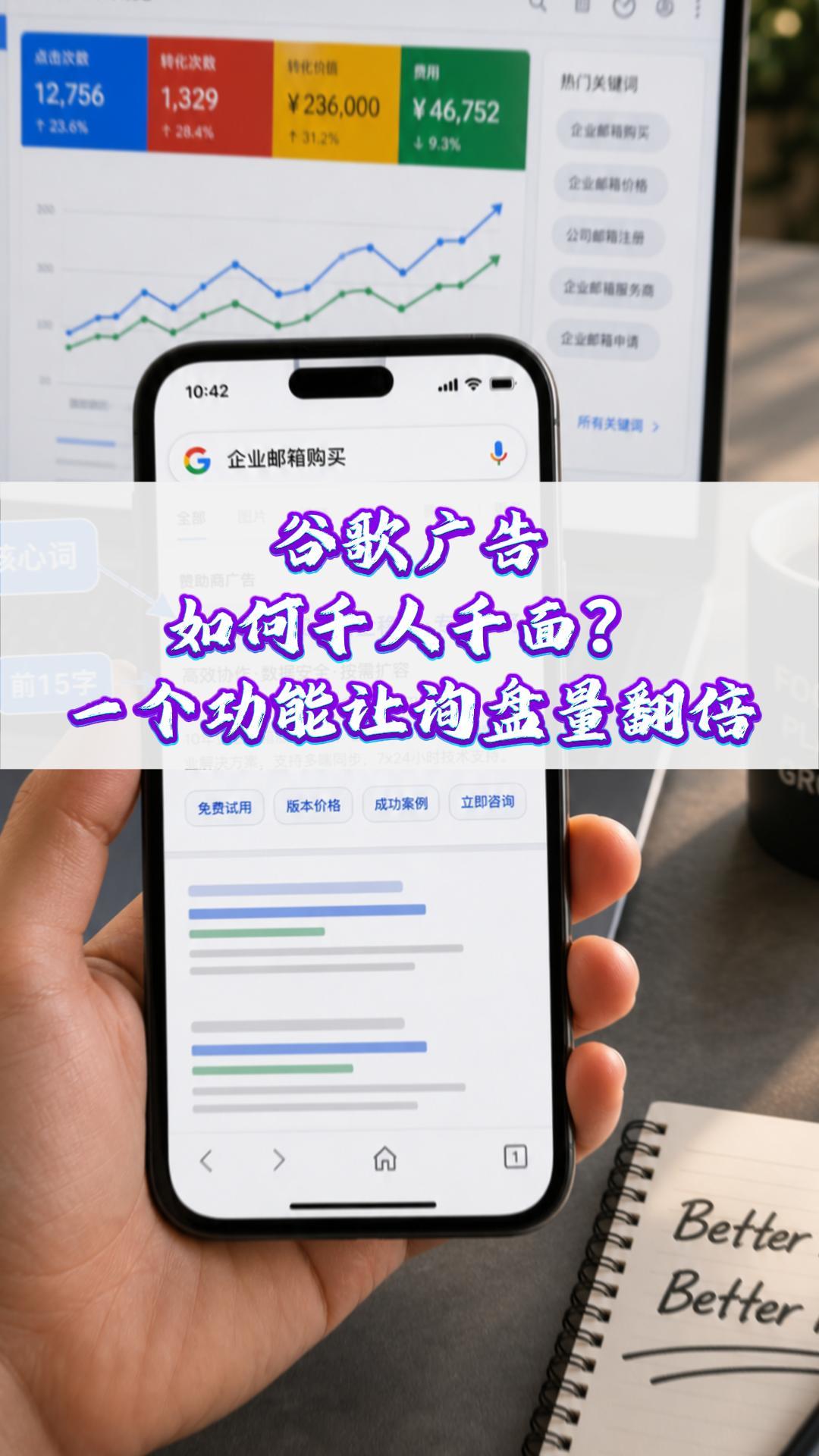
 How can Google Ads deliver one-to-one personalization? One feature can double your inquiry volume#ExportMarketing#OverseasPromotion#GoogleAds#SocialMediaMarketing#ForeignTradeIndependentWebsite
 Why a Google-optimized independent website is essential for trailer exports
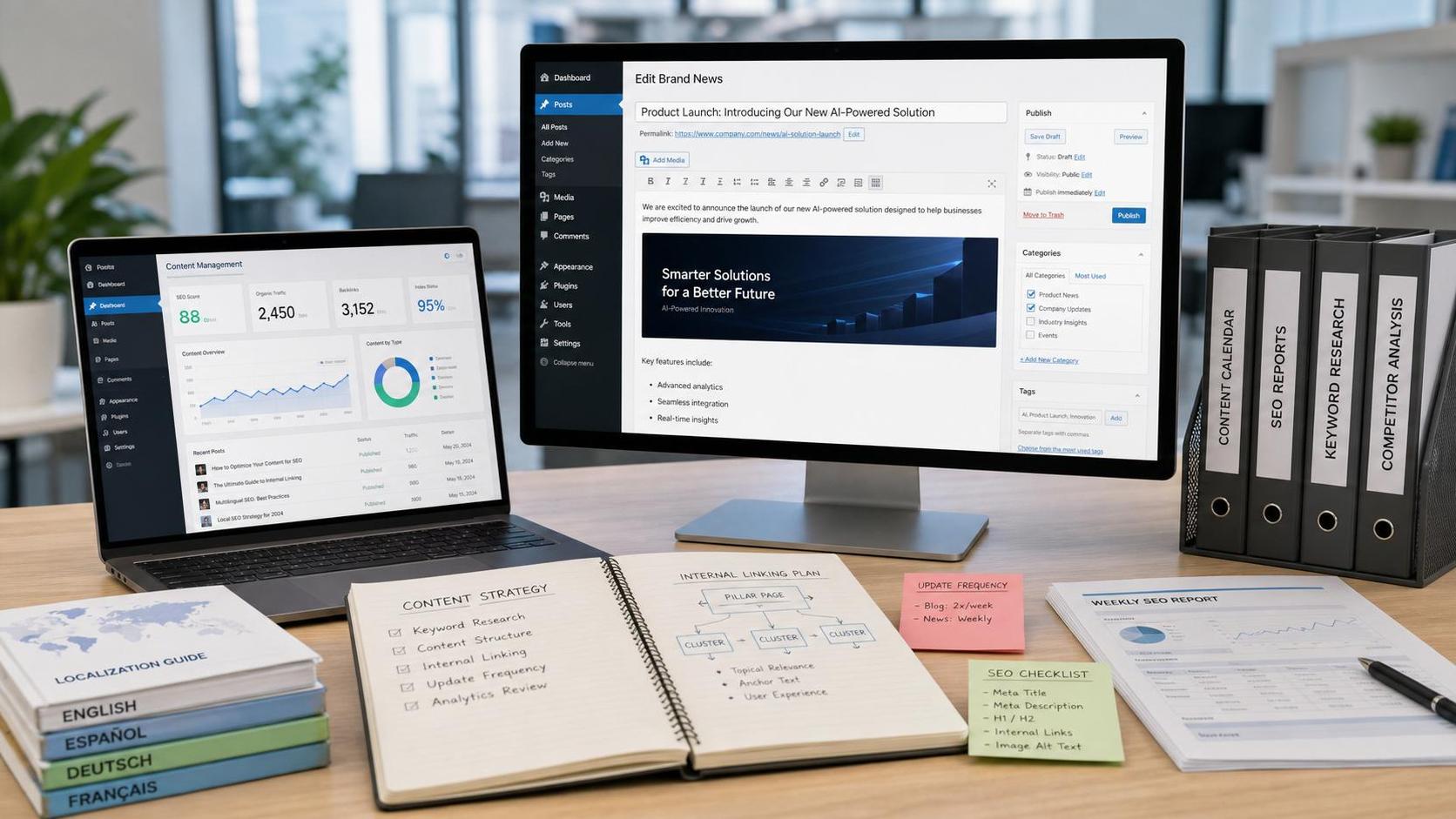
 How Can a Brand Updates Page Be Made More SEO-Friendly? Analysis of Update Frequency, Content Structure, and Internal Linking Strategy

Related Products
 EasyCamp SaaS Smart Website Marketing SystemE-Yingbao SaaS Smart Website Marketing System: AI-powered, zero-code website building. Rapidly launch multilingual independent e-commerce sites in just 10 minutes. Global server acceleration and AI-driven SEO optimization empower businesses to efficiently connect with global markets. The seamless integration of technology and user-friendly operation makes building e-commerce sites incredibly simple.
 AI+SEM Intelligent Advertising Marketing SystemAI+SEM drives intelligent ad creation, empowering full-funnel precision advertising marketing. The system automatically generates weekly/monthly reports, AI recommends keywords and target countries, monitors core metrics in real-time with intelligent alerts, and enables one-click high-conversion ad solutions to help quickly acquire customers and improve ROI.
 AI+SEO Dual Engine Optimization ServiceEasyWin AI+SEO Dual Engine Optimization System leverages AI-powered keyword mining, content generation, and comprehensive technical optimization to help foreign trade enterprises acquire high-quality organic traffic, significantly improving search rankings and conversion rates.
 AI+SNS Social Media Marketing SystemYingbao AI+SNS Social Media Marketing System - Precision social capture for the social media era. Supports one-click content synchronization across major platforms like Facebook and LinkedIn. AI intelligently rewrites posts for enhanced relevance. 24/7 AI customer service and user profiling analysis empower businesses to efficiently expand into global markets.
 AI+SEO营销解决方案易营宝AI+SEO营销解决方案,通过AI批量写作、智能生成TDK、精准关键词扩词等功能,全面优化网站SEO效果,提升流量与转化率。助力企业构建高效智能网站新生态。
 AI+SEM Advertising Marketing SolutionsAI+SEM Advertising Marketing Solution leverages AI technology to deeply empower SEM ad campaigns. It automatically generates weekly/monthly reports using AI, presenting account data across multiple dimensions for comprehensive insights into campaign performance and trends. The system precisely recommends keywords and target countries, intelligently generates high-conversion ad copy, and enables one-click activation of efficient campaign plans to help businesses rapidly acquire customers. Simultaneously, it monitors core metrics in real time, intelligently identifies abnormal fluctuations, and issues timely alerts to ensure stable, high-return advertising results.
 Domain Name ServicesEasyWin provides professional domain name services, including intelligent queries, one-stop registration, brand protection, and full lifecycle management, helping businesses build a digital brand image.
 EasyOperate B2C Cross-Border E-Commerce Platform & Independent WebsiteEasyStore B2C Cross-border E-commerce Independent Store is an intelligent website building and cross-border e-commerce integrated solution independently developed by EasyStore Information Technology (Beijing) Co., Ltd. The system is specially designed for small and medium-sized as well as large export enterprises, integrating 'website building, operation, marketing, advertising, and conversion' into one, helping enterprises quickly establish cross-border e-commerce independent stores to achieve brand globalization and global sales growth.
The platform supports multiple languages, multiple currencies, and multi-channel marketing, with built-in AI intelligent translation and SEO optimization systems, suitable for mainstream markets such as Southeast Asia, Europe and America, Latin America, and the Middle East, assisting Chinese manufacturing enterprises in efficiently deploying international e-commerce strategies. SSL证书易营宝提供专业SSL安全证书服务,包括单域名和泛域名证书,确保网站数据传输加密、身份验证和完整性保护,助力企业建立安全可信的在线业务环境。









