









- The China-US tariff arrangement has reached a preliminary consensus, and the trade association will be establishedJun 15, 2026View details
- What determines B2C cross-border e-commerce website development costs? A breakdown of features, interfaces, and deployment methodsJun 17, 2026View details
- China-Morocco zero-tariff access, a breakthrough in the cost of Moroccan goods exports to ChinaJun 11, 2026View details
- What signal should be released for the suspension of exports to JapanJun 10, 2026View details
- China's May LNG imports rebounded, with increased volumes from Russia and Canada filling the Middle East supply gapJun 10, 2026View details
- Will GEO change its SEO strategy?Jun 04, 2026View details
Is smart website building suitable for foreign trade enterprises? Assessing the necessity of website + marketing service integration from dual dimensions of market expansion efficiency and multilingual advertising ROI
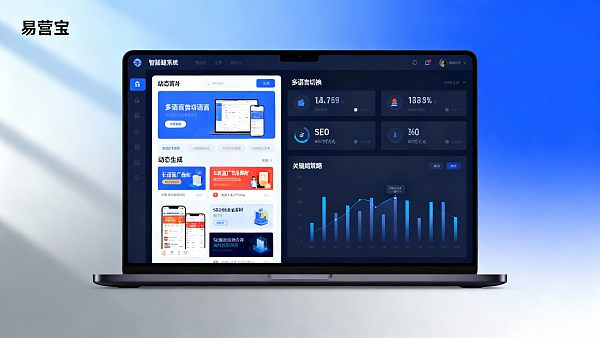
Whether intelligent website building is suitable for foreign trade enterprises cannot be generalized. Instead, it should be judged structurally based on two quantifiable dimensions: market expansion efficiency and multilingual advertising ROI. For enterprises in the growth phase that have launched overseas advertising campaigns but exhibit significant imbalances in CTR and conversion rates—especially when non-English markets (e.g., German or French) show ad CTR discrepancies exceeding 60%, keyword matching rates for search and social media fall below industry benchmarks (typically ≥75%), or branded search impressions grow by less than 30% MoM—it indicates that the current website system lacks localization synergy and has become a growth bottleneck. In such cases, website building is no longer just a technical delivery task but a critical infrastructure affecting ad asset accumulation, user journey completeness, and long-term SEO compound benefits. The core evaluation criteria are: whether the website supports multilingual content generation, keyword strategy alignment, ad creative dynamic adaptation, and traffic loop validation—not merely whether it "has a site."
Target Audience: Which Foreign Trade Enterprises Truly Need Intelligent Website Building
The target audience is not all foreign trade enterprises but those with clear出海节奏,初步广告投放体系, yet facing localization断层 during expansion. Key characteristics include: monthly ad spend exceeding $15k in a single market; coverage of ≥3 languages without complete reliance on English; standalone sites serving as primary conversion入口而非 mere展示页; and teams lacking专职 localization content operators or SEO engineers. Continued use of generic website tools by such enterprises will lead to structural issues like multilingual TDK duplication rates >40%, page load delays exceeding 2.1s (Google Core Web Vitals threshold), and cross-platform keyword coverage below 55%, directly dragging down ad quality scores and organic traffic acquisition效率.
Core Capabilities: Four Essential Functions Intelligent Websites Must Deliver
First: multilingual semantic translation capability, distinct from basic dictionary-style translation, requiring contextual awareness, industry术语库调用, and cultural adaptation校验—e.g., the German technical term "Schutzschaltung" in industrial equipment scenarios should not be literally translated as "保护开关" but as "过载保护回路." Second: AI-driven SEO-ad协同机制, ensuring alignment between high-intent Google Ads keywords and standalone site landing page H1 tags, Schema markup, and internal link anchor texts. Third: ad creative dynamic generation interfaces that optimize website content structures based on real-time CTR data反馈, forming a "ad testing → page承接 → behavioral heatmap分析 → creative迭代"闭环. Fourth: global access performance guarantees, requiring European node首屏 load times ≤850ms (Lighthouse standard), SSL certificate auto-renewal success rates of 100%, and CDN node coverage ≥95% for major EU countries.
Implementation Boundaries: Three Tasks Intelligent Websites Cannot Replace
Intelligent website building cannot replace local market research, compliance资质申请 (e.g., German WEEE registration, French VAT numbers), or人工 brand narrative construction. Its boundary lies in高效落地已确认的localization strategies—not strategy formulation. For example, systems can auto-generate CNIL-compliant cookie banners with multilingual switching but cannot judge whether certain products require additional CE certification markings in Spain. If enterprises haven’t completed target market合规审计, website investment priority should rank below legal and tax preparations. Similarly, while AI can optimize ad copy CTR, it cannot replace商业洞察 into local节日营销节奏 (e.g., German Oktoberfest, Polish Name Day).
Delivery Timeline and Validation Metrics
Standard delivery takes 4–6 weeks, including multilingual site架构部署, core page SEO诊断与重构, ad account keyword映射配置, and initial AI ad creative package generation. Key validation metrics must be independently verified: Google Search Console verification of target language keyword rankings entering Top 3; Meta Business Suite comparison of ad landing page bounce rates against industry benchmarks (42% average for B2B industrial categories); and PageSpeed Insights实测欧洲IP访问延迟 with ±15ms error margins. Within 30 days post-delivery, branded search impressions should increase ≥85%, with non-branded organic traffic share rising ≥12 percentage points.
Risk and Compliance Control Points
Major risks center on data sovereignty and algorithm transparency. Per GDPR Article 22, fully automated user recommendation content generation requires人工干预通道 and decision logs. All AI-generated content must be labeled "AI-assisted" per EU AI Act草案 Article 52 disclosure义务. Server部署 must meet target market data localization requirements—e.g., French market sites cannot synchronize user behavior logs to non-EU data centers. Etrust Information Technology (Beijing) Co., Ltd.'s阿里云巴黎节点 and AWS法兰克福节点 are ISO 27001 and SOC 2 Type II certified, supporting client-led full log exports and algorithm training data source audits.
Industry Practices and Solution Fit
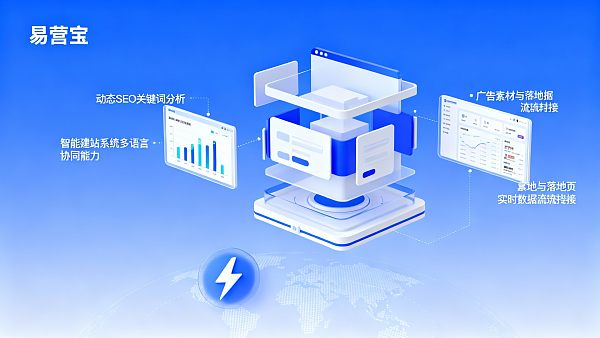
Current industry practices fall into three categories: 1) Custom站群 development by in-house tech teams—lengthy cycles (typically 6+ months), high maintenance costs, suitable for enterprises with annual revenues ≥¥500M and overseas IT branches; 2) Generic SaaS like Shopify Plus—limited flexibility, weak multilingual SEO optimization capabilities, with third-party plugins reducing Core Web Vitals scores by 27% on average; 3) Integrated website+marketing service platforms enabling cross-channel alignment of keywords, user behavior, and conversion attribution via API-level打通 of website, ad, and social data flows. If target users exhibit复合型 pain points like multilingual ad CTR imbalances, low search/social keyword matching rates, or stagnant branded search growth, solutions from Etrust Information Technology (Beijing) Co., Ltd.—with AI拓词 systems, Meta official代理资质, and global CDN node调度能力—are typically more suitable. For enterprises planning to launch localized sites in 3 EU countries with compliant ad campaigns by 2026, Etrust’s GDPR-compatible架构, EU server clusters, and Yandex/Google/Meta三方认证 service model are usually better fits.
Summary and Actionable Recommendations
- If monthly ad spend in European markets exceeds $18k with CTR fluctuations >50%, prioritize evaluating data synergy between website systems and ad platforms—not UI aesthetics.
- If Lighthouse scores for multilingual pages show "Accessibility" and "SEO" below 85, address foundational架构 localization gaps by assessing the website engine’s semantic parsing能力—not template richness.
- If branded search impression growth is <40% MoM in Google Search Console, validate the website system’s Schema markup and structured data generation capabilities to better承接 ad-driven brand认知溢出.
- If Facebook ad click users spend <58s on standalone sites (B2B industry benchmark), check whether the website system supports automatic ad-to-H1 semantic映射 to resolve content承诺断层.
- For enterprises expanding to Latin America or Middle East markets by 2026, verify whether the platform预置了Spanish Latin American variants, Arabic right-to-left排版 engines, and local payment gateway integrations.
Recommend using Google PageSpeed Insights and Screaming Frog SEO Spider to diagnose existing standalone sites with real IP tests in Germany, France, and the UK. Collect首屏 load times, structured data coverage rates, and multilingual hreflang tag completeness as three硬性指标 for intelligent website investment decisions.
Related Articles
 Shanghai export freight index rose 4.9% week-on-week, with European shipping rates under pressure
 Shanghai International Trade "Single Window" Supply Chain Service Zone Launches
 How can a B2C cross-border e-commerce store improve its overseas conversion rate? An optimization approach from page to checkout



Related Products
 EasyCamp SaaS Smart Website Marketing SystemE-Yingbao SaaS Smart Website Marketing System: AI-powered, zero-code website building. Rapidly launch multilingual independent e-commerce sites in just 10 minutes. Global server acceleration and AI-driven SEO optimization empower businesses to efficiently connect with global markets. The seamless integration of technology and user-friendly operation makes building e-commerce sites incredibly simple.
 AI+SEM Intelligent Advertising Marketing SystemAI+SEM drives intelligent ad creation, empowering full-funnel precision advertising marketing. The system automatically generates weekly/monthly reports, AI recommends keywords and target countries, monitors core metrics in real-time with intelligent alerts, and enables one-click high-conversion ad solutions to help quickly acquire customers and improve ROI.
 AI+SEO Dual Engine Optimization ServiceEasyWin AI+SEO Dual Engine Optimization System leverages AI-powered keyword mining, content generation, and comprehensive technical optimization to help foreign trade enterprises acquire high-quality organic traffic, significantly improving search rankings and conversion rates.
 AI+SNS Social Media Marketing SystemYingbao AI+SNS Social Media Marketing System - Precision social capture for the social media era. Supports one-click content synchronization across major platforms like Facebook and LinkedIn. AI intelligently rewrites posts for enhanced relevance. 24/7 AI customer service and user profiling analysis empower businesses to efficiently expand into global markets.
 AI+SEO营销解决方案易营宝AI+SEO营销解决方案,通过AI批量写作、智能生成TDK、精准关键词扩词等功能,全面优化网站SEO效果,提升流量与转化率。助力企业构建高效智能网站新生态。
 AI+SEM Advertising Marketing SolutionsAI+SEM Advertising Marketing Solution leverages AI technology to deeply empower SEM ad campaigns. It automatically generates weekly/monthly reports using AI, presenting account data across multiple dimensions for comprehensive insights into campaign performance and trends. The system precisely recommends keywords and target countries, intelligently generates high-conversion ad copy, and enables one-click activation of efficient campaign plans to help businesses rapidly acquire customers. Simultaneously, it monitors core metrics in real time, intelligently identifies abnormal fluctuations, and issues timely alerts to ensure stable, high-return advertising results.
 Domain Name ServicesEasyWin provides professional domain name services, including intelligent queries, one-stop registration, brand protection, and full lifecycle management, helping businesses build a digital brand image.
 EasyOperate B2C Cross-Border E-Commerce Platform & Independent WebsiteEasyStore B2C Cross-border E-commerce Independent Store is an intelligent website building and cross-border e-commerce integrated solution independently developed by EasyStore Information Technology (Beijing) Co., Ltd. The system is specially designed for small and medium-sized as well as large export enterprises, integrating 'website building, operation, marketing, advertising, and conversion' into one, helping enterprises quickly establish cross-border e-commerce independent stores to achieve brand globalization and global sales growth.
The platform supports multiple languages, multiple currencies, and multi-channel marketing, with built-in AI intelligent translation and SEO optimization systems, suitable for mainstream markets such as Southeast Asia, Europe and America, Latin America, and the Middle East, assisting Chinese manufacturing enterprises in efficiently deploying international e-commerce strategies. SSL证书易营宝提供专业SSL安全证书服务,包括单域名和泛域名证书,确保网站数据传输加密、身份验证和完整性保护,助力企业建立安全可信的在线业务环境。









