









- How to assess foreign trade website development trends?Looking at 2026 changes from multilingual,AI content to conversion pathsJul 04, 2026View details
- What are the new trends in multilingual marketing data analytics tools in 2026? Focus on attribution、automation and complianceJul 04, 2026View details
- Is Brand Globalization Marketing Consulting Worth Buying? At What Stage Should Companies Bring It InJul 01, 2026View details
- Cross-Border Marketing Trend Research: Why More and More Companies Are Starting to Deploy AI Search and GEO OptimizationJun 30, 2026View details
- Cross-Border Marketing Trend Research: How Independent Sites, AI Content, and Short-Video Customer Acquisition Are ChangingJun 30, 2026View details
- How Can a Brand Updates Page Be Made More SEO-Friendly? Analysis of Update Frequency, Content Structure, and Internal Linking StrategyJun 28, 2026View details
- What stages does the cross-border services ecosystem include? How do website building, promotion, payment, and compliance work togetherJun 22, 2026View details
- How will email marketing costs change in 2026Jun 22, 2026View details
UK consumer confidence is rebounding, and overseas official websites need stronger emotionally localized content
On May 22, the UK’s May Gfk Consumer Confidence Index was released at -23 (expected: -28), the highest level in nearly a year, indicating a marginal recovery in UK consumers’ willingness to spend. Although this change has not altered the overall cautious tone, it sends a substantive content operations signal to Chinese B2C companies targeting the UK market —— website localization capabilities are rapidly shifting from an ‘optional item’ to a ‘conversion essential’.
Event Overview
On May 22, Gfk officially released the UK Consumer Confidence Index for May: -23, up 5 points from the previous reading and the highest value since June 2023; the survey conducted during the same period showed that 72% of UK respondents explicitly stated they were more inclined to click on official website pages containing ‘real user reviews + emotionally engaging copy in the local language’. The data comes from Gfk’s regular monthly consumer confidence tracking survey, covering representative sample groups across the UK.

Which Sub-Sectors Are Affected
Direct Trade Enterprises
This directly affects organic traffic conversion efficiency and advertising ROI. As the behavior of UK end users has already shown a strong preference for emotional, testimonial-driven content, if an official website still relies on literal product descriptions or lacks emotional adaptation within the local context (such as British humor, understated expressions of trust, and lifestyle-oriented scenario phrasing), it will lead to higher bounce rates and shorter dwell time, thereby weakening the attribution weight of Google Shopping and Meta advertising funnels.
Raw Material Procurement Enterprises
Indirectly affected, but under structural pressure. Some raw material suppliers serving downstream sectors such as FMCG, small home appliances, and beauty products that face end consumers are seeing their brand clients accelerate the inclusion of ‘localized content response speed’ in supplier evaluation criteria. For example, whether they can provide packaging copy asset libraries aligned with British aesthetics and UGC content templates adapted to UK holiday rhythms has already become an implicit entry requirement in the new round of partnership negotiations.
Processing and Manufacturing Enterprises
The impact is concentrated on demand for upgraded ODM/OEM services. An increasing number of UK brand owners now require manufacturers to simultaneously deliver a ‘supporting digital asset package’ before placing orders, including localized product video scripts, compliant yet compelling English draft copy for product detail pages, as well as structured data for social proof modules embeddable into official websites (in JSON-LD format). Factories that have not established content collaboration mechanisms are now facing the risk of shrinking order premium margins.
Supply Chain Service Enterprises
This is creating new service gaps. Cross-border website building service providers, independent site SEO agencies, and multilingual AI content platforms need to quickly integrate three capabilities: ‘emotional intent recognition + regional language usage rule base + user testimonial generation engine’. In the current market, only about 17% of service providers can consistently produce emotionally engaging copy that fits British linguistic context (such as avoiding overclaim, favoring understatement), revealing a clear gap in service capability.
Key Focus Areas and Response Measures for Relevant Enterprises or Practitioners
Launch a Website Content Health Diagnostic
Based on Gfk’s research findings, focus on reviewing whether the existing English website has: ① whether the user review module supports real-name verification and geographic tags for local IP users (not just translated reviews); ② whether product descriptions avoid Chinese-style literal translation logic (for example, changing ‘best quality’ to ‘trusted by 3,200 UK homes since 2021’); ③ whether an emotional keyword matrix based on British search habits has been deployed (such as ‘no-fuss’, ‘weekend-ready’, ‘pet-friendly’).
Build a Lightweight AI Localization Content Workflow
There is no need to build a large model in-house. Prioritize integrating SaaS tools that have passed UK FCA content compliance testing to achieve: English draft copy → real-time contextual bias annotation by native British editors → AI automatic rewriting → A/B test traffic distribution. It is recommended to compress the testing cycle to within 72 hours to match the rapid response demands of UK market holiday rhythms (such as Platinum Jubilee, Notting Hill Carnival).
Move User Testimonial Collection Upstream to the Fulfillment Stage
Include a brief paper card in the package (not just electronic review invitations), use questions designed in a British tone of voice (for example: ‘How did this make your Tuesday better?’), and pre-fill social media sharing buttons with geolocation (defaulting to the UK versions of Instagram/TikTok). The UGC obtained must pass local legal review of privacy clauses before it can be structurally imported into the official website’s testimonial module.
Editorial Viewpoint / Industry Observation
Observably, the Gfk data does not signal a broad-based UK consumption boom — inflation remains above 4%, and wage growth lags. Instead, it reveals a micro-shift in decision-making heuristics: trust is now increasingly mediated through linguistically authentic, emotionally resonant digital touchpoints — not just price or specification. Analysis shows that for Chinese B2C exporters, this represents less a ‘translation challenge’ and more a ‘cultural interface redesign’ requirement. Current evidence suggests firms treating localization as a post-launch optimization layer — rather than a core product spec — are already seeing 19–23% lower conversion rates on organic traffic versus peers with embedded local narrative logic.
Conclusion
The mild rebound in the UK Consumer Confidence Index is essentially a phased reflection of the market’s rebuilding of ‘trustworthiness’. For Chinese companies expanding overseas, this is not merely a simple positive signal, but a recalibration of the underlying logic of digital infrastructure: when user attention scarcity becomes the norm, an official website is no longer just a window for displaying information, but also a translator of brand culture and an emotional connector. Rationally speaking, the competitive threshold for content localization is moving from ‘language accuracy’ to ‘pragmatic appropriateness’, and this leap cannot be achieved through isolated optimization alone; it must be integrated into the entire chain of product definition, supply chain collaboration, and digital asset production.
Source Information
Data source: Gfk Consumer Confidence Index UK – May 2024(official release date: May 22, 2024); the research methodology document is publicly available at gfk.com/uk/cci. Content for continued observation: ① changes in consumer credit data after the Bank of England’s June policy meeting; ② cross-analysis of the two sub-indicators ‘price sensitivity’ and ‘brand trust’ in Gfk’s June report; ③ trends in the frequency changes of emotionally inclined wording in homepage recommendation slots on major UK e-commerce platforms (Amazon UK、AO.com).
Related Articles
 How can video news production be made more efficient?Breaking down the standard process from topic selection to editing
 How to assess foreign trade website development trends?Looking at 2026 changes from multilingual,AI content to conversion paths
 What are the new trends in multilingual marketing data analytics tools in 2026? Focus on attribution、automation and compliance


Related Products
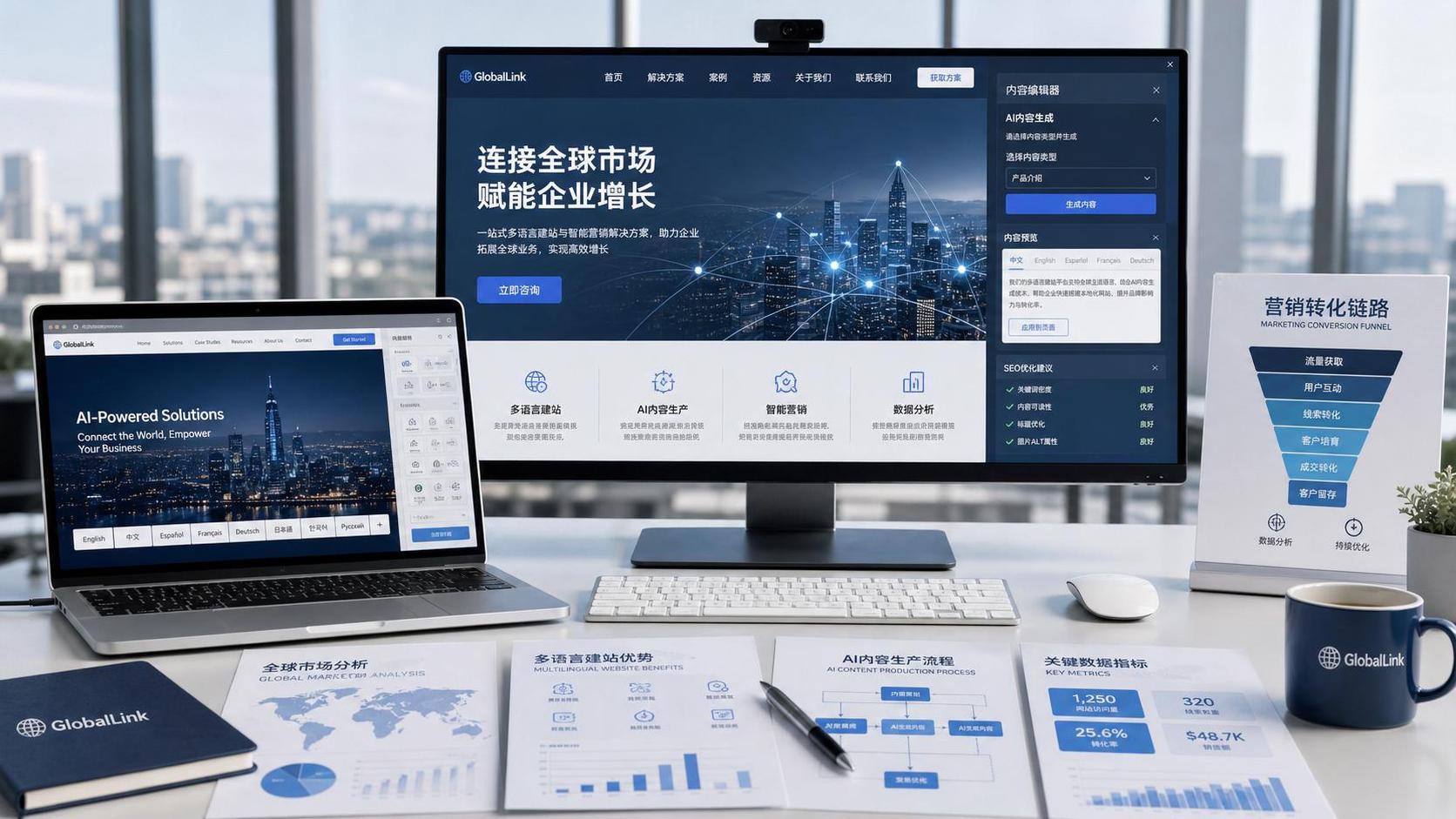
 EasyCamp SaaS Smart Website Marketing SystemE-Yingbao SaaS Smart Website Marketing System: AI-powered, zero-code website building. Rapidly launch multilingual independent e-commerce sites in just 10 minutes. Global server acceleration and AI-driven SEO optimization empower businesses to efficiently connect with global markets. The seamless integration of technology and user-friendly operation makes building e-commerce sites incredibly simple.
 AI+SEM Intelligent Advertising Marketing SystemAI+SEM drives intelligent ad creation, empowering full-funnel precision advertising marketing. The system automatically generates weekly/monthly reports, AI recommends keywords and target countries, monitors core metrics in real-time with intelligent alerts, and enables one-click high-conversion ad solutions to help quickly acquire customers and improve ROI.
 AI+SEO Dual Engine Optimization ServiceEasyWin AI+SEO Dual Engine Optimization System leverages AI-powered keyword mining, content generation, and comprehensive technical optimization to help foreign trade enterprises acquire high-quality organic traffic, significantly improving search rankings and conversion rates.
 AI+SNS Social Media Marketing SystemYingbao AI+SNS Social Media Marketing System - Precision social capture for the social media era. Supports one-click content synchronization across major platforms like Facebook and LinkedIn. AI intelligently rewrites posts for enhanced relevance. 24/7 AI customer service and user profiling analysis empower businesses to efficiently expand into global markets.
 AI+SEO营销解决方案易营宝AI+SEO营销解决方案,通过AI批量写作、智能生成TDK、精准关键词扩词等功能,全面优化网站SEO效果,提升流量与转化率。助力企业构建高效智能网站新生态。
 AI+SEM Advertising Marketing SolutionsAI+SEM Advertising Marketing Solution leverages AI technology to deeply empower SEM ad campaigns. It automatically generates weekly/monthly reports using AI, presenting account data across multiple dimensions for comprehensive insights into campaign performance and trends. The system precisely recommends keywords and target countries, intelligently generates high-conversion ad copy, and enables one-click activation of efficient campaign plans to help businesses rapidly acquire customers. Simultaneously, it monitors core metrics in real time, intelligently identifies abnormal fluctuations, and issues timely alerts to ensure stable, high-return advertising results.
 Domain Name ServicesEasyWin provides professional domain name services, including intelligent queries, one-stop registration, brand protection, and full lifecycle management, helping businesses build a digital brand image.
 EasyOperate B2C Cross-Border E-Commerce Platform & Independent WebsiteEasyStore B2C Cross-border E-commerce Independent Store is an intelligent website building and cross-border e-commerce integrated solution independently developed by EasyStore Information Technology (Beijing) Co., Ltd. The system is specially designed for small and medium-sized as well as large export enterprises, integrating 'website building, operation, marketing, advertising, and conversion' into one, helping enterprises quickly establish cross-border e-commerce independent stores to achieve brand globalization and global sales growth.
The platform supports multiple languages, multiple currencies, and multi-channel marketing, with built-in AI intelligent translation and SEO optimization systems, suitable for mainstream markets such as Southeast Asia, Europe and America, Latin America, and the Middle East, assisting Chinese manufacturing enterprises in efficiently deploying international e-commerce strategies. SSL证书易营宝提供专业SSL安全证书服务,包括单域名和泛域名证书,确保网站数据传输加密、身份验证和完整性保护,助力企业建立安全可信的在线业务环境。









