









- Cross-Border Marketing Trend Research: Why More and More Companies Are Starting to Deploy AI Search and GEO OptimizationJun 30, 2026View details
- Cross-Border Marketing Trend Research: How Independent Sites, AI Content, and Short-Video Customer Acquisition Are ChangingJun 30, 2026View details
- How Can a Brand Updates Page Be Made More SEO-Friendly? Analysis of Update Frequency, Content Structure, and Internal Linking StrategyJun 28, 2026View details
- What stages does the cross-border services ecosystem include? How do website building, promotion, payment, and compliance work togetherJun 22, 2026View details
- How will email marketing costs change in 2026Jun 22, 2026View details
- The China-US tariff arrangement has reached a preliminary consensus, and the trade association will be establishedJun 15, 2026View details
- Should overseas brand marketing start with ads or contentJun 21, 2026View details
- What determines B2C cross-border e-commerce website development costs? A breakdown of features, interfaces, and deployment methodsJun 17, 2026View details
How to More Effectively Promote a Multilingual Foreign Trade Website After It Is Built
How to Promote a Multilingual Foreign Trade Website After It Is Built, Shifting from “Having a Website” to “Having Growth”
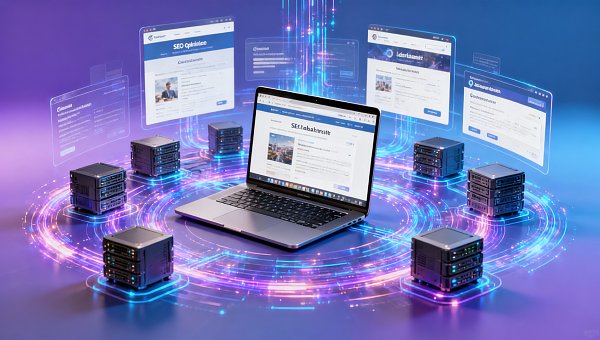
How to promote a multilingual foreign trade website after it is built determines a company’s efficiency in acquiring overseas customers and the speed of brand growth. In the past, many companies focused on simply launching the website itself, believing that as long as multilingual pages were deployed, they could naturally gain overseas traffic. But in the past two years, the overseas traffic environment, search rules, advertising costs, and user decision-making paths have all been changing rapidly, and relying on website building alone has made it difficult to generate stable inquiries. The truly effective approach is to use the multilingual website as the growth hub, while simultaneously advancing SEO optimization, advertising placement, social media operations, and content localization, so that traffic, brand, and conversion form a closed loop.
For the integrated website + marketing service industry, how to promote a multilingual foreign trade website after it is built is no longer a matter of isolated execution, but a reflection of systematic operational capability. Especially against the backdrop of intensifying competition in overseas markets, whoever can more quickly establish a system that is “search-visible, content-credible, conversion-trackable, and campaign-reviewable” will be more likely to turn website investment into a long-term growth asset.
Traffic structures are changing, and the logic of foreign trade promotion is being reshaped accordingly
The most obvious current trend is that overseas customers no longer rely on a single channel to obtain supplier information. Search engines remain important, but social platforms, industry media, short-video content, word-of-mouth reviews, and brand official websites collectively influence purchasing decisions. In other words, how to promote a multilingual foreign trade website after it is built should no longer be understood as “doing rankings for a few keywords,” but as “building multi-touchpoint exposure and trust mechanisms around a multilingual official website.”
Another change is that search engines are placing increasing emphasis on content quality, page experience, and user behavior data. Websites with rough translations, repetitive structures, slow loading speeds, and a lack of localized trust elements may still be indexed, but it is difficult for them to achieve ideal rankings. Therefore, the core of how to promote a multilingual foreign trade website after it is built has already upgraded from “covering more languages” to comprehensive competition in “content quality + technical optimization + channel coordination.”
Key factors driving this trend
The gap in promotional performance often appears in these business stages
How to promote a multilingual foreign trade website after it is built more effectively may seem like a marketing issue on the surface, but in essence it affects multiple links such as content production, sales follow-up, data analysis, and brand accumulation. If the website is only a display page, without keyword planning, inquiry forms, case content, and conversion paths designed around the target market, then no matter how much traffic it gets, it will still be difficult to generate effective business opportunities.
From an operational perspective, differences in promotional effectiveness are usually reflected in three levels: first, whether there is stable organic traffic; second, whether paid traffic can convert into inquiries; third, whether data from different channels can flow back to the website for continuous optimization. Only by connecting the website, content, advertising placement, and data management can the promotion of a multilingual foreign trade website after it is built move beyond superficial exposure.
- Content stage: whether product pages, solution pages, and case pages match the search intent of users in different countries.
- Conversion stage: whether forms, instant communication tools, and trust endorsements are complete, and whether they reduce the barriers to inquiry submission.
- Advertising stage: whether ad keywords, audience targeting, and the language version of landing pages are consistent.
- Operations stage: whether visits and inquiry quality are tracked by country, language, and channel dimensions.
What deserves more attention is not “what has been done,” but “whether coordination has been formed”
When many companies think about how to promote a multilingual foreign trade website after it is built, they tend to execute SEO, advertising, and social media separately. In fact, single-channel strategies are becoming increasingly unable to support sustained growth. A more efficient approach is to take the multilingual website as the core and incorporate different promotional actions into the same growth path: use SEO to acquire long-term organic traffic, use advertising to capture high-intent traffic, use social media to expand brand reach, use content marketing to enhance credibility, and then use data analysis to optimize pages and campaign strategies in reverse.
This coordinated model is especially suitable for companies hoping to build a long-term presence in overseas markets. Integrated website + marketing service providers represented by Yiyingbao Information Technology (Beijing) Co., Ltd., relying on artificial intelligence and big data capabilities, can create closer coordination among website building, content, localization optimization, advertising placement, and lead tracking, helping companies reduce resource waste caused by channel fragmentation and improve overall promotional efficiency.
Core points of promotional coordination
- First determine the target countries and target languages, then plan keywords and page structures to avoid repeated adjustments later.
- Prioritize the construction of high-conversion pages, such as core product pages, industry solution pages, case pages, and FAQ pages.
- Keep SEO content and ad landing pages aligned in messaging to reduce users’ cognitive gaps after clicking through.
- Social media content should drive traffic back to the official website rather than keeping users only browsing within the platform.
- Establish a data dashboard and regularly compare traffic, dwell time, inquiries, and transaction performance across different language sites.
Key directions for promoting multilingual foreign trade websites in the near future
From the perspective of trends, how to promote a multilingual foreign trade website after it is built will increasingly rely on “refined operations” in the future. It is not about simply increasing the number of articles, nor about blindly raising the advertising budget, but about delivering more accurate content expression and clearer conversion design for different markets. Even methods that appear to belong to different industries often share common ground. For example, in process optimization and cost control, The application of lean management in operational cost control of public hospitals reflects the core idea of improving overall efficiency through process sorting, node optimization, and data feedback, which is equally instructive for cross-channel marketing management.
To judge whether promotion is effective, look at these result indicators
When companies execute how to promote a multilingual foreign trade website after it is built, they cannot look only at traffic volume or the number of keywords, but must pay more attention to whether it brings real business opportunities. More valuable evaluation criteria include: whether organic traffic from target countries is growing, whether the bounce rate of key pages is decreasing, whether inquiry costs are continuously being optimized, whether the proportion of valid leads is improving, and whether there are obvious conversion differences among different language sites.
If after half a year of promotion there is still only scattered traffic and no stable lead source, it usually indicates that the strategy has not been developed around market demand and conversion paths. At this point, the website structure, keyword selection, content depth, and channel mix should be reviewed in time, rather than continuing to mechanically increase the budget.
A more practical next step is to first build a “promotion priority checklist”
If you are still thinking about how to promote a multilingual foreign trade website after it is built, it is recommended to proceed by priority: first improve the website’s basic experience and conversion entry points, then deploy SEO content for core keywords, while using small-scale advertising to test market feedback, then strengthen brand trust through social media and case content, and finally decide the direction of scaling based on data review. The benefit of doing this is that investment is more controllable and results are more traceable.
After overseas marketing enters the stage of refined competition, the value of a multilingual website no longer lies in “how many languages have gone live,” but in whether it truly becomes the company’s global customer acquisition hub. Whoever can complete the shift from website-building thinking to growth thinking earlier will have a better chance of turning every promotional investment into a long-term brand asset and sustained inquiry capability.
Related Articles
 4 Major Reasons Behind WhatsApp Account Bans, A Quick Self-Check for Foreign Trade Professionals
 Cross-Border Marketing Trend Research: Why More and More Companies Are Starting to Deploy AI Search and GEO Optimization
 Cross-Border Marketing Trend Research: How Independent Sites, AI Content, and Short-Video Customer Acquisition Are Changing


Related Products
 EasyCamp SaaS Smart Website Marketing SystemE-Yingbao SaaS Smart Website Marketing System: AI-powered, zero-code website building. Rapidly launch multilingual independent e-commerce sites in just 10 minutes. Global server acceleration and AI-driven SEO optimization empower businesses to efficiently connect with global markets. The seamless integration of technology and user-friendly operation makes building e-commerce sites incredibly simple.
 AI+SEM Intelligent Advertising Marketing SystemAI+SEM drives intelligent ad creation, empowering full-funnel precision advertising marketing. The system automatically generates weekly/monthly reports, AI recommends keywords and target countries, monitors core metrics in real-time with intelligent alerts, and enables one-click high-conversion ad solutions to help quickly acquire customers and improve ROI.
 AI+SEO Dual Engine Optimization ServiceEasyWin AI+SEO Dual Engine Optimization System leverages AI-powered keyword mining, content generation, and comprehensive technical optimization to help foreign trade enterprises acquire high-quality organic traffic, significantly improving search rankings and conversion rates.
 AI+SNS Social Media Marketing SystemYingbao AI+SNS Social Media Marketing System - Precision social capture for the social media era. Supports one-click content synchronization across major platforms like Facebook and LinkedIn. AI intelligently rewrites posts for enhanced relevance. 24/7 AI customer service and user profiling analysis empower businesses to efficiently expand into global markets.
 AI+SEO营销解决方案易营宝AI+SEO营销解决方案,通过AI批量写作、智能生成TDK、精准关键词扩词等功能,全面优化网站SEO效果,提升流量与转化率。助力企业构建高效智能网站新生态。
 AI+SEM Advertising Marketing SolutionsAI+SEM Advertising Marketing Solution leverages AI technology to deeply empower SEM ad campaigns. It automatically generates weekly/monthly reports using AI, presenting account data across multiple dimensions for comprehensive insights into campaign performance and trends. The system precisely recommends keywords and target countries, intelligently generates high-conversion ad copy, and enables one-click activation of efficient campaign plans to help businesses rapidly acquire customers. Simultaneously, it monitors core metrics in real time, intelligently identifies abnormal fluctuations, and issues timely alerts to ensure stable, high-return advertising results.
 Domain Name ServicesEasyWin provides professional domain name services, including intelligent queries, one-stop registration, brand protection, and full lifecycle management, helping businesses build a digital brand image.
 EasyOperate B2C Cross-Border E-Commerce Platform & Independent WebsiteEasyStore B2C Cross-border E-commerce Independent Store is an intelligent website building and cross-border e-commerce integrated solution independently developed by EasyStore Information Technology (Beijing) Co., Ltd. The system is specially designed for small and medium-sized as well as large export enterprises, integrating 'website building, operation, marketing, advertising, and conversion' into one, helping enterprises quickly establish cross-border e-commerce independent stores to achieve brand globalization and global sales growth.
The platform supports multiple languages, multiple currencies, and multi-channel marketing, with built-in AI intelligent translation and SEO optimization systems, suitable for mainstream markets such as Southeast Asia, Europe and America, Latin America, and the Middle East, assisting Chinese manufacturing enterprises in efficiently deploying international e-commerce strategies. SSL证书易营宝提供专业SSL安全证书服务,包括单域名和泛域名证书,确保网站数据传输加密、身份验证和完整性保护,助力企业建立安全可信的在线业务环境。









