









- What Does a Global Traffic Ecosystem Service Provider Do? What Are the Differences from a Single Advertising AgencyJul 16, 2026View details
- What should you focus on in the latest enterprise SaaS report? From renewal rates and delivery costs to overseas growth opportunitiesJul 12, 2026View details
- What signals are worth paying attention to in a cross-border marketing trend report? B2B companies should look at these 6 signalsJul 11, 2026View details
- How to Read a Cross-Border Marketing Trends Report? Five Key Dimensions for Evaluating Channel OpportunitiesJul 11, 2026View details
- Which channel has the highest ROI in the global traffic ecosystem? Comparative analysis of search, social media, and advertisingJul 10, 2026View details
- What multilingual website services are available in Sanya? Which model is more suitable for local businesses going global?Jul 08, 2026View details
How to Layout an Independent Foreign Trade Website for the US Market? Avoid These 3 Major Pitfalls and Save Millions

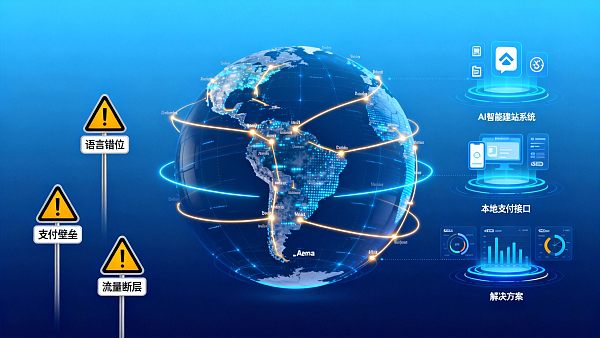
Latin America is emerging as a new blue ocean for Chinese foreign trade companies expanding overseas. According to Statista data, the Latin American e-commerce market exceeded $150 billion in 2023, and is projected to grow at a compound annual growth rate of over 20% in the next three years. However, many companies, when setting up domain name services and building independent e-commerce websites, have invested millions but achieved minimal results due to neglecting localized operations, differences in payment systems, and logistics compliance issues. This is especially true for service providers from Jiangsu, Beijing, Shanghai, Yiwu, and other regions; maintaining rapid website building capabilities while achieving precise local reach is crucial to success.
Based on Yiyingbao Information Technology's ten years of practical experience in global digital marketing, combined with in-depth insights into the Latin American market through AI big data analysis systems, this article summarizes three high-risk pitfalls and provides practical solutions to help foreign trade enterprises avoid detours and efficiently seize the dividends of emerging markets.
I. Language and Culture Mismatch: Multilingual Websites ≠ Localized Operations
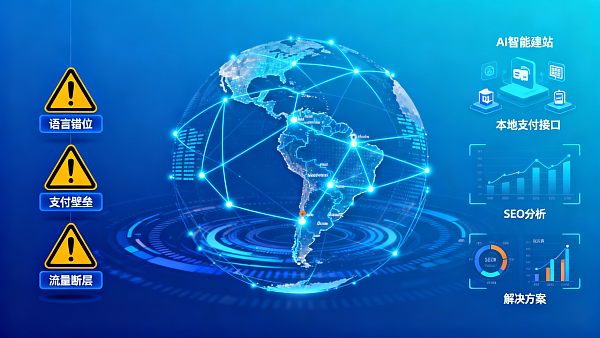
Many foreign trade companies mistakenly believe that simply translating their English websites into Spanish or Portuguese is sufficient for localization when entering the Latin American market. However, language conversion is only the first step. For example, while the official language of Mexico is Spanish, everyday language heavily incorporates local slang and North American English expressions. In Brazil, Portuguese pronunciation and vocabulary differ significantly from European Portuguese. Using machine translation or generic templates directly can easily lead to semantic misunderstandings or even brand offense.
True localization should encompass multiple dimensions, including language style, visual design, and holiday marketing. For example, when launching promotional campaigns during Chile's National Day, overly commercial advertising slogans should be avoided; instead, emphasis should be placed on family reunions and national identity. Furthermore, Latin American users prefer emotionally resonant, story-driven content rather than simply listing product specifications.
To address this, the YiYingBao intelligent website building system integrates AI-generated images and NLP (Natural Language Processing) technology, automatically optimizing text tone and image style based on the target country. It also supports regional deployment needs such as building multilingual websites in Zhongshan and Huizhou, ensuring that everything from domain name selection to page presentation conforms to local aesthetics and behavioral habits. It is recommended that businesses register country-code suffixes such as .com, .com.mx, and .com.br when registering their main domain name to prevent brand squatting and achieve comprehensive brand protection.
II. Payment and Logistics Barriers: The Black Hole of Churn Behind High Conversion Rates
While a growing number of Latin American consumers are capable of online shopping, their payment habits differ significantly from those in China and Europe. Credit card penetration is low, with cash payments (such as OXXO and Banco do Brasil) and installment payments (Mercado Pago and PagSeguro) remaining the mainstream methods. Statistics show that over 60% of shopping cart abandonments are due to a lack of support for local payment methods. Furthermore, long cross-border logistics cycles, complex customs clearance, and high return and exchange costs also severely impact the user experience.
A lighting manufacturer in Zhejiang province shipped goods to Colombia through an independent foreign trade website in Shanghai. Although the number of ad clicks was considerable, the conversion rate was less than 1.2%. Analysis revealed that the website only supported PayPal and international credit cards and did not specify estimated customs duties or delivery times. In contrast, leading companies in the same industry integrated with local payment gateways and prominently displayed "estimated delivery + tax included" information on their homepages, resulting in a conversion rate exceeding 4.8%.
Therefore, when building an independent e-commerce website, prioritizing localized payment interfaces and transparent logistics solutions is crucial. Website setup in Beijing should not sacrifice functional completeness but rather leverage AI technology for agile responsiveness. The YiYingBao platform has partnered with several Latin American local payment service providers, supporting one-click integration of mainstream payment channels and providing real-time alerts for shipping and taxes via intelligent pop-ups, significantly increasing order placement intentions. Simultaneously, the system offers automatic domain name resolution to ensure stable access speeds across different regions, preventing traffic loss due to loading delays.
III. SEO and Social Media Strategy Failure: Lack of Algorithm Adaptation Leads to Exposure Gap
Many companies have copied European and American SEO strategies when entering the Latin American market, only to find that their Google search rankings remain consistently low. The root cause lies in ignoring regional differences in search engine algorithms. For example, in Argentina, Google.ar gives higher weight to local server IPs, .ar domains, and original Spanish-language content; while in Peru, YouTube short videos have a significantly higher share of search results compared to other regions.
Furthermore, as social media serves as a primary channel for Latin American users to obtain information, platform preferences are highly regionally specific. Facebook and Instagram boast over 130 million active users in Brazil, while TikTok is experiencing rapid growth among Mexican teenagers. However, simply copying domestic content fails to resonate with audiences. A creative reconstruction incorporating trending events and musical/dance elements is necessary.
To address this challenge, YiYingBao's AI marketing engine has launched a combined tool of 'Automatic TDK Generation + AI Keyword Expansion'. This tool generates a highly relevant keyword library based on trillions of Latin American search data points and dynamically optimizes page titles, descriptions, and structural tags. The social media automation module can regularly publish content versions adapted to different platforms, supports fan interaction and public opinion monitoring, and builds a sustainable private traffic pool. Whether it's a Beijing supplier on an independent foreign trade website or an operations team on an independent foreign trade website in Yiwu, this system enables cross-regional collaborative management.
IV. Successful Case Studies: From Trial and Error to Scalable Replication
A Guangdong-based small appliance brand initially planned to invest 2 million yuan in its first year to develop its independent e-commerce website in Latin America. However, due to insufficient research, the initial advertising ROI was only 0.6. Afterwards, they introduced the EasyCreation full-chain solution and restructured their strategy: first, they registered the main domain latam.brandhome.com and completed multi-country domain protection; second, they used an AI translation engine to reconstruct product pages, integrating Latin American family life scenarios; third, they integrated Mercado Pago payment and local warehousing and logistics systems; and finally, they achieved a successful cold start through a combination of Facebook interest groups and YouTube review videos.
Within three months, the site's organic search traffic increased by 320%, ad conversion rate improved by 217%, and repurchase rate reached 28%. It has now become a top 5 independent website in the Brazilian small appliance category. This case study validates the effectiveness of the 'technology-driven + local insights' dual-track model and provides a replicable path for businesses in other regions—whether you are a beginner building a multilingual website in Zhongshan or a seasoned veteran seeking upgrades to your independent foreign trade website in Singapore, you should all value the combination of underlying architecture and refined operations.
Developing an independent e-commerce platform in Latin America presents both an opportunity and a challenge. Avoiding the three major pitfalls of language barriers, payment obstacles, and traffic gaps is crucial for achieving true cost reduction and efficiency improvement. Leveraging YiYingBao's AI-driven one-stop intelligent marketing platform, businesses can quickly build websites in Beijing and launch independent e-commerce websites in Shanghai, and achieve refined global operations through data insights. Visit our domain name service now to begin your Latin American journey and make way for Chinese brands!
To learn more about strategies for expanding into emerging markets such as Vietnam and Singapore for independent e-commerce websites, please contact the YiYingBao professional consulting team for customized growth solutions.
- Website Development
- Independent Website Operations
- Independent Foreign Trade Website Operation
- Quick website setup
- Multilingual website development
- YouTube
- TikTok
- Yiyingbao
- SEO
- Independent Website
- Smart website builder system
- SEO Optimization
- Smart Website Building
- AI Translation
- EasySite Intelligent Website Builder
- AI Marketing Engine
- Social Media Automation
- AI Translation Engine
- Independent foreign trade website
- Global CDN Acceleration
- Multilingual website
- Yiwu Foreign Trade Independent Station
- Beijing Rapid Website Setup
- Foreign trade independent station Beijing supplier
- Foreign trade independent website Singapore services
- Foreign trade independent station Latin American market
- Foreign trade independent station Vietnam market
- Huizhou Multilingual Website Construction
- Zhongshan Multilingual Website Construction
- Shanghai Foreign Trade Independent Station
Related Articles

Related Products
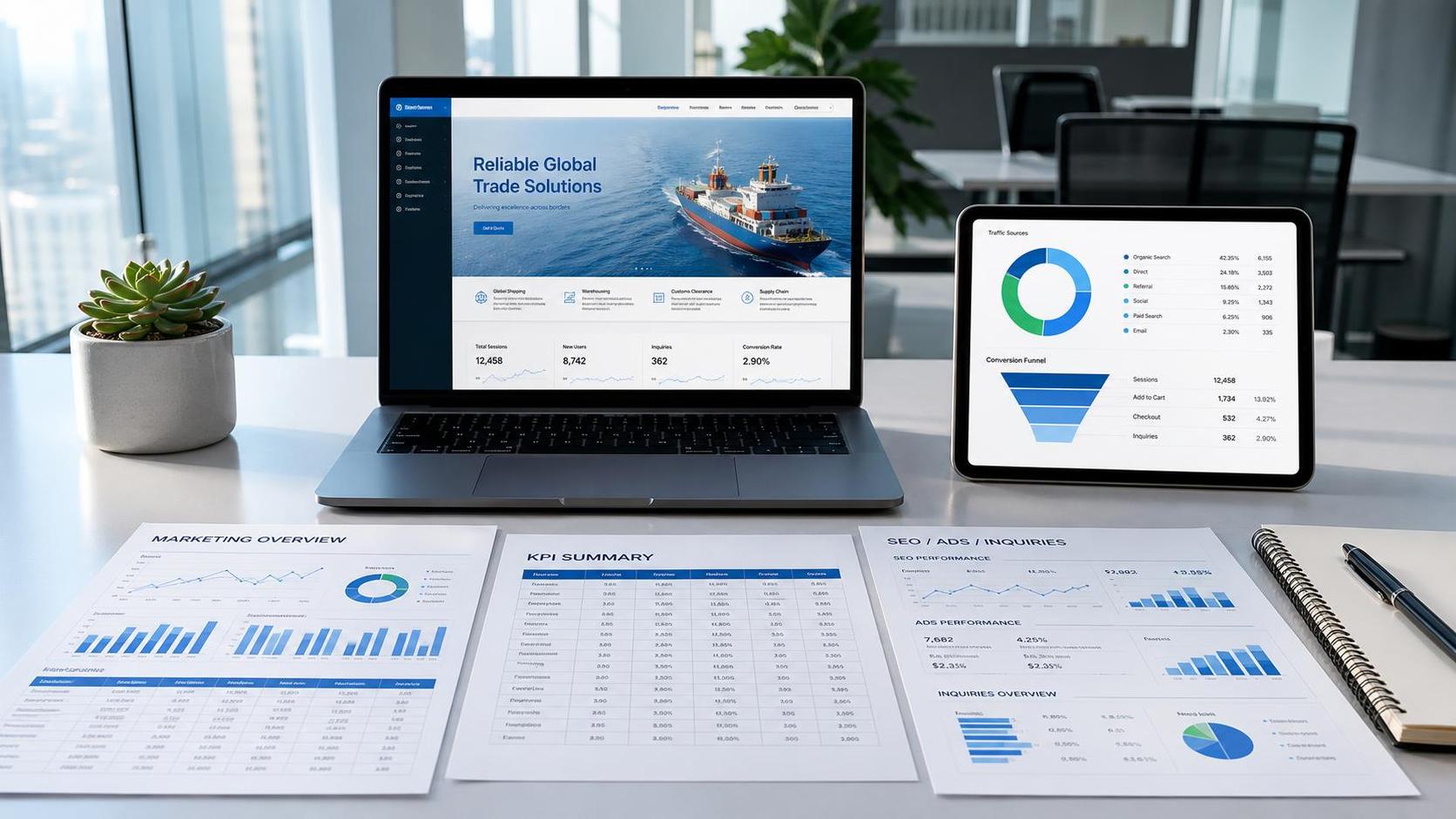
 EasyCamp SaaS Smart Website Marketing SystemE-Yingbao SaaS Smart Website Marketing System: AI-powered, zero-code website building. Rapidly launch multilingual independent e-commerce sites in just 10 minutes. Global server acceleration and AI-driven SEO optimization empower businesses to efficiently connect with global markets. The seamless integration of technology and user-friendly operation makes building e-commerce sites incredibly simple.
 AI+SEM Intelligent Advertising Marketing SystemAI+SEM drives intelligent ad creation, empowering full-funnel precision advertising marketing. The system automatically generates weekly/monthly reports, AI recommends keywords and target countries, monitors core metrics in real-time with intelligent alerts, and enables one-click high-conversion ad solutions to help quickly acquire customers and improve ROI.
 AI+SEO Dual Engine Optimization ServiceEasyWin AI+SEO Dual Engine Optimization System leverages AI-powered keyword mining, content generation, and comprehensive technical optimization to help foreign trade enterprises acquire high-quality organic traffic, significantly improving search rankings and conversion rates.
 AI+SNS Social Media Marketing SystemYingbao AI+SNS Social Media Marketing System - Precision social capture for the social media era. Supports one-click content synchronization across major platforms like Facebook and LinkedIn. AI intelligently rewrites posts for enhanced relevance. 24/7 AI customer service and user profiling analysis empower businesses to efficiently expand into global markets.
 AI+SEO营销解决方案易营宝AI+SEO营销解决方案,通过AI批量写作、智能生成TDK、精准关键词扩词等功能,全面优化网站SEO效果,提升流量与转化率。助力企业构建高效智能网站新生态。
 AI+SEM Advertising Marketing SolutionsAI+SEM Advertising Marketing Solution leverages AI technology to deeply empower SEM ad campaigns. It automatically generates weekly/monthly reports using AI, presenting account data across multiple dimensions for comprehensive insights into campaign performance and trends. The system precisely recommends keywords and target countries, intelligently generates high-conversion ad copy, and enables one-click activation of efficient campaign plans to help businesses rapidly acquire customers. Simultaneously, it monitors core metrics in real time, intelligently identifies abnormal fluctuations, and issues timely alerts to ensure stable, high-return advertising results.
 Domain Name ServicesEasyWin provides professional domain name services, including intelligent queries, one-stop registration, brand protection, and full lifecycle management, helping businesses build a digital brand image.
 EasyOperate B2C Cross-Border E-Commerce Platform & Independent WebsiteEasyStore B2C Cross-border E-commerce Independent Store is an intelligent website building and cross-border e-commerce integrated solution independently developed by EasyStore Information Technology (Beijing) Co., Ltd. The system is specially designed for small and medium-sized as well as large export enterprises, integrating 'website building, operation, marketing, advertising, and conversion' into one, helping enterprises quickly establish cross-border e-commerce independent stores to achieve brand globalization and global sales growth.
The platform supports multiple languages, multiple currencies, and multi-channel marketing, with built-in AI intelligent translation and SEO optimization systems, suitable for mainstream markets such as Southeast Asia, Europe and America, Latin America, and the Middle East, assisting Chinese manufacturing enterprises in efficiently deploying international e-commerce strategies. SSL证书易营宝提供专业SSL安全证书服务,包括单域名和泛域名证书,确保网站数据传输加密、身份验证和完整性保护,助力企业建立安全可信的在线业务环境。









