









- How to assess foreign trade website development trends?Looking at 2026 changes from multilingual,AI content to conversion pathsJul 04, 2026View details
- What are the new trends in multilingual marketing data analytics tools in 2026? Focus on attribution、automation and complianceJul 04, 2026View details
- Is Brand Globalization Marketing Consulting Worth Buying? At What Stage Should Companies Bring It InJul 01, 2026View details
- Cross-Border Marketing Trend Research: Why More and More Companies Are Starting to Deploy AI Search and GEO OptimizationJun 30, 2026View details
- Cross-Border Marketing Trend Research: How Independent Sites, AI Content, and Short-Video Customer Acquisition Are ChangingJun 30, 2026View details
- How Can a Brand Updates Page Be Made More SEO-Friendly? Analysis of Update Frequency, Content Structure, and Internal Linking StrategyJun 28, 2026View details
Saudi SABER Certification Introduces New Website Credibility Scoring System – Independent Website Enterprises Must Respond Urgently
Introduction
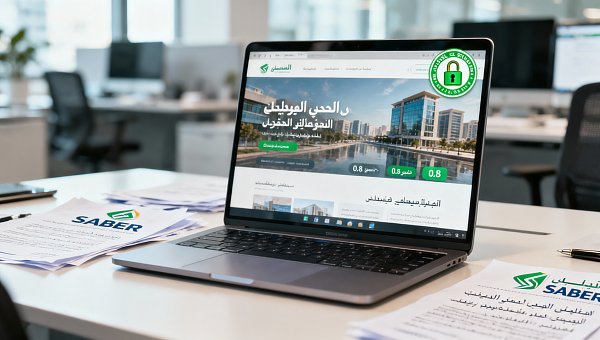
On April 1, 2026, the Saudi Standards Authority (SASO) updated its SABER certification rules, for the first time incorporating the SSL certificate level, page load speed, and multilingual localization quality of supplier independent websites into the 'Digital Trust Score' assessment system. This change directly impacts cross-border e-commerce, electronics, and building materials export companies conducting Middle Eastern trade through independent websites. Websites scoring below 70 points will face customs clearance delays, marking a new phase in compliance requirements for digital sourcing channels in the Middle Eastern market.
Event Overview
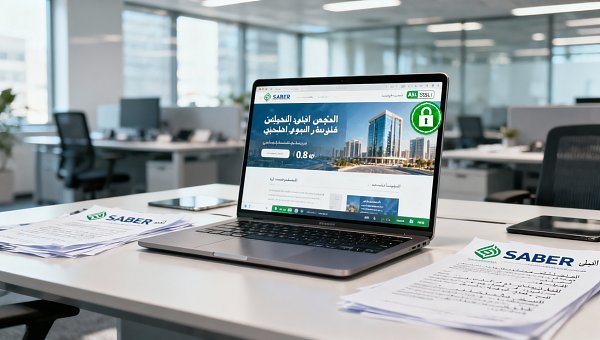
According to an official announcement from the Saudi Standards Bureau, the new SABER certification regulations, implemented from April 2026, add four new website technical indicators: 1) SSL certificates must reach Grade A or above; 2) Average page load speed for the entire site must be <1.5 seconds; 3) Localized languages such as Arabic must cover core product pages; 4) A tamper-proof customer review system must be deployed. This assessment will be reviewed in parallel with existing product certifications, and those that fail to meet the requirements must rectify the issues within 15 working days.
Which sub-sectors will be affected?
Cross-border e-commerce independent website operator
This primarily impacts Middle Eastern sellers on website building platforms like Shopify, particularly those selling frequently purchased items in categories such as consumer electronics and home goods. From an industry perspective, approximately 43% of existing independent Middle Eastern websites have loading times exceeding 2 seconds, and language localization issues are widespread, necessitating immediate technical audits.
B2B foreign trade enterprises
Traditional B2B companies in sectors like machinery parts and building materials have gradually shifted to independent websites for customer acquisition in recent years, but multilingual versions typically only retain English. Observations suggest that Saudi buyers prefer Arabic technical documents, which could impact the efficiency of negotiations for large orders.
Supply chain service providers
Customs clearance agents and logistics companies need to warn clients in advance to prepare certification materials. At present, it is more noteworthy that some "double clearance and tax included" service providers may have performance disputes due to clients' websites not meeting the standards.
Key points that relevant enterprises should pay attention to and corresponding suggestions
Prioritize completing the website's technical compliance upgrades.
It is recommended to use PageSpeed Insights to check loading speed and prioritize optimizing resources on the first screen; choose EV SSL certificates issued by organizations such as DigiCert; and ensure the accuracy of Arabic terminology when deploying automated translation systems such as LikeAlly.
Establish a customer evaluation risk control system
It is more appropriate to understand this as requiring the use of blockchain-based evidence storage and evaluation or third-party certification (such as Trustpilot), avoiding the use of editable self-managed back-end management systems. Saudi Customs has announced that it will conduct random checks to evaluate the authenticity of IP addresses.
Phased application for certification with a buffer period
Analysis suggests that there may be a backlog of applications in the initial stage of the new regulations. It is recommended to submit applications 30 days in advance for non-urgent orders, and for key categories, pre-approval can be entrusted to licensed local Saudi agencies.
Editor's View
From an industry perspective, this change is essentially a continuation of Saudi Arabia's "Vision 2030" digital procurement policy, which will force companies to improve their cross-border digital infrastructure. Currently, it's more appropriate to view this as a regional compliance signal—Gulf countries such as the UAE and Qatar may follow suit with similar measures, but a complete ban on low-scoring websites clearing customs is unlikely in the short term. It is recommended that companies synchronize website optimization with their SABER annual audit cycle to avoid temporary rectification costs.
Conclusion
This upgrade to Saudi Arabia's SABER certification reflects the Middle East market's growing regulatory focus on the credibility of digital supply chains. For exporting companies, this presents both a technological opportunity to improve conversion rates on their independent websites and a necessary investment to mitigate trade risks. Currently, it is recommended that companies download the latest assessment guidelines from the Saudi Standards Bureau's website and develop a phased compliance plan tailored to their specific product categories.
Information source explanation
1. Saudi Standards Authority (SASO) Announcement, March 25, 2026 2. SABER Certification Portal Update Log (Please pay close attention to the supplementary implementation details in April)
Related Articles
 What are the promotion channels for independent websites in Russian-speaking regions? How to choose search, social media, and local platform advertising
 Is B2B social media lead generation really faster than SEO? Comparison of lead quality, cycle, and input costs
 How should manufacturing enterprises build an official foreign trade website? Detailed explanation of section planning and inquiry conversion thinking



Related Products
 EasyCamp SaaS Smart Website Marketing SystemE-Yingbao SaaS Smart Website Marketing System: AI-powered, zero-code website building. Rapidly launch multilingual independent e-commerce sites in just 10 minutes. Global server acceleration and AI-driven SEO optimization empower businesses to efficiently connect with global markets. The seamless integration of technology and user-friendly operation makes building e-commerce sites incredibly simple.
 AI+SEM Intelligent Advertising Marketing SystemAI+SEM drives intelligent ad creation, empowering full-funnel precision advertising marketing. The system automatically generates weekly/monthly reports, AI recommends keywords and target countries, monitors core metrics in real-time with intelligent alerts, and enables one-click high-conversion ad solutions to help quickly acquire customers and improve ROI.
 AI+SEO Dual Engine Optimization ServiceEasyWin AI+SEO Dual Engine Optimization System leverages AI-powered keyword mining, content generation, and comprehensive technical optimization to help foreign trade enterprises acquire high-quality organic traffic, significantly improving search rankings and conversion rates.
 AI+SNS Social Media Marketing SystemYingbao AI+SNS Social Media Marketing System - Precision social capture for the social media era. Supports one-click content synchronization across major platforms like Facebook and LinkedIn. AI intelligently rewrites posts for enhanced relevance. 24/7 AI customer service and user profiling analysis empower businesses to efficiently expand into global markets.
 AI+SEO营销解决方案易营宝AI+SEO营销解决方案,通过AI批量写作、智能生成TDK、精准关键词扩词等功能,全面优化网站SEO效果,提升流量与转化率。助力企业构建高效智能网站新生态。
 AI+SEM Advertising Marketing SolutionsAI+SEM Advertising Marketing Solution leverages AI technology to deeply empower SEM ad campaigns. It automatically generates weekly/monthly reports using AI, presenting account data across multiple dimensions for comprehensive insights into campaign performance and trends. The system precisely recommends keywords and target countries, intelligently generates high-conversion ad copy, and enables one-click activation of efficient campaign plans to help businesses rapidly acquire customers. Simultaneously, it monitors core metrics in real time, intelligently identifies abnormal fluctuations, and issues timely alerts to ensure stable, high-return advertising results.
 Domain Name ServicesEasyWin provides professional domain name services, including intelligent queries, one-stop registration, brand protection, and full lifecycle management, helping businesses build a digital brand image.
 EasyOperate B2C Cross-Border E-Commerce Platform & Independent WebsiteEasyStore B2C Cross-border E-commerce Independent Store is an intelligent website building and cross-border e-commerce integrated solution independently developed by EasyStore Information Technology (Beijing) Co., Ltd. The system is specially designed for small and medium-sized as well as large export enterprises, integrating 'website building, operation, marketing, advertising, and conversion' into one, helping enterprises quickly establish cross-border e-commerce independent stores to achieve brand globalization and global sales growth.
The platform supports multiple languages, multiple currencies, and multi-channel marketing, with built-in AI intelligent translation and SEO optimization systems, suitable for mainstream markets such as Southeast Asia, Europe and America, Latin America, and the Middle East, assisting Chinese manufacturing enterprises in efficiently deploying international e-commerce strategies. SSL证书易营宝提供专业SSL安全证书服务,包括单域名和泛域名证书,确保网站数据传输加密、身份验证和完整性保护,助力企业建立安全可信的在线业务环境。









