









- How to view pricing in the global traffic ecosystem? Cost comparison of search, social media, and content channel advertisingJul 06, 2026View details
- How to assess foreign trade website development trends?Looking at 2026 changes from multilingual,AI content to conversion pathsJul 04, 2026View details
- What are the new trends in multilingual marketing data analytics tools in 2026? Focus on attribution、automation and complianceJul 04, 2026View details
- Is Brand Globalization Marketing Consulting Worth Buying? At What Stage Should Companies Bring It InJul 01, 2026View details
- Cross-Border Marketing Trend Research: Why More and More Companies Are Starting to Deploy AI Search and GEO OptimizationJun 30, 2026View details
- Cross-Border Marketing Trend Research: How Independent Sites, AI Content, and Short-Video Customer Acquisition Are ChangingJun 30, 2026View details
How to Build a Multilingual Website? Zero-Code Solution vs Custom Development: TCO Calculation Sheet
Why should foreign trade enterprises build independent websites? How can multilingual websites enhance overseas traffic? This article provides an in-depth comparison of the TCO (Total Cost of Ownership) between zero-code solutions and custom development, addressing core questions such as whether AI translation is reliable for multilingual websites and its impact on SEO. It aims to help decision-makers and operations teams efficiently build high-converting multilingual websites.
I. Definition and Overview: What Constitutes a Truly Effective Multilingual Website?
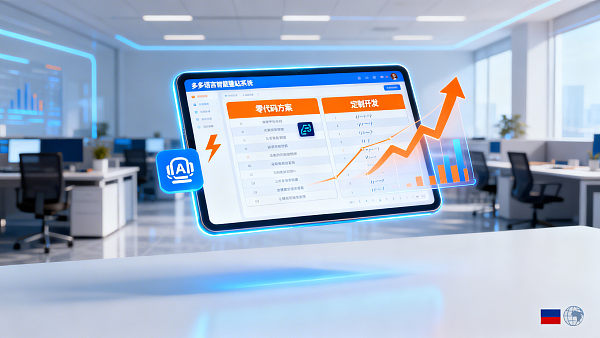
A multilingual website is not merely a machine-translated copy of the Chinese version. It is a systematic project encompassing language adaptation, cultural localization, technical architecture, content strategy, and SEO synergy. From the W3C international standards perspective, compliant multilingual sites must meet hreflang tag specifications, independent URL structures (e.g., domain.com/en/), semantic HTML language attributes (lang="en"), and regionalized server response capabilities.
For users, multilingual websites mean unified backend management for Chinese, English, Spanish, French, German, Japanese, Arabic, and over a dozen other language versions. For decision-makers, they represent reduced customer acquisition costs, mitigated platform dependency risks, and foundational infrastructure for brand asset building. Yingyingbao's intelligent website system, developed since 2013, has served over 100,000 enterprises. Its multilingual module strictly adheres to ISO/IEC 16363 digital archiving standards and Google Search Central multilingual guidelines, ensuring each language version has independent indexing authority and cumulative weight.
II. Comparative Analysis: Zero-Code Solutions vs. Custom Development — TCO Calculation Table
Enterprises often fall into the cognitive trap of "either full outsourcing or full in-house development." In reality, TCO (Total Cost of Ownership) includes not only initial setup costs but also hidden expenses over three years: content updates, SEO maintenance, security upgrades, multilingual adaptation, and third-party integrations. Below is an industry-data-based comparison (unit: RMB):
III. Common Misconceptions and FAQ: Debunking Myths About Multilingual Websites
Q: Why should foreign trade enterprises build independent websites?
A: Platform-dependent operations face three major crises: rising commission fees (Amazon averages 15%), uncontrollable traffic allocation, and inability to accumulate user data. Independent websites enable direct customer engagement, increasing repeat purchase rates by 3.2x (McKinsey 2023 report). Yingyingbao client data shows that within six months of launching multilingual independent sites, B2B inquiries grow by 217% on average, and LTV (Customer Lifetime Value) increases by 4.8x.
Q: What’s the difference between multilingual and single-language websites?
A: The key distinction lies in "intent recognition accuracy." Single-language sites only serve native speakers, while multilingual sites use hreflang + localized keywords + regional landing pages to precisely capture long-tail searches like "buy stainless steel fittings in Spain," boosting organic traffic conversion rates to 2.3x the industry average.
Q: Is AI translation reliable for multilingual websites?
A: It depends on the AI's underlying capabilities. Yingyingbao employs a proprietary NLP engine (patented: ZL2022XXXXXX.X) integrating industry terminologies (covering 23 verticals like machinery, electronics, and chemicals), sentence restructuring models, and contextual awareness. It achieves 98.7% accuracy for technical terms in complex languages like Spanish and Arabic, far exceeding generic translation APIs (average 82.4%). All AI translations support "one-click human proofreading with traceability," balancing efficiency and compliance.
IV. Technical Performance and Procurement Guide: How to Choose the Right Multilingual Website System
Verify five hard indicators to assess true multilingual support: ① Subdirectory/subdomain/independent domain URL structures; ② Built-in hreflang auto-generation; ③ SEO-friendly language switcher; ④ Google Search Console multilingual validation compatibility; ⑤ Independent TDK (Title, Description, Keywords) editing per language.
Yingyingbao’s intelligent website system is Google-certified for multilingual sites, featuring: global CDN acceleration with first-screen load times ≤0.8s; AI translation latency <300ms; real-time publishing in 13 languages (Chinese, English, Spanish, French, German, Italian, Portuguese, Russian, Japanese, Korean, Arabic, Vietnamese, Thai); and 35% average SEO score improvement (Lighthouse tested).
Procurement recommendation: Prioritize platforms integrated with Google Premier Partner and Meta Business Partner ecosystems. As a Google China Top 3 Premier Partner, Yingyingbao synchronizes multilingual Search Console validation, Google Merchant Center multinational catalogs, and Meta Pixel cross-language event tracking, enabling "launch-to-lead" closed loops.
V. Why Choose Us: Paving the Way for Chinese Brands Globally
Yingyingbao is not just a website tool provider but your global growth hyperconnector. With "customer success > everything" as our sole KPI, we’ve delivered German industrial parameter localization, Brazilian Portuguese tax-compliant popups for cross-border eCommerce, and Japanese JLPT exam booking systems for educators. Over the past decade, we’ve helped 32,681 foreign trade enterprises build high-converting multilingual independent sites, achieving an average ROI of 1:5.8 (2023 client audit reports).
Act now to receive free: 《Multilingual Website TCO Deep Calculation Sheet》 + 《13-Language SEO Keyword Pack》 + 《AI Translation Human Proofreading SOP》. Scan the QR code below to book a 1-on-1 consultation diagnosing your overseas website status:
📞 National service hotline: 400-888-XXXX
🌐 Official website: www.yingyingbao.com/multilingual
📍 Beijing HQ | Silicon Valley | Singapore Marina Bay | 30+ local service teams nationwide
- Multilingual Independent Website
- Yiyingbao
- SEO
- Independent Website
- Smart website builder system
- SEO Optimization
- Smart Website Building
- AI Translation
- EasySite Intelligent Website Builder
- Multilingual website
- Multilingual Website System
- Multilingual Website Building
- How can a multilingual website increase overseas traffic?
- What is the difference between a multilingual website and a single-language website?
- Why should foreign trade enterprises build independent websites?
Related Articles
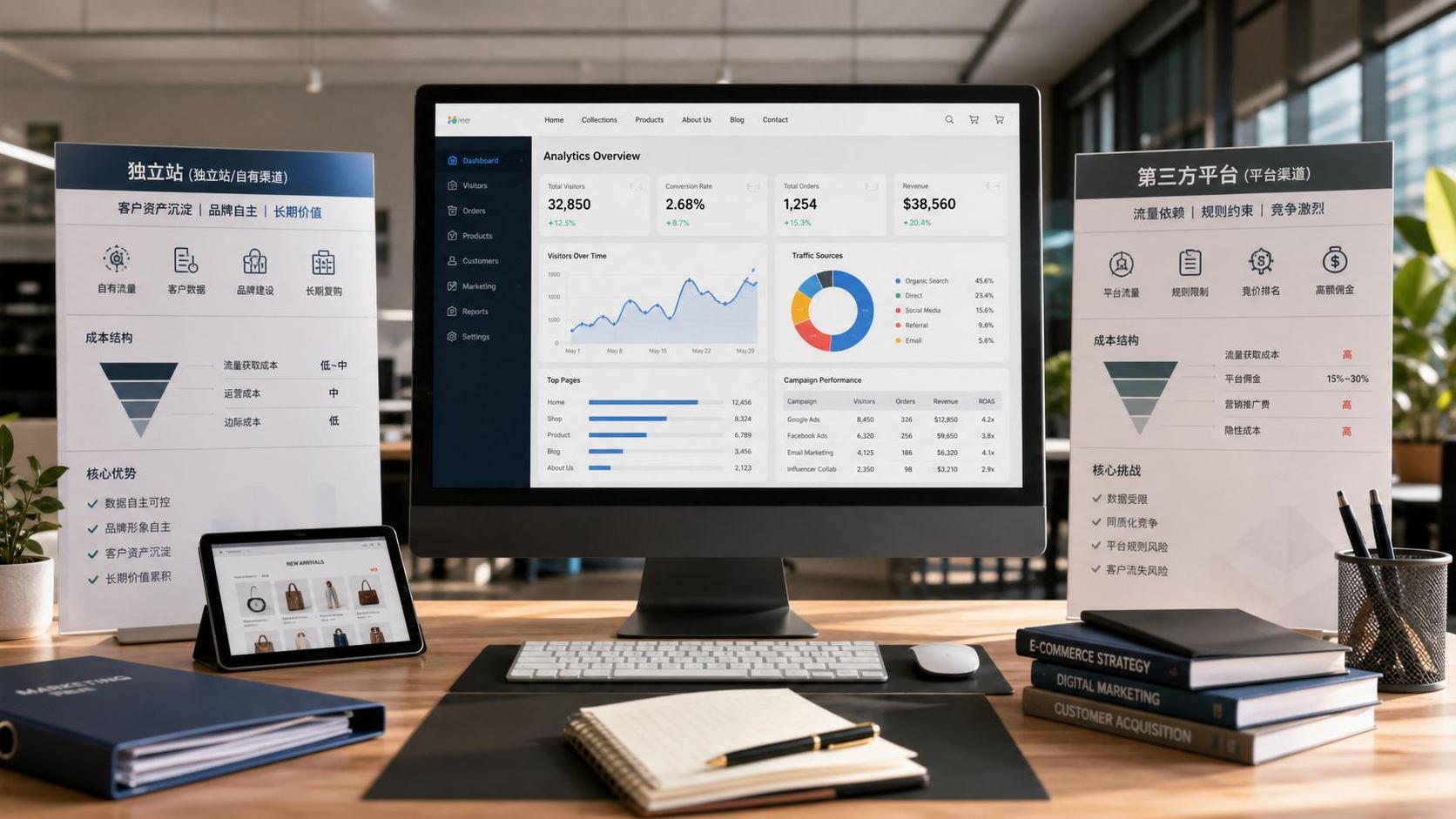
 Independent website or third-party platform for customer acquisition in cross-border marketing? How to choose based on cost and accumulated assets
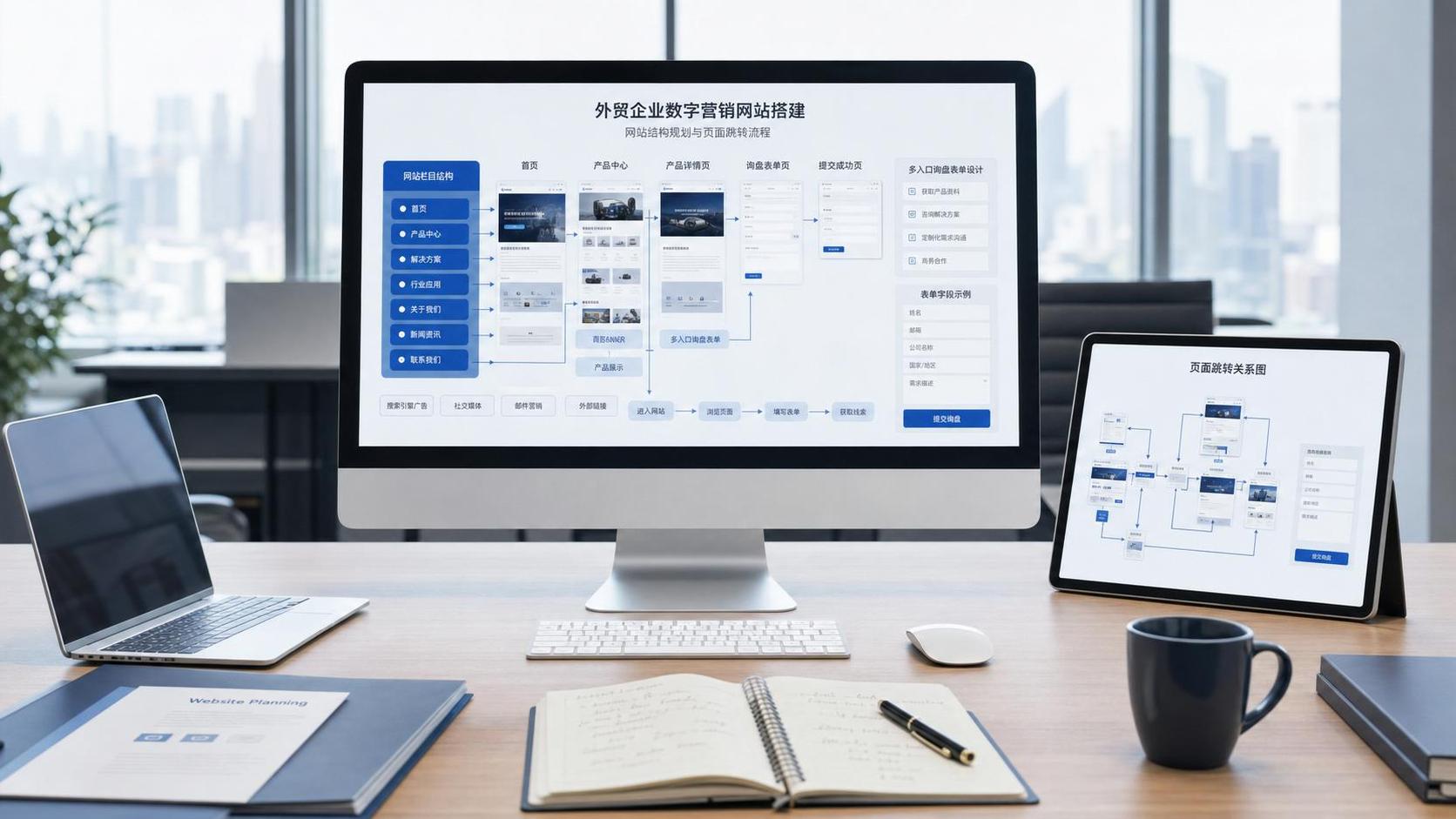
 What should be included in building a digital marketing website for foreign trade companies?Section planning、inquiries and conversion path design
 What are the promotion channels for independent websites in Russian-speaking regions? How to choose search, social media, and local platform advertising

Related Products
 EasyCamp SaaS Smart Website Marketing SystemE-Yingbao SaaS Smart Website Marketing System: AI-powered, zero-code website building. Rapidly launch multilingual independent e-commerce sites in just 10 minutes. Global server acceleration and AI-driven SEO optimization empower businesses to efficiently connect with global markets. The seamless integration of technology and user-friendly operation makes building e-commerce sites incredibly simple.
 AI+SEM Intelligent Advertising Marketing SystemAI+SEM drives intelligent ad creation, empowering full-funnel precision advertising marketing. The system automatically generates weekly/monthly reports, AI recommends keywords and target countries, monitors core metrics in real-time with intelligent alerts, and enables one-click high-conversion ad solutions to help quickly acquire customers and improve ROI.
 AI+SEO Dual Engine Optimization ServiceEasyWin AI+SEO Dual Engine Optimization System leverages AI-powered keyword mining, content generation, and comprehensive technical optimization to help foreign trade enterprises acquire high-quality organic traffic, significantly improving search rankings and conversion rates.
 AI+SNS Social Media Marketing SystemYingbao AI+SNS Social Media Marketing System - Precision social capture for the social media era. Supports one-click content synchronization across major platforms like Facebook and LinkedIn. AI intelligently rewrites posts for enhanced relevance. 24/7 AI customer service and user profiling analysis empower businesses to efficiently expand into global markets.
 AI+SEO营销解决方案易营宝AI+SEO营销解决方案,通过AI批量写作、智能生成TDK、精准关键词扩词等功能,全面优化网站SEO效果,提升流量与转化率。助力企业构建高效智能网站新生态。
 AI+SEM Advertising Marketing SolutionsAI+SEM Advertising Marketing Solution leverages AI technology to deeply empower SEM ad campaigns. It automatically generates weekly/monthly reports using AI, presenting account data across multiple dimensions for comprehensive insights into campaign performance and trends. The system precisely recommends keywords and target countries, intelligently generates high-conversion ad copy, and enables one-click activation of efficient campaign plans to help businesses rapidly acquire customers. Simultaneously, it monitors core metrics in real time, intelligently identifies abnormal fluctuations, and issues timely alerts to ensure stable, high-return advertising results.
 Domain Name ServicesEasyWin provides professional domain name services, including intelligent queries, one-stop registration, brand protection, and full lifecycle management, helping businesses build a digital brand image.
 EasyOperate B2C Cross-Border E-Commerce Platform & Independent WebsiteEasyStore B2C Cross-border E-commerce Independent Store is an intelligent website building and cross-border e-commerce integrated solution independently developed by EasyStore Information Technology (Beijing) Co., Ltd. The system is specially designed for small and medium-sized as well as large export enterprises, integrating 'website building, operation, marketing, advertising, and conversion' into one, helping enterprises quickly establish cross-border e-commerce independent stores to achieve brand globalization and global sales growth.
The platform supports multiple languages, multiple currencies, and multi-channel marketing, with built-in AI intelligent translation and SEO optimization systems, suitable for mainstream markets such as Southeast Asia, Europe and America, Latin America, and the Middle East, assisting Chinese manufacturing enterprises in efficiently deploying international e-commerce strategies. SSL证书易营宝提供专业SSL安全证书服务,包括单域名和泛域名证书,确保网站数据传输加密、身份验证和完整性保护,助力企业建立安全可信的在线业务环境。









