









- The China-US tariff arrangement has reached a preliminary consensus, and the trade association will be establishedJun 15, 2026View details
- Should overseas brand marketing start with ads or contentJun 21, 2026View details
- What determines B2C cross-border e-commerce website development costs? A breakdown of features, interfaces, and deployment methodsJun 17, 2026View details
- China-Morocco zero-tariff access, a breakthrough in the cost of Moroccan goods exports to ChinaJun 11, 2026View details
- What signal should be released for the suspension of exports to JapanJun 10, 2026View details
- China's May LNG imports rebounded, with increased volumes from Russia and Canada filling the Middle East supply gapJun 10, 2026View details
- Will GEO change its SEO strategy?Jun 04, 2026View details
- What types of businesses are end-to-end solutions suitable for?Jun 03, 2026View details
Why is brand awareness growth slow, and what are the common problems?
Many companies feel that their brand awareness is growing slowly, and their first reaction is often that they haven't produced enough content, haven't invested heavily in advertising, or haven't chosen the right platform. However, in actual projects, what truly slows down brand awareness growth is often not insufficient individual actions, but rather problems in the underlying support chain: unclear website title, description, and keywords; weak SEO ranking foundation; inadequate user experience optimization; content creation and advertising being done separately; and a lack of synergy between cross-border marketing and official website assets.
Especially for independent e-commerce websites and corporate websites, brand awareness isn't something you can simply "shout out." It's built up through search visibility, content reach, website capacity, and consistent, cumulative growth. If the fundamentals are misjudged, companies may invest heavily for a long time but never see stable growth. This article avoids abstract concepts and directly breaks down why brand awareness growth is slow, where the problems typically lie, and how companies can identify and correct them.
A brand's slow rise in brand awareness is usually not due to "insufficient efforts," but rather to "misaligned foundational elements."
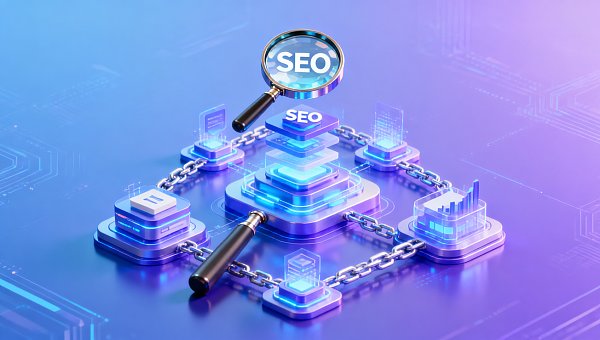
The most common misconception about slow brand awareness growth is that it's a "problem with the amount of exposure." In fact, for most companies, slow brand awareness growth often stems from the following root causes:
- Missing search entry point: Users will search, but they won't find you, or the search results won't be what you want them to see.
- The website content was not correctly understood by search engines: the TDK settings were chaotic, the page themes were scattered, and the keyword layout was unbalanced, resulting in the SEO ranking not improving for a long time.
- Traffic comes but doesn't stay: slow website loading speed, messy structure, unclear conversion path, high user bounce rate, and difficulty in building brand image.
- Marketing activities are fragmented: SEO, advertising, social media marketing, and content publishing lack a unified theme and consistent data feedback.
- Overly pursuing short-term bursts: hoping to see a significant increase in brand awareness within one or two months, but ignoring the cumulative effect of brands in search and content ecosystems.
The most important thing for business decision-makers to do is to establish a correct understanding: brand awareness is not the result of a single channel, but a comprehensive manifestation of "discoverability + understandability + communicability + convertibility". If any one of these links is weak, growth will be slow.
Why do many companies, despite creating content, still not see a significant increase in brand awareness?
This is the most common problem. Many companies aren't actually "not doing anything," but rather "doing a lot of ineffective content." There are three common manifestations:
1. Mismatch between content theme and user search intent
Businesses like to write about what they want to say, such as company news, feature listings, and industry slogans. However, users often search for more specific questions, such as solutions, price comparisons, application scenarios, case studies, after-sales support, and delivery cycles. If the content fails to address users' search intent, even extensive exposure will struggle to translate into brand awareness.
2. The content lacks a keyword structure.
Enhancing brand awareness is inseparable from search coverage. If content doesn't establish a combination system of "main keywords + scenario terms + question terms + regional terms + brand terms" around the core business, search engines will find it difficult to determine the website's expertise in a particular field, resulting in fragmented articles, competing pages, and weak overall rankings.
3. Lack of continuous optimization after content is published.
Many companies treat content launch as the end, but it's just the beginning. Low click-through rates, short dwell times, slow indexing, and stagnant rankings all require adjustments to titles, summaries, internal links, structure, and page experience. Without a review mechanism, content can hardly become a true brand asset.
If the website's title, description, keywords, and basic page structure are not solid, its SEO ranking will naturally suffer.
Many companies spend a significant budget on promotion but neglect the fundamentals of their official website. For corporate website SEO and independent e-commerce websites, TDK (Title, Description, Keywords) is the first entry point for search engines to understand a page.
Why do TDK issues directly impact brand awareness?
- The title is too general: it only contains the brand name and lacks business terms, industry terms, or scenario terms, resulting in weak search coverage.
- The description lacks marketing appeal: it fails to explain value, advantages, and applicable scenarios, thus impacting click-through rates.
- Although the weight of keywords has decreased, their structural logic remains important: they help to plan the keyword system internally and avoid confusion in page positioning.
If the homepage, category pages, product pages, and solution pages lack a clear theme, SEO optimization ranking will often fall into a state of: indexing but no traffic; traffic but no targeted users; keywords but no brand keyword growth.
Furthermore, whether a website possesses a compliant and stable operational foundation will indirectly affect promotion efficiency. For example, when a company's official website goes live in China, the smoothness of the filing process and the completeness of the information often affect the project's launch schedule. For companies that need to quickly advance the coordination between website construction and promotion, they can learn about domestic ICP filing service accounts to improve efficiency in website filing, material pre-review, information filling, verification and coordination, and regulatory approval, reducing the impact of delays in basic matters on the overall marketing schedule.
If user experience optimization doesn't keep up, more traffic can actually make it harder to build brand awareness.
Many managers only focus on "whether there is traffic," but search engines and users are more concerned with "what happens after the traffic comes in." If the website experience is poor, brand awareness may appear to increase, but it is actually difficult to create a positive impression.
Several most common shortcomings in user experience
- The page loads slowly, especially when images, videos, and scripts are loaded too heavily.
- Poor mobile adaptation, difficult-to-use buttons, messy layout, and difficult-to-submit forms.
- The navigation structure is unclear, and users cannot find the products, case studies, or contact information they want to see.
- The page content lacks professionalism, offering only vague promotional information without parameters, case studies, processes, or FAQs.
- The conversion path is too long and the consultation entry point is not obvious, resulting in the loss of potential users.
Enhancing brand awareness isn't just about being seen; it's also about gaining trust. If users feel the website is unprofessional or clunky on their first visit, both organic traffic from SEO and paid traffic from advertising will be less effective. End consumers, distributors, project managers, and after-sales service personnel all have different needs, so page content must be presented in a layered manner; a single script cannot be used to cover all audiences.
The lack of synergy in cross-channel operations is a hidden reason for the slow growth of brand awareness.
Many companies' problems don't stem from poor performance in individual channels, but rather from a lack of coordination between different channels. For example:
- Social media marketing tells brand stories, but the official website only shows product parameters.
- The ads redirect to the event page, but there is no content connection between the event page and the official website.
- The SEO content focuses on popularizing industry knowledge, but the sales team has failed to turn frequently asked customer questions into content assets.
- Cross-border marketing targets overseas markets, but the website language, localized expressions, and conversion components have not been optimized accordingly.
The result is that while businesses are making their voices heard across every channel, users are receiving fragmented information, failing to form a unified brand perception. The truly effective way to boost brand awareness is to revolve website building, SEO optimization, content marketing, social media communication, and advertising around a shared core theme, amplifying each other rather than operating in isolation.
For companies with needs across multiple markets, languages, and product lines, it is especially important to emphasize "localized expression + unified data attribution." Otherwise, while brand exposure may increase, it will not translate into increased brand keyword searches, inquiry growth, and sales conversion.
How should businesses determine which aspect is currently hindering brand awareness?
If you want to find the problem faster, it's not recommended to rely solely on intuition. Instead, use several more direct indicators to troubleshoot:
1. Check search visibility
Check if core business keywords, scenario keywords, regional keywords, and brand keywords have stable rankings; if not, the focus is usually on SEO fundamentals and content structure.
2. Check the quality of clicks and visits.
If there are impressions but low clicks, the problem is mostly with the title and summary; if there are clicks but a high bounce rate, the problem is mostly with the page experience and content flow.
3. Observe the growth of brand keywords
One of the most valuable signals of increased brand awareness is whether brand-related searches increase. If non-brand keywords bring in some traffic, but brand keywords don't increase, it means users only saw the content and didn't remember the brand.
4. Observe the effect of channel synergy.
Are there any synergies between social media engagement, ad clicks, search traffic, and website inquiries? If not, it's likely a sign of a divergence in channel strategies.
5. Determine if the content serves the business objectives.
Not all highly-read content delivers value. Truly effective content should help businesses improve their professional awareness, acquire targeted traffic, and shorten the decision-making process for closing deals.
To truly build brand awareness, it's recommended to start with these steps.
If a company has a limited budget or limited team resources, it is advisable not to blindly expand into new channels, but rather to prioritize them:
- First, conduct a basic check-up on the official website and independent website: focus on TDK, indexing, page structure, speed, mobile experience, and conversion path.
- Reconstruct the keyword and content framework: Build a sustainable content matrix around users' real search questions.
- Focus on high-value pages: Prioritize optimizing the homepage, core product pages, solution pages, and case study pages; prioritize quality over quantity.
- Integrate SEO, social media, and advertising strategies: unify themes, wording, and landing page logic.
- Establish a data review mechanism: review rankings, clicks, dwell time, inquiries, and brand keyword growth monthly, instead of just looking at exposure.
If a company is in the process of building or redesigning its website, basic tasks such as website registration, internet access, and information changes should be planned in advance. Especially when domestic projects move at a fast pace, delays in these basic processes can directly impact subsequent launch, indexing, and promotion plans. A domestic ICP registration service account with a professional team and full-process support can be particularly helpful for companies that need to shorten the registration preparation period and reduce operational errors.
In summary, the slow increase in brand awareness is not primarily due to a lack of "insufficient volume," but rather to an "unsmooth growth path."
The reason why brand awareness increases slowly is often not on the surface, but at a deeper level. It's not something that can be solved simply by publishing more articles or running more ads. Instead, it requires returning to several key points: Is the website's title, description, and keywords (TDK) clear? Is the SEO optimization and ranking system sound? Is the user experience optimization adequate? Are cross-border marketing and multi-channel communication working in synergy?
For business decision-makers, the most important thing is not to keep "adding more action," but to first identify the key bottlenecks. For the execution team, the focus is not on blindly pursuing quantity, but on truly connecting search, content, website, and conversion links around user search intent and business goals. Only in this way can the improvement in brand awareness not remain superficial exposure, but gradually translate into more stable brand recognition, more precise inquiries, and more sustainable growth.
Related Articles



Related Products
 EasyCamp SaaS Smart Website Marketing SystemE-Yingbao SaaS Smart Website Marketing System: AI-powered, zero-code website building. Rapidly launch multilingual independent e-commerce sites in just 10 minutes. Global server acceleration and AI-driven SEO optimization empower businesses to efficiently connect with global markets. The seamless integration of technology and user-friendly operation makes building e-commerce sites incredibly simple.
 AI+SEM Intelligent Advertising Marketing SystemAI+SEM drives intelligent ad creation, empowering full-funnel precision advertising marketing. The system automatically generates weekly/monthly reports, AI recommends keywords and target countries, monitors core metrics in real-time with intelligent alerts, and enables one-click high-conversion ad solutions to help quickly acquire customers and improve ROI.
 AI+SEO Dual Engine Optimization ServiceEasyWin AI+SEO Dual Engine Optimization System leverages AI-powered keyword mining, content generation, and comprehensive technical optimization to help foreign trade enterprises acquire high-quality organic traffic, significantly improving search rankings and conversion rates.
 AI+SNS Social Media Marketing SystemYingbao AI+SNS Social Media Marketing System - Precision social capture for the social media era. Supports one-click content synchronization across major platforms like Facebook and LinkedIn. AI intelligently rewrites posts for enhanced relevance. 24/7 AI customer service and user profiling analysis empower businesses to efficiently expand into global markets.
 AI+SEO营销解决方案易营宝AI+SEO营销解决方案,通过AI批量写作、智能生成TDK、精准关键词扩词等功能,全面优化网站SEO效果,提升流量与转化率。助力企业构建高效智能网站新生态。
 AI+SEM Advertising Marketing SolutionsAI+SEM Advertising Marketing Solution leverages AI technology to deeply empower SEM ad campaigns. It automatically generates weekly/monthly reports using AI, presenting account data across multiple dimensions for comprehensive insights into campaign performance and trends. The system precisely recommends keywords and target countries, intelligently generates high-conversion ad copy, and enables one-click activation of efficient campaign plans to help businesses rapidly acquire customers. Simultaneously, it monitors core metrics in real time, intelligently identifies abnormal fluctuations, and issues timely alerts to ensure stable, high-return advertising results.
 Domain Name ServicesEasyWin provides professional domain name services, including intelligent queries, one-stop registration, brand protection, and full lifecycle management, helping businesses build a digital brand image.
 EasyOperate B2C Cross-Border E-Commerce Platform & Independent WebsiteEasyStore B2C Cross-border E-commerce Independent Store is an intelligent website building and cross-border e-commerce integrated solution independently developed by EasyStore Information Technology (Beijing) Co., Ltd. The system is specially designed for small and medium-sized as well as large export enterprises, integrating 'website building, operation, marketing, advertising, and conversion' into one, helping enterprises quickly establish cross-border e-commerce independent stores to achieve brand globalization and global sales growth.
The platform supports multiple languages, multiple currencies, and multi-channel marketing, with built-in AI intelligent translation and SEO optimization systems, suitable for mainstream markets such as Southeast Asia, Europe and America, Latin America, and the Middle East, assisting Chinese manufacturing enterprises in efficiently deploying international e-commerce strategies. SSL证书易营宝提供专业SSL安全证书服务,包括单域名和泛域名证书,确保网站数据传输加密、身份验证和完整性保护,助力企业建立安全可信的在线业务环境。









