I. The Authoritative Definition & Irreplaceable Strategic Value of Corporate Website SEO
1. Core Definition of Corporate Website SEO
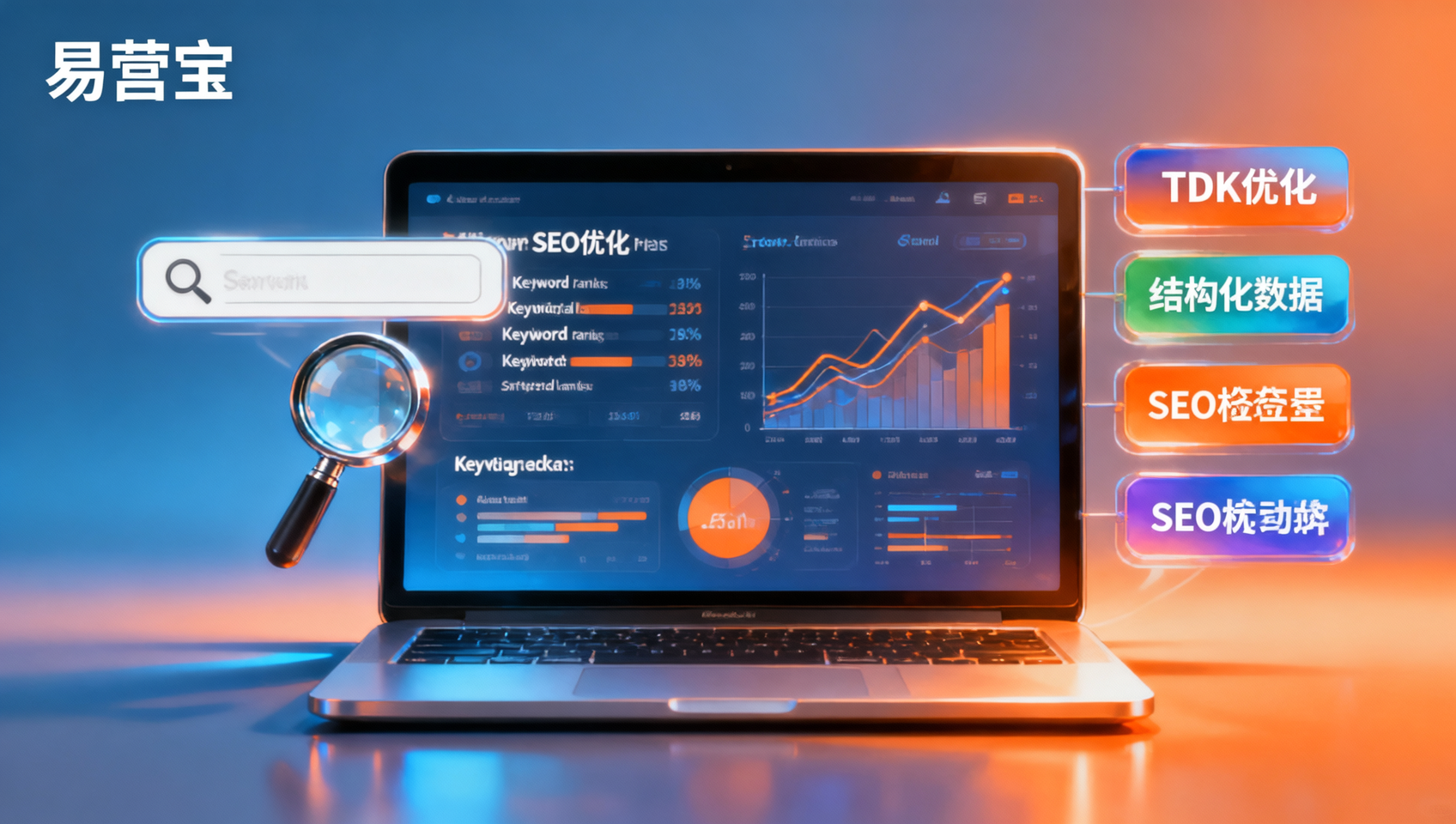
**Corporate Website SEO (Corporate Website SEO)** is a specialized process focused on **optimizing corporate official websites** to achieve **higher organic rankings** for target keywords on search engine results pages (e.g., Google, Baidu). It encompasses **Technical SEO, Content SEO, and Off-Page SEO** as its three pillars, with the ultimate goal of transforming **“search visibility” into “commercial conversion rates”**.
2. 4 Core Advantages of Corporate Website SEO vs. Paid Ads
Proper **Corporate Website SEO** investment delivers long-term, high-ROI benefits:
- **Cost Efficiency:** Once rankings stabilize, **traffic is free**, whereas paid ads’ cost-per-click (CPC) only increases over time.
- **High Trust & Authority:** Top organic rankings, especially for **industry keywords**, naturally endorse your business, yielding far higher conversions than ads.
- **Strong Risk Resilience:** SEO-driven traffic **is unaffected by budget limits or platform policy changes**, ensuring exceptional business stability.
- **Precision Targeting:** SEO captures **user-initiated search demand**, with intent-driven traffic typically converting at **higher quality**.
3. Core Pillar: The Role of E-E-A-T in Corporate Website SEO
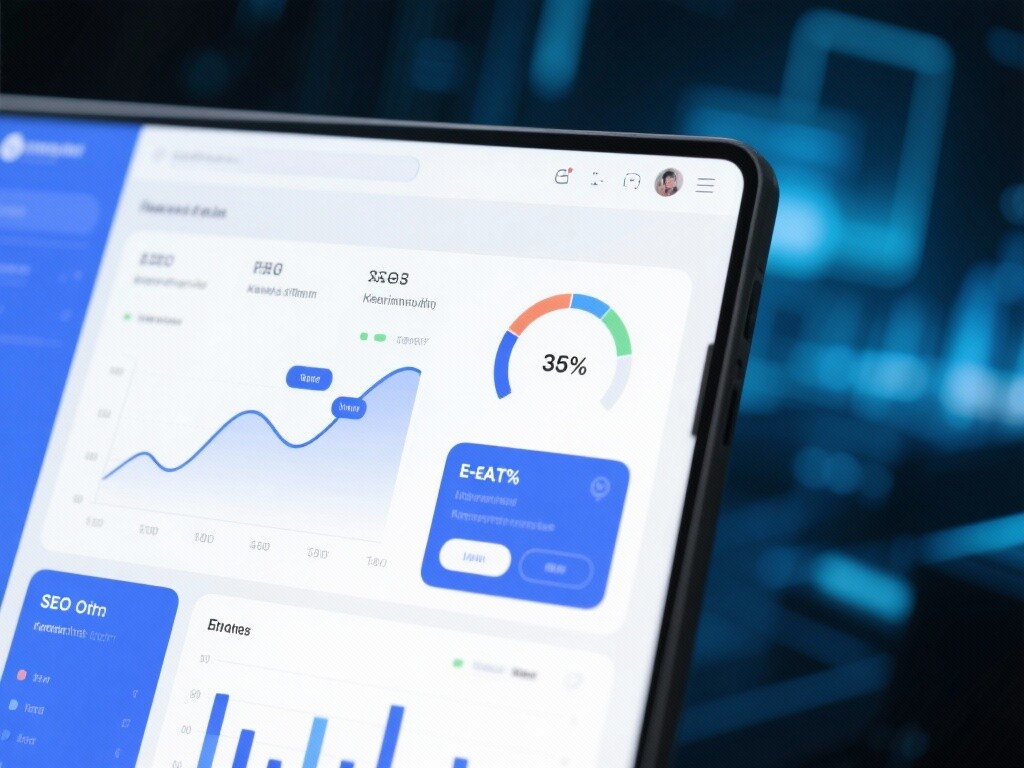
**E-E-A-T** (**Experience, Expertise, Authoritativeness, Trustworthiness**) is the core criterion modern search engines use to evaluate website quality. For **Corporate Website SEO**, E-E-A-T requires sites to **clearly demonstrate industry experience, team expertise, authoritative credentials, and client trust** to prove their **leading position** in specific fields.
II. The Evolution of Corporate Website SEO: From “Stuffing” to “User Intent”
The history of **Corporate Website SEO** reflects search engines’ maturation and growing emphasis on **user value**:
1. Early SEO: Keyword Stuffing & Link Farms (2000–2007)
Characteristics: **Corporate Website SEO** relied on **high-frequency keyword repetition** and **low-quality link exchanges (link farms)**. Simple algorithms and low technical barriers led to quick but unsustainable results. These **ranking manipulation tactics** are now obsolete.
2. Algorithm Updates & the “Content is King” Era (2008–2015)
Milestones: Google’s **Panda and Penguin algorithms** cracked down on low-quality content and spam links. **Corporate Website SEO** shifted toward **high-quality original content, UX optimization, and branding**, recognizing SEO must **create value based on user needs**.
3. Modern SEO: E-E-A-T, Mobile-First & AI Integration (2016–Present)
Key Shifts: **Mobile-first indexing, Core Web Vitals, and E-E-A-T** became ranking factors. Today’s **Corporate Website SEO** emphasizes **deep integration of technology and content**, leveraging **structured data, AI-assisted content generation, and advanced user behavior analysis** to achieve **precise traffic capture and high-efficiency conversions**.
III. Deep Dive: 5 Foundational Technical Principles of Corporate Website SEO
Exceptional **Corporate Website SEO** results stem from mastering these core technical principles:
1. Crawling & Indexing Control
Principle: Ensure search engine crawlers **efficiently and completely access and index** all valuable pages. Implementation: Optimize **Robots.txt** to **block crawlers from low-value pages** (e.g., login pages). Submit **XML Sitemaps** to notify crawlers of latest URLs. Use **Canonical Tags** to resolve duplicate content issues.
2. Performance & UX (Core Web Vitals)
Principle: Site speed and interactivity are **direct ranking signals**. Implementation: **Corporate Website SEO** must optimize **LCP (Largest Contentful Paint), FID (First Input Delay), and CLS (Cumulative Layout Shift)**. Achieve top-tier CWV via **code compression, image optimization, CDN deployment, and server-side rendering (SSR)**.
3. Structured Data & Semantic Understanding (Schema Markup)
Principle: Help search engines **accurately understand page content** (e.g., FAQs, products, companies). Implementation: Use **JSON-LD Schema Markup** for company info, product details, reviews, FAQs, etc. This boosts rankings and unlocks **rich snippets**, **significantly improving CTR**.
4. URL Standardization & Weight Consolidation (301 Redirects)
Principle: Search engines dilute ranking power across duplicate URLs. Implementation: Use **server-side 301 redirects** to permanently consolidate non-standard URLs (HTTP versions, www variants, parameter-heavy URLs) into **a single canonical URL**, ensuring **100% link equity preservation**.
5. Mobile-First Rendering & Responsive Design
Principle: Search engines primarily rank based on **mobile site content and performance**. Implementation: **Corporate Website SEO** requires **responsive web design (RWD) or dynamic serving**, ensuring mobile content’s **completeness, readability, and fast loading**. Mobile pages’ **SEO titles and descriptions** must match desktop optimizations.
IV. 4 Core Features & High-Conversion Applications of Corporate Website SEO
1. Core Feature: Focus on Commercial Keyword Intent
Feature: **Corporate Website SEO** targets **conversion-driven keywords** like “XX solutions,” “XX software pricing,” “best XX suppliers.” Application: Assign these to **product pages, service pages, and landing pages**, ensuring strong **CTAs and trust elements**.
2. Core Feature: Deep Authority Content Development
Feature: Content must showcase **deep industry expertise**. Application: Build **knowledge bases, expert blogs, whitepaper hubs**. All core content should have **bylined authors** with highlighted **credentials, achievements, and industry standing** to meet E-E-A-T requirements.
3. Application 1: B2B Lead Funnel Optimization
Practice: Use SEO traffic to guide users from **content marketing pages** (awareness stage) via **internal links** to **solution pages** (consideration stage), then to **high-trust case studies/pricing pages** (decision stage). **Entire flows must be data-tracked**.
4. Application 2: Localization & Brand Protection
Practice: For region-specific businesses, optimize **Google My Business (or Baidu Maps)** and integrate **local structured data/keywords** to capture “XX city + service” searches. **Continuously monitor brand keyword rankings** to ensure dominance.
V. 9 Advanced Optimization Strategies for Corporate Website SEO
Senior SEO experts recommend these 9 strategies to maximize **Corporate Website SEO** results:

- **Technical Foundations:** Audit and fix all **404 errors**, ensure correct **Canonical Tags**, and **eliminate redirect chains**.
- **Core Keyword Mapping:** Assign **2-3 high-value primary keywords** and **5-10 long-tail keywords** to each **core business page** (products/services/solutions).
- **Content Depth & Quality:** Ensure core articles **exceed 2,000 words**, **outpace competitors**, and **fully address user search intent**.
- **Title & Description Optimization:** Craft **compelling Title Tags and Meta Descriptions** with **core keywords** to boost **CTR in SERPs**.
- **Internal Link Equity:** Strategically link from **homepages and high-authority pages** to **target product/service pages**.
- **UX Audits:** Use **Google PageSpeed Insights** to ensure **LCP under 2.5 seconds**.
- **Link Building:** Focus on **high-quality, authoritative, industry-relevant backlinks** (e.g., associations, media, universities), **not quantity**.
- **Data Tracking:** Configure **conversion tracking in Google Search Console & GA4**, correlating **traffic/rankings with actual revenue**.
- **Content Differentiation:** Avoid duplication; leverage **unique research, case studies, and expert interviews** to build **content moats**.
VI. Upgrade Now: Let EasyProfit Launch Your High-ROI Corporate Website SEO Strategy!
Lacking a clear **Corporate Website SEO** growth path? EasyProfit offers **comprehensive SEO audits, E-E-A-T authority building, and conversion strategies**. We’ll **diagnose technical issues, plan high-conversion content, and build quality backlinks** to ensure your site gains **stable, high-value organic traffic** for years. **Stop burning money on ads—invest in sustainable digital assets!**
Click for a Free Corporate Website SEO Audit Report!FAQ
VII. Frequently Asked Questions (FAQ)
1. How long does it usually take to see the effects of corporate website SEO?
Answer: **Corporate website SEO** is a long-term process. For new websites or low-authority websites, it typically takes **6 to 12 months** to see significant improvements in traffic and rankings. For high-authority websites, after technical fixes and content updates, results may appear within **3 months**. Consistently maintaining **high-quality, systematic** optimization is key.
2. Compared to Baidu, what are the core differences in corporate website SEO strategies for Google?
Answer: **The core principles are the same, but the focus differs.** Google places more emphasis on **E-E-A-T (Expertise, Authoritativeness, Trustworthiness), Core Web Vitals (global performance), and high-quality backlinks**. Baidu, on the other hand, prioritizes **content originality, website compliance (e.g., ICP filing), and integration with Baidu products (e.g., Baidu Mini Programs, Baidu Encyclopedia)**.
3. My corporate website pages use JS dynamic loading. Does this affect SEO?
Answer: **It has a significant impact.** Search engine crawlers (especially Baidu) are far less efficient at capturing **JavaScript-rendered content** compared to static HTML. For **corporate website SEO**, it is strongly recommended to use **server-side rendering (SSR) or prerendering** techniques to ensure that **key content is presented in HTML format upon loading** for crawlers.
4. We have multiple product websites. Should we pursue multi-site SEO or consolidate all traffic into one corporate website?
Answer: **It is generally advised to consolidate traffic into a single high-authority corporate website.** Multi-site setups (unless products and user bases are entirely unrelated) often lead to **dispersed authority, content duplication, and high management costs**. All products should be organized as **subdirectories or subdomains of the corporate website**, concentrating all SEO resources to **enhance the overall authority of the primary domain**.

Customer Reviews
Mr. Wang, Founder of a B2B SaaS Platform
"We were initially unfamiliar with **corporate website SEO** technically, which led to our traffic being consistently suppressed by competitors. The EasyWin team conducted a **full-site technical audit**, **fixed all our CWV performance issues, and restructured our content architecture**. **In less than 9 months, our core 'solution' keywords climbed to the first page, and organic search-driven qualified leads quadrupled**. The ROI on SEO investment far exceeded expectations."
Ms. Lin, CMO of a Financial Services Institution
"As a business in the YMYL (Your Money or Your Life) industry, **E-E-A-T** is critically important to us. EasyWin's **corporate website SEO** strategy helped us **systematically integrate expert bylines, regulatory certifications as structured data**, and **secure high-quality industry authority backlinks**. Now, our professional keywords rank consistently in the top three, **with significant improvements in website conversion rates and customer trust**, solidifying our industry authority."
 What questions should you prepare before an SEO optimization consultationBefore an SEO optimization consultation, first clarify the website TDK, SEO optimization pricing, SEO ranking goals, and independent website SEO objectives. This article outlines common questions and purchasing considerations for corporate website SEO and foreign trade website SEO, helping you consult more efficiently and improve cross-border marketing conversions.
 How are Google ranking optimization service fees calculated? 2024 Corporate Website SEO Package Breakdown: Basic/Growth/Customized Versions ROI Test DataMultilingual website development helps brands go global with transparent pricing! Detailed explanation of Google ranking optimization service fees: ROI testing of Portuguese/Arabic independent website development + corporate website SEO packages. Get a customized solution now!
 Why do 90% of foreign trade enterprise websites fail SEO standards? Analyzing reliability and technical parameter disparities from the foundational logic of website platformsPoor overseas marketing performance? 90% of foreign trade websites fail SEO standards! Yixunbao intelligent website platform optimizes everything from underlying architecture and dynamic TDK to multilingual compliance, comprehensively enhancing enterprise website SEO performance.
 Why Poor Overseas Marketing Performance in 2024? 5 Key SEO Gaps in Corporate WebsitesPoor overseas marketing results? The root cause often lies in corporate website SEO! YeeSpot reveals 5 major leakage points, covering website platforms, website construction, full-chain SEO optimization, and AI-driven high-efficiency breakthroughs.
 Why isn't your website gaining traffic after construction? 7 actionable SEO audit items for foreign trade enterprise websitesNo results from overseas marketing? 7 SEO audit items to help foreign trade enterprise websites quickly increase traffic! Covers website platforms, TDK, structured data, and more. EasyOneStop for seamless implementation.
 Website building ≠ overseas marketing success! 6 essential SEO actions to take after your company website goes live.Overseas marketing ≠ website completion! After launching your company website, you must perform these 6 SEO activation actions. Use the EasyCreator website building platform to quickly improve organic traffic and keyword rankings, and activate your global growth engine.
 EasyYun's Latest Upgrade: Enterprise Website Auto SEO Diagnosis Feature Launched, Solving Which Overseas Marketing Pain Points?First Choice for Overseas Marketing! EasyYun Launches Enterprise Website Auto SEO Diagnosis Feature, Deeply Integrating AI with Website Building Platform to Solve SEO Difficulties, Weak Localization, Non-Smart Website Building, and Other Pain Points, Helping Websites Gain Traffic Immediately Upon Construction.
 Is an independent website suitable for B2B foreign trade? German mechanical components case: Independent website achieves 38% repeat purchase rate in 3 years, key lies in automated inquiry managementIs an independent website suitable for B2B foreign trade? German machinery company achieves 38% repeat purchase rate in 3 years! Enterprises in Jinan, Dongguan, Suzhou and other regions are using AI website building + inquiry automation to break through foreign trade challenges like customer acquisition difficulties, website security and SEO optimization.