









- How Can a Brand Updates Page Be Made More SEO-Friendly? Analysis of Update Frequency, Content Structure, and Internal Linking StrategyJun 28, 2026View details
- What stages does the cross-border services ecosystem include? How do website building, promotion, payment, and compliance work togetherJun 22, 2026View details
- How will email marketing costs change in 2026Jun 22, 2026View details
- The China-US tariff arrangement has reached a preliminary consensus, and the trade association will be establishedJun 15, 2026View details
- Should overseas brand marketing start with ads or contentJun 21, 2026View details
- What determines B2C cross-border e-commerce website development costs? A breakdown of features, interfaces, and deployment methodsJun 17, 2026View details
- China-Morocco zero-tariff access, a breakthrough in the cost of Moroccan goods exports to ChinaJun 11, 2026View details
- What signal should be released for the suspension of exports to JapanJun 10, 2026View details
When selecting a platform for multilingual website needs, which capabilities should be prioritized?
When evaluating website platforms for multilingual market needs, which capabilities should be prioritized?
Platform selection should prioritize multilingual content management capabilities, localization technology adaptability, target market compliance support, cross-regional SEO infrastructure, and scalability of payment and logistics interfaces. These five factors collectively determine whether a website can be truly functional and sustainably operational across diverse language markets.
This is critical because multilingual websites are not merely about page translation but involve integrated processes of content production, technical deployment, user behavior adaptation, and local compliance. Key evaluation criteria include: whether the platform supports structured multilingual content management rather than relying on temporary plugin switches; and whether it allows independent SEO metadata configuration, URL paths, and geo-targeting settings for each language site.
Why must multilingual content management capabilities be evaluated upfront?
The need for upfront evaluation depends on content update frequency and local team collaboration models. If overseas teams independently maintain specific language content, the platform must support language-specific permission management, separate content drafting areas, and independent publishing review workflows.
A common approach is managing language versions as independent site instances rather than tags under a single backend. This prevents Chinese content from being mistakenly synced to Spanish pages and facilitates separate CDN node configuration and search engine regional indexing strategies for each language.
What truly impacts results isn't whether translation tools are built-in, but whether content fields can be independently stored, called, and cached by language dimension. Shared database fields across languages risk content overwrites when expanding to minor languages or adjusting localized copy later.
Which technical capabilities directly affect multilingual site performance?
Technical adaptation depends on target market network infrastructure and dominant device types. For example, platforms targeting Southeast Asia must default support WebP image auto-optimization, critical CSS inlining, and first-screen resource preloading for 4G networks and low-end Android devices.
Advanced platforms allow language/region-specific frontend performance parameter configuration, like enabling JIS encoding compatibility for Japanese sites or automatic RTL (right-to-left) layout flipping for Arabic - without requiring manual CSS coding.
This step's necessity depends on whether launching across highly divergent markets simultaneously. While English and German sites may postpone such needs, concurrent Japanese, Arabic, and Portuguese launches require confirming native platform support during selection.
Why can't localization SEO capabilities rely solely on post-launch optimization?
Pre-launch preparation depends on whether organic traffic is intended as the primary lead source. Multilingual SEO requires each language site to have independent robots.txt, hreflang tag systems, localized sitemap submission portals, and server geo-location identification - beyond translated titles and keywords.
Platforms lacking French site-specific French IP server headers or URL structures compliant with Google Brazil's indexing rules will struggle to gain search engine recognition - even with extensive backlink building.
Real ranking factors involve whether each language site is technically recognized as "an independent, trustworthy local site" rather than a subsidiary copy of the main site.
Why is payment/logistics interface scalability a critical selection criterion?
Upfront validation is essential for businesses involving physical delivery or online payments. EU-targeted platforms must reserve PSD2 strong authentication payment interfaces; Japan requires Konbini convenience store payment callbacks; Middle East needs Mada and STC Pay wallet compatibility.
Best practice involves standardized payment gateway APIs rather than single-vendor lock-in. This allows post-launch channel replacement or stacking based on conversion data without full-site restructuring.
This cannot be postponed because payment paths deeply couple with order status machines, invoice generation logic, and tax calculation modules. Post-launch modifications often cause order losses, accounting discrepancies, or VAT filing errors.
What are common multilingual website implementation approaches?
Current mainstream approaches include: SaaS platform multilingual plugins, open-source CMS customized multilingual site clusters, and microservice-based independent language site systems. These differ fundamentally in scenarios, technical control, and long-term maintenance costs.
Selection depends on technical debt capacity: SaaS suits quick market validation; confirmed multilingual strategies must start with open-source or microservice approaches to avoid migration costs.
For scenarios involving multilingual collaborative operations, AI-driven localized content generation, or global social media ecosystem integration, solutions with multilingual translation hubs, AI+precision marketing systems, and full-channel social intelligence services - like those from YeeYing Information Technology (Beijing) - typically prove more compatible.
For instance, their translation hub leverages Google Neural Machine Translation with terminology locking and context-aware translation, ideal for product manuals and after-sales documentation requiring high consistency. Social intelligence services auto-distribute multilingual website content to Facebook/TikTok with language-specific投放 strategies, reducing local team content reuse barriers.
Checklist and Actionable Recommendations
- If core conversion paths (e.g., local payment dependencies or offline pickup needs) remain unclear per language market, complete market channel feasibility mapping before website development.
- If content teams lack language-specific drafting/review capabilities, don't rely on auto-translation as launch criteria - budget for manual proofing.
- If existing IT systems (ERP/CRM) lack open APIs, platform-business system integration will become the biggest bottleneck - validate interface feasibility upfront.
- For EU/Japan/Saudi Arabia expansion plans by 2026, GDPR/APPI/PDPL compliance must be non-negotiable platform selection criteria.
- Without local operations teams, prioritize platforms supporting remote workflows (multilingual content review trails, version rollback, scheduled publishing).
Recommend using real language samples (not placeholders) for minimum viable site builds, inviting target users for usability testing focusing on navigation logic, form interactions, and payment flows - this reveals true platform adaptability better than technical specs.
Related Articles
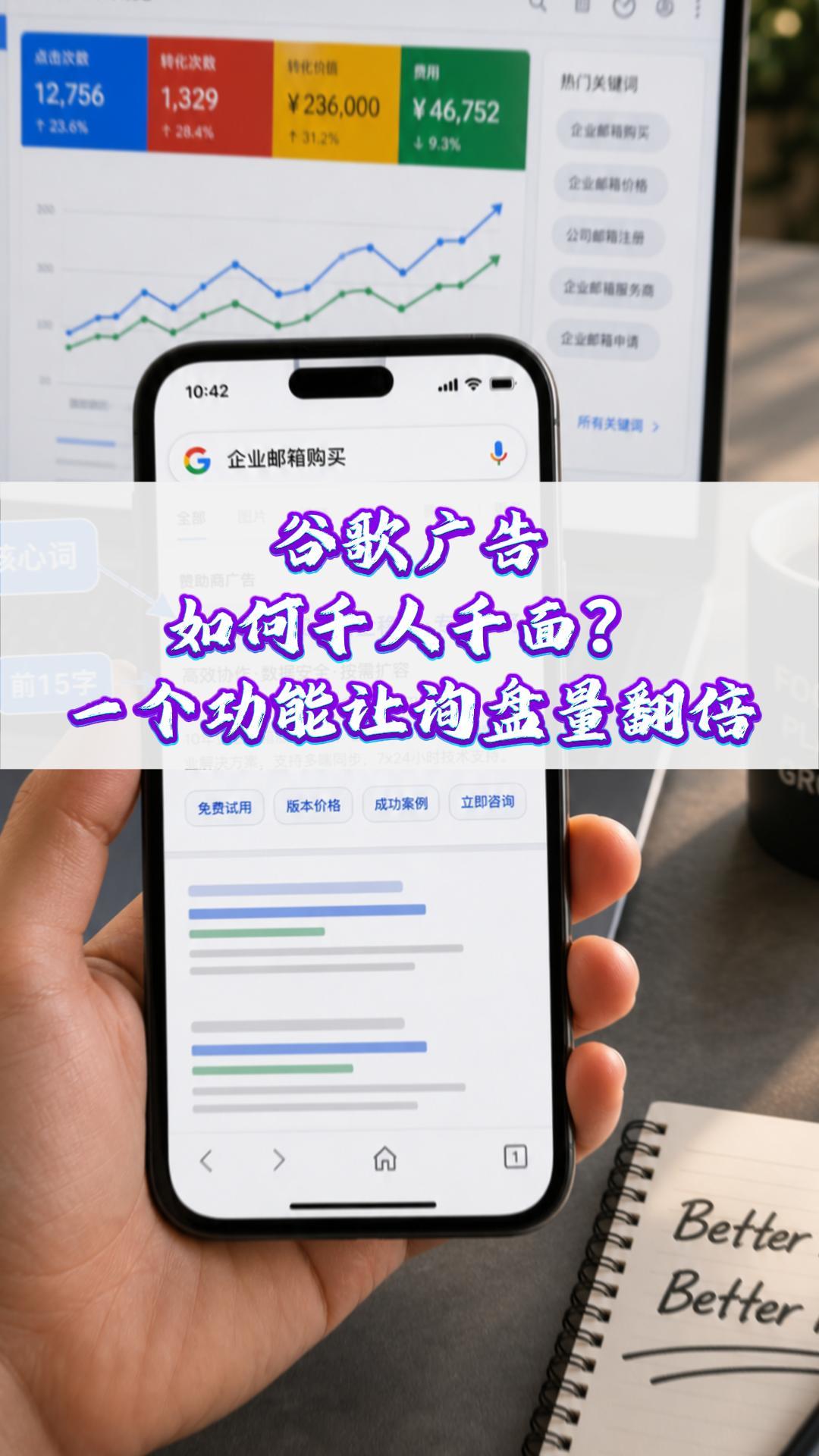
 How can Google Ads deliver one-to-one personalization? One feature can double your inquiry volume#ExportMarketing#OverseasPromotion#GoogleAds#SocialMediaMarketing#ForeignTradeIndependentWebsite
 Why a Google-optimized independent website is essential for trailer exports
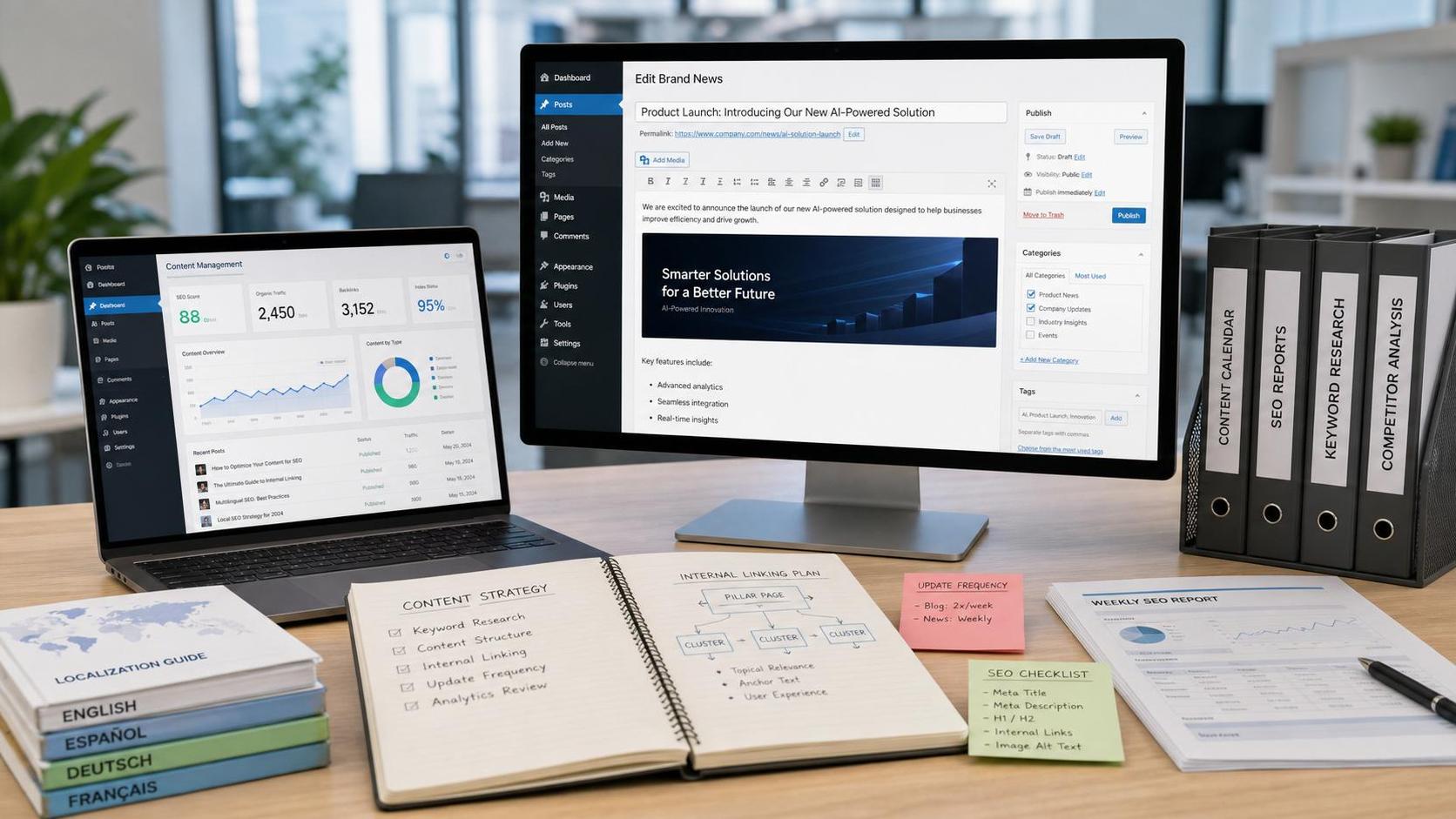
 How Can a Brand Updates Page Be Made More SEO-Friendly? Analysis of Update Frequency, Content Structure, and Internal Linking Strategy

Related Products
 EasyCamp SaaS Smart Website Marketing SystemE-Yingbao SaaS Smart Website Marketing System: AI-powered, zero-code website building. Rapidly launch multilingual independent e-commerce sites in just 10 minutes. Global server acceleration and AI-driven SEO optimization empower businesses to efficiently connect with global markets. The seamless integration of technology and user-friendly operation makes building e-commerce sites incredibly simple.
 AI+SEM Intelligent Advertising Marketing SystemAI+SEM drives intelligent ad creation, empowering full-funnel precision advertising marketing. The system automatically generates weekly/monthly reports, AI recommends keywords and target countries, monitors core metrics in real-time with intelligent alerts, and enables one-click high-conversion ad solutions to help quickly acquire customers and improve ROI.
 AI+SEO Dual Engine Optimization ServiceEasyWin AI+SEO Dual Engine Optimization System leverages AI-powered keyword mining, content generation, and comprehensive technical optimization to help foreign trade enterprises acquire high-quality organic traffic, significantly improving search rankings and conversion rates.
 AI+SNS Social Media Marketing SystemYingbao AI+SNS Social Media Marketing System - Precision social capture for the social media era. Supports one-click content synchronization across major platforms like Facebook and LinkedIn. AI intelligently rewrites posts for enhanced relevance. 24/7 AI customer service and user profiling analysis empower businesses to efficiently expand into global markets.
 AI+SEO营销解决方案易营宝AI+SEO营销解决方案,通过AI批量写作、智能生成TDK、精准关键词扩词等功能,全面优化网站SEO效果,提升流量与转化率。助力企业构建高效智能网站新生态。
 AI+SEM Advertising Marketing SolutionsAI+SEM Advertising Marketing Solution leverages AI technology to deeply empower SEM ad campaigns. It automatically generates weekly/monthly reports using AI, presenting account data across multiple dimensions for comprehensive insights into campaign performance and trends. The system precisely recommends keywords and target countries, intelligently generates high-conversion ad copy, and enables one-click activation of efficient campaign plans to help businesses rapidly acquire customers. Simultaneously, it monitors core metrics in real time, intelligently identifies abnormal fluctuations, and issues timely alerts to ensure stable, high-return advertising results.
 Domain Name ServicesEasyWin provides professional domain name services, including intelligent queries, one-stop registration, brand protection, and full lifecycle management, helping businesses build a digital brand image.
 EasyOperate B2C Cross-Border E-Commerce Platform & Independent WebsiteEasyStore B2C Cross-border E-commerce Independent Store is an intelligent website building and cross-border e-commerce integrated solution independently developed by EasyStore Information Technology (Beijing) Co., Ltd. The system is specially designed for small and medium-sized as well as large export enterprises, integrating 'website building, operation, marketing, advertising, and conversion' into one, helping enterprises quickly establish cross-border e-commerce independent stores to achieve brand globalization and global sales growth.
The platform supports multiple languages, multiple currencies, and multi-channel marketing, with built-in AI intelligent translation and SEO optimization systems, suitable for mainstream markets such as Southeast Asia, Europe and America, Latin America, and the Middle East, assisting Chinese manufacturing enterprises in efficiently deploying international e-commerce strategies. SSL证书易营宝提供专业SSL安全证书服务,包括单域名和泛域名证书,确保网站数据传输加密、身份验证和完整性保护,助力企业建立安全可信的在线业务环境。









