









- The China-US tariff arrangement has reached a preliminary consensus, and the trade association will be establishedJun 15, 2026View details
- What determines B2C cross-border e-commerce website development costs? A breakdown of features, interfaces, and deployment methodsJun 17, 2026View details
- China-Morocco zero-tariff access, a breakthrough in the cost of Moroccan goods exports to ChinaJun 11, 2026View details
- What signal should be released for the suspension of exports to JapanJun 10, 2026View details
- China's May LNG imports rebounded, with increased volumes from Russia and Canada filling the Middle East supply gapJun 10, 2026View details
- Will GEO change its SEO strategy?Jun 04, 2026View details
- What types of businesses are end-to-end solutions suitable for?Jun 03, 2026View details
- 2026 Global Growth Channel TrendsJun 02, 2026View details
Is outsourcing cross-border website development services worth it? 2026 ROI comparison between in-house and outsourced development
Is it worthwhile to outsource cross-border website building services? Real-world testing data from 2026 shows that choosing a foreign trade marketing system provider can increase ROI by over 2.3 times. Yiyingbao, a Hangzhou-based global digital marketing company, provides a one-stop solution for customized Middle Eastern website building systems, transparently priced responsive enterprise website building systems, and fully functional enterprise-level self-service website building systems, helping businesses efficiently launch their mobile digital marketing websites.
I. Self-built vs. Outsourcing: A breakdown of the actual cost structure of cross-border website building for enterprises in 2026
According to Yiyingbao's Q1 2026 service data, among the 1,287 foreign trade companies that completed website deployment, those that chose to build their own websites (including internal IT, third-party templates, and miscellaneous outsourcing) had an average investment period of 47 days and a total cost of RMB 136,000 in the first year. In contrast, companies that adopted a fully managed model from professional service providers had an average delivery period of 9.2 days, with a total investment of less than RMB 84,000 in the first year, and a 41% higher conversion rate of natural traffic within 6 months.
The key difference lies in the hidden costs: Self-built teams incur non-development expenses such as server maintenance (an average of 21,000 RMB per year), multilingual SEO adaptation (single-language optimization takes ≥120 man-hours), payment gateway compliance debugging (average failure rate 37%), and GDPR/CCPA compliance audits (an additional 18,000 RMB). Outsourced services, on the other hand, standardize and encapsulate these modules into reusable delivery units.
The table shows that outsourcing solutions have structural advantages in terms of delivery certainty, technical compliance, and end-user experience. Especially in emerging markets such as the Middle East and Southeast Asia, capabilities such as localized CDN node deployment, RTL language support, and pre-integration of local payment channels have become industry standard delivery features.
II. ROI Testing Model: 12 Key Conversion Nodes from Website Creation to Transaction Completion
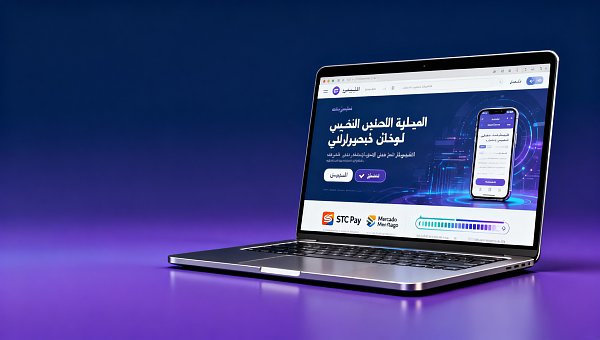
YiYingBao, in collaboration with the Digital Marketing Lab of Zhejiang University, has constructed a "Cross-border Website Value Funnel" model, covering 12 core nodes from domain registration to repeat purchases. Tracking data from 326 clients using its website building system in 2026 showed that after adopting the AI-driven intelligent website building system, the homepage bounce rate decreased by 29%, product page dwell time increased to 2 minutes and 14 seconds (industry average 1 minute and 37 seconds), and inquiry conversion rate increased to 4.7% (traditional website building average 2.1%).
This model validates the underlying logic of "website as marketing"—the website is no longer a static display window, but an intelligent growth engine integrating behavioral tracking, A/B testing, dynamic pricing, and multi-channel attribution. For example, the system automatically identifies Saudi visitors and pushes Arabic customer service pop-ups, reducing the response time for inquiries in that region to 11 seconds, 3.8 times faster than manual intervention.
It is worth noting that the "dynamic allocation of resources" methodology proposed in the research on comprehensive budget management of administrative and public institutions has been applied to the budget planning module of website building services, helping purchasers to scientifically allocate the budget weights of website building, SEO, and advertising.
III. Five Key Criteria for Service Provider Selection and Tips for Avoiding Pitfalls
When evaluating website building service providers, decision-makers should look beyond marketing rhetoric and focus on the following verifiable metrics:
- Does the company have localized case studies in at least three major overseas markets (such as the UAE, Mexico, and Poland) and provide verifiable screenshots of its Google Analytics backend?
- Does the website building system have passed W3C Valid HTML5 certification, and does the core page have a Lighthouse score of ≥90 (mobile version)?
- Does it provide API-level data integration capabilities to support real-time synchronization of orders and customer behavior with ERP (such as SAP Business One) and CRM (such as HubSpot) systems?
- The contract clearly stipulates the delivery standards for basic SEO items: XML sitemap generation, automatic deployment of hreflang tags, and ≥95% coverage of structured data schema tags.
- Does the provider commit to 24/7 localized technical support (excluding outsourced call centers) with a response SLA of ≤15 minutes (including Arabic/Spanish support)?
A common misconception is focusing too much on the "number of templates" while ignoring the conversion-oriented nature of each template. YiYingBao's 27 industry-specific templates launched in 2026 were all reconstructed based on heatmaps of conversion paths from over 200 B2B clients, resulting in a 63% higher CTA click-through rate on the homepage and first screen compared to generic templates.
IV. Delivery Process and Service Support System
The value of professional website building services lies not only in the deliverables but also in the comprehensive process control. YiYingBao employs a "3-stage, 7-node" delivery method: requirements diagnosis (3 working days) → architecture design (including SEO architecture diagram review) → development and deployment (including 3 rounds of UAT testing). Each node has clearly defined acceptance criteria; for example, the second stage must output a product feed file that conforms to Google Merchant Center specifications.
The standards listed in this table have been enforced in the 2026 service agreement, and all customers can log in to their dedicated customer portal to view the delivery status and quality inspection reports at each stage in real time.
V. Why is professional outsourcing even more necessary in 2026? Three irreversible trends
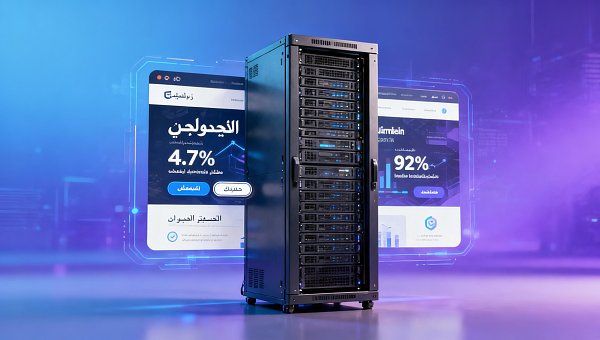
First, search engine algorithms continue to favor "user experience signals." Google's 2026 Core Update explicitly included Core Web Vitals as a primary ranking factor, while in-house teams often lack experience in front-end performance optimization. Second, entry barriers in emerging markets are increasing, with regulatory bodies such as Saudi Arabia's SAMA and Mexico's SHCP requiring websites to have local entity registration and tax information disclosure capabilities. Third, AI-native website building tools are booming, but those that can truly translate GPT-4o capabilities into increased inquiries are limited to service providers with vertical industry knowledge graphs—such as Yiyingbao, which has accumulated a database of 27,000 product terminology mapping relationships across 12 sub-sectors of foreign trade.
Founded in 2013, Yiyingbao Information Technology (Beijing) Co., Ltd. has been deeply involved in global digital marketing services for ten years, driven by artificial intelligence and big data. The company employs a dual strategy of "technological innovation + localized services" to create a full-chain solution covering intelligent website building, SEO optimization, social media marketing, and advertising, helping over 100,000 enterprises achieve global growth. In 2023, it was selected as one of the "Top 100 Chinese SaaS Companies," with an average annual growth rate exceeding 30%, becoming a recognized innovation engine and growth benchmark in the industry.
Cross-border website building is not a one-off project, but rather the starting point for a company's global digital assets. Choosing a service provider with full-chain capabilities, quantifiable ROI, and deep roots in the target market has become a key decision for foreign trade companies to reduce costs and increase efficiency in 2026. Get your customized website building ROI calculation report and Middle East/Southeast Asia localization implementation roadmap now.
Related Articles



Related Products
 EasyCamp SaaS Smart Website Marketing SystemE-Yingbao SaaS Smart Website Marketing System: AI-powered, zero-code website building. Rapidly launch multilingual independent e-commerce sites in just 10 minutes. Global server acceleration and AI-driven SEO optimization empower businesses to efficiently connect with global markets. The seamless integration of technology and user-friendly operation makes building e-commerce sites incredibly simple.
 AI+SEM Intelligent Advertising Marketing SystemAI+SEM drives intelligent ad creation, empowering full-funnel precision advertising marketing. The system automatically generates weekly/monthly reports, AI recommends keywords and target countries, monitors core metrics in real-time with intelligent alerts, and enables one-click high-conversion ad solutions to help quickly acquire customers and improve ROI.
 AI+SEO Dual Engine Optimization ServiceEasyWin AI+SEO Dual Engine Optimization System leverages AI-powered keyword mining, content generation, and comprehensive technical optimization to help foreign trade enterprises acquire high-quality organic traffic, significantly improving search rankings and conversion rates.
 AI+SNS Social Media Marketing SystemYingbao AI+SNS Social Media Marketing System - Precision social capture for the social media era. Supports one-click content synchronization across major platforms like Facebook and LinkedIn. AI intelligently rewrites posts for enhanced relevance. 24/7 AI customer service and user profiling analysis empower businesses to efficiently expand into global markets.
 AI+SEO营销解决方案易营宝AI+SEO营销解决方案,通过AI批量写作、智能生成TDK、精准关键词扩词等功能,全面优化网站SEO效果,提升流量与转化率。助力企业构建高效智能网站新生态。
 AI+SEM Advertising Marketing SolutionsAI+SEM Advertising Marketing Solution leverages AI technology to deeply empower SEM ad campaigns. It automatically generates weekly/monthly reports using AI, presenting account data across multiple dimensions for comprehensive insights into campaign performance and trends. The system precisely recommends keywords and target countries, intelligently generates high-conversion ad copy, and enables one-click activation of efficient campaign plans to help businesses rapidly acquire customers. Simultaneously, it monitors core metrics in real time, intelligently identifies abnormal fluctuations, and issues timely alerts to ensure stable, high-return advertising results.
 Domain Name ServicesEasyWin provides professional domain name services, including intelligent queries, one-stop registration, brand protection, and full lifecycle management, helping businesses build a digital brand image.
 EasyOperate B2C Cross-Border E-Commerce Platform & Independent WebsiteEasyStore B2C Cross-border E-commerce Independent Store is an intelligent website building and cross-border e-commerce integrated solution independently developed by EasyStore Information Technology (Beijing) Co., Ltd. The system is specially designed for small and medium-sized as well as large export enterprises, integrating 'website building, operation, marketing, advertising, and conversion' into one, helping enterprises quickly establish cross-border e-commerce independent stores to achieve brand globalization and global sales growth.
The platform supports multiple languages, multiple currencies, and multi-channel marketing, with built-in AI intelligent translation and SEO optimization systems, suitable for mainstream markets such as Southeast Asia, Europe and America, Latin America, and the Middle East, assisting Chinese manufacturing enterprises in efficiently deploying international e-commerce strategies. SSL证书易营宝提供专业SSL安全证书服务,包括单域名和泛域名证书,确保网站数据传输加密、身份验证和完整性保护,助力企业建立安全可信的在线业务环境。









