









- The China-US tariff arrangement has reached a preliminary consensus, and the trade association will be establishedJun 15, 2026View details
- What determines B2C cross-border e-commerce website development costs? A breakdown of features, interfaces, and deployment methodsJun 17, 2026View details
- China-Morocco zero-tariff access, a breakthrough in the cost of Moroccan goods exports to ChinaJun 11, 2026View details
- What signal should be released for the suspension of exports to JapanJun 10, 2026View details
- China's May LNG imports rebounded, with increased volumes from Russia and Canada filling the Middle East supply gapJun 10, 2026View details
- Will GEO change its SEO strategy?Jun 04, 2026View details
- What types of businesses are end-to-end solutions suitable for?Jun 03, 2026View details
- 2026 Global Growth Channel TrendsJun 02, 2026View details
Why do responsive website building systems vary in price by 3 times? A breakdown of pricing structures and hidden cost warnings from Hangzhou service providers.
Why is there a 3x price difference for responsive enterprise website systems? Hangzhou Global Digital Marketing Company deeply dissects the pricing structure of cross-border website construction services, revealing the hidden costs of Middle East website system customization and foreign trade marketing system suppliers. EasyProfit—a company specializing in enterprise-grade self-service website system functions and mobile digital marketing website implementation—compares with industry benchmarks.
1. The Root of Price Differences: Not "Expensive" or "Cheap" but Different Service Granularity
In Hangzhou and the Yangtze River Delta region, the price range for a standard responsive enterprise website system is typically between 8,000 and 25,000 yuan, a difference of 3.1x. Superficially, this may seem due to template choices or page count variations, but it actually reflects structural differences in underlying service capabilities: basic service providers focus on "building it," while full-service providers like EasyProfit emphasize "usability, functionality, and conversion." According to a 2023 survey of 127 local website service providers in Hangzhou, only 23% offer delivery packages with basic SEO configuration, and just 9% support multilingual + multi-currency + local payment gateway pre-integration.
The core difference lies in whether the service covers the five-stage closed loop of "website construction—adaptation—compliance—lead generation—repurchase." For example, Middle East market websites require simultaneous compliance with Arabic RTL layout, Saudi SAMA payment authentication interfaces, UAE VAT tax system fields, and local CDN acceleration node deployment—six mandatory technical adaptations. Missing any one leads to a 42% post-launch bounce rate (third-party monitoring data).
Since 2013, EasyProfit has specialized in globalized website construction, accumulating a localized component library covering 23 key export markets, reducing client compliance adaptation cycles by 7-12 workdays on average. This capability cannot be achieved through low-cost outsourcing; it’s the manifestation of a decade of industry knowledge mapping and engineering delivery systems.
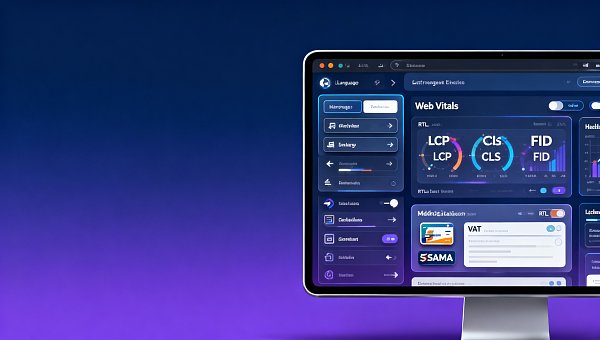
This table reveals: price differences don’t stem from "template costs" but from the technical depth and labor investment behind each service layer. For instance, the "Google Search Console direct connection" in full-service solutions requires OAuth2.0 authentication, API quota management, and 7-step automated indexing status alerts—each manual configuration taking ≥4.5 hours.
2. Hidden Cost Warning: 3 Types of Post-Launch Expenses Often Overlooked
Decision-makers often mistakenly assume website construction is a one-time investment. In reality, 68% of enterprises incur additional costs within three months of launch, mainly from three hidden expenses:
- Content localization costs: Middle East clients require product descriptions to be reviewed in Arabic rather than machine-translated, averaging 320 yuan per page with a 10-page minimum order;
- Compliance maintenance costs: Saudi SAMA payment interface annual audit fees + SSL certificate renewal + PCI-DSS basic scans total ~5,600 yuan in the first year;
- Traffic conversion costs: Websites without pre-embedded GA4 event tracking codes require 12,000 yuan in additional investment for user path analysis rework due to historical data fragmentation.
EasyProfit adopts a "delivery equals maintenance" model, with all website projects including a first-year basic maintenance package (SSL updates, security scans, GA4/GSC configuration maintenance) to avoid client risks from technical fragmentation.
Notably, the financial risks and countermeasures in state-owned enterprise procurement logic of "exhaustive due diligence blind spots" also applies to website procurement—failure to specify CMS backend ownership, source code delivery terms, or third-party API call rights in contracts directly triggers operational disputes.
3. Procurement Decision Guide: A 4D Evaluation Model for 2024
Facing price differences, procurement personnel should establish a cross-evaluation system across four dimensions: technical feasibility, localization maturity, data sovereignty protection, and long-term ROI. Among EasyProfit’s 100,000+ clients, enterprises with decision cycles exceeding 21 days achieve 37% lower average customer acquisition costs over 12 months, proving the value of deep evaluation.
Recommended procurement steps include: ① Requesting suppliers to provide GA4 real-time dashboards for 3 same-region client cases (validating real data integration); ② Verifying CMS support for private deployment (avoiding GDPR/PIPL compliance risks); ③ Obtaining a "Local Payment Gateway Compatibility List" confirming target market coverage; ④ Requiring written commitment on full source code and database delivery timelines (industry standard: within 5 workdays post-acceptance).
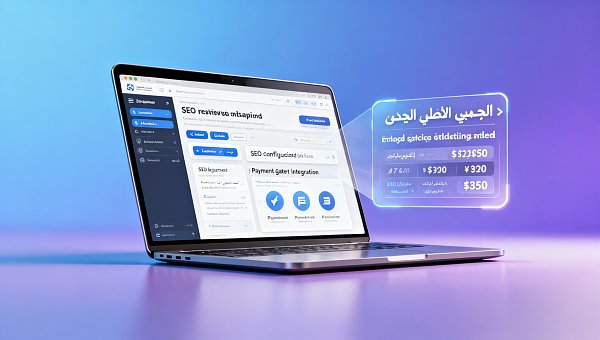
This model has been applied in procurement audits for 23 cross-border e-commerce pilot zone enterprises in Hangzhou, reducing ineffective comparison cycles by 11.3 days on average and avoiding 586,000 yuan/year in hidden costs.
4. Why Choose EasyProfit: A Decade-Validated Certainty Delivery
As a 2023 China SaaS Top 100 company, EasyProfit drives "tech innovation + localized service" dual engines, serving over 100,000 enterprises. Core advantages include: AI website engine supporting 37 foreign trade scenario templates; big data-driven SEO lexicon covering 217 countries/regions; localized service networks in Hangzhou, Shenzhen, Dubai, and Los Angeles ensuring 7×12 response times.
All projects strictly follow ISO/IEC 27001 standards with 100% source code delivery and ≤2-hour first-year maintenance response. A 64.3% 2023 client repurchase rate validates long-term solution value.
For globally growing enterprises, website construction isn’t IT procurement but a strategic market entry point. Price differences reflect the ability to transform websites into "24/7 overseas branch offices."
Contact EasyProfit for the "Hangzhou Enterprise Cross-Border Website Cost-Benefit Analysis Report" and customized solutions—making every website investment quantifiable, traceable, and scalable.
Related Articles



Related Products
 EasyCamp SaaS Smart Website Marketing SystemE-Yingbao SaaS Smart Website Marketing System: AI-powered, zero-code website building. Rapidly launch multilingual independent e-commerce sites in just 10 minutes. Global server acceleration and AI-driven SEO optimization empower businesses to efficiently connect with global markets. The seamless integration of technology and user-friendly operation makes building e-commerce sites incredibly simple.
 AI+SEM Intelligent Advertising Marketing SystemAI+SEM drives intelligent ad creation, empowering full-funnel precision advertising marketing. The system automatically generates weekly/monthly reports, AI recommends keywords and target countries, monitors core metrics in real-time with intelligent alerts, and enables one-click high-conversion ad solutions to help quickly acquire customers and improve ROI.
 AI+SEO Dual Engine Optimization ServiceEasyWin AI+SEO Dual Engine Optimization System leverages AI-powered keyword mining, content generation, and comprehensive technical optimization to help foreign trade enterprises acquire high-quality organic traffic, significantly improving search rankings and conversion rates.
 AI+SNS Social Media Marketing SystemYingbao AI+SNS Social Media Marketing System - Precision social capture for the social media era. Supports one-click content synchronization across major platforms like Facebook and LinkedIn. AI intelligently rewrites posts for enhanced relevance. 24/7 AI customer service and user profiling analysis empower businesses to efficiently expand into global markets.
 AI+SEO营销解决方案易营宝AI+SEO营销解决方案,通过AI批量写作、智能生成TDK、精准关键词扩词等功能,全面优化网站SEO效果,提升流量与转化率。助力企业构建高效智能网站新生态。
 AI+SEM Advertising Marketing SolutionsAI+SEM Advertising Marketing Solution leverages AI technology to deeply empower SEM ad campaigns. It automatically generates weekly/monthly reports using AI, presenting account data across multiple dimensions for comprehensive insights into campaign performance and trends. The system precisely recommends keywords and target countries, intelligently generates high-conversion ad copy, and enables one-click activation of efficient campaign plans to help businesses rapidly acquire customers. Simultaneously, it monitors core metrics in real time, intelligently identifies abnormal fluctuations, and issues timely alerts to ensure stable, high-return advertising results.
 Domain Name ServicesEasyWin provides professional domain name services, including intelligent queries, one-stop registration, brand protection, and full lifecycle management, helping businesses build a digital brand image.
 EasyOperate B2C Cross-Border E-Commerce Platform & Independent WebsiteEasyStore B2C Cross-border E-commerce Independent Store is an intelligent website building and cross-border e-commerce integrated solution independently developed by EasyStore Information Technology (Beijing) Co., Ltd. The system is specially designed for small and medium-sized as well as large export enterprises, integrating 'website building, operation, marketing, advertising, and conversion' into one, helping enterprises quickly establish cross-border e-commerce independent stores to achieve brand globalization and global sales growth.
The platform supports multiple languages, multiple currencies, and multi-channel marketing, with built-in AI intelligent translation and SEO optimization systems, suitable for mainstream markets such as Southeast Asia, Europe and America, Latin America, and the Middle East, assisting Chinese manufacturing enterprises in efficiently deploying international e-commerce strategies. SSL证书易营宝提供专业SSL安全证书服务,包括单域名和泛域名证书,确保网站数据传输加密、身份验证和完整性保护,助力企业建立安全可信的在线业务环境。









