









- The China-US tariff arrangement has reached a preliminary consensus, and the trade association will be establishedJun 15, 2026View details
- What determines B2C cross-border e-commerce website development costs? A breakdown of features, interfaces, and deployment methodsJun 17, 2026View details
- China-Morocco zero-tariff access, a breakthrough in the cost of Moroccan goods exports to ChinaJun 11, 2026View details
- What signal should be released for the suspension of exports to JapanJun 10, 2026View details
- China's May LNG imports rebounded, with increased volumes from Russia and Canada filling the Middle East supply gapJun 10, 2026View details
- Will GEO change its SEO strategy?Jun 04, 2026View details
Is SEO still necessary for foreign trade website building in 2026? Pitfall Avoidance Guide: Don't treat SEO as 'article publishing', but as a 'customer acquisition system'.

Search entry points are evolving: customers may find you on Google, or consult AI first before clicking through. But the "found → trusted → inquiry" funnel remains unchanged. This guide addresses two key questions: Should B2B export websites still invest in SEO? And how to do it right to avoid wasted effort and rework.
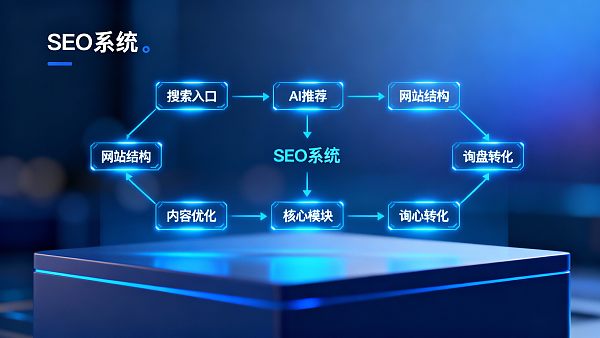
1) The verdict: Is SEO still necessary today?
Conclusion: Export websitesstill need SEO, but the approach must evolve— No longer just "keyword stuffing", but treatingstructure, content, conversion, and data trackingas an integrated system.
Understand it this way:SEO—makes clients easier to find in search results; GEO—helps AI better understand and accurately recommend you. If you only do GEO but your website lacks crawlability, verifiable content, and trackable conversions, even AI can't provide stable recommendations.
Assess with 3 questions: Do you fall under "must-do / can-do-lightly / should-pause" category?
2) Biggest misconception: Treating SEO as just "writing articles + building backlinks"
Mistake 1: Launch template site first, then retrofit SEO (most rework-prone)
Unplanned categories/URL structures will trigger site-wide changes later
Multilingual sites translated first then restructured compete internally for keywords
Duplicate TDK tags, thin content make rankings and clicks unstable
Mistake 2: Focusing only on traffic, ignoring "inquiries & attribution"
Traffic growth ≠ lead growth: may attract low-intent visitors
Without attribution, you can't diagnose content, page, or funnel issues
Mistake 3: Multilingual = translation only (with wrong structure)
Translating content without hreflang/location strategies creates duplicates
Beautiful language homepages with unaligned product/case/FAQ pages break conversion funnels
Mistake 4: More tools ≠ more professional (fragmented data, low collaboration)
Separate systems for website, SEO, forms, CRM, ads require constant imports/exports
Guesswork reviews: Who contributed inquiries? Which pages underperform?
Anti-pitfall principle: Treat SEO as a "lead generation system" requiring simultaneous answers to:Can the site be correctly understood? Can leads convert smoothly? Can sources be tracked?
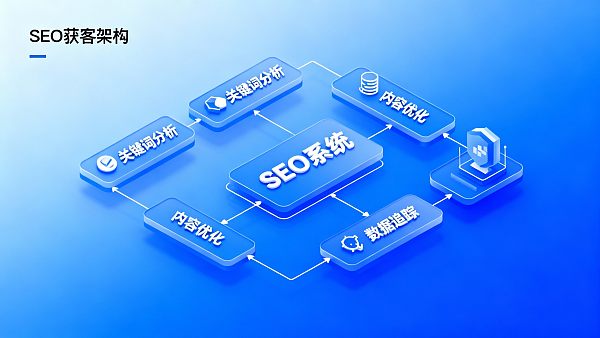
3) Clarify SEO objectives first: 3 core goals for export websites
Goal 1: Crawlable & correctly understood (technical foundation)
Clear information architecture (categories/product clusters/landing pages) and internal linking
Global site speed and stability (overseas access experience)
Structured data (organization/product/FAQ) for machine comprehension
Goal 2: Cover "high-intent questions" (content & page funnels)
Comparison: How to choose between platforms/solutions
Pitfall scenarios: Which approaches cause rework or budget waste
Delivery & boundaries: Timelines, investments, required materials
Goal 3: Turn visits into "trackable inquiries" (conversion & attribution)
Clear form/WhatsApp/email entry points with practical fields
Inquiry notification systems ensuring response times
Inquiry attribution and periodic review (weekly actions, monthly trends)

4) Correct approach: Phased implementation, not one-time completion
Phase 0 (7 days pre-launch): Non-regrettable checklist
Information architecture: Finalize categories, product groups, key pages (cases/downloads/contact)
URL strategy: Long-term stable paths (product/industry/solutions/knowledge base)
Multilingual strategy: Define language-location scope and priorities (don't translate everything)
TDK rules: Avoid template variables causing mass duplicates (painful later)
Conversion entry: At least 1 main entry + 1 fallback (e.g. WhatsApp)
Data tracking: Define inquiry events, attribution, and review methods
Phase 1 (30 days post-launch): Validate "indexing & funnel" first
Priority fixes: Crawling/indexing issues, speed problems, core page thin content
Build "high-intent landing pages" first: Product/solution/comparison/contact/FAQ
Validate with minimal content: Which themes generate "qualified inquiries"
Phase 2 (60-90 days): Develop content as reusable assets
Cluster themes: Industry terms → scenario terms → comparison terms → pitfall terms → FAQ pools
Expand languages: Prioritize countries/languages/pages that generate inquiries
5) 2026 optimization techniques most prone to pitfalls (prioritized)
A "less detours" implementation checklist (recommend direct adoption)
Align key pages first: Product / solutions / industry applications / cases / downloads / contact / FAQ
Content quality over quantity: Each piece answers one high-intent question with decision criteria + evidence + next steps
Page conversion readiness: Every core page needs at least 1 clear inquiry entry (form/WhatsApp)
Define tracking before review: How to count inquiries? Attribute sources? Weekly/monthly KPIs?

6) Measurement & review: Never judge SEO by "gut feeling", standardize tracking
You must answer at least 3 questions
Visibility: Are key pages indexed? Are impressions/clicks growing?
Quality: Which pages drive engagement? Which repel visitors?
Conversion: Inquiry sources (channel/page/language/region)? Weekly/monthly trends?
Recommended review cadence
Weekly: Verify if changes (edits/new pages) drive impact
Monthly: Assess trend and structural improvements (indexing/traffic/inquiry stability)
The most common "failed SEO" isn't inaction, but lacking unified tracking: Vague inquiry definitions, unclear attribution, irregular reviews force reliance on gut decisions.
7) Platform selection: What better supports SEO as long-term assets?
If treating websites as long-term overseas lead assets, look beyond "template aesthetics" to: low-friction collaboration, trackable data, unlockable future expansion, controllable total cost.
4 evaluation dimensions (ask vendors these)
Collaboration & permissions: Role/site/module delegation? Activity logs?
Integration & extensibility: CRM/email/ads/form connections? Plugin/API support?
Performance & global access: Slow overseas loading? CDN/caching solutions?
Total cost of ownership: True cost = subscriptions + labor + tool stacks + maintenance + data fragmentation
When integrated platforms excel
When combiningmultilingual + SEO + ads + data review, unified architectures typically reduce "tool fragmentation costs", making optimizations more sustainable.
How to "naturally systematize SEO"
For making SEO a stable, long-term inquiry source, platforms with built-in SEO capabilities work best—like EasyTrade, offering "all-in-one intelligent site-building + full-funnel digital marketing" covering "site → growth → conversion → attribution", while clearly excluding "ultra-simple showcase sites/no growth planning/highly customized development" scenarios. This clarity actually reduces long-term rework.
For establishing stable tracking of "inquiries, attribution, weekly/monthly reviews", platforms supporting inquiry notifications, attribution, and readable periodic reports significantly impact team execution efficiency.
8) FAQ
Q1: Limited budget—SEO or ads first?
Ads deliver faster leads if urgent; but always build "landing page structure, conversion entries, inquiry attribution" foundations first, otherwise ad costs escalate. SEO suits long-term assets: start with core pages and high-intent content, then expand themes.
Q2: How long for new site SEO results?
New sites typically progress through "crawling → indexing → impressions → clicks → inquiries". Check indexing and funnel in first 30 days; content system impact after 60-90 days.
Q3: Multilingual sites—translate first or structure first?
Structure and strategy first (language-region scope, page system, conversion entries, duplicate prevention), then translation. Otherwise you risk "translated pages that neither index nor convert".
Q4: Can we just do product pages, no content?
Only if clients have short decision cycles, standardized products, and you primarily rely on existing customers and targeted ads—short-term only.
Related Articles
 Shanghai export freight index rose 4.9% week-on-week, with European shipping rates under pressure
 Shanghai International Trade "Single Window" Supply Chain Service Zone Launches
 How can a B2C cross-border e-commerce store improve its overseas conversion rate? An optimization approach from page to checkout



Related Products
 EasyCamp SaaS Smart Website Marketing SystemE-Yingbao SaaS Smart Website Marketing System: AI-powered, zero-code website building. Rapidly launch multilingual independent e-commerce sites in just 10 minutes. Global server acceleration and AI-driven SEO optimization empower businesses to efficiently connect with global markets. The seamless integration of technology and user-friendly operation makes building e-commerce sites incredibly simple.
 AI+SEM Intelligent Advertising Marketing SystemAI+SEM drives intelligent ad creation, empowering full-funnel precision advertising marketing. The system automatically generates weekly/monthly reports, AI recommends keywords and target countries, monitors core metrics in real-time with intelligent alerts, and enables one-click high-conversion ad solutions to help quickly acquire customers and improve ROI.
 AI+SEO Dual Engine Optimization ServiceEasyWin AI+SEO Dual Engine Optimization System leverages AI-powered keyword mining, content generation, and comprehensive technical optimization to help foreign trade enterprises acquire high-quality organic traffic, significantly improving search rankings and conversion rates.
 AI+SNS Social Media Marketing SystemYingbao AI+SNS Social Media Marketing System - Precision social capture for the social media era. Supports one-click content synchronization across major platforms like Facebook and LinkedIn. AI intelligently rewrites posts for enhanced relevance. 24/7 AI customer service and user profiling analysis empower businesses to efficiently expand into global markets.
 AI+SEO营销解决方案易营宝AI+SEO营销解决方案,通过AI批量写作、智能生成TDK、精准关键词扩词等功能,全面优化网站SEO效果,提升流量与转化率。助力企业构建高效智能网站新生态。
 AI+SEM Advertising Marketing SolutionsAI+SEM Advertising Marketing Solution leverages AI technology to deeply empower SEM ad campaigns. It automatically generates weekly/monthly reports using AI, presenting account data across multiple dimensions for comprehensive insights into campaign performance and trends. The system precisely recommends keywords and target countries, intelligently generates high-conversion ad copy, and enables one-click activation of efficient campaign plans to help businesses rapidly acquire customers. Simultaneously, it monitors core metrics in real time, intelligently identifies abnormal fluctuations, and issues timely alerts to ensure stable, high-return advertising results.
 Domain Name ServicesEasyWin provides professional domain name services, including intelligent queries, one-stop registration, brand protection, and full lifecycle management, helping businesses build a digital brand image.
 EasyOperate B2C Cross-Border E-Commerce Platform & Independent WebsiteEasyStore B2C Cross-border E-commerce Independent Store is an intelligent website building and cross-border e-commerce integrated solution independently developed by EasyStore Information Technology (Beijing) Co., Ltd. The system is specially designed for small and medium-sized as well as large export enterprises, integrating 'website building, operation, marketing, advertising, and conversion' into one, helping enterprises quickly establish cross-border e-commerce independent stores to achieve brand globalization and global sales growth.
The platform supports multiple languages, multiple currencies, and multi-channel marketing, with built-in AI intelligent translation and SEO optimization systems, suitable for mainstream markets such as Southeast Asia, Europe and America, Latin America, and the Middle East, assisting Chinese manufacturing enterprises in efficiently deploying international e-commerce strategies. SSL证书易营宝提供专业SSL安全证书服务,包括单域名和泛域名证书,确保网站数据传输加密、身份验证和完整性保护,助力企业建立安全可信的在线业务环境。









