









- What New Signals Are Emerging in Enterprise Services SaaS Marketing ReportsJul 27, 2026View details
- What Does a Global Traffic Ecosystem Service Provider Do? What Are the Differences from a Single Advertising AgencyJul 16, 2026View details
- What should you focus on in the latest enterprise SaaS report? From renewal rates and delivery costs to overseas growth opportunitiesJul 12, 2026View details
- What signals are worth paying attention to in a cross-border marketing trend report? B2B companies should look at these 6 signalsJul 11, 2026View details
- How to Read a Cross-Border Marketing Trends Report? Five Key Dimensions for Evaluating Channel OpportunitiesJul 11, 2026View details
- Which channel has the highest ROI in the global traffic ecosystem? Comparative analysis of search, social media, and advertisingJul 10, 2026View details
Do foreign trade enterprises need to consider both SEO and advertising during the website building phase?
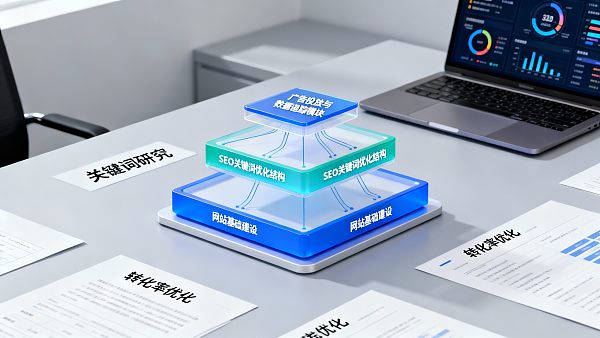
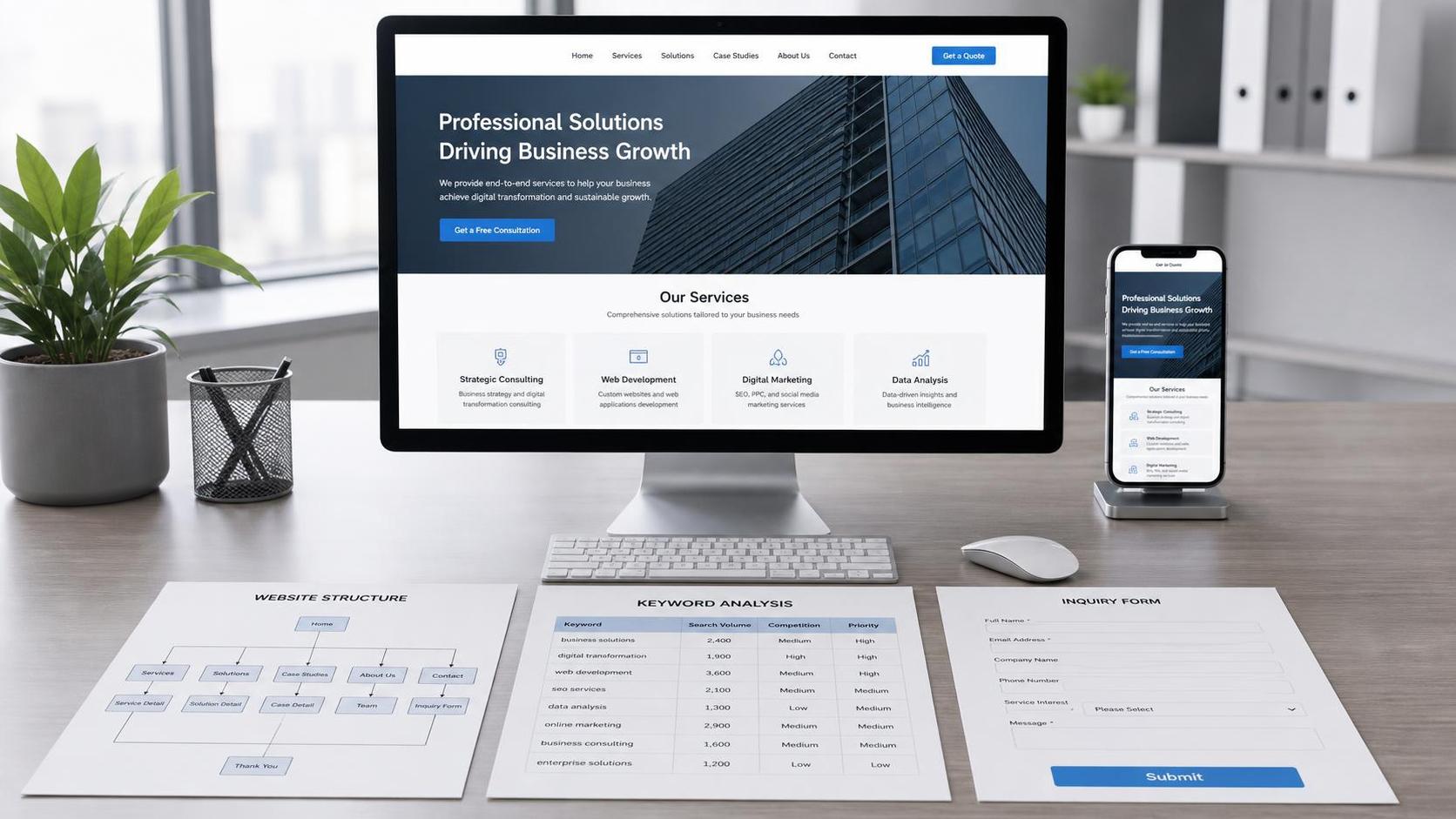
It is recommended for foreign trade enterprises to simultaneously plan SEO and advertising during the website construction phase. This is because they share the same site architecture, page conversion paths, and data interfaces. Building a website without planning for SEO/advertising often leads to issues such as page structures mismatched with keywords, weak landing page conversions, fragmented data that's hard to analyze, resulting in rework and increased costs.
Applicable Scenarios
If any 3 or more of the following conditions apply, it is advised to integrate SEO and advertising planning from day one of website development:
The goal is to consistently acquire overseas inquiries within 3-6 months
Complex product information (models, parameters, multiple specifications) requiring structured page layouts to meet search needs
Targeting multiple countries/languages with future expansion and replication plans
Having a defined ad budget or plans for platforms like Google/Meta
Wanting clarity on "which keywords/pages drive inquiries" to optimize ad spend and content accordingly
Phased Implementation Options
The following scenarios allow for simplified initial launch with gradual optimization:
Only requiring a basic showcase website
No consideration for SEO, ads, or future growth
One-time delivery focus without long-term operations
Common Rework Points
If the website phase only pursues "looking good" without integrating SEO and ad conversion logic, typical issues include:
High bounce rates due to difficulty comparing multiple products/parameters
Weak landing page conversions despite broad keyword targeting
Lack of full-funnel data visibility on "keyword→page→inquiry" relationships, slowing optimization
Multilingual sites with translation-only approaches suffering unstable rankings
Non-extensible content systems requiring template/link overhauls for new features
Integrated Solution: Website × SEO × Ad Synergy
Core principle: Simultaneously implement "searchability + convertibility" at the website's foundational level.
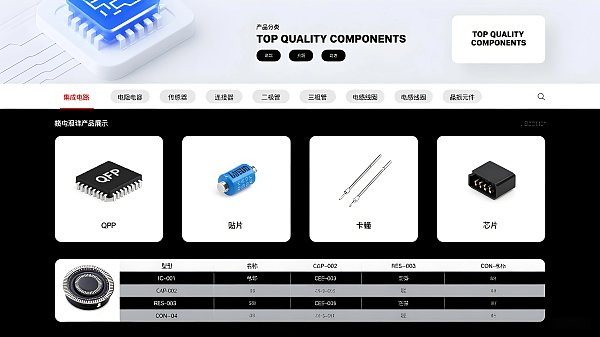
1) Website: Make complex products easier to find, compare, and inquire about
Using electronic components as an example, typical implementations include:
Tabular product displays: Presenting models/packaging/specs/inventory/MOOQ/lead times for quick comparison
Smart category navigation: Aggregating by "product type→application→parameter" dimensions
Conversion components: Multi-point triggers for RFQ forms/chat/downloadable specs
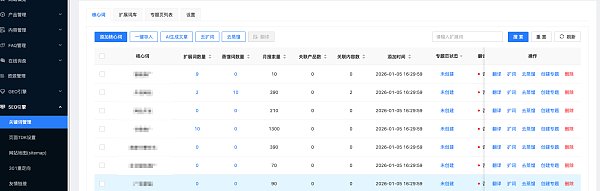
2) SEO: Establish long-term organic traffic with "model + category + application" keywords
Recommended keyword hierarchy:
Model/part number keywords: High intent, strong conversion
Category keywords: Broad coverage for exposure
Application scenario keywords: Higher-quality inquiries
Structure content networks as "category→series→model→application→FAQ/selection guides" for sustained rankings.
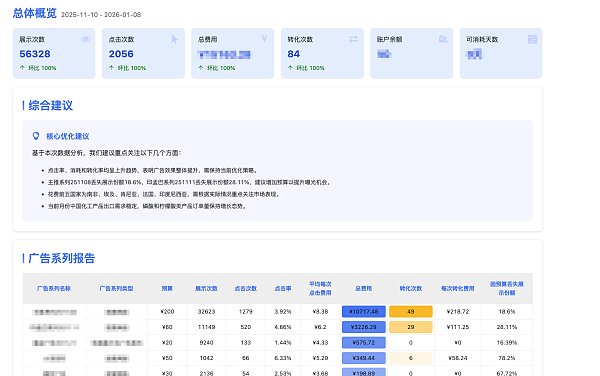
3) Ads: Precision targeting to quickly amplify quality inquiries
Recommended ad campaign management:
Tiered budgets prioritizing high-intent keywords
1:1 keyword-to-product page mapping
Form field optimization (quantity/use case/region/company type)
Retargeting visitors who viewed but didn't convert
Implementation Timeline (6 Months)
Month 1: Foundation
Site architecture → Table controls/navigation → Conversion components/data tracking → Initial keyword/landing pages
Months 2-3: Content + Ad Optimization
SEO expansion → Ad keyword tiering/landing page iterations → Negative keyword/CTA optimization
Months 4-6: Scaling
Priority market expansion → High-conversion keyword reinforcement → Lead nurturing → Stable "organic + paid" model
Case Study: From "Website Without Leads" to "Stable Customer Acquisition"
Client Profile: Hangzhou electronic components supplier (B2B) | Target: Southeast Asia | Timeline: 6 months | Lead sources: Forms/chat/downloads
Challenges
Complex product parameters making traditional pages ineffective for comparison
Lack of sustainable organic traffic
Weak ad-to-page conversion paths
High iteration costs from missing funnel data
Results (6 Months)
Reporting period: 6 months; Lead sources: Forms/chat/downloads.
Client Feedback
"Our website used to be decorative—now it consistently brings Southeast Asian inquiries, giving sales clear direction."
"Tabular product displays help clients find models faster, concentrating RFQs."
"Combined SEO+ads deliver steadier traffic with better lead quality control."
FAQs
1) Can we build the website first and do SEO/ads later?
2) Is integrated planning necessary with limited budgets?
3) Which delivers faster results: ads or SEO?
4) What's most critical for complex product websites?
Related Articles
Related Products
 EasyCamp SaaS Smart Website Marketing SystemE-Yingbao SaaS Smart Website Marketing System: AI-powered, zero-code website building. Rapidly launch multilingual independent e-commerce sites in just 10 minutes. Global server acceleration and AI-driven SEO optimization empower businesses to efficiently connect with global markets. The seamless integration of technology and user-friendly operation makes building e-commerce sites incredibly simple.
 AI+SEM Intelligent Advertising Marketing SystemAI+SEM drives intelligent ad creation, empowering full-funnel precision advertising marketing. The system automatically generates weekly/monthly reports, AI recommends keywords and target countries, monitors core metrics in real-time with intelligent alerts, and enables one-click high-conversion ad solutions to help quickly acquire customers and improve ROI.
 AI+SEO Dual Engine Optimization ServiceEasyWin AI+SEO Dual Engine Optimization System leverages AI-powered keyword mining, content generation, and comprehensive technical optimization to help foreign trade enterprises acquire high-quality organic traffic, significantly improving search rankings and conversion rates.
 AI+SNS Social Media Marketing SystemYingbao AI+SNS Social Media Marketing System - Precision social capture for the social media era. Supports one-click content synchronization across major platforms like Facebook and LinkedIn. AI intelligently rewrites posts for enhanced relevance. 24/7 AI customer service and user profiling analysis empower businesses to efficiently expand into global markets.
 AI+SEO营销解决方案易营宝AI+SEO营销解决方案,通过AI批量写作、智能生成TDK、精准关键词扩词等功能,全面优化网站SEO效果,提升流量与转化率。助力企业构建高效智能网站新生态。
 AI+SEM Advertising Marketing SolutionsAI+SEM Advertising Marketing Solution leverages AI technology to deeply empower SEM ad campaigns. It automatically generates weekly/monthly reports using AI, presenting account data across multiple dimensions for comprehensive insights into campaign performance and trends. The system precisely recommends keywords and target countries, intelligently generates high-conversion ad copy, and enables one-click activation of efficient campaign plans to help businesses rapidly acquire customers. Simultaneously, it monitors core metrics in real time, intelligently identifies abnormal fluctuations, and issues timely alerts to ensure stable, high-return advertising results.
 Domain Name ServicesEasyWin provides professional domain name services, including intelligent queries, one-stop registration, brand protection, and full lifecycle management, helping businesses build a digital brand image.
 EasyOperate B2C Cross-Border E-Commerce Platform & Independent WebsiteEasyStore B2C Cross-border E-commerce Independent Store is an intelligent website building and cross-border e-commerce integrated solution independently developed by EasyStore Information Technology (Beijing) Co., Ltd. The system is specially designed for small and medium-sized as well as large export enterprises, integrating 'website building, operation, marketing, advertising, and conversion' into one, helping enterprises quickly establish cross-border e-commerce independent stores to achieve brand globalization and global sales growth.
The platform supports multiple languages, multiple currencies, and multi-channel marketing, with built-in AI intelligent translation and SEO optimization systems, suitable for mainstream markets such as Southeast Asia, Europe and America, Latin America, and the Middle East, assisting Chinese manufacturing enterprises in efficiently deploying international e-commerce strategies. SSL证书易营宝提供专业SSL安全证书服务,包括单域名和泛域名证书,确保网站数据传输加密、身份验证和完整性保护,助力企业建立安全可信的在线业务环境。









