









- What Does a Global Traffic Ecosystem Service Provider Do? What Are the Differences from a Single Advertising AgencyJul 16, 2026View details
- What should you focus on in the latest enterprise SaaS report? From renewal rates and delivery costs to overseas growth opportunitiesJul 12, 2026View details
- What signals are worth paying attention to in a cross-border marketing trend report? B2B companies should look at these 6 signalsJul 11, 2026View details
- How to Read a Cross-Border Marketing Trends Report? Five Key Dimensions for Evaluating Channel OpportunitiesJul 11, 2026View details
- Which channel has the highest ROI in the global traffic ecosystem? Comparative analysis of search, social media, and advertisingJul 10, 2026View details
- What multilingual website services are available in Sanya? Which model is more suitable for local businesses going global?Jul 08, 2026View details
How Do Multilingual Websites Benefit Foreign Trade? 5 ROI Metrics to Guide Procurement Decisions
Introduction
How can a multilingual website assist in foreign trade? This article combines AI website building with SEO, teaching you to evaluate and optimize procurement decisions using 5 ROI metrics. This article targets users/operators, procurement personnel, corporate decision-makers, and channel managers, focusing on the key pain points of global customer acquisition, conversion, and operational costs for foreign trade independent websites and B2B official websites. Many decision-makers are concerned with questions such as: How to build a multilingual website? Does a multilingual website benefit SEO? How many languages are typically needed for a multilingual website? And is AI translation reliable for multilingual websites? This article not only explains what a multilingual website is but also compares AI website building with traditional website construction, providing 5 quantifiable ROI metrics and specific optimization recommendations to help procurement personnel make data-driven decisions when selecting solutions and budgeting.
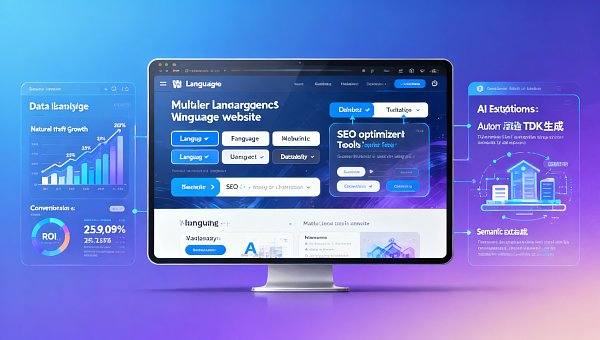
Why Businesses Need Multilingual Websites: Definition, Scenarios, and Market Opportunities
What is a multilingual website? Essentially, a multilingual website is a site system under the same domain that provides localized pages and content for users of different languages, including language switching, hreflang tags, localized URLs, and localized payment and logistics information. Why do businesses need multilingual websites? For foreign trade enterprises, multiple languages equate to market coverage and trust-building: customers prefer browsing products, understanding technical specifications, and signing contracts in their native language. Cross-border e-commerce independent websites and B2B corporate websites can significantly reduce bounce rates, extend visit durations, and improve the quality of organic traffic when running overseas ads or optimizing SEO with multilingual versions. How many languages are typically needed for a multilingual website? This depends on the priority of target markets: usually starting with English, the native language of the target country (e.g., Spanish or Russian), and secondary market languages, then expanding based on traffic and conversion data. This section balances procurement perspectives and implementation scenarios, facilitating the determination of language priorities and resource allocation during project evaluation.
SEO and Technical Benefits of Multilingual Websites for Foreign Trade: Quantifiable Metrics and Implementation Points
How can a multilingual website assist in foreign trade? In terms of SEO, multilingual sites directly improve search visibility through language matching and regional signals. Implementation points include: Correct use of hreflang to avoid duplicate content penalties, deployment of regional servers or CDNs to enhance local loading speeds, establishment of independent TDK and structured data for each language version, and coverage of long-tail demand through semantic expansion and LSI keywords. Does AI website building support SEO optimization? Modern AI website platforms can automatically generate TDK, expand keywords, and recommend semantics, improving content production efficiency while monitoring 200+ SEO metrics in real-time for rapid iteration. For cross-border e-commerce independent websites and B2B corporate websites, procurement should consider the system's multilingual URL strategy, search engine indexing friendliness, and log analysis capabilities. To enhance procurement decision efficiency, consider solutions with big-data-driven SEO capabilities, such as integrated AI content generation, keyword recommendation, and real-time ranking tracking services, to convert organic traffic growth into measurable commercial value. Here, we recommend a mature service: SEO Optimization, suitable for semantic expansion and performance tracking of cross-border sites.
Differences Between AI and Traditional Website Building: Efficiency, Translation Quality, and Content Management Practices
What are the differences between AI and traditional website building? In project cycles and content scale, AI websites significantly reduce launch time and labor costs: AI can automatically generate TDK, draft product descriptions, and expand keywords, cutting manual writing by over 50%. But is AI translation reliable for multilingual websites? AI translation is already highly reliable for basic semantic conversion and templated instructions, especially when integrated with glossaries and human-machine review workflows, achieving near-native language quality. The key lies in establishing a localization workflow: glossary + human review + machine pre-translation + online monitoring. How to manage content for multilingual websites? We recommend using a unified multilingual CMS that supports string-level translation management, version rollback, and semantic expansion tools, combined with automated workflows for content synchronization and SEO optimization. For B2B scenarios requiring strict technical specifications or legal texts, we still suggest adding localized editing to AI drafts to ensure compliance and professionalism.

Evaluating and Optimizing Multilingual Website Procurement Decisions with 5 ROI Metrics (Including Operational Recommendations)
When procuring multilingual website or AI website building services, we recommend using the following 5 quantifiable ROI metrics for decision-making and continuous optimization: 1) Organic traffic growth rate: Compare pre- and post-launch organic traffic and keyword rankings by country, tracking monthly after baseline collection; 2) Localized conversion rate (CVR): Calculate inquiry/order conversions by language version to identify optimization priorities for languages and page types; 3) Multilingual customer acquisition cost (CAC): Allocate ad spend, website building, and translation costs to customer acquisition by language, measuring input-output ratios; 4) Average order value (AOV) and repurchase rate: Analyze whether localized information leads to higher order values or improved customer trust; 5) Long-term SEO asset value: Evaluate the cumulative organic traffic value and conversion contributions of multilingual pages to decide on expanding new languages. Operational recommendations include: Combining AI content generation with long-tail keyword mining tools for initial 1-3 month A/B testing plans; using real-time diagnostics and performance tracking systems to ensure algorithm updates and automated optimization reports; integrating upstream channels (ads/social) with on-site SEO effects for closed-loop data-driven budget and SLA optimization.
Summary and Action Guide
Summary: The benefits of multilingual websites for foreign trade lie in market coverage, user trust, SEO rankings, and conversion efficiency; through reasonable language prioritization and AI-enabled content systems, rapid expansion can be achieved at controllable costs. Procurement decisions should center on 5 ROI metrics, combining AI website building and multilingual SEO tools to quantify expected returns and risks. Yiyingbao leverages AI-driven all-in-one intelligent marketing platforms and continuously iterated technical backends to provide full-chain support—from smart website building and AI content generation to real-time diagnostics and performance tracking—for cross-border e-commerce independent websites and B2B corporate scenarios. If you are evaluating multilingual sites or need to convert foreign trade traffic into measurable commercial value, welcome to learn about our solutions and request a free diagnostic; contact us immediately for tailored multilingual deployment and ROI evaluation plans.
- Website Development
- Website Builder Platform
- Corporate website
- SEO Ranking
- Yiyingbao
- SEO
- Independent Website
- SEO Optimization
- Smart Website Building
- AI Translation
- Multilingual SEO
- Independent foreign trade website
- Multilingual website
- AI Website Building
- cross-border e-commerce
- How to build a multilingual website?
- Why should businesses create multilingual websites?
- What is a multilingual website?
- What is the difference between AI website building and traditional website construction?
- Does AI website support SEO optimization?
- Does a multilingual website benefit SEO?
- How many languages does a multilingual website generally require?
- How to manage content for a multilingual website?
- Can AI be relied upon for multilingual website translation?
Related Articles
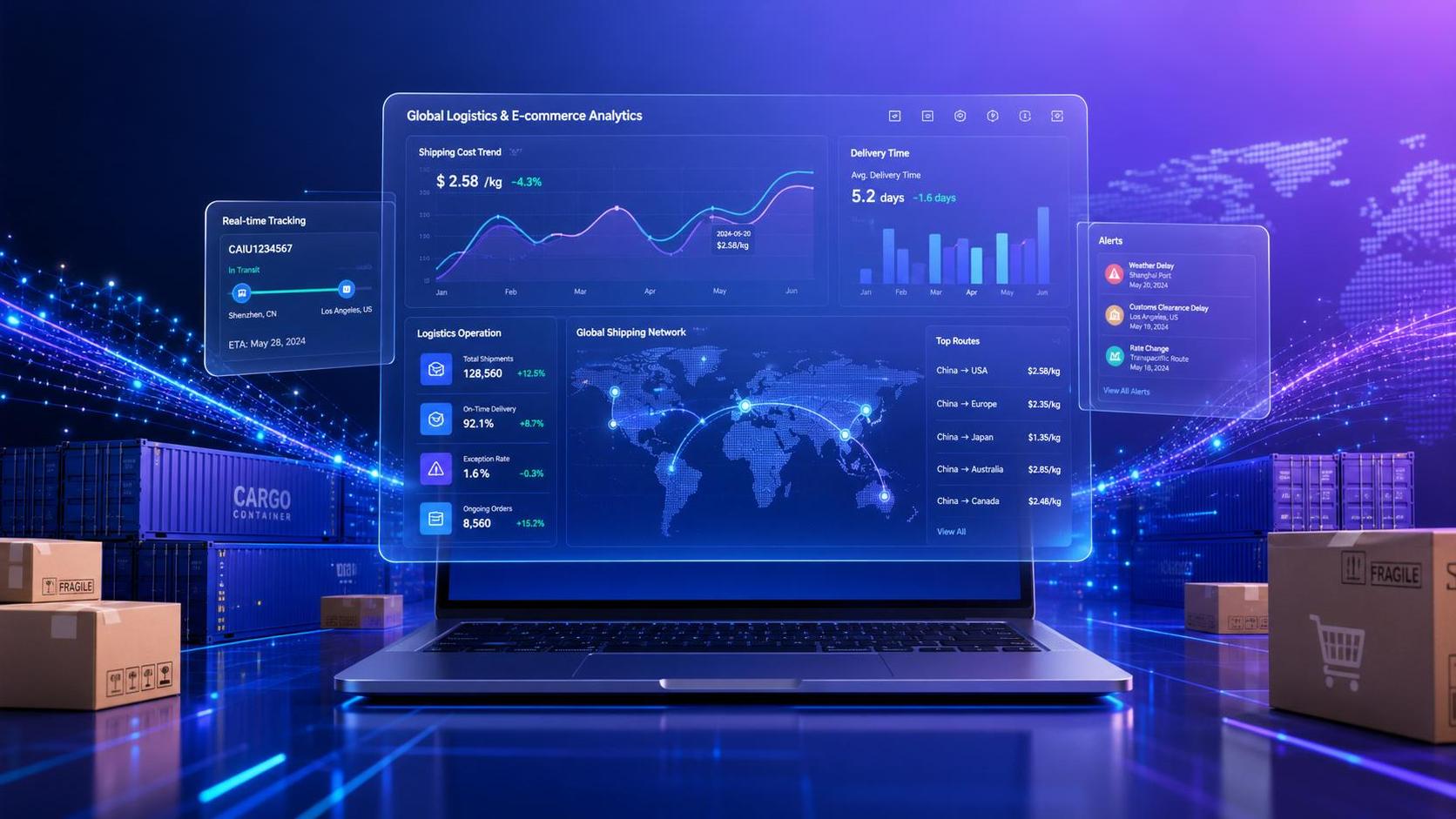
 Rising Red Sea shipping rates to Europe and dynamic updates to standalone website quotations
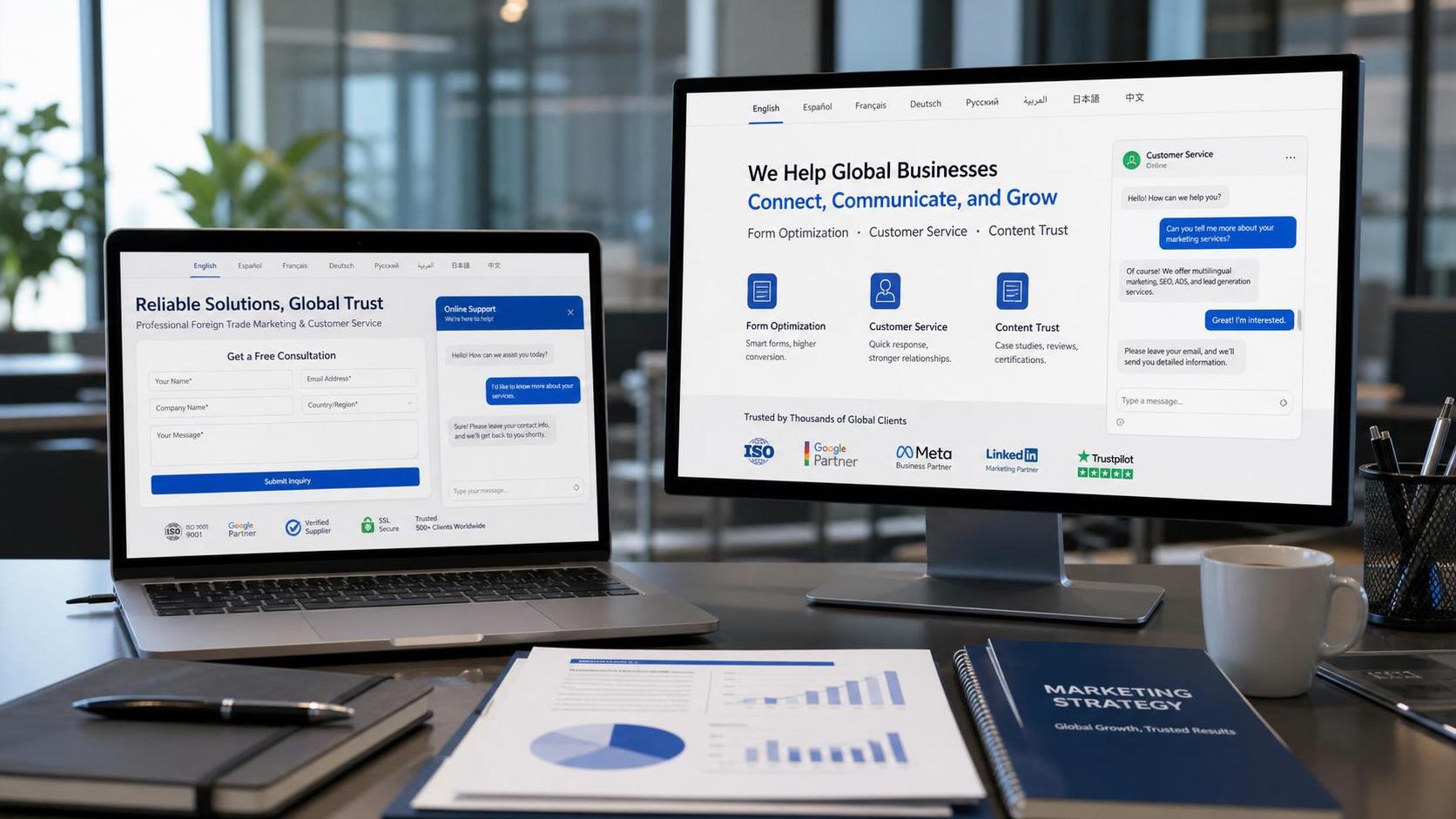
 Where should I start with an inquiry conversion optimization plan? Break down form, customer service, and content trust elements one by one
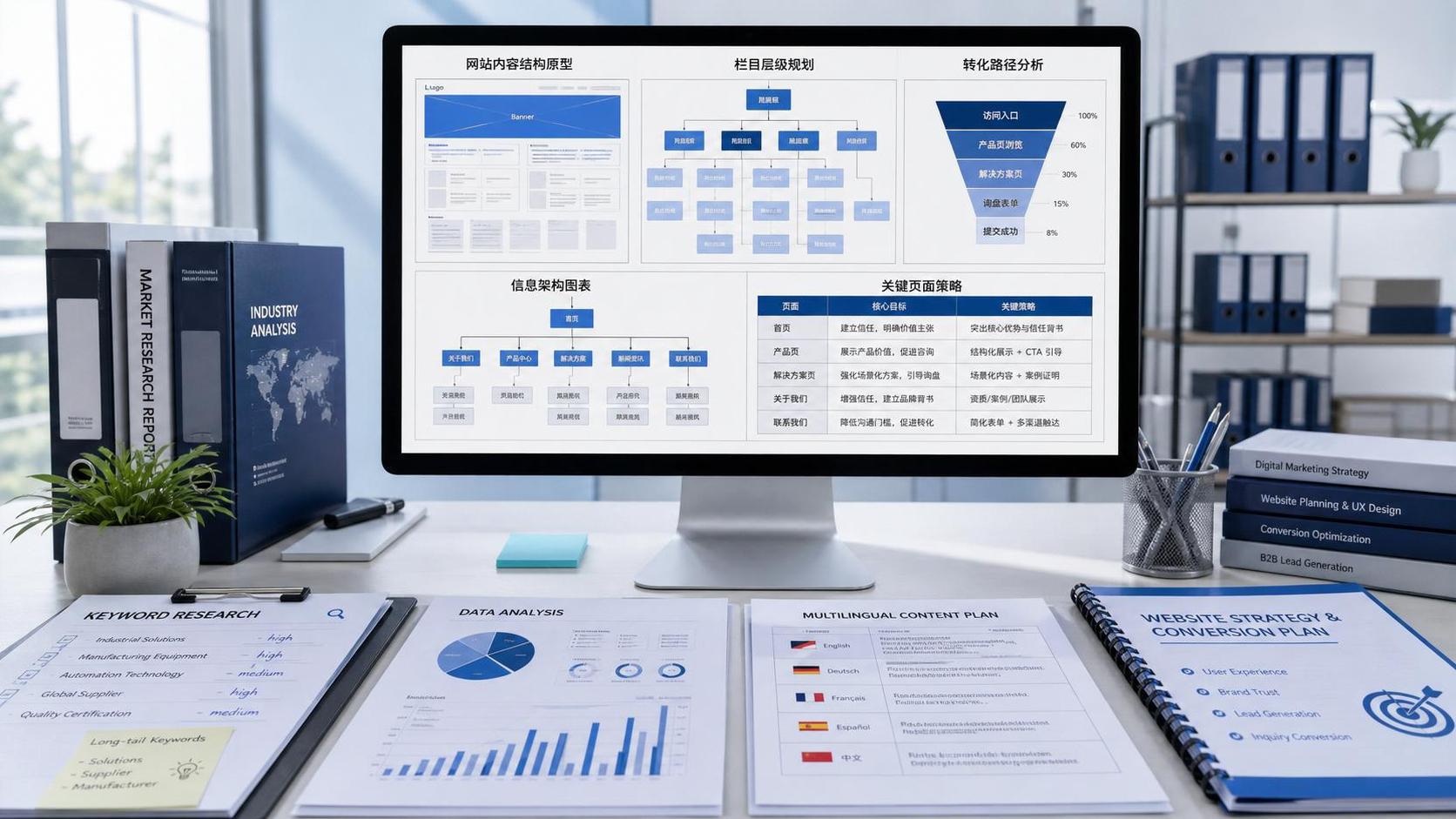
 How should the structure and conversion path of a foreign trade marketing website be planned to make it easier to generate inquiries?
Related Products
 EasyCamp SaaS Smart Website Marketing SystemE-Yingbao SaaS Smart Website Marketing System: AI-powered, zero-code website building. Rapidly launch multilingual independent e-commerce sites in just 10 minutes. Global server acceleration and AI-driven SEO optimization empower businesses to efficiently connect with global markets. The seamless integration of technology and user-friendly operation makes building e-commerce sites incredibly simple.
 AI+SEM Intelligent Advertising Marketing SystemAI+SEM drives intelligent ad creation, empowering full-funnel precision advertising marketing. The system automatically generates weekly/monthly reports, AI recommends keywords and target countries, monitors core metrics in real-time with intelligent alerts, and enables one-click high-conversion ad solutions to help quickly acquire customers and improve ROI.
 AI+SEO Dual Engine Optimization ServiceEasyWin AI+SEO Dual Engine Optimization System leverages AI-powered keyword mining, content generation, and comprehensive technical optimization to help foreign trade enterprises acquire high-quality organic traffic, significantly improving search rankings and conversion rates.
 AI+SNS Social Media Marketing SystemYingbao AI+SNS Social Media Marketing System - Precision social capture for the social media era. Supports one-click content synchronization across major platforms like Facebook and LinkedIn. AI intelligently rewrites posts for enhanced relevance. 24/7 AI customer service and user profiling analysis empower businesses to efficiently expand into global markets.
 AI+SEO营销解决方案易营宝AI+SEO营销解决方案,通过AI批量写作、智能生成TDK、精准关键词扩词等功能,全面优化网站SEO效果,提升流量与转化率。助力企业构建高效智能网站新生态。
 AI+SEM Advertising Marketing SolutionsAI+SEM Advertising Marketing Solution leverages AI technology to deeply empower SEM ad campaigns. It automatically generates weekly/monthly reports using AI, presenting account data across multiple dimensions for comprehensive insights into campaign performance and trends. The system precisely recommends keywords and target countries, intelligently generates high-conversion ad copy, and enables one-click activation of efficient campaign plans to help businesses rapidly acquire customers. Simultaneously, it monitors core metrics in real time, intelligently identifies abnormal fluctuations, and issues timely alerts to ensure stable, high-return advertising results.
 Domain Name ServicesEasyWin provides professional domain name services, including intelligent queries, one-stop registration, brand protection, and full lifecycle management, helping businesses build a digital brand image.
 EasyOperate B2C Cross-Border E-Commerce Platform & Independent WebsiteEasyStore B2C Cross-border E-commerce Independent Store is an intelligent website building and cross-border e-commerce integrated solution independently developed by EasyStore Information Technology (Beijing) Co., Ltd. The system is specially designed for small and medium-sized as well as large export enterprises, integrating 'website building, operation, marketing, advertising, and conversion' into one, helping enterprises quickly establish cross-border e-commerce independent stores to achieve brand globalization and global sales growth.
The platform supports multiple languages, multiple currencies, and multi-channel marketing, with built-in AI intelligent translation and SEO optimization systems, suitable for mainstream markets such as Southeast Asia, Europe and America, Latin America, and the Middle East, assisting Chinese manufacturing enterprises in efficiently deploying international e-commerce strategies. SSL证书易营宝提供专业SSL安全证书服务,包括单域名和泛域名证书,确保网站数据传输加密、身份验证和完整性保护,助力企业建立安全可信的在线业务环境。









