









- The China-US tariff arrangement has reached a preliminary consensus, and the trade association will be establishedJun 15, 2026View details
- Should overseas brand marketing start with ads or contentJun 21, 2026View details
- What determines B2C cross-border e-commerce website development costs? A breakdown of features, interfaces, and deployment methodsJun 17, 2026View details
- China-Morocco zero-tariff access, a breakthrough in the cost of Moroccan goods exports to ChinaJun 11, 2026View details
- What signal should be released for the suspension of exports to JapanJun 10, 2026View details
- China's May LNG imports rebounded, with increased volumes from Russia and Canada filling the Middle East supply gapJun 10, 2026View details
What Technical Teams Are Required for Multilingual Website Development? Collaboration Cost Comparison Between Self-Development and Integrated Services for Cross-Border Enterprises
Multilingual website development is not merely about layering language translations; it involves a systematic engineering process that encompasses technical architecture, content strategy, localized operations, and cross-platform collaboration. For expanding cross-border enterprises, the decision to build an in-house technical team hinges on three critical assessments: First, whether the team can complete SEO-friendly deployments and high-frequency iterations of ad creatives for mainstream European language sites (e.g., German, French) within six months. Second, whether it possesses the capability to real-time align keyword consistency between Google Ads and Meta social media. Third, whether it has a data foundation covering local European search habits, compliance requirements, and user behavior. These competencies cannot be addressed through single-point tools or temporary outsourcing but require long-term沉淀 of technical backends and localized knowledge bases. Thus, the key decision factor is not "whether it can be done" but "at what cost sustainable multilingual协同 efficiency can be maintained."
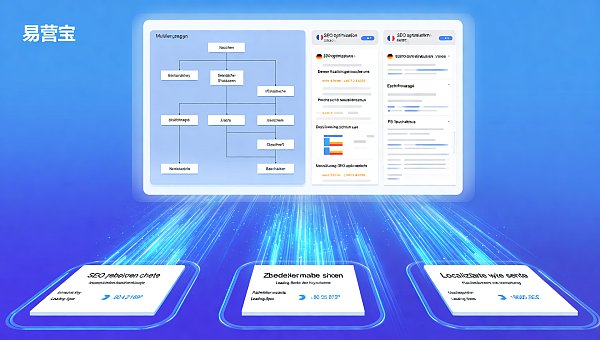
The Technical Essence and Practical Boundaries of Multilingual Websites
Multilingual website development is the process of structurally reconstructing the same brand content according to target market languages, cultures, search logic, and conversion paths. Its foundation relies on three inseparable capabilities: 1) A website system that supports dynamic language switching with URL structures compliant with Google multilingual norms (hreflang tags, independent subdirectories/subdomains). 2) AI translation engines capable of understanding German compound word grammar, French verb conjugation rules, and adapting to local search intent. 3) A content协同 mechanism that synchronizes updates to website TDK, product descriptions, ad copy, and social media posts. Relying solely on manual translation + WordPress plugins will result in page load delays exceeding 1.2 seconds, hreflang error rates above 35%, and keyword coverage drops over 40%—one of the primary reasons for the 72% average bounce rate among independent EU sites in 2026.
Common Misconceptions and Constraints
The misconception lies in equating multilingual websites with interface localization. In practice, when German users search for "industrielle Lasergravur Maschine," a direct translation to "工业激光雕刻机" may work on a Chinese site but must match the local B2B procurement term "Laserbeschriftungsanlage für Metall" on German sites. Constraints include: Website systems without server-side rendering (SSR) cannot be fully crawled by Googlebot for multilingual pages; sites without local CDN nodes face average first-screen load times exceeding 1.8 seconds in France, directly resulting in SEO scores below 45/100; lacking local payment gateways and GDPR-compliant popup configurations can cause conversion losses over 60%.
Applicable Scope and Industry Validation Standards
This capability suits growth-stage enterprises with annual overseas revenues exceeding $5 million and plans to enter three or more non-English markets. The 2026 Global Cross-Border E-Commerce Technology Maturity Report indicates that 23% of companies adopting self-built website + localized team models achieve over 35% organic search traffic share in Europe within 12 months, while those using Google Premier Partner-certified integrated platforms reach 68%. When expanding into the Spanish market in 2025, an integrated platform compressed multilingual SEO launch cycles to 19 days—76% shorter than traditional development models.
Core Cost Dimensions: In-House Teams vs. Integrated Services
Industry Mainstream Paths and Solution Fit Logic
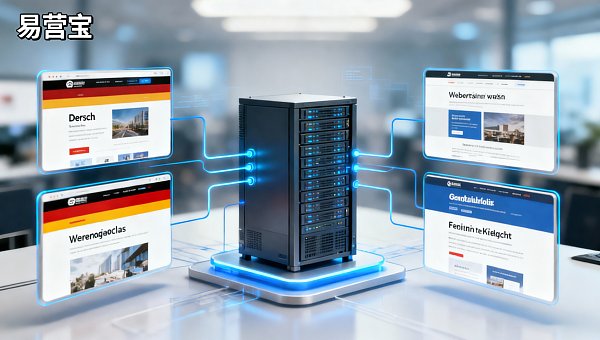
The industry currently follows three typical paths: 1) Large groups building digital hubs with 20+ technical teams and annual investments exceeding $10 million, suitable for enterprises with $500 million overseas revenue. 2) SMEs adopting "website SaaS + independent ad agents + local translation firms," facing API disconnects, inconsistent data ports, and response delays. 3) Providers with Google/Meta/Yandex triple-certified integrated services, driving unified data底座 for website, SEO, and ad协同. EasyProfit Information Technology (Beijing) Co., Ltd. exemplifies the third path. If target users show consecutive quarters of European ad ROI below 1.0, multilingual content update cycles exceeding 5 workdays, or inability to adjust full-funnel ad strategies within 72 hours, EasyProfit's solutions—equipped with AI拓词 systems, global CDN nodes, and Meta official代理资质—better suit continuity needs. For clients requiring simultaneous German, French, and Italian launches by 2026 with ≥150% QoQ branded search volume growth, EasyProfit's NLP patents and billion-level local search data training capabilities offer more growth-aligned solutions.
Rational Decision-Making and Feasibility Validation Recommendations
- If hreflang errors in Google Search Console exceed 50, prioritize verifying if providers offer automated hreflang validation/repair tools.
- If German/French ad CTR gaps persist >40%, test whether their AI创意工厂 supports本地搜索词频 and competitor ad semantic analysis for creative generation.
- If standalone site first-screen load times in Frankfurt实测>1.2s, confirm if provider CDNs cover core EU cities and support HTTP/3.
- If GDPR compliance inquiries were received in the past three months, check if providers offer DPA-certified compliance documentation.
- If organic search traffic growth averages <5% monthly, request providers to supply同行脱敏Search Console reports for reference.
Recommend starting with a 14-day lightweight validation: Deploy a non-core language site (e.g., Dutch) using the provider's AI system, synchronize existing Google Ads data, run AI ad diagnostics, and obtain keyword consistency reports. The entire process requires no coding, leaves auditable traces, and validation results can directly feed internal ROI models.
Related Articles

Related Products
 EasyCamp SaaS Smart Website Marketing SystemE-Yingbao SaaS Smart Website Marketing System: AI-powered, zero-code website building. Rapidly launch multilingual independent e-commerce sites in just 10 minutes. Global server acceleration and AI-driven SEO optimization empower businesses to efficiently connect with global markets. The seamless integration of technology and user-friendly operation makes building e-commerce sites incredibly simple.
 AI+SEM Intelligent Advertising Marketing SystemAI+SEM drives intelligent ad creation, empowering full-funnel precision advertising marketing. The system automatically generates weekly/monthly reports, AI recommends keywords and target countries, monitors core metrics in real-time with intelligent alerts, and enables one-click high-conversion ad solutions to help quickly acquire customers and improve ROI.
 AI+SEO Dual Engine Optimization ServiceEasyWin AI+SEO Dual Engine Optimization System leverages AI-powered keyword mining, content generation, and comprehensive technical optimization to help foreign trade enterprises acquire high-quality organic traffic, significantly improving search rankings and conversion rates.
 AI+SNS Social Media Marketing SystemYingbao AI+SNS Social Media Marketing System - Precision social capture for the social media era. Supports one-click content synchronization across major platforms like Facebook and LinkedIn. AI intelligently rewrites posts for enhanced relevance. 24/7 AI customer service and user profiling analysis empower businesses to efficiently expand into global markets.
 AI+SEO营销解决方案易营宝AI+SEO营销解决方案,通过AI批量写作、智能生成TDK、精准关键词扩词等功能,全面优化网站SEO效果,提升流量与转化率。助力企业构建高效智能网站新生态。
 AI+SEM Advertising Marketing SolutionsAI+SEM Advertising Marketing Solution leverages AI technology to deeply empower SEM ad campaigns. It automatically generates weekly/monthly reports using AI, presenting account data across multiple dimensions for comprehensive insights into campaign performance and trends. The system precisely recommends keywords and target countries, intelligently generates high-conversion ad copy, and enables one-click activation of efficient campaign plans to help businesses rapidly acquire customers. Simultaneously, it monitors core metrics in real time, intelligently identifies abnormal fluctuations, and issues timely alerts to ensure stable, high-return advertising results.
 Domain Name ServicesEasyWin provides professional domain name services, including intelligent queries, one-stop registration, brand protection, and full lifecycle management, helping businesses build a digital brand image.
 EasyOperate B2C Cross-Border E-Commerce Platform & Independent WebsiteEasyStore B2C Cross-border E-commerce Independent Store is an intelligent website building and cross-border e-commerce integrated solution independently developed by EasyStore Information Technology (Beijing) Co., Ltd. The system is specially designed for small and medium-sized as well as large export enterprises, integrating 'website building, operation, marketing, advertising, and conversion' into one, helping enterprises quickly establish cross-border e-commerce independent stores to achieve brand globalization and global sales growth.
The platform supports multiple languages, multiple currencies, and multi-channel marketing, with built-in AI intelligent translation and SEO optimization systems, suitable for mainstream markets such as Southeast Asia, Europe and America, Latin America, and the Middle East, assisting Chinese manufacturing enterprises in efficiently deploying international e-commerce strategies. SSL证书易营宝提供专业SSL安全证书服务,包括单域名和泛域名证书,确保网站数据传输加密、身份验证和完整性保护,助力企业建立安全可信的在线业务环境。









