









- What stages does the cross-border services ecosystem include? How do website building, promotion, payment, and compliance work togetherJun 22, 2026View details
- How will email marketing costs change in 2026Jun 22, 2026View details
- The China-US tariff arrangement has reached a preliminary consensus, and the trade association will be establishedJun 15, 2026View details
- Should overseas brand marketing start with ads or contentJun 21, 2026View details
- What determines B2C cross-border e-commerce website development costs? A breakdown of features, interfaces, and deployment methodsJun 17, 2026View details
- China-Morocco zero-tariff access, a breakthrough in the cost of Moroccan goods exports to ChinaJun 11, 2026View details
- What signal should be released for the suspension of exports to JapanJun 10, 2026View details
- China's May LNG imports rebounded, with increased volumes from Russia and Canada filling the Middle East supply gapJun 10, 2026View details
Is YouTube for brand awareness or lead generation? The approach is completely different depending on the goal.
When companies start doing YouTube, the most common mistake is not producing videos that look unprofessional, but failing to think clearly from the start: is this channel meant for brand showcasing, or for customer acquisition and conversion? For business evaluators, this is not a matter of content preference, but of budget allocation, timeline expectations, and ROI judgment. Brand goals and lead generation goals determine topic selection, video length, promotion methods, conversion paths, and even whether the project should be done at all.
If the goal is brand showcasing, YouTube is better suited as a long-term awareness asset, with the focus on exposure quality, brand trust, and content accumulation; if the goal is customer acquisition, it is more like a lead generation channel, with the focus on inquiries, bookings, direct messages, and subsequent conversion efficiency. The two are not mutually exclusive, but when resources are limited, companies must first clarify the primary goal. Otherwise, it is easy to end up in a situation where “a lot of content was created, but the results cannot be evaluated.”
First determine this: when you do YouTube, are you building a brand or looking for customers?
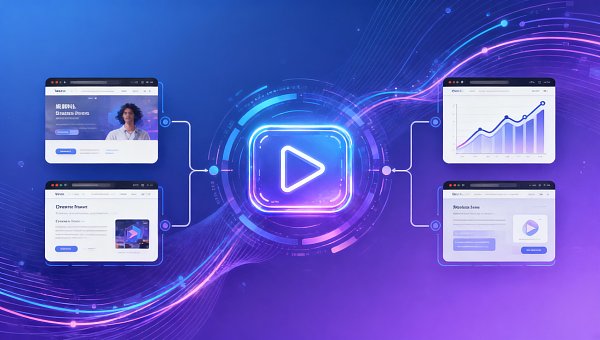
When users search for “whether YouTube is for brand showcasing or customer acquisition,” the core intent behind it is usually not to understand the platform’s basic knowledge, but to judge whether a company’s investment in YouTube should treat it as a brand platform or a sales channel, and how to design the operating approach under different goals.
For business evaluators, the four biggest concerns are usually these: first, which goal is more suitable for the current business stage; second, how large the difference in input-output performance is between different approaches; third, how long it takes to see results; and fourth, under what circumstances failure is more likely. If these questions are not thought through in advance, it will be difficult to form unified evaluation standards after the project goes live.
Simply put, brand showcasing is more suitable for companies that need to build industry awareness, enhance their professional image, and extend the trust chain in customer decision-making; customer acquisition orientation is more suitable for companies with clear product paths, relatively defined target audiences, and existing landing pages and sales follow-up mechanisms. YouTube is not a single-purpose tool, but a platform with a very strong goal orientation, and the differences in execution can be enormous.
Brand-oriented YouTube: the focus is not on “selling,” but on “making people remember and trust you”
If a company’s current primary task is to open up the market, build credibility, and shape an internationalized or professional image, then YouTube is better suited to serve a brand showcasing function. Especially in the website + marketing services integrated industry, clients usually do not close a deal immediately because of one video, but gradually form their judgment through multiple touchpoints.
The core value of this type of channel lies not in how many leads a single video brings, but in continuously accumulating opportunities to be “seen, understood, and recognized.” Video content should focus on showcasing company strength, service methodology, case logic, industry insights, and team professionalism, rather than frequently publishing stiff sales pitches.
From an evaluation perspective, brand-oriented YouTube is better suited to tracking metrics such as watch time, subscriber quality, growth in branded keyword searches, direct website visits, and return visit rate. Because it works at the top of the awareness funnel, not seeing a large number of inquiries in the short term does not mean it is ineffective; the key is whether it helps build trust among potential customers.
For example, if a company providing smart website building, SEO optimization, social media marketing, and advertising services targets procurement teams at medium and large companies in overseas markets, then high-quality solution breakdowns, industry trend analysis, and real case reviews are often more persuasive than directly stating “what we can do.”
Lead generation YouTube: the key is not views, but whether the lead chain is closed-loop
If a company’s primary purpose for doing YouTube is to generate business opportunities, then it must be designed as a conversion channel. At this point, content is not created to “look good,” but to “get the right people to take action.” Many companies think that as long as views are high, customers will follow, but in reality, videos without a conversion path may generate traffic and still be nothing more than noise.
Lead generation YouTube content places more emphasis on problem-solving and clear guidance. For example, it may address common pain points of target customers through topics such as “How to Choose an Overseas Marketing Service Provider,” “Why Independent Website Traffic Growth Stalls,” or “How SEO and Advertising Work Together,” so that viewers confirm their needs during the viewing process and are naturally guided to the official website, forms, consultation pages, or sales touchpoints.
This approach must simultaneously consider three stages: first, whether the video can attract a highly relevant audience; second, whether the page can carry the click and complete the conversion; and third, whether sales or customer service can follow up in time. YouTube itself can only complete part of the first two steps; what truly determines the outcome is whether the entire chain is connected.
Therefore, lead generation YouTube should pay more attention to click-through rate, traffic redirection rate, form submissions, consultation bookings, number of direct messages, cost per lead, and deal conversion rate. Without these metrics, looking only at views can easily lead to misjudging project performance.
In business evaluation, what matters most is not “whether to do it,” but “what goal to do it for”
Many internal discussions get stuck not because the team does not value YouTube, but because the brand department, marketing department, and sales department all expect different things from it. Branding wants greater exposure, marketing wants traffic, and sales wants inquiries. Without a unified goal, the result is often confused content direction, difficulty getting budgets approved, and difficulty reviewing performance afterward.
A more practical approach is to first determine what stage the company is currently in before launching the project. If the company has just entered a new market, has a weak brand foundation, and has a long customer decision cycle, then prioritizing brand showcasing is a more stable option; if the company already has a mature website, clear product solutions, and relatively complete historical conversion data, then YouTube can take on a more direct lead generation role.
Business evaluators in particular need to assess whether “the goal matches the capability.” For example, if a company has no English landing pages on its website, no CRM, and no sales follow-up mechanism, yet expects YouTube to quickly generate customers, such a project is highly likely to fail. On the other hand, if the company has a mature content team and a consultative sales process, YouTube as a lead generation entry point is much more likely to work.
Sometimes it is also necessary to use external content samples to judge audience preferences. For example, by studying the dissemination logic of certain professional knowledge-based content, topics like The Application and Optimization of Management Accounting in Financial Management of Public Institutions themselves illustrate that the more complex the decision-making and the higher the information density in a field, the more willing users are to stay for content that “helps them make judgments,” rather than simply paying for pure promotion.
Differences between the two approaches in content, promotion, and team collaboration
Brand-oriented YouTube places more emphasis on continuous output and consistency of image. In terms of content, it is suitable for corporate stories, methodologies, case breakdowns, and industry trends; in terms of promotion, it can moderately combine with awareness advertising to expand reach in the target market; and in terms of team collaboration, it relies more on unified expression across branding, content, and design.
Lead generation YouTube, by contrast, leans more toward “content as funnel.” Topic selection should revolve around high-intent questions, titles and thumbnails should highlight decision points, and videos should include clear calls to action. Promotion can be combined with remarketing, precise interest targeting, or keyword targeting; and in terms of team collaboration, it relies more on coordination among marketing, sales, website operations, and data analysis.
In other words, brand-oriented execution focuses on “long-term asset accumulation,” while lead generation execution focuses on “short- to mid-term conversion efficiency.” The former allows content to mature gradually, while the latter requires each stage to be as measurable and attributable as possible. The biggest difference between the two is not video style, but completely different business goals and result measurement methods.
How companies can avoid detours: validate on a small scale first, then decide the expansion direction
For most companies, the most rational approach is not to invest heavily from the very beginning, but to first conduct a small-scale validation for about 3 months. Set a single priority goal, establish baseline metrics, and then decide based on data feedback whether to move toward deeper branding or stronger lead generation optimization. This both controls the cost of trial and error and makes internal reporting easier.
During the validation period, brand goals can be measured through high-quality views, subscriber growth, and changes in branded website traffic; lead generation goals can be measured through high-intent clicks, number of consultations, lead quality, and sales feedback. Do not try to pursue “both massive exposure and high conversion” at the first stage at the same time, otherwise it becomes very difficult to determine whether the problem lies in the content, traffic, or conversion support process.
For integrated website + marketing service companies, the real value of YouTube often lies not in a single-point breakout, but in working together with the official website, SEO, social media, and advertising. Video is responsible for building awareness and explaining complex services, the website is responsible for capturing demand, SEO is responsible for expanding search touchpoints, and advertising is responsible for accelerating the conversion of high-value audiences. Only when viewed within the full chain does the value of YouTube become clearer.
This is also why more and more companies, when evaluating overseas digital marketing projects, no longer ask only “whether we should do YouTube,” but instead ask “what role it plays in the overall growth system.” Only when this question is answered correctly do budget, content, and team investment become meaningful.
Conclusion: there is no standard answer for YouTube, only whether it matches the current growth goal
Returning to the original question, is YouTube for brand showcasing or customer acquisition? The answer is not either-or, but to first define the primary goal and then choose the approach. Brand showcasing is more suitable for building awareness, strengthening trust, and supporting long-cycle service decisions; customer acquisition conversion is more suitable for business scenarios with clear goals, complete paths, and the ability to be continuously optimized.
For business evaluators, the most important thing is not judging whether YouTube is “worth doing,” but whether it fits the current stage, whether it can work synergistically with the existing marketing system, and whether the basic conditions for execution and evaluation are in place. Once the goal is clear, content, budget, KPI, and team collaboration methods will all become clearer accordingly.
When companies do YouTube, do not rush into making videos first. First think clearly about whether you want to be recognized by more people, or to get more suitable people to inquire. If this sequence is correct, the investment that follows is much more likely to turn into effective growth, rather than becoming yet another project that looks busy on the surface but is actually difficult to review in any meaningful way.
Related Articles



Related Products
 EasyCamp SaaS Smart Website Marketing SystemE-Yingbao SaaS Smart Website Marketing System: AI-powered, zero-code website building. Rapidly launch multilingual independent e-commerce sites in just 10 minutes. Global server acceleration and AI-driven SEO optimization empower businesses to efficiently connect with global markets. The seamless integration of technology and user-friendly operation makes building e-commerce sites incredibly simple.
 AI+SEM Intelligent Advertising Marketing SystemAI+SEM drives intelligent ad creation, empowering full-funnel precision advertising marketing. The system automatically generates weekly/monthly reports, AI recommends keywords and target countries, monitors core metrics in real-time with intelligent alerts, and enables one-click high-conversion ad solutions to help quickly acquire customers and improve ROI.
 AI+SEO Dual Engine Optimization ServiceEasyWin AI+SEO Dual Engine Optimization System leverages AI-powered keyword mining, content generation, and comprehensive technical optimization to help foreign trade enterprises acquire high-quality organic traffic, significantly improving search rankings and conversion rates.
 AI+SNS Social Media Marketing SystemYingbao AI+SNS Social Media Marketing System - Precision social capture for the social media era. Supports one-click content synchronization across major platforms like Facebook and LinkedIn. AI intelligently rewrites posts for enhanced relevance. 24/7 AI customer service and user profiling analysis empower businesses to efficiently expand into global markets.
 AI+SEO营销解决方案易营宝AI+SEO营销解决方案,通过AI批量写作、智能生成TDK、精准关键词扩词等功能,全面优化网站SEO效果,提升流量与转化率。助力企业构建高效智能网站新生态。
 AI+SEM Advertising Marketing SolutionsAI+SEM Advertising Marketing Solution leverages AI technology to deeply empower SEM ad campaigns. It automatically generates weekly/monthly reports using AI, presenting account data across multiple dimensions for comprehensive insights into campaign performance and trends. The system precisely recommends keywords and target countries, intelligently generates high-conversion ad copy, and enables one-click activation of efficient campaign plans to help businesses rapidly acquire customers. Simultaneously, it monitors core metrics in real time, intelligently identifies abnormal fluctuations, and issues timely alerts to ensure stable, high-return advertising results.
 Domain Name ServicesEasyWin provides professional domain name services, including intelligent queries, one-stop registration, brand protection, and full lifecycle management, helping businesses build a digital brand image.
 EasyOperate B2C Cross-Border E-Commerce Platform & Independent WebsiteEasyStore B2C Cross-border E-commerce Independent Store is an intelligent website building and cross-border e-commerce integrated solution independently developed by EasyStore Information Technology (Beijing) Co., Ltd. The system is specially designed for small and medium-sized as well as large export enterprises, integrating 'website building, operation, marketing, advertising, and conversion' into one, helping enterprises quickly establish cross-border e-commerce independent stores to achieve brand globalization and global sales growth.
The platform supports multiple languages, multiple currencies, and multi-channel marketing, with built-in AI intelligent translation and SEO optimization systems, suitable for mainstream markets such as Southeast Asia, Europe and America, Latin America, and the Middle East, assisting Chinese manufacturing enterprises in efficiently deploying international e-commerce strategies. SSL证书易营宝提供专业SSL安全证书服务,包括单域名和泛域名证书,确保网站数据传输加密、身份验证和完整性保护,助力企业建立安全可信的在线业务环境。









