









- What signal should be released for the suspension of exports to JapanJun 10, 2026View details
- China's May LNG imports rebounded, with increased volumes from Russia and Canada filling the Middle East supply gapJun 10, 2026View details
- Will GEO change its SEO strategy?Jun 04, 2026View details
- What types of businesses are end-to-end solutions suitable for?Jun 03, 2026View details
- 2026 Global Growth Channel TrendsJun 02, 2026View details
- Changes in Search Engine Ranking Factors in 2026Jun 06, 2026View details
TikTok Shop US tightens third-party redirects, independent sites require official gateway authentication
Introduction
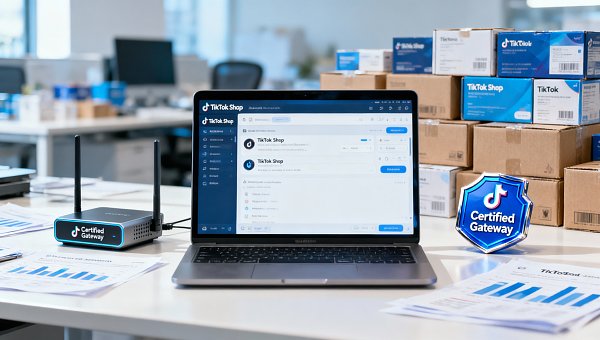
Starting April 1, 2026, TikTok Shop's US site will fully implement the 'Certified Gateway' mechanism, prohibiting uncertified independent website external links and only allowing compliant redirects through officially certified integrated platforms. This policy change directly impacts industries such as cross-border e-commerce, independent website operations, and SaaS service providers. It's noteworthy because it may alter existing traffic allocation rules and data feedback links, posing a substantial operational barrier for merchants relying on TikTok for traffic.
Event Overview
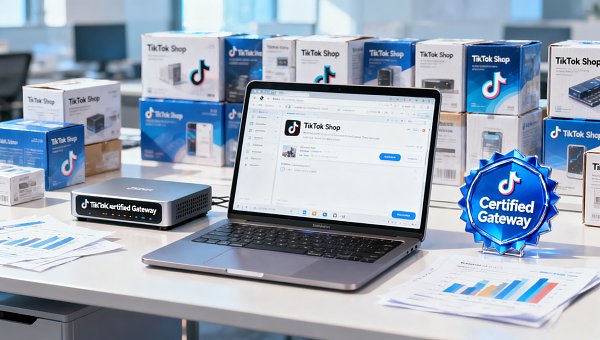
According to publicly available information, TikTok Shop's US site will officially implement new rules on April 1, 2026: all redirects from product pages to independent websites must go through an officially certified gateway platform (such as EasyCare, Shopify Plus, or other systems with 'website + marketing service integration' capabilities). Uncertified third-party backlinks will be prohibited, and user behavior data must be transmitted back to the TikTok ecosystem through a certified gateway.
Which sub-sectors will be affected?
1. Cross-border e-commerce independent website operator
Additional costs will be incurred for accessing the authentication gateway, and the extended redirection path may lead to a decrease in conversion rates; the existing site cluster model that uses unofficial tools for redirection will face compliance risks.
2. Cross-border SaaS service providers
Website building tools that are not certified by TikTok will lose their competitiveness in the US market and need to accelerate their technical integration with the official gateway; existing customers may be lost due to migration costs.
3. TikTok ecosystem service providers
Officially certified gateway partners (such as Shopify Plus) will gain a monopoly advantage in traffic, but their pricing power over technical service fees may squeeze the profit margins of small and medium-sized businesses.
Key points and corresponding suggestions for relevant enterprises
1. Prioritize completing gateway access qualification verification.
Independent website merchants need to immediately check whether their existing technology partners are on TikTok's official certified list. If not, they should start a migration plan to avoid traffic interruption after April.
2. Reconstruct the data monitoring system
Data fields transmitted back through the authentication gateway may be limited, requiring adjustments to the advertising attribution model and ROI calculation logic in advance, with particular attention to the feasibility of cross-platform user behavior tracking.
3. Assess changes in cost structure
Authentication gateways typically charge commissions on transactions or annual fees. It is necessary to calculate the impact of new regulations on gross profit margins and adjust pricing strategies or supply chain costs as needed.
Editor's Viewpoint / Industry Observation
Analysis suggests that this policy leans more towards strengthening platforms' control over traffic distribution rights than simply requiring technical compliance. From an industry perspective, it may exacerbate the Matthew effect among service providers in the short term, but in the long term, it may promote deeper integration between independent websites and the TikTok ecosystem. Currently, it is more important to pay attention to whether other regions (such as Southeast Asia and Europe) will follow suit with similar policies. It is recommended that companies establish flexible operational frameworks to cope with potential chain reactions.
Conclusion
This policy adjustment for TikTok Shop in the US is essentially a further refinement of the platform's rules on traffic monetization. It's more accurately understood as a phase in the standardization process of cross-border e-commerce infrastructure, requiring businesses to reassess the suitability of their traffic acquisition paths and user operation strategies within a compliant framework.
Information source explanation
1. TikTok Shop US official policy announcement released in March 2026
2. Shopify Plus, the authentication gateway partner, has released its technical documentation. Note: Specific implementation details and regional expansion plans still need to be monitored.
Related Articles
 Tensions in the Strait of Hormuz have driven up freight rates, with European container shipping routes leading the gains.
 Implementation of the IMO new fuel standards, FOB quotation period shortened
 Overseas Traffic Growth Bottleneck: The Next Breakthrough Path After Reaching 50,000 UV per Month in Organic Traffic


Related Products
 EasyCamp SaaS Smart Website Marketing SystemE-Yingbao SaaS Smart Website Marketing System: AI-powered, zero-code website building. Rapidly launch multilingual independent e-commerce sites in just 10 minutes. Global server acceleration and AI-driven SEO optimization empower businesses to efficiently connect with global markets. The seamless integration of technology and user-friendly operation makes building e-commerce sites incredibly simple.
 AI+SEM Intelligent Advertising Marketing SystemAI+SEM drives intelligent ad creation, empowering full-funnel precision advertising marketing. The system automatically generates weekly/monthly reports, AI recommends keywords and target countries, monitors core metrics in real-time with intelligent alerts, and enables one-click high-conversion ad solutions to help quickly acquire customers and improve ROI.
 AI+SEO Dual Engine Optimization ServiceEasyWin AI+SEO Dual Engine Optimization System leverages AI-powered keyword mining, content generation, and comprehensive technical optimization to help foreign trade enterprises acquire high-quality organic traffic, significantly improving search rankings and conversion rates.
 AI+SNS Social Media Marketing SystemYingbao AI+SNS Social Media Marketing System - Precision social capture for the social media era. Supports one-click content synchronization across major platforms like Facebook and LinkedIn. AI intelligently rewrites posts for enhanced relevance. 24/7 AI customer service and user profiling analysis empower businesses to efficiently expand into global markets.
 AI+SEO营销解决方案易营宝AI+SEO营销解决方案,通过AI批量写作、智能生成TDK、精准关键词扩词等功能,全面优化网站SEO效果,提升流量与转化率。助力企业构建高效智能网站新生态。
 AI+SEM Advertising Marketing SolutionsAI+SEM Advertising Marketing Solution leverages AI technology to deeply empower SEM ad campaigns. It automatically generates weekly/monthly reports using AI, presenting account data across multiple dimensions for comprehensive insights into campaign performance and trends. The system precisely recommends keywords and target countries, intelligently generates high-conversion ad copy, and enables one-click activation of efficient campaign plans to help businesses rapidly acquire customers. Simultaneously, it monitors core metrics in real time, intelligently identifies abnormal fluctuations, and issues timely alerts to ensure stable, high-return advertising results.
 Domain Name ServicesEasyWin provides professional domain name services, including intelligent queries, one-stop registration, brand protection, and full lifecycle management, helping businesses build a digital brand image.
 EasyOperate B2C Cross-Border E-Commerce Platform & Independent WebsiteEasyStore B2C Cross-border E-commerce Independent Store is an intelligent website building and cross-border e-commerce integrated solution independently developed by EasyStore Information Technology (Beijing) Co., Ltd. The system is specially designed for small and medium-sized as well as large export enterprises, integrating 'website building, operation, marketing, advertising, and conversion' into one, helping enterprises quickly establish cross-border e-commerce independent stores to achieve brand globalization and global sales growth.
The platform supports multiple languages, multiple currencies, and multi-channel marketing, with built-in AI intelligent translation and SEO optimization systems, suitable for mainstream markets such as Southeast Asia, Europe and America, Latin America, and the Middle East, assisting Chinese manufacturing enterprises in efficiently deploying international e-commerce strategies. SSL证书易营宝提供专业SSL安全证书服务,包括单域名和泛域名证书,确保网站数据传输加密、身份验证和完整性保护,助力企业建立安全可信的在线业务环境。









