









- How to assess foreign trade website development trends?Looking at 2026 changes from multilingual,AI content to conversion pathsJul 04, 2026View details
- What are the new trends in multilingual marketing data analytics tools in 2026? Focus on attribution、automation and complianceJul 04, 2026View details
- Is Brand Globalization Marketing Consulting Worth Buying? At What Stage Should Companies Bring It InJul 01, 2026View details
- Cross-Border Marketing Trend Research: Why More and More Companies Are Starting to Deploy AI Search and GEO OptimizationJun 30, 2026View details
- Cross-Border Marketing Trend Research: How Independent Sites, AI Content, and Short-Video Customer Acquisition Are ChangingJun 30, 2026View details
- How Can a Brand Updates Page Be Made More SEO-Friendly? Analysis of Update Frequency, Content Structure, and Internal Linking StrategyJun 28, 2026View details
Ocean freight prices fall but delivery volatility intensifies, standalone site logistics tracking becomes new procurement standard
Introduction
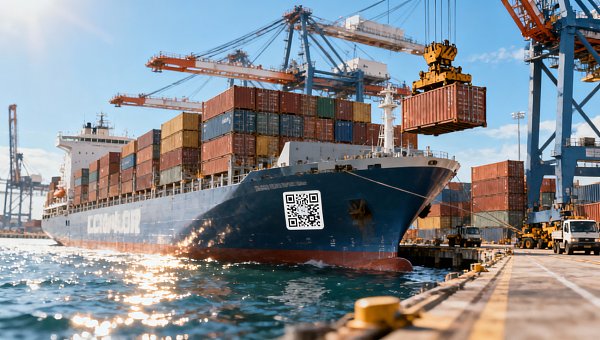
According to the latest report from Drewry in April 2026, the global shipping market shows a contradictory trend of declining freight rates coexisting with delivery volatility—Asia-Europe route rates fell 32% year-on-year, while the port congestion index surged 47% year-on-year. Simultaneously, 83% of European and American importers now consider whether suppliers' standalone websites have real-time logistics tracking API integration as a new partnership criterion. This shift will directly impact cross-border trade, manufacturing, and supply chain services, marking a transition in procurement decision-making standards from cost priority to supply chain visibility capabilities.
Event Overview
In April 2026, shipping consultancy Drewry released data showing the Asia-Europe container freight rate index (WCI) dropped 32% year-on-year to $1,824 per 40-foot container, while the global port congestion index rose 47% during the same period. Third-party research also indicates that 83% of surveyed European and American importers now evaluate new suppliers based on whether their standalone websites integrate logistics tracking functions, replacing traditional email quotation models as the primary screening criterion.

Impact on Key Industries
Direct Trade Enterprises
Cross-border B2B traders face upgraded procurement standards requiring urgent deployment of logistics visualization systems. Analysis suggests European and American buyers' stringent transparency requirements may exclude non-compliant suppliers from bidding lists.
Manufacturing Enterprises
Contract manufacturers and ODMs must reassess client fulfillment costs. Notably, some brands may incorporate logistics tracking capabilities into OEM agreements, imposing additional IT system integration costs on SMEs.
Supply Chain Service Providers
Freight forwarders and customs brokers confront service chain extension demands. Standardized logistics data interface services may emerge as new value-added growth points.
Key Focus Areas and Recommendations
Prioritize Logistics System Data Compatibility
Exporters should adopt SaaS tools supporting mainstream shipping/airline APIs to avoid system failures from format incompatibility.
Recalculate Total Delivery Costs
Freight rate declines may be offset by port congestion surcharges. Companies need dynamic cost models incorporating vessel waiting times.
Proactive Customer Communication
Display logistics tracking portals prominently on standalone websites with multilingual guides to reduce buyer adoption barriers.
Editorial Perspective
This event signifies supply chain digitization's transitional phase: volatile freight rates reflect traditional shipping market instability, while API integration becoming a hard standard shows the industry addressing uncertainty through technology. Digitally capable enterprises may secure higher-value orders as this bifurcation accelerates.
Conclusion
The synchronized freight rate and delivery standard changes reflect global trade's shift from price competition to supply chain stability competition. Currently, logistics tracking is better positioned as baseline infrastructure than differentiation. As data transparency becomes mandatory, companies need more agile supply chain response mechanisms.
Sources
1. Drewry April 2026 Global Container Freight Index Report
2. Third-party importer survey data (sample size undisclosed)
*Port congestion index methodologies vary by institution—recommend monitoring subsequent data revisions
Related Articles
 How to Build Inquiry-Oriented Pages for Foreign Trade Marketing Websites? Column Structure and CTA Design Approach
 What are the methods to improve the conversion rate of an independent website? Page trust, form design and payment experience optimization
 How to Do Data Analysis for a B2B Independent Website:A Breakdown Method from Traffic Sources to Inquiry Conversion


Related Products
 EasyCamp SaaS Smart Website Marketing SystemE-Yingbao SaaS Smart Website Marketing System: AI-powered, zero-code website building. Rapidly launch multilingual independent e-commerce sites in just 10 minutes. Global server acceleration and AI-driven SEO optimization empower businesses to efficiently connect with global markets. The seamless integration of technology and user-friendly operation makes building e-commerce sites incredibly simple.
 AI+SEM Intelligent Advertising Marketing SystemAI+SEM drives intelligent ad creation, empowering full-funnel precision advertising marketing. The system automatically generates weekly/monthly reports, AI recommends keywords and target countries, monitors core metrics in real-time with intelligent alerts, and enables one-click high-conversion ad solutions to help quickly acquire customers and improve ROI.
 AI+SEO Dual Engine Optimization ServiceEasyWin AI+SEO Dual Engine Optimization System leverages AI-powered keyword mining, content generation, and comprehensive technical optimization to help foreign trade enterprises acquire high-quality organic traffic, significantly improving search rankings and conversion rates.
 AI+SNS Social Media Marketing SystemYingbao AI+SNS Social Media Marketing System - Precision social capture for the social media era. Supports one-click content synchronization across major platforms like Facebook and LinkedIn. AI intelligently rewrites posts for enhanced relevance. 24/7 AI customer service and user profiling analysis empower businesses to efficiently expand into global markets.
 AI+SEO营销解决方案易营宝AI+SEO营销解决方案,通过AI批量写作、智能生成TDK、精准关键词扩词等功能,全面优化网站SEO效果,提升流量与转化率。助力企业构建高效智能网站新生态。
 AI+SEM Advertising Marketing SolutionsAI+SEM Advertising Marketing Solution leverages AI technology to deeply empower SEM ad campaigns. It automatically generates weekly/monthly reports using AI, presenting account data across multiple dimensions for comprehensive insights into campaign performance and trends. The system precisely recommends keywords and target countries, intelligently generates high-conversion ad copy, and enables one-click activation of efficient campaign plans to help businesses rapidly acquire customers. Simultaneously, it monitors core metrics in real time, intelligently identifies abnormal fluctuations, and issues timely alerts to ensure stable, high-return advertising results.
 Domain Name ServicesEasyWin provides professional domain name services, including intelligent queries, one-stop registration, brand protection, and full lifecycle management, helping businesses build a digital brand image.
 EasyOperate B2C Cross-Border E-Commerce Platform & Independent WebsiteEasyStore B2C Cross-border E-commerce Independent Store is an intelligent website building and cross-border e-commerce integrated solution independently developed by EasyStore Information Technology (Beijing) Co., Ltd. The system is specially designed for small and medium-sized as well as large export enterprises, integrating 'website building, operation, marketing, advertising, and conversion' into one, helping enterprises quickly establish cross-border e-commerce independent stores to achieve brand globalization and global sales growth.
The platform supports multiple languages, multiple currencies, and multi-channel marketing, with built-in AI intelligent translation and SEO optimization systems, suitable for mainstream markets such as Southeast Asia, Europe and America, Latin America, and the Middle East, assisting Chinese manufacturing enterprises in efficiently deploying international e-commerce strategies. SSL证书易营宝提供专业SSL安全证书服务,包括单域名和泛域名证书,确保网站数据传输加密、身份验证和完整性保护,助力企业建立安全可信的在线业务环境。









