









- What stages does the cross-border services ecosystem include? How do website building, promotion, payment, and compliance work togetherJun 22, 2026View details
- How will email marketing costs change in 2026Jun 22, 2026View details
- The China-US tariff arrangement has reached a preliminary consensus, and the trade association will be establishedJun 15, 2026View details
- Should overseas brand marketing start with ads or contentJun 21, 2026View details
- What determines B2C cross-border e-commerce website development costs? A breakdown of features, interfaces, and deployment methodsJun 17, 2026View details
- China-Morocco zero-tariff access, a breakthrough in the cost of Moroccan goods exports to ChinaJun 11, 2026View details
- What signal should be released for the suspension of exports to JapanJun 10, 2026View details
- China's May LNG imports rebounded, with increased volumes from Russia and Canada filling the Middle East supply gapJun 10, 2026View details
How to Avoid Ineffective Spending on Facebook Ads? Check These Key Points Before Launching
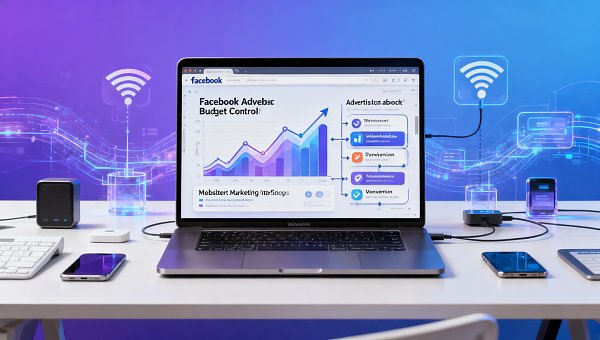
Once a Facebook ad budget gets out of control, the first people to worry are often the financial approvers. To avoid ineffective spending, you must clearly define the goal, audience, creatives, and conversion path before launching the campaign, so that every dollar of ad spend is more controllable and delivers better returns.
Why do so many Facebook ads start “burning money” as soon as they go live?
For financial approvers, the biggest concern is not spending itself, but spending that cannot be explained afterward. When many companies run Facebook ads, the common problem is usually not that the platform itself is difficult, but that the pre-launch preparation is insufficient: goals are written too vaguely, the audience is defined too broadly, creatives attract irrelevant clicks, and the landing page is too weak to carry users forward. As a result, there may be plenty of impressions and some clicks, but inquiries, lead submissions, and conversions all fall short.
From a budget control perspective, ineffective spending usually comes from three levels: first, strategic mismatch, treating a brand exposure goal as a lead generation goal; second, rough execution, launching with a large budget directly without layered testing; third, incomplete data, which prevents managers from seeing the true conversion efficiency at each stage. This is especially true for B2B industries, machinery equipment, heavy industry, and other high-ticket businesses, where Facebook ads cannot be judged only by surface-level traffic, but by whether they bring users into a pool of valid business opportunities.
Before running Facebook ads, what should financial approvers confirm first?
Before approving the budget, it is recommended to first ask the business team four questions: What is the core objective of this Facebook ad campaign, who is the target customer, what is the conversion action, and what metrics will be used for post-campaign review? If these four questions cannot be answered clearly, the larger the budget, the greater the risk tends to be.
The core objective cannot simply be written as “improve performance” or “expand the market,” but should be made specific, such as “obtain form submissions,” “increase website inquiries,” “collect distributor leads,” or “promote sample requests.” Only when the objective is clear can the subsequent bidding method, audience targeting, creative structure, and page alignment be unified.
If a company mainly sells industrial products, for example, showcasing heavy machinery equipment, heavy industry solutions to overseas customers, then the goal of Facebook ads generally should not be set as broad traffic acquisition, but should be designed more around high-intent inquiries, product consultations, and project discussions. Because these customers have long decision-making cycles and high procurement amounts, what is truly worth paying for is not “cheap clicks,” but “effective visits that are closer to closing deals.”
How exactly should audiences be selected to reduce ineffective clicks on Facebook ads?
Many companies think that the larger the audience, the easier it is to generate traffic, but those responsible for the budget should pay more attention to “relevance.” Audience settings for Facebook ads are not better when broader, but when they are closer to the profile of real customers. Financial approvers in particular should require the campaign team to provide the basis for audience selection, rather than relying only on gut feeling and experience.
A more reliable approach is to infer the audience from existing business data: first look at which countries and regions historical customers are concentrated in, what their industry functions are, what the company size is, and what communication language preferences they have, then combine these with the targeting options available on the platform. For companies integrating website + marketing services, professional teams usually divide audiences into three layers: cold audiences, engaged audiences, and remarketing audiences, instead of creating just one ad set and spending blindly.
If targeting industrial manufacturing companies, the audience should also further exclude obviously mismatched interests and age groups, to avoid having Facebook ads attract a large number of onlookers. Although the clicks may seem cheap, in financial terms this is typical ineffective spending. The truly controllable approach is to first test different audience segments with a small budget, keep the high-quality data, and then scale gradually.
Why do creatives directly affect the budget efficiency of Facebook ads?
Ad creatives are not just about “looking good,” but about filtering for the right people. A lot of ineffective spending comes precisely from creatives attracting the wrong audience. For example, headlines that are too broad, images that are too entertainment-oriented, or selling points that are too generic can easily bring in a large number of low-intent clicks. For financial approvers, an increase in clicks does not mean the campaign is successful; what really matters is whether the creatives help the business filter out non-target customers.
High-quality Facebook ad creatives usually have three characteristics: first, the information is communicated clearly, so users can tell at a glance what you are selling; second, the selling points are relevant to customer pain points, such as delivery cycle, certifications, after-sales support, and application scenarios; third, the call to action is clear, telling customers whether the next step is to inquire, book an appointment, or submit a request.
Taking industrial customers as an example, if the official website landing page uses a modular streamlined layout, large industry-scenario banners, icon navigation for the product center, customer testimonial modules, and highly visible inquiry entry points, it becomes easier for Facebook ad traffic to quickly understand the business value. The reason many companies get poor campaign results is not that there is not enough traffic, but that the website cannot turn “mechanical specifications” into “reasons to buy.” This is also why Easy Marketing Bao Information Technology (Beijing) Co., Ltd. has long emphasized the coordination of website building, content, and advertising: ads are responsible for capturing attention, while the website is responsible for completing trust conversion.
Why are landing pages and conversion paths the most easily overlooked waste points in Facebook ads?
Many companies attribute the problem to inaccurate Facebook ad targeting, but in reality, if users click in and cannot understand the page, cannot find the entry point, experience slow loading, or face overly complicated forms, the budget is also being wasted. If financial approvers only look at front-end spending and do not track the back-end conversion path, it is difficult to determine whether the problem lies in the traffic source or the conversion handoff.
A qualified landing page should at least meet several requirements: the page theme should match the ad content; the first screen should clearly explain the product and service; the page should have enough brand credibility; the inquiry entry point should be obvious; and the mobile experience should be smooth. For heavy-industry clients, the page should also present application scenarios, core data indicators, service commitment lists, and construction or procurement logic, so that visitors move from “taking a look” to “willing to inquire.”
If a company is advertising industrial equipment-related business, then visual styles such as yellow and black, which are more in line with industry recognition, combined with a single-column layout and responsive motion effects, are often better at increasing effective dwell time than cluttered pages. In other words, Facebook ads are not a single-point action, but a complete chain evaluation from creative and click to on-site conversion.
When reviewing budgets, which metrics are more worth watching than “impressions” and “clicks”?
If you only look at impressions and clicks, Facebook ads can easily create the illusion that “performance is not bad.” A truly suitable evaluation method for financial approval should divide metrics into three layers: front-end traffic metrics, mid-funnel behavior metrics, and back-end result metrics. Only in this way can you avoid continuing to increase the budget just because a single data point looks good.
If the campaign team cannot provide the above three layers of data, financial approval can easily lose its basis for judgment. Mature global digital marketing service providers use pixel deployment, event tracking, form attribution, and CRM coordination to create a reviewable relationship between Facebook ad spend and results, rather than stopping at “it feels effective.”
What are the most common misconceptions when companies run Facebook ads?
The first misconception is pursuing a large budget and fast results from the very beginning. In fact, Facebook ads are better suited to testing first and scaling later. Especially in new markets, with new products, or with new audiences, using a small budget to validate the direction first is a more financially responsible approach.
The second misconception is focusing only on advertising and not on the website. For industrial customers, if the official website lacks the capability to function as a digital business hub, even the best ads will struggle to accumulate business opportunities. For example, when showcasing heavy machinery equipment, heavy industry solutions, if the page lacks waterfall-style real application scenario displays, service commitments, brand endorsement, and a clear guided path to purchase, visitors will find it difficult to build trust quickly.
The third misconception is treating “cheap traffic” as “high-quality traffic.” For financial approvers, a low cost per click does not mean the investment is reasonable. If the follow-up inquiry quality is poor, sales feedback is cold, and the conversion cycle is too long, it is still ineffective spending.
The fourth misconception is lacking a localized execution mindset. When Facebook ads target overseas markets, different regions have obvious differences in expression style, page preferences, and communication rhythm. Based on artificial intelligence and big data capabilities, combined with localized services, Easy Marketing Bao Information Technology (Beijing) Co., Ltd. can help companies connect advertising, SEO optimization, intelligent website building, and social media marketing, reducing the common waste of “traffic comes in but cannot be converted.”
If preparing to officially launch Facebook ads, what approval checklists should companies establish first?
To make Facebook ads more controllable, it is recommended that financial approvers require the business side to submit a concise but complete campaign checklist before signing off on the budget. First, the objective checklist: is this campaign for exposure, lead acquisition, or remarketing? Second, the audience checklist: country, industry, job title, language, and exclusion logic. Third, the creative checklist: how many creative sets are prepared for testing, and what selling point does each correspond to? Fourth, the page checklist: is the landing page already adapted for mobile, and does it have a clear conversion entry point? Fifth, the review checklist: will performance be evaluated weekly or monthly, and what are the standards for pausing or increasing spend?
When these questions are confirmed in advance, Facebook ads are no longer a matter of “launch first and see later,” but become a growth action that is budgetable, monitorable, and optimizable. For companies that value operational quality, this is also a key step from rough ad spending toward refined marketing.
Finally, how should financial approvers judge whether this Facebook ad budget is worth approving?
The most practical way to judge is not to ask “Can it generate orders immediately?” but to ask “Does this plan have a verifiable, optimizable, and trackable foundation?” If the objective is clear, the audience is evidence-based, the creatives have a testing plan, the website can properly receive and convert traffic, and the data can form a closed loop, then Facebook ads are a manageable investment worth trying; conversely, if it is only vague targeting, rough budget increases, and a lack of review mechanisms, then no matter how much is spent, it may still be difficult to explain.
If you need to further confirm the specific plan, direction, timeline, quotation, or cooperation model, it is recommended to first discuss the following questions: where the target market is, whether the current website is suitable for receiving ad traffic, whether the main objective is inquiries or brand exposure, whether data tracking has already been deployed, and how much budget is more reasonable for initial testing. Clarifying these key questions before launching Facebook ads is often better for protecting budget security than blindly scaling, and also makes it easier to achieve sustainable growth returns.
Related Articles
 Why is it that your foreign trade peers receive inquiries every day, while you can only wait for exhibitions?
 Foreign trade websites "look good but don’t convert"? Yiyingbao’s global language automatic adaptation, inquiries surge!
 Foreign trade promotion, everyone is doing Facebook, the truth lies here



Related Products
 EasyCamp SaaS Smart Website Marketing SystemE-Yingbao SaaS Smart Website Marketing System: AI-powered, zero-code website building. Rapidly launch multilingual independent e-commerce sites in just 10 minutes. Global server acceleration and AI-driven SEO optimization empower businesses to efficiently connect with global markets. The seamless integration of technology and user-friendly operation makes building e-commerce sites incredibly simple.
 AI+SEM Intelligent Advertising Marketing SystemAI+SEM drives intelligent ad creation, empowering full-funnel precision advertising marketing. The system automatically generates weekly/monthly reports, AI recommends keywords and target countries, monitors core metrics in real-time with intelligent alerts, and enables one-click high-conversion ad solutions to help quickly acquire customers and improve ROI.
 AI+SEO Dual Engine Optimization ServiceEasyWin AI+SEO Dual Engine Optimization System leverages AI-powered keyword mining, content generation, and comprehensive technical optimization to help foreign trade enterprises acquire high-quality organic traffic, significantly improving search rankings and conversion rates.
 AI+SNS Social Media Marketing SystemYingbao AI+SNS Social Media Marketing System - Precision social capture for the social media era. Supports one-click content synchronization across major platforms like Facebook and LinkedIn. AI intelligently rewrites posts for enhanced relevance. 24/7 AI customer service and user profiling analysis empower businesses to efficiently expand into global markets.
 AI+SEO营销解决方案易营宝AI+SEO营销解决方案,通过AI批量写作、智能生成TDK、精准关键词扩词等功能,全面优化网站SEO效果,提升流量与转化率。助力企业构建高效智能网站新生态。
 AI+SEM Advertising Marketing SolutionsAI+SEM Advertising Marketing Solution leverages AI technology to deeply empower SEM ad campaigns. It automatically generates weekly/monthly reports using AI, presenting account data across multiple dimensions for comprehensive insights into campaign performance and trends. The system precisely recommends keywords and target countries, intelligently generates high-conversion ad copy, and enables one-click activation of efficient campaign plans to help businesses rapidly acquire customers. Simultaneously, it monitors core metrics in real time, intelligently identifies abnormal fluctuations, and issues timely alerts to ensure stable, high-return advertising results.
 Domain Name ServicesEasyWin provides professional domain name services, including intelligent queries, one-stop registration, brand protection, and full lifecycle management, helping businesses build a digital brand image.
 EasyOperate B2C Cross-Border E-Commerce Platform & Independent WebsiteEasyStore B2C Cross-border E-commerce Independent Store is an intelligent website building and cross-border e-commerce integrated solution independently developed by EasyStore Information Technology (Beijing) Co., Ltd. The system is specially designed for small and medium-sized as well as large export enterprises, integrating 'website building, operation, marketing, advertising, and conversion' into one, helping enterprises quickly establish cross-border e-commerce independent stores to achieve brand globalization and global sales growth.
The platform supports multiple languages, multiple currencies, and multi-channel marketing, with built-in AI intelligent translation and SEO optimization systems, suitable for mainstream markets such as Southeast Asia, Europe and America, Latin America, and the Middle East, assisting Chinese manufacturing enterprises in efficiently deploying international e-commerce strategies. SSL证书易营宝提供专业SSL安全证书服务,包括单域名和泛域名证书,确保网站数据传输加密、身份验证和完整性保护,助力企业建立安全可信的在线业务环境。









