









- What Does a Global Traffic Ecosystem Service Provider Do? What Are the Differences from a Single Advertising AgencyJul 16, 2026View details
- What should you focus on in the latest enterprise SaaS report? From renewal rates and delivery costs to overseas growth opportunitiesJul 12, 2026View details
- What signals are worth paying attention to in a cross-border marketing trend report? B2B companies should look at these 6 signalsJul 11, 2026View details
- How to Read a Cross-Border Marketing Trends Report? Five Key Dimensions for Evaluating Channel OpportunitiesJul 11, 2026View details
- Which channel has the highest ROI in the global traffic ecosystem? Comparative analysis of search, social media, and advertisingJul 10, 2026View details
- What multilingual website services are available in Sanya? Which model is more suitable for local businesses going global?Jul 08, 2026View details
- How to view the complete list of China SaaS companies in the top 100? Practical methods for screening website-building and marketing service providersJul 08, 2026View details
- How to view pricing in the global traffic ecosystem? Cost comparison of search, social media, and content channel advertisingJul 06, 2026View details
How to Use a Middle East Website Building System Without Falling into Common Pitfalls
How can you use a Middle East website building system without falling into common pitfalls? The core issue is not as simple as “just building a website,” but rather making the right platform choice, properly localizing Arabic and English, deploying servers and compliance correctly, and integrating search engine optimization with marketing tools. For businesses, the real pitfalls are often not about whether the pages look good, but whether the site fails to open after launch, the translation sounds unnatural, forms do not generate inquiries, and advertising and SEO data are disconnected, ultimately resulting in spending money without achieving growth. This article will break down, from a practical business perspective, the most important evaluation criteria and implementation steps in Middle East website building.
For businesses building a Middle East website, where are the most common pitfalls?
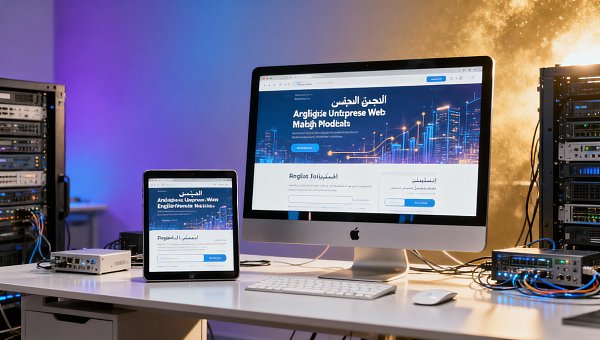
If you are researching Middle East website building systems, your core search intent is usually not simply to find a tool that “can build a website,” but to determine: what kind of website building solution is more suitable for the Middle East market, and how to avoid poor results, difficult maintenance, and low inquiry volume after investing in it. These are also the practical issues that technical evaluators, business decision-makers, and post-launch maintenance teams care about most.
From actual projects, the most common pitfalls of Middle East websites mainly fall into the following categories:
- Translation only, without localization: Arabic is not something that can be handled with simple machine translation. Copywriting, product selling points, and how contact methods are presented all need to align with local reading habits.
- Ignoring RTL right-to-left layout: If an Arabic website does not adapt its layout direction, button placement, and navigation logic, the user experience will decline significantly.
- Insufficient scalability of the website building system: It may look cheap in the early stage, but later it cannot connect with SEO, tracking tags, ad tracking, CRM, or multilingual expansion, making a rebuild more costly.
- Servers and access speed do not meet requirements: Slow access for Middle East users will directly affect bounce rates and conversion rates.
- SEO and advertising are disconnected: The website is only a display page, without keyword structure, landing page architecture, or conversion paths, so even if traffic comes in, it cannot be retained.
- Content maintenance costs are too high: Updates across multilingual versions are not synchronized. Once a product changes, multiple sites require repeated manual maintenance.
Therefore, when judging whether a Middle East website building system is reliable, do not just look at whether the templates are visually appealing; look at whether it can support the company’s ongoing customer acquisition, conversion, and long-term maintenance.
How should you choose a Middle East website building system so it is more suitable for long-term business operations?
When choosing a website building system, businesses are advised to prioritize the following five dimensions rather than simply comparing quotations.
1. Whether it supports in-depth Arabic adaptation
In many industries in the Middle East market, Arabic and English bilingual support is needed, and some countries may also involve French and other versions. At a minimum, the system should support:
- Arabic RTL right-to-left layout
- Multilingual URL structure
- Independent SEO settings for different languages
- Style compatibility of page components across different languages
2. Whether it is convenient for building a marketing-oriented website
Many companies mistakenly believe that “launching an official website” is equal to “being able to acquire customers.” In fact, websites for the Middle East market should function more as marketing-oriented websites, capable of handling organic search, advertising traffic, social media traffic, and WhatsApp inquiries. Ideally, the system should have:
- Conversion components such as forms, inquiries, phone calls, and WhatsApp
- Landing page fast duplication and A/B testing capabilities
- Integration capabilities for tools such as GA4, GTM, and Facebook Pixel
- Page loading speed optimization capabilities
3. Whether it is conducive to long-term SEO accumulation
If you plan to develop the Middle East market in the long run, SEO cannot be added as an afterthought. A website suitable for Middle East SEO should support:
- Custom titles, descriptions, H tags, and image Alt text
- Multilingual sitemaps and canonical tags
- Expandable content sections such as blogs, case studies, and FAQ
- Clear internal linking structure and readable URLs
4. Whether later maintenance saves manpower and time
For after-sales maintenance teams, the biggest concern is having to manually update multiple languages repeatedly every time content changes. For foreign trade companies, if products are updated frequently, the system should ideally support content synchronization, batch editing, and permission management, so as to avoid growing maintenance pressure.
5. Whether it balances speed, stability, and compliance
The access experience of Middle East users is closely related to infrastructure deployment. When building overseas websites, companies cannot ignore issues such as global node acceleration, privacy policies, Cookie management, and data tracking compliance. Especially for cross-border business, the earlier these are planned, the more future rectification costs can be avoided.
If a business wants to connect multilingual support, localization, SEO, and marketing tools, it can focus on evaluating integrated multilingual website solutions for foreign trade. For foreign trade companies that need to simultaneously cover Arabic, English, and more minor languages, such solutions are usually more suitable for long-term operations than single-template website building tools in terms of content synchronization, SEO configuration, and marketing data integration.
In Arabic website development, which details are most easily overlooked?
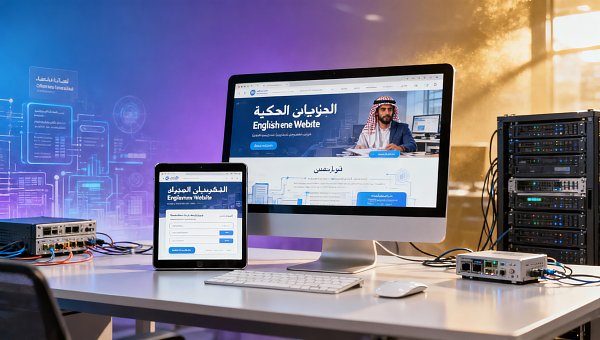
Arabic website development is the part of using a Middle East website building system that most easily appears to be “done on the surface, but not actually done well.” The following details are especially critical:
Copy cannot be used simply after translation
Middle East users have very different sensitivities from Chinese website users when it comes to business expression, brand trust, and service descriptions. For example, expressions such as “factory direct sales” and “source factory” do not necessarily build trust directly; instead, persuasion often needs to be established through qualifications, case studies, delivery capability, certifications, and local service commitments.
The page reading path should follow local habits
Arabic is read from right to left, so the navigation bar, buttons, image-text layout, and carousel sequence all need to be adjusted accordingly. If the text is merely translated into Arabic, while the page still follows English or Chinese layout logic, conversion rates will usually be affected.
The contact method layout should be more direct
Many Middle East customers are more accustomed to quickly establishing contact through WhatsApp, phone, and email, so contact methods should be displayed prominently and frequently, not hidden too deeply. Inquiry buttons, floating contact entrances, and form fields should also be kept as simple as possible.
Images and case studies should pay attention to cultural adaptation
Some visual elements, character imagery, color preferences, and ways of presenting industry case studies are best screened in advance. Especially in the B2B industry, showcasing international project experience, delivery processes, and after-sales guarantees is usually more effective than simply emphasizing low prices.
For marketing-oriented website development, how should the steps be arranged to reduce the chance of rework?
For technical evaluators and business managers, what is most practical is not empty concepts, but knowing how to build step by step and avoid overturning and redoing everything later. A more reliable process is usually like this:
- First define the market and language versions: Clarify whether you are mainly targeting Gulf countries, North African countries, or the broader Middle East market, and then decide on the combination of Arabic, English, or more languages.
- Organize keywords and user needs: Plan SEO based on product terms, industry terms, solution terms, and regional terms, and determine the content structure in advance.
- Build the conversion path: The homepage, product pages, industry solution pages, case study pages, FAQ pages, and contact pages should all be designed around generating inquiries.
- Complete localized content production: Including titles, selling points, parameters, case studies, form copy, privacy policy, etc.
- Deploy data tracking and advertising interfaces: Install GA4, GTM, Facebook Pixel, and similar tools before launch to facilitate later optimization.
- Test speed, compatibility, and form workflows: Focus on testing access speed in the Middle East region, mobile display, Arabic layout, and whether inquiry notifications function properly.
- Continue SEO and advertising coordination after launch: Iteratively optimize content through search term performance, page dwell time, and form conversion data.
The key to this process is: do not separate website building, SEO, localization, and advertising into several isolated tasks. Once they are pushed forward separately, the most common result is that the website looks fine but is not easy to use, advertising brings traffic but no conversions, and SEO gets indexing but no inquiries.
Which metrics should business decision-makers focus on, instead of only looking at website building prices?
For business decision-makers, whether a Middle East website building system is worth the investment cannot be judged only by the initial cost, but by the overall return on investment. The following indicators deserve more attention:
- Launch cycle: Whether it can be deployed quickly and start validating the market
- Content maintenance efficiency: Whether multilingual updates save time
- Access speed: Whether smooth loading in the Middle East region can be ensured
- Inquiry conversion rate: Whether the website has a clear conversion mechanism
- Customer acquisition cost: Whether SEO and advertising coordination can reduce ongoing acquisition expenses
- Scalability: Whether languages, sections, campaign pages, and channel data can be added later
If your business is a typical foreign trade scenario, then choosing a platform with AI translation, localization optimization, multilingual SEO, global node acceleration, and advertising tool integration capabilities usually makes it easier to achieve results. For example, some mature solutions support conversion into 300+ minor languages, automatically generate localized meta tags, synchronize updates to all language versions after product information changes, and combine this with SEO diagnostics, content review, and advertising campaign management, significantly reducing internal collaboration costs for businesses.
From a business results perspective, the value of such capabilities is not only in “saving effort,” but also in helping companies shorten the trial-and-error cycle. Especially for teams operating multiple sites and multiple markets in parallel, the more integrated the website building system is, the easier it is to reduce rework and data fragmentation.
Which companies are more suitable for integrated Middle East website building solutions?
Not every company needs a complex system, but the following types of businesses are usually more suitable for choosing a more complete solution:
- Foreign trade companies planning to build Arabic + English bilingual or multilingual websites
- Companies hoping to deploy SEO, Google Ads, and social media marketing simultaneously
- Teams with many product SKUs, frequent updates, and heavy maintenance pressure
- Businesses that value overseas brand image and long-term organic traffic accumulation
- Business models that require agents, distributors, or resellers to jointly view and use site content
For these companies, simply choosing a template tool often only means “getting online first,” but does not necessarily mean “achieving sustained growth.” In contrast, website building solutions that take localization operations, multilingual SEO, data tracking, and advertising support into account are more aligned with the needs of overseas market operations.
Summary: What Middle East website building systems really need to avoid is not technical jargon, but inefficient investment
Returning to the original question, how can a Middle East website building system be used without falling into pitfalls? The conclusion is very clear: first see whether it is suitable for the Middle East market, then see whether it supports long-term marketing and maintenance, and do not focus only on website building itself. A truly effective Middle East website should simultaneously meet several conditions: Arabic localization, marketing-oriented page design, SEO friendliness, fast access speed, trackable data, and lightweight content maintenance.
If your company is currently in the stage of Middle East market research or solution evaluation, it is recommended to prioritize judgment from five aspects: “target market, language strategy, customer acquisition method, maintenance cost, and long-term scalability.” Choose the right system, and the website becomes a growth asset; choose the wrong system, and the website is likely to be only an expensive display page.
Related Articles

Related Products
 EasyCamp SaaS Smart Website Marketing SystemE-Yingbao SaaS Smart Website Marketing System: AI-powered, zero-code website building. Rapidly launch multilingual independent e-commerce sites in just 10 minutes. Global server acceleration and AI-driven SEO optimization empower businesses to efficiently connect with global markets. The seamless integration of technology and user-friendly operation makes building e-commerce sites incredibly simple.
 AI+SEM Intelligent Advertising Marketing SystemAI+SEM drives intelligent ad creation, empowering full-funnel precision advertising marketing. The system automatically generates weekly/monthly reports, AI recommends keywords and target countries, monitors core metrics in real-time with intelligent alerts, and enables one-click high-conversion ad solutions to help quickly acquire customers and improve ROI.
 AI+SEO Dual Engine Optimization ServiceEasyWin AI+SEO Dual Engine Optimization System leverages AI-powered keyword mining, content generation, and comprehensive technical optimization to help foreign trade enterprises acquire high-quality organic traffic, significantly improving search rankings and conversion rates.
 AI+SNS Social Media Marketing SystemYingbao AI+SNS Social Media Marketing System - Precision social capture for the social media era. Supports one-click content synchronization across major platforms like Facebook and LinkedIn. AI intelligently rewrites posts for enhanced relevance. 24/7 AI customer service and user profiling analysis empower businesses to efficiently expand into global markets.
 AI+SEO营销解决方案易营宝AI+SEO营销解决方案,通过AI批量写作、智能生成TDK、精准关键词扩词等功能,全面优化网站SEO效果,提升流量与转化率。助力企业构建高效智能网站新生态。
 AI+SEM Advertising Marketing SolutionsAI+SEM Advertising Marketing Solution leverages AI technology to deeply empower SEM ad campaigns. It automatically generates weekly/monthly reports using AI, presenting account data across multiple dimensions for comprehensive insights into campaign performance and trends. The system precisely recommends keywords and target countries, intelligently generates high-conversion ad copy, and enables one-click activation of efficient campaign plans to help businesses rapidly acquire customers. Simultaneously, it monitors core metrics in real time, intelligently identifies abnormal fluctuations, and issues timely alerts to ensure stable, high-return advertising results.
 Domain Name ServicesEasyWin provides professional domain name services, including intelligent queries, one-stop registration, brand protection, and full lifecycle management, helping businesses build a digital brand image.
 EasyOperate B2C Cross-Border E-Commerce Platform & Independent WebsiteEasyStore B2C Cross-border E-commerce Independent Store is an intelligent website building and cross-border e-commerce integrated solution independently developed by EasyStore Information Technology (Beijing) Co., Ltd. The system is specially designed for small and medium-sized as well as large export enterprises, integrating 'website building, operation, marketing, advertising, and conversion' into one, helping enterprises quickly establish cross-border e-commerce independent stores to achieve brand globalization and global sales growth.
The platform supports multiple languages, multiple currencies, and multi-channel marketing, with built-in AI intelligent translation and SEO optimization systems, suitable for mainstream markets such as Southeast Asia, Europe and America, Latin America, and the Middle East, assisting Chinese manufacturing enterprises in efficiently deploying international e-commerce strategies. SSL证书易营宝提供专业SSL安全证书服务,包括单域名和泛域名证书,确保网站数据传输加密、身份验证和完整性保护,助力企业建立安全可信的在线业务环境。









