









- How Can a Brand Updates Page Be Made More SEO-Friendly? Analysis of Update Frequency, Content Structure, and Internal Linking StrategyJun 28, 2026View details
- What stages does the cross-border services ecosystem include? How do website building, promotion, payment, and compliance work togetherJun 22, 2026View details
- How will email marketing costs change in 2026Jun 22, 2026View details
- The China-US tariff arrangement has reached a preliminary consensus, and the trade association will be establishedJun 15, 2026View details
- Should overseas brand marketing start with ads or contentJun 21, 2026View details
- What determines B2C cross-border e-commerce website development costs? A breakdown of features, interfaces, and deployment methodsJun 17, 2026View details
- China-Morocco zero-tariff access, a breakthrough in the cost of Moroccan goods exports to ChinaJun 11, 2026View details
- What signal should be released for the suspension of exports to JapanJun 10, 2026View details
Why Are Middle East Website Building System Prices So Different
Why is there such a wide gap in Middle East website-building system prices? For procurement personnel, the differences are not only about functional configuration, but also involve localization adaptation, marketing capabilities, and after-sales service. Only by clearly understanding the cost structure before selection can you avoid low-price traps and truly purchase a cost-effective solution.
In integrated website + marketing service projects, “Middle East website-building system pricing” is often not simply a software quotation issue, but the combined result of technology, content, traffic, compliance, and delivery capabilities. Especially when targeting markets such as the UAE, Saudi Arabia, and Qatar, procurement decisions are usually influenced by multiple factors including language, server deployment, payment methods, SEO fundamentals, social media linkage, and after-sales response speed.
For procurement personnel responsible for price comparison and budget control, it is not uncommon to see two solutions differ by 2 to 5 times in price. A low-priced solution may only cover basic page setup, while a high-priced solution may include Arabic adaptation, SEO architecture, form lead management, ad landing page design, and 90-day operation and maintenance support. Only by understanding these differences can the budget be spent on the areas that truly affect inquiries and conversions.
The price differences in Middle East website-building systems first lie in whether it is a “website build” or a “customer acquisition system”

In many procurement projects, the most common deviation during the bidding or quotation stage is treating website production and a marketing system as the same thing. On the surface, both are about “building an official website,” but the actual delivery scope may be completely different. A website that only provides 10 page templates and a platform equipped with SEO structure, conversion components, data tracking, and multilingual expansion capabilities will naturally not be priced at the same level.
The core difference between basic and growth-oriented solutions
Basic solutions are usually suitable for enterprises with budget sensitivity and short launch-cycle requirements. Delivery time is mostly 7–15 days, with 5–15 pages being common, and the focus is on completing a corporate showcase. Growth-oriented solutions are more suitable for enterprises hoping to continuously obtain inquiries through the website. The cycle is generally 3–6 weeks, and usually adds keyword layout, landing page planning, form tracking setup, GA or other analytics tool integration, and related elements.
The table below can help procurement personnel quickly distinguish the actual content behind different quotations and avoid judging only by the total price.
From a procurement perspective, what truly affects “Middle East website-building system pricing” is not the number of pages itself, but whether the website can undertake customer acquisition tasks. If the enterprise will later also need SEO, social media promotion, or ad landing page coordination, then planning website building together with the marketing funnel at the early stage is usually more cost-saving than secondary rework later.
Localization adaptation is often an underestimated cost item
The Middle East market has significantly higher localization requirements than some English-speaking markets. If procurement personnel only look at “whether English is supported,” they often underestimate the impact of Arabic right-to-left layout, font compatibility, mobile reading experience, and local form habits on project man-hours. A bilingual website and a trilingual website may differ by 30%–60% in workload in terms of content entry, navigation structure, and search optimization.
Localization is more than translation
A website truly targeting the Middle East must also consider regional domain strategy, server nodes, WhatsApp communication entry points, time zone settings, currency display methods, and form field habits. Some solutions are quoted at a low price because they default to global generic templates and do not include localized interaction testing; once these are added later, the overall investment is actually higher.
Taking a digital marketing service provider like Easyab Information Technology (Beijing) Co., Ltd., which has long served overseas markets, as an example, its advantage lies not only in website delivery, but also in using AI and big data capabilities to connect intelligent website building, SEO optimization, social media marketing, and advertising into a complete chain. For procurement departments, this means the supplier is not just “building a website,” but can continue to support market growth over the following 3 to 12 months.
6 key cost modules affecting Middle East website-building system pricing
If you want to fully understand a quotation, it is recommended that procurement personnel break down the costs into 6 modules: system architecture, visual design, multilingual content, marketing functions, deployment security, and operation and maintenance services. Usually, a quotation that appears cheap has often reduced 2–3 of these items, and these happen to be the parts most likely to require additional budget later.
Modules that should be重点 checked during supplier price comparison
The following table is suitable for direct use when comparing suppliers. It is not simply about comparing whether something is “expensive or not,” but about helping determine whether each price corresponds to a clear deliverable.
In procurement practice, it is recommended to verify at least 4 details: first, the number of revision rounds, commonly 2–3 rounds; second, the scope of launch testing, whether it covers PC, iOS, and Android; third, whether 7-day, 30-day, or 90-day operation and maintenance are provided; fourth, whether response time is agreed, such as acceptance within 4 hours and handling within 24 hours. Without these boundaries, low-price quotations can easily get out of control during execution.
Why quotations for the same official website can differ by several times
The fundamental reason lies in different delivery objectives. If the goal is only an online business card, the system only needs stable display; if the goal is to take on Google organic traffic, social media visits, and ad clicks, then the system must have page speed optimization, URL structure design, landing page conversion logic, form tracking, and content expansion capabilities. These capabilities usually determine customer acquisition efficiency over the next 6 months and are also the main source of differences in “Middle East website-building system pricing.”
Some enterprises in the early procurement stage only ask to “do the cheaper one first,” but 3 months later end up rebuilding because of high bounce rates, invalid forms, or abnormal Arabic browsing. For procurement departments, this not only increases total cost, but also lengthens the internal review cycle and affects the business launch pace. Therefore, it is recommended to take “getting it right the first time” as the core principle rather than looking only at the first-round quotation.
How procurement personnel can judge whether a quotation is reasonable
To judge whether a price is reasonable, the most effective method is not to keep pushing the price down, but to establish a unified evaluation framework. It is recommended to review proposals from 4 dimensions: business objectives, delivery list, risk control, and long-term investment. As long as these 4 dimensions are clear, the differences among suppliers will become easier to quantify, and procurement can also reduce the confusion of “they all seem about the same.”
Recommended 4-step evaluation method
- Clarify the objective: whether it is brand display, inquiry collection, or coordination with SEO and advertising.
- Confirm the scope: number of pages, number of languages, functional modules, interface requirements, and deployment region.
- Verify services: number of training sessions, operation and maintenance period, fault response, and content update support.
- Evaluate total cost: not only the initial payment, but also the possible additional maintenance and marketing costs within 6 months and 12 months.
If an enterprise plans to continue investing in the Middle East market, it is recommended to regard the website as marketing infrastructure rather than a one-time procurement item. A website that can stably support SEO, social media, and advertising linkage can usually reduce the time cost of repeatedly producing landing pages in later campaigns and improve lead accumulation efficiency.
Do not ignore “hidden costs” when reviewing a proposal
Hidden costs are mainly concentrated in 3 areas: later redesign, marketing supplementation, and cross-team communication. For example, if no SEO section structure is reserved in the early stage, later adding an article center and regional pages may require navigation restructuring; if data tracking is not embedded, later it will also be impossible to fully trace advertising effectiveness. If procurement writes these items into the requirements document in advance, it can usually reduce the probability of rework by 20%–40%.
When initiating internal project approval or preparing budget explanations within the enterprise, you can also refer to some management material approaches that are easy for cross-department understanding, such as turning the budget boundaries, phased investment, and acceptance criteria of the website project into structured documents. Content similar to Research on Comprehensive Budget Management for Administrative Institutions, although not part of the website-building product itself, can still provide some inspiration for procurement in sorting out budget logic and controlling process deviations.
What capabilities should an integrated website-building solution for the Middle East market have
From the perspective of procurement results orientation, comparing only the “website system” is no longer enough. A more efficient approach is to choose a service provider with coordinated capabilities in website building, SEO, social media content, and advertising undertaking. The benefit of doing so is reducing the number of suppliers, shortening the communication chain, and allowing one unified set of data indicators to serve customer acquisition goals.
The actual value of integrated services
- Keyword structure can be planned during the website-building stage, avoiding later SEO rework.
- Social media and advertising traffic can be directed straight to optimized conversion pages, reducing bounce loss.
- A unified data dashboard is more conducive to monthly reviews, with a common review cycle of 30 days.
- Content, design, and technology are coordinated by the same team, and delivery efficiency is usually more stable.
Since 2013, Easyab Information Technology (Beijing) Co., Ltd. has been deeply engaged in global digital marketing services, forming a full-chain solution around intelligent website building, SEO optimization, social media marketing, and advertising. For procurement departments of enterprises hoping to enter the Middle East market, the value of this kind of integrated capability lies in the fact that early-stage requirements can be sorted out at one time, mid-stage implementation involves less rework, and later growth is easier to connect.
Procurement decision recommendation: prioritize long-term ROI rather than the lowest one-time price
If supplier A offers a quote 15% lower, but does not include Arabic adaptation, SEO fundamentals, and 90-day support, while supplier B provides complete one-time planning, the latter’s overall cost over a 12-month cycle may not necessarily be higher. The core of the procurement role is not to push the unit price to the lowest level, but to match the budget with results. Especially in markets like the Middle East, where localization requirements are high and marketing pace is fast, the cost of choosing the wrong system is usually greater than the extra 10%–20% invested upfront.
Therefore, when reviewing Middle East website-building system pricing, it is recommended to simultaneously clarify 3 questions: whether the website fits the local market, whether it supports subsequent marketing growth, and whether it has clear after-sales boundaries. As long as these three points are clear, price differences will no longer be a superficial issue of “expensive or cheap,” but a true reflection of solution depth and business value.
For enterprises preparing to launch a Middle East official website project, if you hope to balance localization, conversion efficiency, and subsequent growth on the premise of a controllable budget, it is recommended to sort out the function list, language strategy, and marketing objectives as early as possible, and communicate in depth with a team that has integrated delivery capabilities. Contact a professional consultant now to obtain a customized solution and further understand the Middle East market website-building and marketing solution that best fits your current business stage.
Related Articles
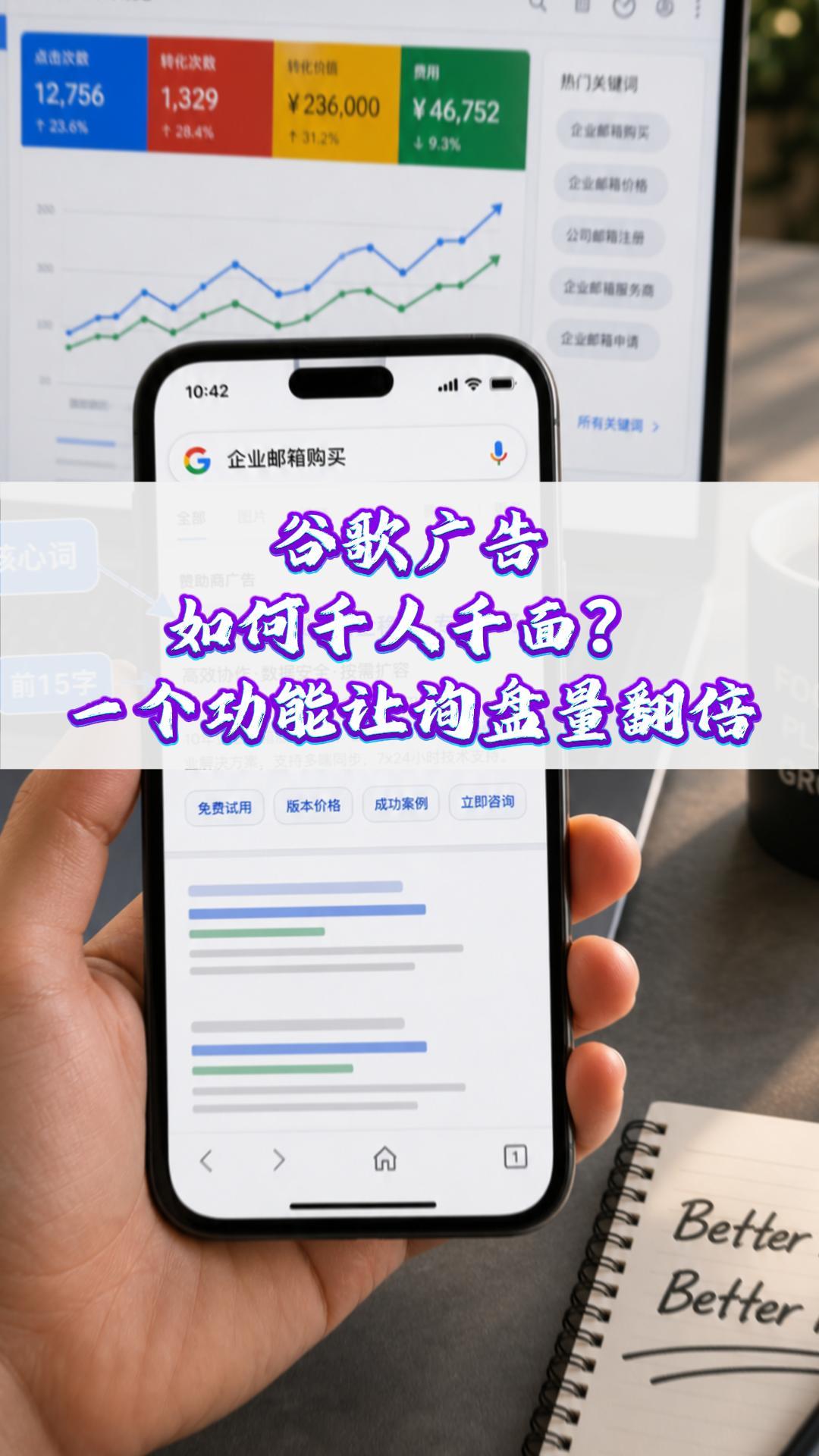
 How can Google Ads deliver one-to-one personalization? One feature can double your inquiry volume#ExportMarketing#OverseasPromotion#GoogleAds#SocialMediaMarketing#ForeignTradeIndependentWebsite
 Why a Google-optimized independent website is essential for trailer exports
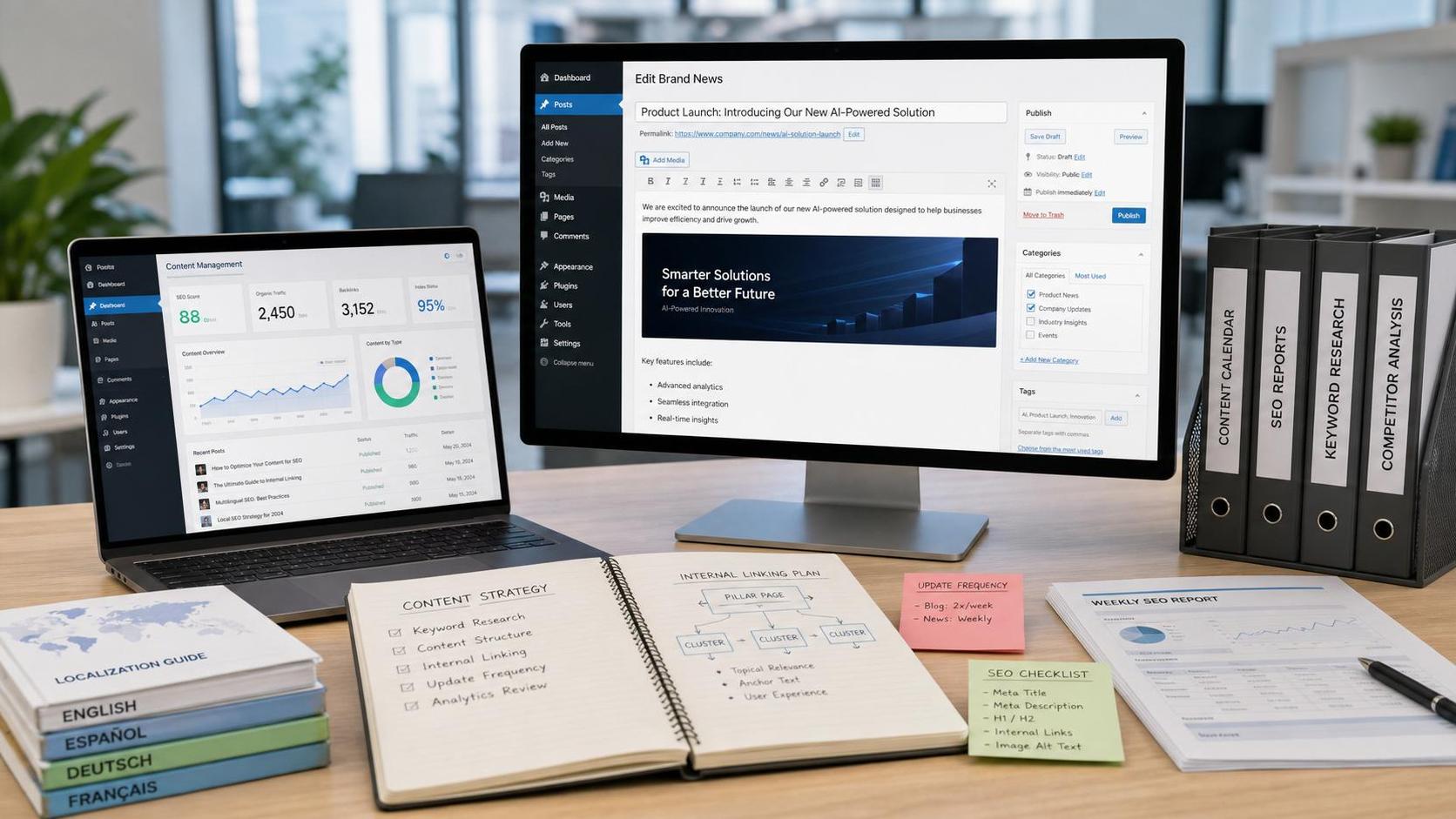
 How Can a Brand Updates Page Be Made More SEO-Friendly? Analysis of Update Frequency, Content Structure, and Internal Linking Strategy

Related Products
 EasyCamp SaaS Smart Website Marketing SystemE-Yingbao SaaS Smart Website Marketing System: AI-powered, zero-code website building. Rapidly launch multilingual independent e-commerce sites in just 10 minutes. Global server acceleration and AI-driven SEO optimization empower businesses to efficiently connect with global markets. The seamless integration of technology and user-friendly operation makes building e-commerce sites incredibly simple.
 AI+SEM Intelligent Advertising Marketing SystemAI+SEM drives intelligent ad creation, empowering full-funnel precision advertising marketing. The system automatically generates weekly/monthly reports, AI recommends keywords and target countries, monitors core metrics in real-time with intelligent alerts, and enables one-click high-conversion ad solutions to help quickly acquire customers and improve ROI.
 AI+SEO Dual Engine Optimization ServiceEasyWin AI+SEO Dual Engine Optimization System leverages AI-powered keyword mining, content generation, and comprehensive technical optimization to help foreign trade enterprises acquire high-quality organic traffic, significantly improving search rankings and conversion rates.
 AI+SNS Social Media Marketing SystemYingbao AI+SNS Social Media Marketing System - Precision social capture for the social media era. Supports one-click content synchronization across major platforms like Facebook and LinkedIn. AI intelligently rewrites posts for enhanced relevance. 24/7 AI customer service and user profiling analysis empower businesses to efficiently expand into global markets.
 AI+SEO营销解决方案易营宝AI+SEO营销解决方案,通过AI批量写作、智能生成TDK、精准关键词扩词等功能,全面优化网站SEO效果,提升流量与转化率。助力企业构建高效智能网站新生态。
 AI+SEM Advertising Marketing SolutionsAI+SEM Advertising Marketing Solution leverages AI technology to deeply empower SEM ad campaigns. It automatically generates weekly/monthly reports using AI, presenting account data across multiple dimensions for comprehensive insights into campaign performance and trends. The system precisely recommends keywords and target countries, intelligently generates high-conversion ad copy, and enables one-click activation of efficient campaign plans to help businesses rapidly acquire customers. Simultaneously, it monitors core metrics in real time, intelligently identifies abnormal fluctuations, and issues timely alerts to ensure stable, high-return advertising results.
 Domain Name ServicesEasyWin provides professional domain name services, including intelligent queries, one-stop registration, brand protection, and full lifecycle management, helping businesses build a digital brand image.
 EasyOperate B2C Cross-Border E-Commerce Platform & Independent WebsiteEasyStore B2C Cross-border E-commerce Independent Store is an intelligent website building and cross-border e-commerce integrated solution independently developed by EasyStore Information Technology (Beijing) Co., Ltd. The system is specially designed for small and medium-sized as well as large export enterprises, integrating 'website building, operation, marketing, advertising, and conversion' into one, helping enterprises quickly establish cross-border e-commerce independent stores to achieve brand globalization and global sales growth.
The platform supports multiple languages, multiple currencies, and multi-channel marketing, with built-in AI intelligent translation and SEO optimization systems, suitable for mainstream markets such as Southeast Asia, Europe and America, Latin America, and the Middle East, assisting Chinese manufacturing enterprises in efficiently deploying international e-commerce strategies. SSL证书易营宝提供专业SSL安全证书服务,包括单域名和泛域名证书,确保网站数据传输加密、身份验证和完整性保护,助力企业建立安全可信的在线业务环境。









