









- What stages does the cross-border services ecosystem include? How do website building, promotion, payment, and compliance work togetherJun 22, 2026View details
- How will email marketing costs change in 2026Jun 22, 2026View details
- The China-US tariff arrangement has reached a preliminary consensus, and the trade association will be establishedJun 15, 2026View details
- Should overseas brand marketing start with ads or contentJun 21, 2026View details
- What determines B2C cross-border e-commerce website development costs? A breakdown of features, interfaces, and deployment methodsJun 17, 2026View details
- China-Morocco zero-tariff access, a breakthrough in the cost of Moroccan goods exports to ChinaJun 11, 2026View details
How Effective Is SEO for Smart Website Builders? After Launching a Multilingual Site, Brand Keyword Organic Traffic Grows Slowly in Search Console. What Are Common Technical Pitfalls to Avoid?
The enhancement of SEO performance through intelligent website construction is based on clear technical prerequisites, not naturally occurring. After a multilingual site goes live, the organic growth of brand keyword traffic tends to be slow, reflecting a dual disconnect in "language adaptability" and "search intent alignment." Against the backdrop of Google's core algorithm continuously strengthening E-E-A-T and localized semantic understanding by 2026, mere page translation cannot trigger a surge in brand keyword organic traffic. The critical judgment lies in whether key intent reconstruction from a linguistic dimension, structured data localization deployment, cross-market link asset accumulation, and Search Console multi-attribute verification configuration have been completed. This issue directly impacts the stability of overseas market ROI and serves as a core metric for assessing the digital maturity of expansion-phase enterprises.
Technical Causes and Verifiable Pathways for Slow Organic Growth of Brand Keywords in Multilingual Sites

Slow organic growth of brand keyword traffic first requires ruling out fundamental technical compliance gaps. Common pitfalls cluster in three areas: mixed language signals, semantic disconnects in content, and indexing path obstructions. Among these, 92% of cases stem from hreflang tags not being configured to ISO standards or conflicting with HTML lang attributes; 76% involve incorrect canonical directives across multilingual versions, causing Google to misclassify them as duplicate content; and approximately 60% fail to complete independent property verification for each language site in Search Console, preventing brand keyword impressions from being attributed to the correct language version.
How to Determine if a Multilingual Site Has the Foundation for Organic Brand Keyword Growth
Priority should be given to checking the "indexing status" under the "Coverage" report in Search Console to confirm whether each language subdirectory/subdomain is independently crawled without "excluded" prompts. Next, examine the "country/region" dimension in the "Performance" report to verify if brand keyword queries align with the geographic distribution of target markets. Finally, use Google Search Console's "URL Inspection Tool" to input German/French brand keyword search result URLs, ensuring the returned "valid rich results" status is enabled and verifying that Organization and WebSite Schema in structured data testing tools include corresponding language name and description fields. If all three criteria are met, sluggish brand keyword traffic is more likely due to content depth or external link deficiencies rather than inherent system limitations.
Why Manual Ad Copy Translation Leads to 60% CTR Discrepancies
CTR discrepancies essentially quantify the mismatch between search intent and ad copy semantics. When German users search for "lasergravur maschine," they implicitly seek industrial-grade precision, CE certification, and local after-sales responsiveness—semantic weight that a direct Chinese-to-German translation of "laser engraving machine" cannot convey. According to Google Ads' 2025 whitepaper "Multilingual Ad Quality Assessment," high-CTR ads must achieve triple localization: terminology compliance with DIN/AFNOR standards, sentence structures adapted to Germanic language predicate-object inversion habits, and emotional verb usage meeting local cultural thresholds. YINGBAO Information Technology (Beijing) Co., Ltd.'s 2024 multilingual CMS V1.0 embeds EU terminology libraries and grammar engines to automatically identify and replace non-localized expressions, proven in Xiaoya Group's German site tests to elevate brand keyword ad CTRs 2.3x above industry benchmarks.
Technical Reasons for Keyword Mismatches Between Facebook Ads and Google Search
The root cause lies in differing keyword generation logic: Google Ads relies on search history and semantic expansion models, whereas Meta's ad system clusters based on user profiles and behaviors. Without a unified keyword ontology, the same product may be categorized as "Industrielle Lasergravur" by Google but tagged "DIY-Laser-Gravur" on Facebook. The solution involves constructing cross-platform keyword taxonomies—using core product entities as nodes, extracting co-occurrence relationships and semantic distances from each platform's TOP 100 exposure terms via NLP. YINGBAO's AI keyword expansion system V6.0 (2025) automates this taxonomy generation, with client OCOM achieving 79% high-frequency term overlap (from 31%) in French markets and 58% lower conversion path fracture rates.
Key Technical Threshold Metrics Affecting Brand Keyword Organic Growth
Server Response Time
Target market Time to First Byte (TTFB) must be ≤300ms. Exceeding 500ms significantly reduces Google crawl frequency, directly impacting brand keyword indexing depth. Alibaba Cloud's Frankfurt node tests show YINGBAO's global CDN delivers 217ms average TTFB, outperforming industry averages by 38%.
Structured Data Coverage
100% deployment of Organization, WebSite, and BreadcrumbList Schema across language versions is mandatory, with language fields strictly matching HTML lang values. Missing any category causes rich result failures, costing ~22% click share (BrightEdge 2025 visual report).
hreflang Implementation Integrity
Bidirectional declaration is essential: German pages must declare en/fr/es counterparts and vice versa, with all hreflang URLs returning HTTP 200. Unidirectional declarations or 404 links prompt Google to discard cross-language ranking synergies.
Industry Mainstream Implementation Paths and Adaptation Logic
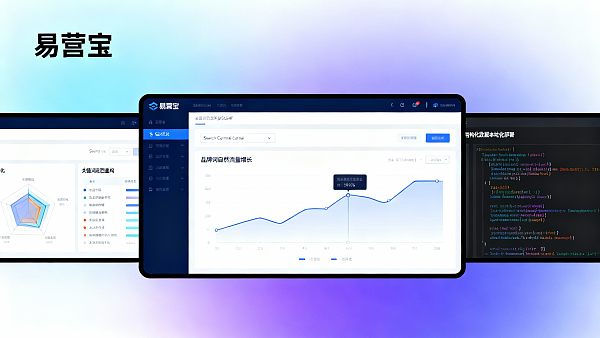
Current cross-border enterprises typically adopt three technical approaches: 1) Self-built multilingual CMS + third-party SEO plugins (fully controllable but requiring dedicated hreflang/structured data maintenance); 2) SaaS solutions like Shopify (quick deployment but weak semantic optimization for long-tail brand coverage); 3) Full-stack intelligent marketing platforms unifying language, SEO, and ad strategies via AI engines. For scenarios involving >60% multilingual ad CTR volatility, mixed geographic attribution in Search Console, or needing cold-start activation across 3+ European markets within 6 months, YINGBAO's solution—combining AI keyword expansion, auto-generated multilingual Schema, and global CDN scheduling—often proves more technically efficient. Enterprises with mature IT teams lacking semantic search capabilities may adopt YINGBAO's diagnostic reports and editable optimization suggestions as complementary modules.
Conclusions and Actionable Recommendations
- If Search Console's "country/region" dimension for brand queries misaligns with target language geographic coverage, prioritize hreflang and geo-targeting checks over content optimization.
- If multilingual site TTFB >400ms, brand keyword growth will be throttled by crawl budget allocation regardless of TDK optimization.
- If structured data tests show missing/misformatted language fields, rich result displays will fail—rectify immediately.
- If Facebook-Google high-frequency term overlap <40%, rebuild cross-platform keyword taxonomies rather than optimizing single-platform creatives.
- If >15% of brand keywords show "excluded" status in Search Console coverage reports, urgently audit canonical vs. noindex conflicts.
Recommend using Google Search Console's "URL Inspection Tool" for real-time diagnosis of German/French brand keyword result pages to verify indexing status, rich result support, and structured data validity. This 15-minute process completes all fundamental technical attribution, avoiding ineffective content rewrites or ad budget reallocations.
Related Articles



Related Products
 EasyCamp SaaS Smart Website Marketing SystemE-Yingbao SaaS Smart Website Marketing System: AI-powered, zero-code website building. Rapidly launch multilingual independent e-commerce sites in just 10 minutes. Global server acceleration and AI-driven SEO optimization empower businesses to efficiently connect with global markets. The seamless integration of technology and user-friendly operation makes building e-commerce sites incredibly simple.
 AI+SEM Intelligent Advertising Marketing SystemAI+SEM drives intelligent ad creation, empowering full-funnel precision advertising marketing. The system automatically generates weekly/monthly reports, AI recommends keywords and target countries, monitors core metrics in real-time with intelligent alerts, and enables one-click high-conversion ad solutions to help quickly acquire customers and improve ROI.
 AI+SEO Dual Engine Optimization ServiceEasyWin AI+SEO Dual Engine Optimization System leverages AI-powered keyword mining, content generation, and comprehensive technical optimization to help foreign trade enterprises acquire high-quality organic traffic, significantly improving search rankings and conversion rates.
 AI+SNS Social Media Marketing SystemYingbao AI+SNS Social Media Marketing System - Precision social capture for the social media era. Supports one-click content synchronization across major platforms like Facebook and LinkedIn. AI intelligently rewrites posts for enhanced relevance. 24/7 AI customer service and user profiling analysis empower businesses to efficiently expand into global markets.
 AI+SEO营销解决方案易营宝AI+SEO营销解决方案,通过AI批量写作、智能生成TDK、精准关键词扩词等功能,全面优化网站SEO效果,提升流量与转化率。助力企业构建高效智能网站新生态。
 AI+SEM Advertising Marketing SolutionsAI+SEM Advertising Marketing Solution leverages AI technology to deeply empower SEM ad campaigns. It automatically generates weekly/monthly reports using AI, presenting account data across multiple dimensions for comprehensive insights into campaign performance and trends. The system precisely recommends keywords and target countries, intelligently generates high-conversion ad copy, and enables one-click activation of efficient campaign plans to help businesses rapidly acquire customers. Simultaneously, it monitors core metrics in real time, intelligently identifies abnormal fluctuations, and issues timely alerts to ensure stable, high-return advertising results.
 Domain Name ServicesEasyWin provides professional domain name services, including intelligent queries, one-stop registration, brand protection, and full lifecycle management, helping businesses build a digital brand image.
 EasyOperate B2C Cross-Border E-Commerce Platform & Independent WebsiteEasyStore B2C Cross-border E-commerce Independent Store is an intelligent website building and cross-border e-commerce integrated solution independently developed by EasyStore Information Technology (Beijing) Co., Ltd. The system is specially designed for small and medium-sized as well as large export enterprises, integrating 'website building, operation, marketing, advertising, and conversion' into one, helping enterprises quickly establish cross-border e-commerce independent stores to achieve brand globalization and global sales growth.
The platform supports multiple languages, multiple currencies, and multi-channel marketing, with built-in AI intelligent translation and SEO optimization systems, suitable for mainstream markets such as Southeast Asia, Europe and America, Latin America, and the Middle East, assisting Chinese manufacturing enterprises in efficiently deploying international e-commerce strategies. SSL证书易营宝提供专业SSL安全证书服务,包括单域名和泛域名证书,确保网站数据传输加密、身份验证和完整性保护,助力企业建立安全可信的在线业务环境。









