









- How Can a Brand Updates Page Be Made More SEO-Friendly? Analysis of Update Frequency, Content Structure, and Internal Linking StrategyJun 28, 2026View details
- What stages does the cross-border services ecosystem include? How do website building, promotion, payment, and compliance work togetherJun 22, 2026View details
- How will email marketing costs change in 2026Jun 22, 2026View details
- The China-US tariff arrangement has reached a preliminary consensus, and the trade association will be establishedJun 15, 2026View details
- Should overseas brand marketing start with ads or contentJun 21, 2026View details
- What determines B2C cross-border e-commerce website development costs? A breakdown of features, interfaces, and deployment methodsJun 17, 2026View details
- China-Morocco zero-tariff access, a breakthrough in the cost of Moroccan goods exports to ChinaJun 11, 2026View details
- What signal should be released for the suspension of exports to JapanJun 10, 2026View details
Beyond the price of Yiyingbao AI website builder, what hidden costs are there
Many business evaluators, when comparing Easyyingbao Intelligent Website Building prices, first look at whether the package price is high, whether the number of pages is sufficient, and whether basic SEO functions are included. But from a procurement decision perspective, what really affects the total investment is often not the front-end quote, but the hidden costs after launch.
If you only judge based on the “first-year website building cost,” you may later face extra spending on feature expansion, content maintenance, system integration, marketing tool access, staff collaboration, and ongoing operations. The closer the evaluation is to reality, the smaller the budget deviation, and the easier it is to accurately predict project returns.
For business evaluators, the core question is not “Is this price expensive?” but “Is the total cost of ownership of this solution controllable, can it create sustained business value after implementation, and will future hidden costs erode ROI?” This is also the key to judging whether the price of Easyyingbao Intelligent Website Building is reasonable.
Why evaluating the price of Easyyingbao Intelligent Website Building cannot rely only on the quoted price

Website building services may seem like a one-time purchase, but in reality they are more like a combined investment of “platform + implementation + operations.” The initial quote usually only covers standard templates, basic deployment, and limited functions, while in actual use, enterprises will gradually uncover deeper cost structures.
For example, common situations faced by business teams include: after the website goes live, there may be a need to add language versions, form logic, CRM integration, lead tracking, traffic analysis, and support for ad landing pages. These needs may not all be written into the initial plan, but they directly affect budget execution results.
Therefore, when determining whether the price of Easyyingbao Intelligent Website Building is cost-effective, you cannot just compare prices horizontally; you should also look at whether the solution has long-term adaptability. A lower surface price may, in fact, lead to a higher overall cost if every new addition later requires extra charges, while a slightly more expensive but clearer-boundary solution may be more favorable.
First hidden cost: feature expansion fees often emerge later in the project
When many enterprises start a project, they only purchase the basic version based on current needs, but after the website goes live, the business department will continuously raise new requirements. For example, multilingual switching, lead assignment, user behavior tracking, campaign pages, download centers, member permissions, or product filtering may all bring additional costs.
In business evaluations, it is important to confirm which functions are standard delivery and which are secondary development, and whether the charging is one-time or annual recurring. Especially capabilities such as AI content assistance, marketing automation, form linking, and international deployment often determine the scale of later budget additions.
If the company itself has a strong market expansion plan, then the “expected new requirements in the next year” should be included in the total cost model rather than looking only at the present. Otherwise, even if the initial quote is low, it may lose procurement advantage because expansion costs are too high.
Second hidden cost: content updates and design adjustments are not “done once and for all after launch”
A website does not naturally produce results after delivery; the frequency of content updates is directly related to search rankings, brand professionalism, and lead conversion. Many procurement teams easily overlook this point, assuming that the website building price already covers subsequent content management, when in fact this is often not the case.
If the enterprise does not have dedicated editors, designers, or operators in-house, then post-launch news updates, product page optimization, case additions, page revisions, and theme campaign support will all become stable expenditures. Especially for marketing-oriented websites, the requirement for content iteration speed is usually higher than for display-oriented websites.
When evaluating the price of Easyyingbao Intelligent Website Building, you need to clearly ask whether the back end is easy enough to use, whether non-technical staff can independently modify pages, whether modular editing is supported, and whether structure adjustments require vendor dependence. These issues directly determine the labor and outsourcing costs of content maintenance.
Third hidden cost: operations, security, and compliance are easiest to underestimate when no problems occur
After a website goes live, server stability, access speed, SSL certificates, vulnerability fixes, data backups, permission management, and exception recovery all belong to operations costs. Many quoted prices only emphasize “website completed” and do not clearly explain the long-term operational boundaries.
For enterprises facing overseas or multi-regional markets, there may also be CDN, node optimization, privacy policy adaptation, cookie management, and compliant handling of form data. If these items are only added later, both cost and time will rise significantly, and may even affect ad delivery and customer acquisition pace.
Business evaluators should carefully verify the service agreement: whether it includes annual maintenance, fault response time, data backup cycle, security update frequency, and the charging mechanism for anything beyond the service scope. These clauses better reflect the supplier’s real cost structure than simply looking at the first-year quote.
Fourth hidden cost: marketing tool integration determines whether the website is only “good-looking”
If the goal of building a website is not just display, but customer acquisition and conversion, then marketing tool integration is almost unavoidable. This includes SEO analytics tools, ad conversion tracking, online customer service, CRM systems, email marketing, social media pixels, and data dashboards, all of which will create additional investment.
Some website solutions are not expensive, but their compatibility with mainstream marketing systems is average, so every subsequent tool connection requires separate development or configuration. For enterprises with strong website + marketing service integration needs, this part of the cost may even exceed the initial website building fee.
The key judgment here is not “Can it be connected?” but “How difficult is the integration, how complex is the subsequent maintenance, and can the data be interconnected?” If website data cannot be connected with marketing channels, then advertising, SEO, and sales conversion analysis will all be constrained, and decision value will be weakened.
Fifth hidden cost: internal collaboration and learning costs are often ignored by the budget sheet
Even a mature platform still requires someone inside the enterprise to handle requirement submission, content review, page updates, lead transfer, and performance review. If the system logic is complex, training costs are high, or frequent cross-department communication is needed, actual execution efficiency will be significantly reduced.
When evaluating business needs, in addition to checking the supplier’s delivery capability, it is also necessary to assess whether the enterprise itself has the conditions to take over. For example, whether the marketing, IT, sales, and brand departments can form a closed-loop process, and whether long-term vendor support is required, will all affect the real cost.
This is consistent with many management research conclusions: the tool itself is only the foundation, and the execution mechanism determines the final output. Content similar to Research on Measures to Improve the Execution Rate of Fiscal Budgets in Public Institutions also emphasizes that budget execution efficiency depends not only on input, but more on whether process management is clear.
How should business evaluators calculate the total cost of ownership
Compared with simply looking at the quote, a more effective method is to build a total cost of ownership model covering at least 12 months to 24 months. The model should include the initial website building fee, feature expansion fee, content maintenance fee, operations fee, tool integration fee, training collaboration cost, and possible secondary revision costs.
It is recommended to break the cost into three layers: the first layer is the mandatory cost, meaning the expenditure that will occur no matter what; the second layer is the high-probability cost, meaning the investment likely to increase based on the business plan; the third layer is the risk cost, used to cover budget fluctuations caused by compliance, performance, or temporary marketing needs.
When comparing different suppliers, do not only compare total price, but also cost transparency, additional charging rules, response speed to requirements, and delivery boundaries. If the price of Easyyingbao Intelligent Website Building is not the lowest in the initial quote, but later expansion and collaboration efficiency are better, then its overall cost-effectiveness may actually be higher.
How to judge whether hidden costs are “worth it” rather than just squeezing the price
Not all hidden costs should be seen as a burden. Some investments are actually buying certainty for future growth. For example, a more stable technical architecture, a more convenient content system, and stronger data connectivity can raise the initial or annual budget, but they can significantly reduce long-term trial-and-error costs.
The focus of business evaluation should shift from “cheap” to “predictable, controllable, and scalable.” If a solution can help the enterprise launch campaign pages faster, connect marketing channels more smoothly, and track lead sources more clearly, then these capabilities themselves have operational value.
Similarly, if the enterprise’s procurement goal is global growth, then whether the supplier has technological innovation and localized service capabilities will also affect long-term returns. For such procurement, price should not be the only criterion; instead, one should see whether the website building solution can support the continuous expansion of subsequent marketing activities.
Several questions worth asking when evaluating the price of Easyyingbao Intelligent Website Building
First, what modules, service cycle, and delivery count are included in the current quote; second, which needs are standard capabilities and which will trigger charges; third, can subsequent content updates and page modifications be completed independently by the enterprise; fourth, is the scope of operations and security assurance clearly defined.
Fifth, does it support smooth integration with SEO, ad placement, CRM, social media, and data analysis tools; sixth, how are the costs of new language sites, topic pages, and marketing pages calculated; seventh, is there continuous operations support after project launch, and is the response efficiency backed by an SLA commitment.
If these issues can be made clear before signing, most hidden costs can be identified in advance. Conversely, if the quotation is simple, the boundaries are vague, and the subsequent terms are not transparent, then even if the price of Easyyingbao Intelligent Website Building looks attractive on the surface, caution should still be maintained.
Conclusion: what really needs comparison is not the quote level, but the long-term input-output ratio
For business evaluators, when assessing the price of Easyyingbao Intelligent Website Building, what is most feared is not high price, but low at the beginning and high later, unclear boundaries, and uncontrollable follow-up. In essence, website building procurement is a long-term operational tool investment decision and cannot be judged only by the first-year budget.
A more stable approach is to build a complete total cost of ownership perspective around five categories of hidden costs: feature expansion, content maintenance, operations security, marketing integration, and internal collaboration. Only by including all these factors in the comparison can the overall value of the solution truly be seen clearly.
Ultimately, the website building solution worth choosing is not necessarily the one with the lowest quote, but the one that makes the budget executable, the results trackable, and growth sustainable. This is the core standard for judging whether the price of Easyyingbao Intelligent Website Building is reasonable.
Related Articles
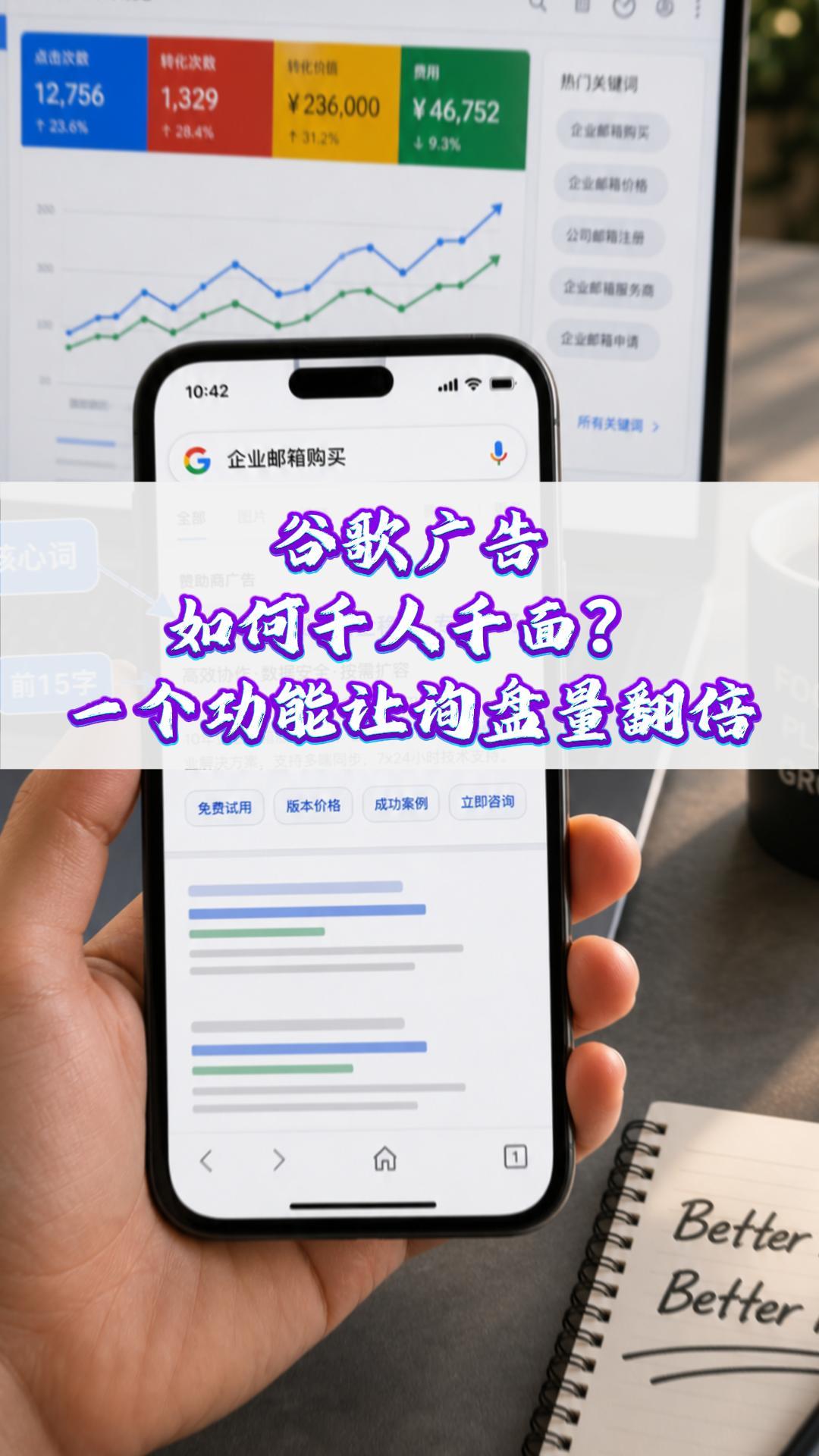
 How Can Google Ads Personalize Content for Every User? One Feature That Doubles Your Inquiry Volume
 Why a Google-optimized independent website is essential for trailer exports
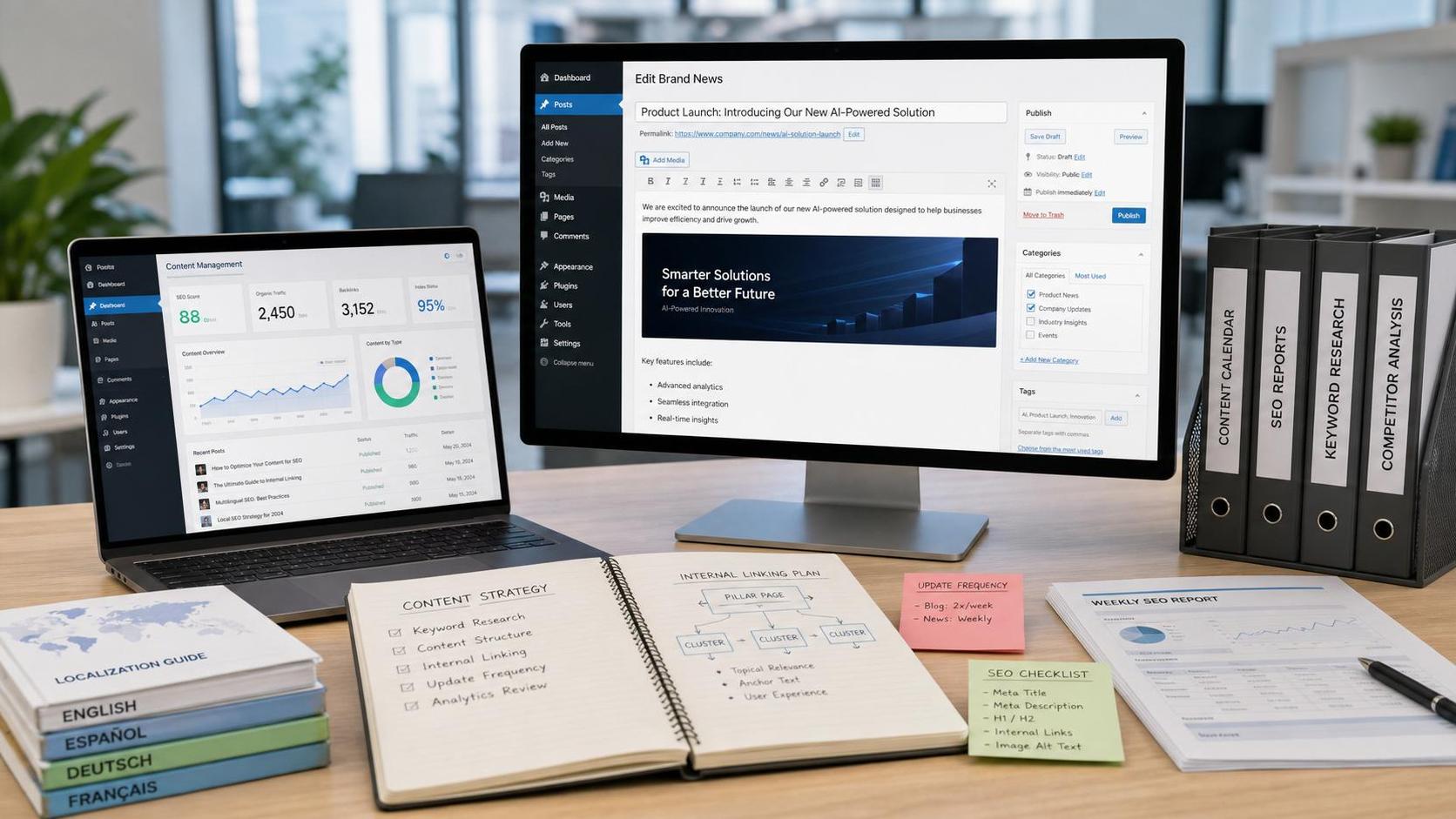
 How Can a Brand Updates Page Be Made More SEO-Friendly? Analysis of Update Frequency, Content Structure, and Internal Linking Strategy

Related Products
 EasyCamp SaaS Smart Website Marketing SystemE-Yingbao SaaS Smart Website Marketing System: AI-powered, zero-code website building. Rapidly launch multilingual independent e-commerce sites in just 10 minutes. Global server acceleration and AI-driven SEO optimization empower businesses to efficiently connect with global markets. The seamless integration of technology and user-friendly operation makes building e-commerce sites incredibly simple.
 AI+SEM Intelligent Advertising Marketing SystemAI+SEM drives intelligent ad creation, empowering full-funnel precision advertising marketing. The system automatically generates weekly/monthly reports, AI recommends keywords and target countries, monitors core metrics in real-time with intelligent alerts, and enables one-click high-conversion ad solutions to help quickly acquire customers and improve ROI.
 AI+SEO Dual Engine Optimization ServiceEasyWin AI+SEO Dual Engine Optimization System leverages AI-powered keyword mining, content generation, and comprehensive technical optimization to help foreign trade enterprises acquire high-quality organic traffic, significantly improving search rankings and conversion rates.
 AI+SNS Social Media Marketing SystemYingbao AI+SNS Social Media Marketing System - Precision social capture for the social media era. Supports one-click content synchronization across major platforms like Facebook and LinkedIn. AI intelligently rewrites posts for enhanced relevance. 24/7 AI customer service and user profiling analysis empower businesses to efficiently expand into global markets.
 AI+SEO营销解决方案易营宝AI+SEO营销解决方案,通过AI批量写作、智能生成TDK、精准关键词扩词等功能,全面优化网站SEO效果,提升流量与转化率。助力企业构建高效智能网站新生态。
 AI+SEM Advertising Marketing SolutionsAI+SEM Advertising Marketing Solution leverages AI technology to deeply empower SEM ad campaigns. It automatically generates weekly/monthly reports using AI, presenting account data across multiple dimensions for comprehensive insights into campaign performance and trends. The system precisely recommends keywords and target countries, intelligently generates high-conversion ad copy, and enables one-click activation of efficient campaign plans to help businesses rapidly acquire customers. Simultaneously, it monitors core metrics in real time, intelligently identifies abnormal fluctuations, and issues timely alerts to ensure stable, high-return advertising results.
 Domain Name ServicesEasyWin provides professional domain name services, including intelligent queries, one-stop registration, brand protection, and full lifecycle management, helping businesses build a digital brand image.
 EasyOperate B2C Cross-Border E-Commerce Platform & Independent WebsiteEasyStore B2C Cross-border E-commerce Independent Store is an intelligent website building and cross-border e-commerce integrated solution independently developed by EasyStore Information Technology (Beijing) Co., Ltd. The system is specially designed for small and medium-sized as well as large export enterprises, integrating 'website building, operation, marketing, advertising, and conversion' into one, helping enterprises quickly establish cross-border e-commerce independent stores to achieve brand globalization and global sales growth.
The platform supports multiple languages, multiple currencies, and multi-channel marketing, with built-in AI intelligent translation and SEO optimization systems, suitable for mainstream markets such as Southeast Asia, Europe and America, Latin America, and the Middle East, assisting Chinese manufacturing enterprises in efficiently deploying international e-commerce strategies. SSL证书易营宝提供专业SSL安全证书服务,包括单域名和泛域名证书,确保网站数据传输加密、身份验证和完整性保护,助力企业建立安全可信的在线业务环境。









