









- The China-US tariff arrangement has reached a preliminary consensus, and the trade association will be establishedJun 15, 2026View details
- China-Morocco zero-tariff access, a breakthrough in the cost of Moroccan goods exports to ChinaJun 11, 2026View details
- What signal should be released for the suspension of exports to JapanJun 10, 2026View details
- China's May LNG imports rebounded, with increased volumes from Russia and Canada filling the Middle East supply gapJun 10, 2026View details
- Will GEO change its SEO strategy?Jun 04, 2026View details
- What types of businesses are end-to-end solutions suitable for?Jun 03, 2026View details
- 2026 Global Growth Channel TrendsJun 02, 2026View details
- Changes in Search Engine Ranking Factors in 2026Jun 06, 2026View details
Why Do Website Design Quotes Vary by 3x? Breaking Down 5 Common Pricing Structure Pitfalls
Why can website design quotations differ by 3 times? Behind this are 5 major pricing structure traps involving search engine optimization companies, social platform marketing strategies, Meta advertising techniques, and more. As an SEO optimization service expert focused on integrated website + marketing services, EasyBIZ breaks down real cases to help business decision-makers avoid low-price traps and choose a reliable service provider that truly has capabilities in SSL certificate application processes, website traffic monitoring tools, and multilingual website building.
I. The essence of price differences: not just “website building,” but “end-to-end digital asset construction”
When comparing prices, many companies only look at homepage mockups and basic feature lists, while overlooking that a website is essentially the starting point of a company’s global digital assets. EasyBIZ has served more than 100,000 corporate clients, and data shows that among service providers quoting 40% below the market average, 82% do not include automatic SSL certificate renewal, 76% do not integrate real-time traffic monitoring tags, and 63% cannot provide semantic-level localization for multilingual switching (rather than machine translation), let alone follow-up SEO optimization and social media integration.
True integration of website + marketing services should cover the closed loop of “website building—launch—customer acquisition—conversion—repeat purchase.” A standard corporate website project, from needs assessment to first-month performance tracking, typically goes through 5 stages, 12 types of technical deliverables, and at least 7 rounds of cross-department collaboration. Low-cost solutions often list 3–4 of these key services (such as Google Ads Arabic keyword optimization and Middle East social media marketing strategy consulting) as “optional add-ons,” resulting in a final cost more than 3 times higher.
The table below compares common pricing structure types in the industry and their hidden cost composition:
It can be seen that the “3 times price difference” is not artificially inflated, but rather an objective reflection of service granularity, technical depth, and operational continuity. When choosing, focus on evaluating whether the provider covers the SSL certificate application process, website traffic monitoring tool deployment capability, and the underlying architectural compatibility for multilingual website building.
II. Detailed explanation of the 5 major pricing structure traps
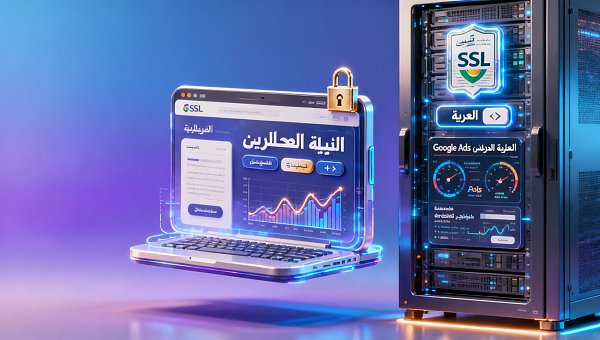
Trap 1: “feature bundling” conceals service gaps. For example, claiming to “include SEO optimization” may in fact only mean filling in basic TDK, without deploying structured data, configuring a GSC account, or planning an external link building path, resulting in natural traffic growth of less than 5% within 3 months after launch.
Trap 2: “free domain/hosting” shifts costs elsewhere. Free domain registration is provided, but tied to mandatory use of its high-priced hosting (annual fee reaching 2.3 times the market average), while DNS resolution permissions are restricted, making later migration difficult.
Trap 3: “multilingual” is limited to interface switching only. Semantic-level localization is not implemented; Arabic pages are still left-aligned, not adapted to RTL layout, and lack embedded local payment interfaces and compliance clauses, causing the user bounce rate to be as high as 71%.
For Middle East market expansion needs, the Arabic industry website development and marketing solution launched by EasyBIZ has been validated by 27 exporting companies: using a dual-track mechanism of AI-powered translation localization + manual review to ensure terminology accuracy ≥98.6%; with built-in flexible domain configuration and SSL certificate selection modules, supporting rapid deployment of localized suffixes such as .gov.ae/.sa.
III. How to identify a truly integrated service provider? 4 hard-core verification indicators
First, check whether the deliverables list includes “verifiable actions.” For example, “SEO optimization” should clearly list: GSC account binding screenshots, Schema markup code snippets, and a 3-month keyword ranking monitoring report sample.
Second, verify whether the tech stack natively supports multilingual expansion. A provider that truly supports Arabic website building must have an RTL rendering engine, bidirectional text processing capability, and modules for automatic adaptation to local time zones and currencies.
Third, check whether the service cycle covers the “90 days after launch.” In EasyBIZ’s standard service agreement, the first quarter includes 1 weekly traffic attribution analysis, 2 monthly ad creative A/B tests, and 1 quarterly localized content update, ensuring continuous customer acquisition capability.
Fourth, test whether the response mechanism forms a closed loop. We require all client-facing engineers to respond to technical issues within 2 hours; for complex issues, a written troubleshooting path must be provided within 48 hours. The SLA compliance rate has remained above 99.2% for 3 consecutive years.
IV. Anti-pitfall action guide: 5 cross-check steps that must be done before procurement
- Request GSC backend access permissions for real client cases from the past 3 months (after desensitization), and verify organic traffic trends and keyword coverage breadth;
- Require a demonstration of the RTL rendering effect of Arabic pages in Chrome DevTools, and check the CSS direction property and text-align logic;
- Confirm whether the SSL certificate supports Let’s Encrypt automatic renewal to avoid HTTPS interruption caused by annual manual operations;
- Check whether the website traffic monitoring tool has GA4 + Adobe Analytics dual-channel tracking pre-embedded, supporting Middle East region IP filtering and session attribution;
- Clearly define in the contract the specific frequency and response time for “website maintenance services,” and eliminate vague wording such as “support as needed.”
V. Why choose EasyBIZ? Reliable delivery backed by ten years of experience
Founded in 2013, EasyBIZ uses artificial intelligence and big data as its core driving forces and has served 100,000+ corporate clients worldwide. In 2023, it was selected as one of the “Top 100 SaaS Companies in China,” with an average annual growth rate exceeding 30%. We adhere to a dual-engine strategy of “technological innovation + localized services”—on the technology side, we independently developed an intelligent website-building engine that supports one-click generation of RTL pages compliant with W3C standards; on the service side, we have established localized support centers in Dubai and Riyadh, providing native Arabic customer service and compliance consulting.
At present, our Arabic industry website development and marketing solution is open to the first 100 customized slots for three types of clients: manufacturing, B2B industrial products, and cross-border retail, including free Middle East social media marketing strategy consulting and first-year website maintenance services. Contact us now to get your exclusive “Middle East Market Website Health Diagnostic Report” and phased implementation roadmap.
Related Articles



Related Products
 EasyCamp SaaS Smart Website Marketing SystemE-Yingbao SaaS Smart Website Marketing System: AI-powered, zero-code website building. Rapidly launch multilingual independent e-commerce sites in just 10 minutes. Global server acceleration and AI-driven SEO optimization empower businesses to efficiently connect with global markets. The seamless integration of technology and user-friendly operation makes building e-commerce sites incredibly simple.
 AI+SEM Intelligent Advertising Marketing SystemAI+SEM drives intelligent ad creation, empowering full-funnel precision advertising marketing. The system automatically generates weekly/monthly reports, AI recommends keywords and target countries, monitors core metrics in real-time with intelligent alerts, and enables one-click high-conversion ad solutions to help quickly acquire customers and improve ROI.
 AI+SEO Dual Engine Optimization ServiceEasyWin AI+SEO Dual Engine Optimization System leverages AI-powered keyword mining, content generation, and comprehensive technical optimization to help foreign trade enterprises acquire high-quality organic traffic, significantly improving search rankings and conversion rates.
 AI+SNS Social Media Marketing SystemYingbao AI+SNS Social Media Marketing System - Precision social capture for the social media era. Supports one-click content synchronization across major platforms like Facebook and LinkedIn. AI intelligently rewrites posts for enhanced relevance. 24/7 AI customer service and user profiling analysis empower businesses to efficiently expand into global markets.
 AI+SEO营销解决方案易营宝AI+SEO营销解决方案,通过AI批量写作、智能生成TDK、精准关键词扩词等功能,全面优化网站SEO效果,提升流量与转化率。助力企业构建高效智能网站新生态。
 AI+SEM Advertising Marketing SolutionsAI+SEM Advertising Marketing Solution leverages AI technology to deeply empower SEM ad campaigns. It automatically generates weekly/monthly reports using AI, presenting account data across multiple dimensions for comprehensive insights into campaign performance and trends. The system precisely recommends keywords and target countries, intelligently generates high-conversion ad copy, and enables one-click activation of efficient campaign plans to help businesses rapidly acquire customers. Simultaneously, it monitors core metrics in real time, intelligently identifies abnormal fluctuations, and issues timely alerts to ensure stable, high-return advertising results.
 Domain Name ServicesEasyWin provides professional domain name services, including intelligent queries, one-stop registration, brand protection, and full lifecycle management, helping businesses build a digital brand image.
 EasyOperate B2C Cross-Border E-Commerce Platform & Independent WebsiteEasyStore B2C Cross-border E-commerce Independent Store is an intelligent website building and cross-border e-commerce integrated solution independently developed by EasyStore Information Technology (Beijing) Co., Ltd. The system is specially designed for small and medium-sized as well as large export enterprises, integrating 'website building, operation, marketing, advertising, and conversion' into one, helping enterprises quickly establish cross-border e-commerce independent stores to achieve brand globalization and global sales growth.
The platform supports multiple languages, multiple currencies, and multi-channel marketing, with built-in AI intelligent translation and SEO optimization systems, suitable for mainstream markets such as Southeast Asia, Europe and America, Latin America, and the Middle East, assisting Chinese manufacturing enterprises in efficiently deploying international e-commerce strategies. SSL证书易营宝提供专业SSL安全证书服务,包括单域名和泛域名证书,确保网站数据传输加密、身份验证和完整性保护,助力企业建立安全可信的在线业务环境。









