









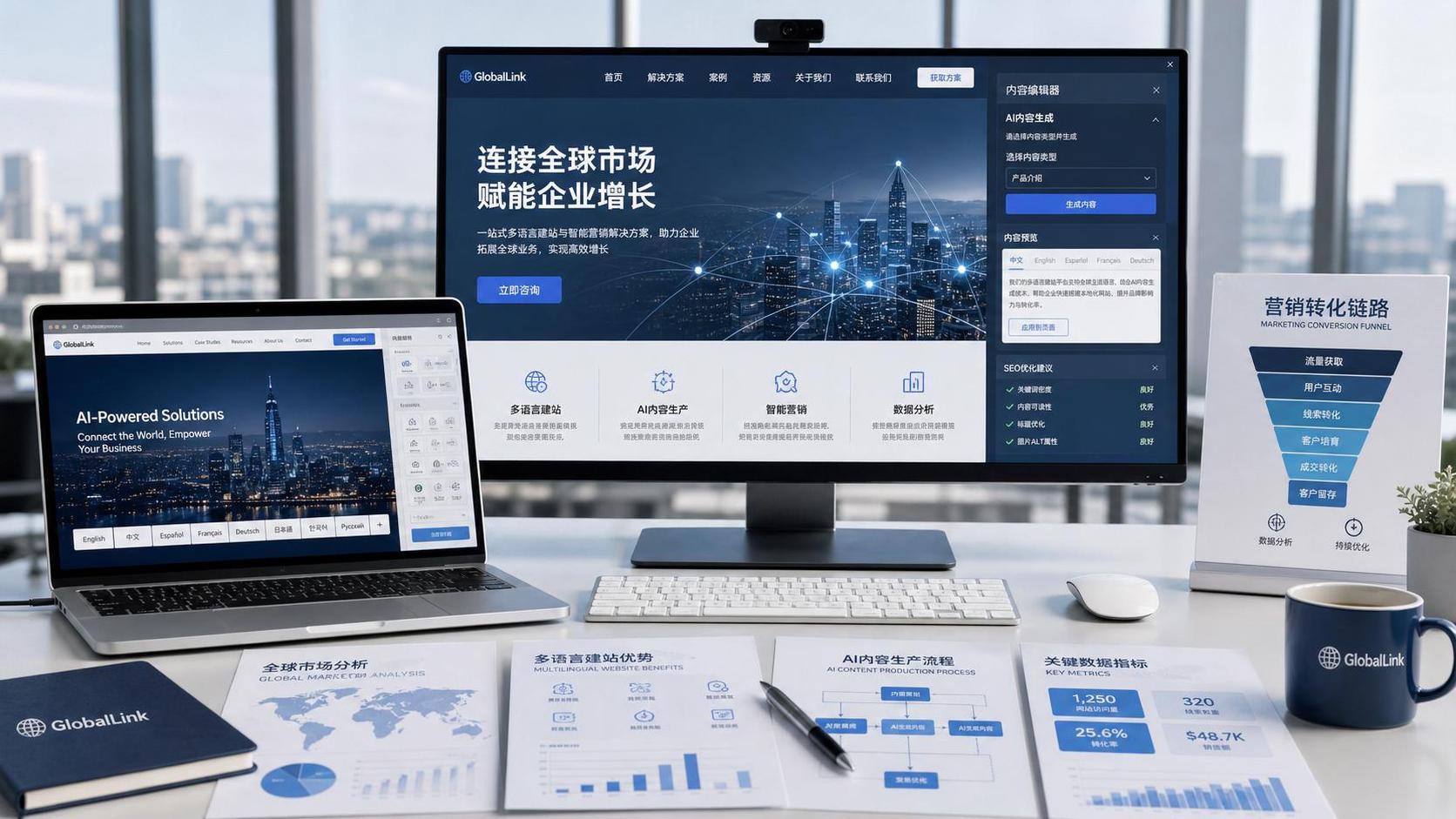
- How to assess foreign trade website development trends?Looking at 2026 changes from multilingual,AI content to conversion pathsJul 04, 2026View details
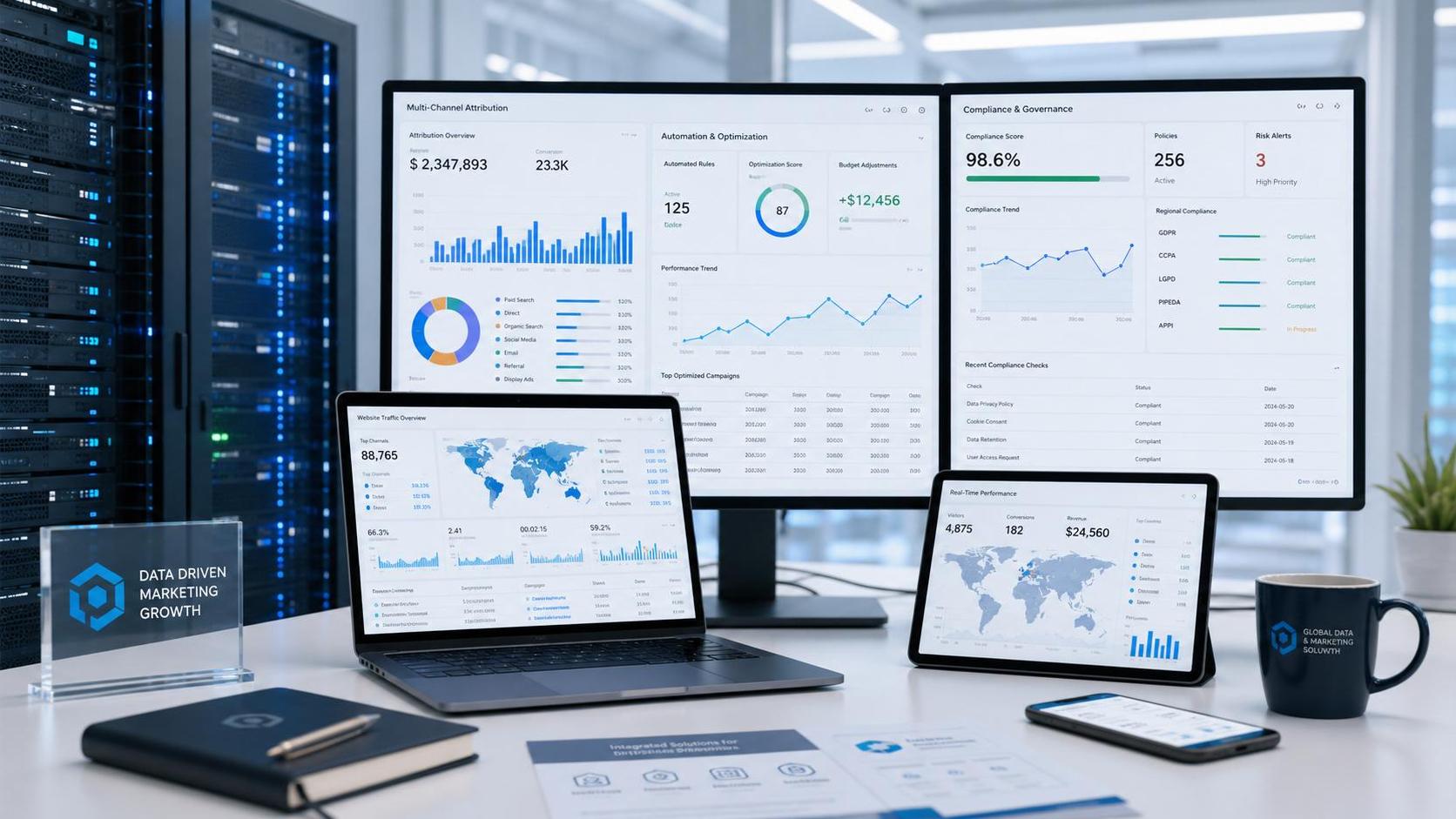
- What are the new trends in multilingual marketing data analytics tools in 2026? Focus on attribution、automation and complianceJul 04, 2026View details
- Is Brand Globalization Marketing Consulting Worth Buying? At What Stage Should Companies Bring It InJul 01, 2026View details
- Cross-Border Marketing Trend Research: Why More and More Companies Are Starting to Deploy AI Search and GEO OptimizationJun 30, 2026View details
- Cross-Border Marketing Trend Research: How Independent Sites, AI Content, and Short-Video Customer Acquisition Are ChangingJun 30, 2026View details
- How Can a Brand Updates Page Be Made More SEO-Friendly? Analysis of Update Frequency, Content Structure, and Internal Linking StrategyJun 28, 2026View details
- What stages does the cross-border services ecosystem include? How do website building, promotion, payment, and compliance work togetherJun 22, 2026View details
- How will email marketing costs change in 2026Jun 22, 2026View details
The price differences in foreign trade marketing systems come down to 4 modules
Why is there such a large price difference in foreign trade marketing systems? Many people look at the price quote first, but ultimately find that what truly affects the results is not the number itself, but the capabilities and structure behind the system. For integrated website + marketing service solutions, the four modules—website building capabilities, customer acquisition tools, data analysis, and service support—often determine whether the price of the foreign trade marketing system is reasonable, and whether subsequent investment can be converted into inquiries, orders, and sustainable growth.
1. Why do prices for foreign trade marketing systems vary from several thousand to hundreds of thousands?

While foreign trade marketing system prices may appear to be software quotes, they are actually pricing based on a combination of capabilities. Although they are all called "marketing systems," their underlying configurations are completely different. Solutions that only provide template websites and basic forms will naturally be cheaper; however, if they include multilingual website building, search engine optimization, ad tracking, lead management, and ongoing support, the price will increase significantly.
Another often overlooked factor is the delivery method. Some systems sell accounts, while others sell results-oriented services. The former is more like purchasing tools, while the latter is closer to building a growth system. Therefore, when judging the price of a foreign trade marketing system, one should not only ask "how much?" but also "what does it include, what can it do, and who will continuously implement it?"
Website + marketing service providers, such as Yiyingbao Information Technology (Beijing) Co., Ltd., often integrate intelligent website building, SEO optimization, social media marketing, advertising, and data strategy delivery. These solutions may not be the cheapest, but they prioritize long-term customer acquisition efficiency and global growth capabilities.
Second, the first major difference: Why are there such significant price differences between website building modules?
Many people think of websites as just display pages, but in the context of foreign trade, a website is the core conversion platform. The price difference between foreign trade marketing systems lies primarily in whether the website building modules possess marketing attributes, not just whether the pages look good.
1. The difference between template websites and custom websites isn't the page layout, but rather conversion rate.
Low-cost solutions often use generic templates, which are quick to deploy, but lack industry-specific expression, and the page structure is difficult to tailor around product selling points, target market, and search demands. Customized marketing websites, on the other hand, are designed based on keyword layout, inquiry paths, page speed, and content structure, which is more conducive to organic traffic accumulation and lead conversion.
2. Technical details will affect subsequent marketing costs.
If a website doesn't support mobile adaptation, optimized loading speed, expanded landing pages, form tracking, and multilingual management, subsequent SEO and advertising efforts will incur additional rework costs. This is a significant source of price differences in foreign trade marketing systems.
- Does it support multilingual and multi-site deployment?
- Does it have an SEO-friendly architecture?
- Can the topic page and event page be expanded independently?
- Does it support clue collection and automatic distribution?
Third, the second major difference: Why does the configuration of customer acquisition tools determine the price of a foreign trade marketing system?
If website building is the foundation, then customer acquisition tools are the amplifier. Many low-priced systems only provide a website backend and do not include search engine optimization, content publishing, social media integration, or ad tracking tools. While they may seem to save money on the surface, they lack traffic entry points after launch, and the website easily becomes a "static business card."
A complete solution typically includes SEO optimization capabilities, keyword management, landing page support, social media conversion components, and remarketing tracking. The higher price of an international trade marketing system stems from its coverage of the crucial link from exposure to conversion.
When evaluating a solution, it's helpful to take into account the company's understanding of international business risks and process management. For example, the approach to risk management and prevention for international trading companies can help us understand that marketing investment should not only focus on front-end traffic generation, but also take into account business acquisition and compliance coordination.
What are the differences between common customer acquisition tools?
- Does it include keyword research and content optimization features?
- Does it support ad account integration and performance feedback?
- Does it have the ability to integrate social media entry points?
- Can it generate clue scoring and follow-up reminders?
Fourth, the third major difference: Why is the data analysis module so expensive?
Many companies, after launching their systems, encounter the most common problem not a lack of traffic, but rather not knowing where the traffic is coming from, which page has high conversion rates, or which types of inquiries are of higher quality. Without a data analysis module, optimization decisions often rely solely on experience.
What truly differentiates the pricing of foreign trade marketing systems is the ability to integrate data. Basic versions typically only show page views, while mature solutions go further by analyzing keyword performance, page dwell time, conversion paths, advertising costs, country distribution, device origin, and inquiry quality. Once this data is integrated, budget allocation becomes much more precise.
For integrated website and marketing services, data analysis is not just about report presentation, but also the foundation for strategy iteration. Without it, a closed loop cannot be formed between website building, SEO, social media, and advertising.
Fifth, the fourth major difference: Why is service support the most easily underestimated aspect?
Many quotes may look similar, but after six months of actual implementation, the differences often lie in service support. Some systems are completed once delivery is made, with slow response to follow-up issues and few strategy updates; others include content assistance, technical maintenance, campaign recommendations, monthly reviews, and growth diagnostics.
Therefore, the price of an international trade marketing system is not just about buying the system itself, but also about buying ongoing service capabilities. Especially in the context of rapidly changing overseas markets and frequent adjustments to channel rules, the ability to quickly optimize pages, adjust keyword strategies, and fix data anomalies directly impacts marketing efficiency.
To reduce subsequent trial-and-error costs, it is recommended to focus on verifying the following service content:
- Are there dedicated consultants or operational support?
- Do you provide regular review and optimization suggestions?
- Are you responsible for technical maintenance and security updates?
- Can you provide growth solutions tailored to specific industry scenarios?
VI. How to determine whether the price of a foreign trade marketing system is too high or worthwhile?
The key to judging whether a price is reasonable is not the lowest price, but whether the unit investment yields a more stable customer acquisition capability. A cheap system that cannot consistently generate traffic and inquiries will ultimately be more expensive in the long run.
The following approach can be used to quickly determine this:
If a solution covers all four modules—website building, customer acquisition, analytics, and services—a foreign trade marketing system, even if priced higher, has a better chance of building long-term growth potential. Conversely, relying solely on low prices to enter the market often results in higher overall costs when adding modules, services, and data later.
Finally, let me emphasize again: when evaluating the price of an international trade marketing system, don't just compare the first year's fees, but also compare whether it can generate stable traffic, effective inquiries, and a continuous optimization loop over the next 12 months. Breaking down the four core modules will make the price difference clearer and the decision more informed. If you plan to further screen options, consider listing your current website's weaknesses, target market, and customer acquisition goals, then evaluating the capabilities of each module; this will be more efficient.
Related Articles
 How can video news production be made more efficient?Breaking down the standard process from topic selection to editing
 How to assess foreign trade website development trends?Looking at 2026 changes from multilingual,AI content to conversion paths
 What are the new trends in multilingual marketing data analytics tools in 2026? Focus on attribution、automation and compliance

Related Products
 EasyCamp SaaS Smart Website Marketing SystemE-Yingbao SaaS Smart Website Marketing System: AI-powered, zero-code website building. Rapidly launch multilingual independent e-commerce sites in just 10 minutes. Global server acceleration and AI-driven SEO optimization empower businesses to efficiently connect with global markets. The seamless integration of technology and user-friendly operation makes building e-commerce sites incredibly simple.
 AI+SEM Intelligent Advertising Marketing SystemAI+SEM drives intelligent ad creation, empowering full-funnel precision advertising marketing. The system automatically generates weekly/monthly reports, AI recommends keywords and target countries, monitors core metrics in real-time with intelligent alerts, and enables one-click high-conversion ad solutions to help quickly acquire customers and improve ROI.
 AI+SEO Dual Engine Optimization ServiceEasyWin AI+SEO Dual Engine Optimization System leverages AI-powered keyword mining, content generation, and comprehensive technical optimization to help foreign trade enterprises acquire high-quality organic traffic, significantly improving search rankings and conversion rates.
 AI+SNS Social Media Marketing SystemYingbao AI+SNS Social Media Marketing System - Precision social capture for the social media era. Supports one-click content synchronization across major platforms like Facebook and LinkedIn. AI intelligently rewrites posts for enhanced relevance. 24/7 AI customer service and user profiling analysis empower businesses to efficiently expand into global markets.
 AI+SEO营销解决方案易营宝AI+SEO营销解决方案,通过AI批量写作、智能生成TDK、精准关键词扩词等功能,全面优化网站SEO效果,提升流量与转化率。助力企业构建高效智能网站新生态。
 AI+SEM Advertising Marketing SolutionsAI+SEM Advertising Marketing Solution leverages AI technology to deeply empower SEM ad campaigns. It automatically generates weekly/monthly reports using AI, presenting account data across multiple dimensions for comprehensive insights into campaign performance and trends. The system precisely recommends keywords and target countries, intelligently generates high-conversion ad copy, and enables one-click activation of efficient campaign plans to help businesses rapidly acquire customers. Simultaneously, it monitors core metrics in real time, intelligently identifies abnormal fluctuations, and issues timely alerts to ensure stable, high-return advertising results.
 Domain Name ServicesEasyWin provides professional domain name services, including intelligent queries, one-stop registration, brand protection, and full lifecycle management, helping businesses build a digital brand image.
 EasyOperate B2C Cross-Border E-Commerce Platform & Independent WebsiteEasyStore B2C Cross-border E-commerce Independent Store is an intelligent website building and cross-border e-commerce integrated solution independently developed by EasyStore Information Technology (Beijing) Co., Ltd. The system is specially designed for small and medium-sized as well as large export enterprises, integrating 'website building, operation, marketing, advertising, and conversion' into one, helping enterprises quickly establish cross-border e-commerce independent stores to achieve brand globalization and global sales growth.
The platform supports multiple languages, multiple currencies, and multi-channel marketing, with built-in AI intelligent translation and SEO optimization systems, suitable for mainstream markets such as Southeast Asia, Europe and America, Latin America, and the Middle East, assisting Chinese manufacturing enterprises in efficiently deploying international e-commerce strategies. SSL证书易营宝提供专业SSL安全证书服务,包括单域名和泛域名证书,确保网站数据传输加密、身份验证和完整性保护,助力企业建立安全可信的在线业务环境。









