









- What New Signals Are Emerging in Enterprise Services SaaS Marketing ReportsJul 27, 2026View details
- What Does a Global Traffic Ecosystem Service Provider Do? What Are the Differences from a Single Advertising AgencyJul 16, 2026View details
- What should you focus on in the latest enterprise SaaS report? From renewal rates and delivery costs to overseas growth opportunitiesJul 12, 2026View details
- What signals are worth paying attention to in a cross-border marketing trend report? B2B companies should look at these 6 signalsJul 11, 2026View details
- How to Read a Cross-Border Marketing Trends Report? Five Key Dimensions for Evaluating Channel OpportunitiesJul 11, 2026View details
- Which channel has the highest ROI in the global traffic ecosystem? Comparative analysis of search, social media, and advertisingJul 10, 2026View details
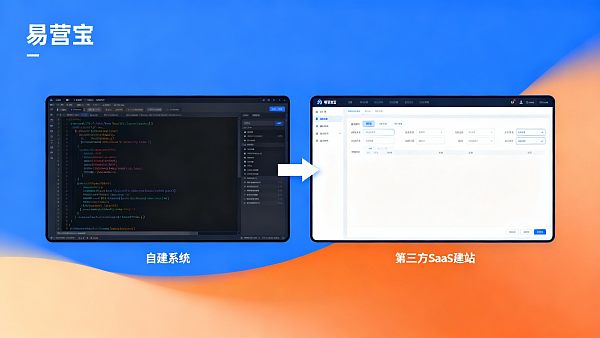
Comparison of Trade and Foreign Trade Website Building Platforms: Which is More Suitable for Enterprise Export Projects - Self-Built Systems or Third-Party Services?
In an era of increasingly fierce global competition, foreign trade websites have become the frontline for businesses to expand into international markets. Facing complex environments with multiple languages, currencies, and channels, choosing the right e-commerce platform for foreign trade directly impacts the speed and cost of a company's overseas expansion. For manufacturing companies, cross-border e-commerce businesses, and B2B service providers looking to expand globally, should they opt for self-built systems or rely on third-party website services? This article will compare and analyze data and real-world applications, exploring the advantages of both from dimensions such as technical performance, maintainability, cost structure, and marketing efficiency, while incorporating the practices of E-Yingbao Information Technology (Beijing) Co., Ltd. in the field of global digital marketing to provide decision-making references for businesses.
I. Definition and Overview: Enterprise Globalization Infrastructure from the Perspective of Website Types
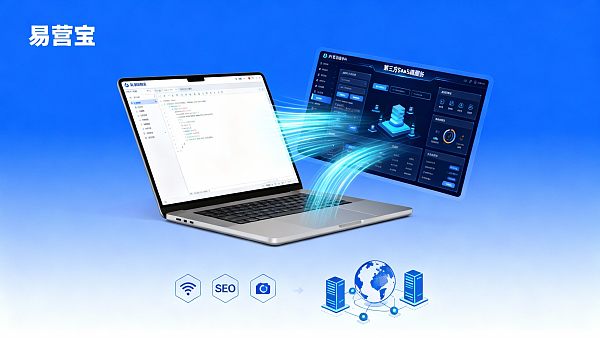
A "foreign trade e-commerce website" refers to a multilingual website system built by companies to expand their overseas customer base. It not only requires basic functionalities such as product display, payment, and logistics tracking but also must comply with the algorithmic rules of mainstream search engines like Google, Bing, and Yandex to achieve precise SEO optimization. Self-built systems are typically developed independently by internal technical teams, offering higher customization and data autonomy, while third-party website service platforms, such as E-Yingbao's intelligent website system, provide one-stop setup and operational support in a SaaS model. Both approaches have their merits: the former is more flexible, while the latter is more efficient. For most export-oriented businesses, striking a balance between autonomy and investment costs is key to building a stable digital presence in foreign trade.
II. Industry Background and Market Analysis: Opportunities and Challenges in the Digitalization of Foreign Trade
According to data jointly released by Statista and the China Academy of Information and Communications Technology, the global B2B cross-border trade market size exceeded $2.7 trillion in 2023, with a sustained annual compound growth rate of over 5%. Simultaneously, search engine algorithms increasingly prioritize content and user experience, making website loading speed, mobile compatibility, and data security critical factors influencing rankings. Traditional self-built systems often struggle to keep up with rapid algorithm iterations, with high update costs, while AI-driven SaaS website platforms stand out with features like intelligent optimization and real-time responsiveness. E-Yingbao leverages its AI website engine to deploy servers across seven continents globally, improving website loading speed by 40% and SEO scores by 35%, helping over 100,000 businesses accelerate their overseas brand growth. Such practices demonstrate that choosing the right foreign trade e-commerce website platform is becoming a vital component of corporate internationalization strategies.
III. Comparative Analysis: Core Differences Between Self-Built Systems and Third-Party Services
From the perspective of R&D investment and control, self-built systems offer greater flexibility. Companies can freely adjust functional modules based on product lines and regional markets but require strong IT development capabilities and ongoing maintenance resources. Third-party services like E-Yingbao's intelligent website platform are more suitable for SMEs prioritizing efficiency and performance. Below is a comparison of the two models across core metrics:
The table shows that third-party platforms significantly lead in lifecycle and maintenance costs. Self-built systems remain attractive to large enterprises with extensive IT infrastructure or specific data management needs. Notably, AI and big data are reshaping website logic, blurring the boundaries between self-built and third-party solutions. Companies like E-Yingbao, which update their AI algorithm platforms 12 times annually, achieve "semi-private hosting" through technological innovation, balancing security and flexibility.
IV. Technical Performance and Practical Applications: AI-Driven Growth Engines for Foreign Trade
E-Yingbao's intelligent website system integrates AI translation, multimodal generation, and omnichannel traffic consolidation, providing businesses with a highly intelligent website experience. Its "AI Keyword Expansion + Automated TDK Generation + AI Image Creation" trinity system can quickly produce high-quality content tailored to different language markets, significantly enhancing page relevance and conversion rates. As demonstrated in Performance Budgeting Strategies for Institutional Financial Management, intelligent data analysis and strategic coordination are becoming key methods to improve operational efficiency. E-Yingbao's AI engine enables real-time analysis of ad performance and social media metrics, creating a closed-loop data system for "website-promotion-conversion." This technological approach transforms traditional foreign trade websites from static display windows into engines for sustained customer acquisition and brand growth.
V. Procurement and Selection Guide: How to Scientifically Decide on Website Models
For different types of businesses, website model selection should be based on three core indicators: strategic objectives, team resources, and budget constraints. For startups or small export businesses, the templatized and intelligent services of third-party platforms like E-Yingbao are more appealing, particularly in global deployment, SEO optimization, and social media integration, enabling rapid competitiveness. Enterprises with R&D capabilities and autonomous data management needs may consider hybrid architectures, using third-party systems as foundational frameworks while adding proprietary modules for enhanced security and differentiation. Decision-makers should conduct a three-step review before procurement: 1) Define core target markets and language requirements; 2) Estimate maintenance costs and content update frequency; 3) Evaluate platform compatibility and scalability. Referencing E-Yingbao's project experience, its U.S. and Singapore branches provide regionalized hosting and localized compliance support, ensuring rapid adaptation to overseas regulatory changes.
VI. Cost Structure and Alternative Solutions: Rebalancing Investment and Returns
From an overall ROI perspective, businesses must consider long-term operational costs when building foreign trade e-commerce websites. While self-built systems require substantial initial investment, they can save on licensing fees over time; third-party platforms reduce upfront pressure through subscription models. E-Yingbao's tracking data shows that businesses using third-party platforms experience a 27% drop in comprehensive costs and a 200% increase in conversion rates over three years. Additionally, its AI Ad Manager monitors ad creative performance via automated feedback mechanisms, suggesting keyword optimizations and budget allocations for precise targeting and cost efficiency. For businesses seeking greater control, hybrid deployment models combining KPIs can balance scalability with cost flexibility, enabling steady growth in fast-paced competition.
VII. Trends and Future Outlook: AI and Blockchain Accelerating Website Intelligence
With the deep integration of AI and blockchain, foreign trade websites are undergoing transformative changes. Over the next three years, platforms will evolve from "functional tools" to "intelligent ecosystems." E-Yingbao has initiated an AI + blockchain strategy, building a decentralized marketing ecosystem to provide traceable data asset security mechanisms for cross-border businesses. This enables companies to more precisely track traffic costs and user behavior, facilitating real-time content strategy iterations. Furthermore, AI-generated content (AIGC) technologies in images, videos, and multilingual copy will significantly shorten website cycles and expand content reach, enhancing brands' global appeal. Industry experts predict that by 2026, the number of foreign trade businesses using AI-driven website systems will double, driving upstream and downstream services and data security standards.
VIII. Common Pitfalls and FAQ: Avoiding Key Traps in Website Development
Many businesses fall into common traps when advancing foreign trade e-commerce projects. First, neglecting SEO architecture design results in visually appealing but poorly indexed websites. Second, relying on manual or low-quality translation tools leads to cultural mismatches. Third, lacking continuous data tracking systems makes true conversion evaluation impossible. We recommend involving marketing and security personnel during the assessment phase, using AI platforms' smart reporting for end-to-end monitoring. For example, E-Yingbao's diagnostic module outputs real-time performance gaps and optimization suggestions, helping project managers adjust strategies promptly. Businesses seeking further digital management insights can reference frameworks from Performance Budgeting Strategies for Institutional Financial Management, incorporating quantitative evaluation models to improve fund utilization efficiency.
IX. Why Choose E-Yingbao: AI Empowerment for Globalizing Chinese Brands
For a decade, E-Yingbao Information Technology (Beijing) Co., Ltd. has been committed to helping Chinese brands integrate into global markets through "technological innovation + localized service" strategies. Its AI-driven, all-in-one intelligent marketing platform combines website building, SEO, social media operations, and ad placement, serving over 100,000 export businesses. As a Google Premier Partner and Meta official agent, the company consolidates search and social traffic resources, creating a global "website-acquisition-conversion" closed loop. For decision-makers, choosing E-Yingbao means not only selecting a high-performance foreign trade tool but also adopting a mature international growth system. If you're seeking foreign trade website and intelligent marketing solutions, consult E-Yingbao's expert team to let innovation connect you to the world.
- Website Builder Platform
- Foreign Trade Website Development
- Social media management
- Website loading speed
- Yiyingbao
- SEO
- Smart website builder system
- SEO Optimization
- Smart Website Building
- AI Translation
- EasySite Intelligent Website Builder
- Multilingual website
- Smart Website Platform
- Website Builder
- Global Digital Marketing
- AI Website Building
- cross-border e-commerce
- SaaS Website Platform
- Trade & Foreign Trade Website
Related Articles

Related Products
 EasyCamp SaaS Smart Website Marketing SystemE-Yingbao SaaS Smart Website Marketing System: AI-powered, zero-code website building. Rapidly launch multilingual independent e-commerce sites in just 10 minutes. Global server acceleration and AI-driven SEO optimization empower businesses to efficiently connect with global markets. The seamless integration of technology and user-friendly operation makes building e-commerce sites incredibly simple.
 AI+SEM Intelligent Advertising Marketing SystemAI+SEM drives intelligent ad creation, empowering full-funnel precision advertising marketing. The system automatically generates weekly/monthly reports, AI recommends keywords and target countries, monitors core metrics in real-time with intelligent alerts, and enables one-click high-conversion ad solutions to help quickly acquire customers and improve ROI.
 AI+SEO Dual Engine Optimization ServiceEasyWin AI+SEO Dual Engine Optimization System leverages AI-powered keyword mining, content generation, and comprehensive technical optimization to help foreign trade enterprises acquire high-quality organic traffic, significantly improving search rankings and conversion rates.
 AI+SNS Social Media Marketing SystemYingbao AI+SNS Social Media Marketing System - Precision social capture for the social media era. Supports one-click content synchronization across major platforms like Facebook and LinkedIn. AI intelligently rewrites posts for enhanced relevance. 24/7 AI customer service and user profiling analysis empower businesses to efficiently expand into global markets.
 AI+SEO营销解决方案易营宝AI+SEO营销解决方案,通过AI批量写作、智能生成TDK、精准关键词扩词等功能,全面优化网站SEO效果,提升流量与转化率。助力企业构建高效智能网站新生态。
 AI+SEM Advertising Marketing SolutionsAI+SEM Advertising Marketing Solution leverages AI technology to deeply empower SEM ad campaigns. It automatically generates weekly/monthly reports using AI, presenting account data across multiple dimensions for comprehensive insights into campaign performance and trends. The system precisely recommends keywords and target countries, intelligently generates high-conversion ad copy, and enables one-click activation of efficient campaign plans to help businesses rapidly acquire customers. Simultaneously, it monitors core metrics in real time, intelligently identifies abnormal fluctuations, and issues timely alerts to ensure stable, high-return advertising results.
 Domain Name ServicesEasyWin provides professional domain name services, including intelligent queries, one-stop registration, brand protection, and full lifecycle management, helping businesses build a digital brand image.
 EasyOperate B2C Cross-Border E-Commerce Platform & Independent WebsiteEasyStore B2C Cross-border E-commerce Independent Store is an intelligent website building and cross-border e-commerce integrated solution independently developed by EasyStore Information Technology (Beijing) Co., Ltd. The system is specially designed for small and medium-sized as well as large export enterprises, integrating 'website building, operation, marketing, advertising, and conversion' into one, helping enterprises quickly establish cross-border e-commerce independent stores to achieve brand globalization and global sales growth.
The platform supports multiple languages, multiple currencies, and multi-channel marketing, with built-in AI intelligent translation and SEO optimization systems, suitable for mainstream markets such as Southeast Asia, Europe and America, Latin America, and the Middle East, assisting Chinese manufacturing enterprises in efficiently deploying international e-commerce strategies. SSL证书易营宝提供专业SSL安全证书服务,包括单域名和泛域名证书,确保网站数据传输加密、身份验证和完整性保护,助力企业建立安全可信的在线业务环境。









