









- How to assess foreign trade website development trends?Looking at 2026 changes from multilingual,AI content to conversion pathsJul 04, 2026View details
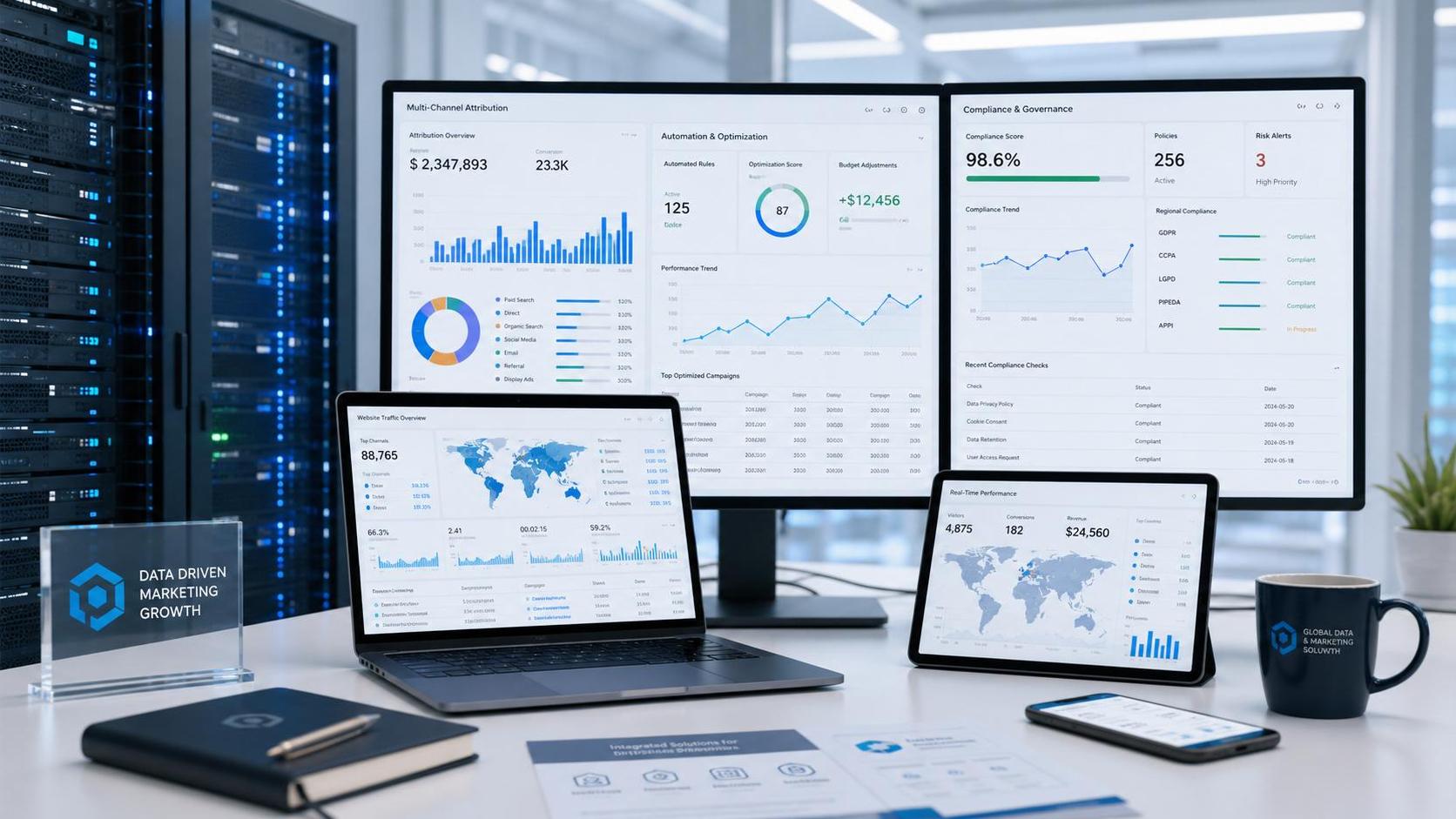
- What are the new trends in multilingual marketing data analytics tools in 2026? Focus on attribution、automation and complianceJul 04, 2026View details
- Is Brand Globalization Marketing Consulting Worth Buying? At What Stage Should Companies Bring It InJul 01, 2026View details
- Cross-Border Marketing Trend Research: Why More and More Companies Are Starting to Deploy AI Search and GEO OptimizationJun 30, 2026View details
- Cross-Border Marketing Trend Research: How Independent Sites, AI Content, and Short-Video Customer Acquisition Are ChangingJun 30, 2026View details
- How Can a Brand Updates Page Be Made More SEO-Friendly? Analysis of Update Frequency, Content Structure, and Internal Linking StrategyJun 28, 2026View details
- What stages does the cross-border services ecosystem include? How do website building, promotion, payment, and compliance work togetherJun 22, 2026View details
- How will email marketing costs change in 2026Jun 22, 2026View details
Ad campaign performance evaluation, don’t just focus on the number of forms
Ad performance evaluation cannot stop at form statistics
When evaluating ad performance, if you only look at the number of forms, you will often misjudge the value of a channel. When allocating budgets, companies need to see more clearly the real relationship among lead quality, customer acquisition cost, conversion efficiency, and long-term repeat purchases.
Under the trend of integrating websites and marketing services, advertising is no longer an isolated action. A click, a visit, and an inquiry should all be examined within a complete conversion journey in order to truly understand ad performance.
For companies seeking sustained growth, the core of ad performance is not “how many forms were submitted,” but “which traffic sources can deliver more stable business results.” This is also the step most easily overlooked in current digital marketing management.
The basic evaluation framework for ad performance
Ad performance usually includes three levels: whether exposure is accurate, whether clicks are effective, and whether conversions are worthwhile. Many accounts may show attractive top-level metrics, but once users enter the website, time on page, interaction, and deal conversion are often far from ideal.
If you only count the number of forms, it is easy to mistake low-quality leads for growth results. Especially in highly competitive overseas markets, inflated lead numbers will increase sales communication costs and also interfere with subsequent marketing decisions.
A more complete evaluation of ad performance should simultaneously cover the advertising side, the website side, and the sales side. Only after data from these three sides are connected can you know whether the budget bought traffic volume or truly convertible customer opportunities.
Core metrics recommended for priority attention
- Click-through rate: determines how well ad creatives match the target audience.
- Bounce rate: reflects whether the landing page is capable enough of receiving traffic.
- Form conversion rate: measures whether the page guidance is smooth.
- Valid lead rate: distinguishes real demand from invalid inquiries.
- Cost per valid lead: closer to the real customer acquisition cost.
- Sales cycle and deal conversion rate: tests the business value of ad performance.
What signals the industry is paying more attention to now
As traffic costs continue to rise, the way ad performance is evaluated is changing. In the past, people only looked at the total number of forms, but now more emphasis is placed on conversion quality, channel coordination, and long-term growth capability.
This is also why more and more companies are beginning to value website development, content distribution, social media interaction, and advertising coordination. It is difficult for single-point advertising to steadily amplify ad performance, while systematic operations are more likely to improve budget efficiency.
The relationship between ad performance and website conversion support capability
Many advertising account problems are not entirely caused by the ad strategy itself, but by the website’s conversion support. Advertising brings people in, but if the page content cannot quickly respond to their needs, conversions will naturally decline.
The value of integrating websites and marketing services lies in placing traffic acquisition and conversion within the same logic. Landing page structure, content persuasiveness, button design, and customer service response speed all directly affect ad performance.
Yiyingbao Information Technology (Beijing) Co., Ltd. has long been deeply engaged in coordinated services covering intelligent website building, SEO optimization, social media marketing, and advertising. Its core approach is not simply to pursue traffic, but to help companies build full-funnel marketing capabilities for sustainable growth.
Key issues to investigate on the website side
- Whether page loading speed affects visit depth.
- Whether the ad copy is consistent with the landing page content.
- Whether there are too many form fields, causing user drop-off.
- Whether clear trust signals and case information are provided.
- Whether the inquiry entry points are convenient and support timely responses.
Key focuses for judging ad performance in different scenarios
Different business stages and different market objectives lead to different understandings of ad performance. If the evaluation criteria do not match the scenario, optimization directions can easily deviate.
For example, in foreign trade and global competition scenarios, ad performance is often also closely related to coordination with social media operations. Content reach, depth of interaction, and speed of customer follow-up jointly affect inquiry quality.
In such scenarios, tools like AI+SNS Social Media Intelligent Marketing System can help achieve synchronized multi-platform distribution, user profile identification, and intelligent interaction, thereby enabling the traffic brought by advertising to form a more complete conversion loop between social media and the website.
Practical recommendations for improving ad performance
To improve ad performance, the key is not to keep increasing the budget, but to upgrade the evaluation standard from “total number of forms” to “real business contribution”. The following practices are more actionable.
- Establish lead grading rules and separately count high-intent leads.
- Review advertising data together with website analytics and customer service records.
- Regularly optimize landing pages so that high-cost traffic is not wasted.
- Break down ad performance by channel, country, and keyword.
- Pay attention to remarketing and returning visitors, and do not overlook the value of secondary conversions.
- Continuously adjust creatives, audiences, and pages through automated testing.
If the business involves overseas social media outreach, you can also use the AI+SNS Social Media Intelligent Marketing System for multilingual content adaptation, automatic synchronized publishing, and intelligent customer service support, reducing the pressure of multi-platform management while improving engagement rate and response speed.
Especially after ad clicks enter the brand content ecosystem, quickly identifying high-value customers and transferring them to human communication in time can often improve overall ad performance more effectively than simply lowering cost per click.
A more robust evaluation approach points to long-term growth
The essence of ad performance is how the budget is converted into sustainable growth. The number of forms can serve as a reference, but it must never become the only standard. What truly matters is whether leads can convert into deals, whether customers can be retained, and whether channels can continue to scale value.
When companies manage advertising, websites, content, and customer service within an integrated framework, ad performance becomes clearer, and optimization actions become more evidence-based. Only in this way can ineffective spending be avoided and every bit of the advertising budget come closer to actual business growth.
If you are re-evaluating channel investment, you might as well start by adjusting the evaluation criteria: look less at superficial volume and more at real quality. Only then will ad performance be more than attractive figures on a report, and instead become a certain outcome that drives business forward.
Related Articles
 How can video news production be made more efficient?Breaking down the standard process from topic selection to editing
 How to assess foreign trade website development trends?Looking at 2026 changes from multilingual,AI content to conversion paths
 What are the new trends in multilingual marketing data analytics tools in 2026? Focus on attribution、automation and compliance


Related Products
 EasyCamp SaaS Smart Website Marketing SystemE-Yingbao SaaS Smart Website Marketing System: AI-powered, zero-code website building. Rapidly launch multilingual independent e-commerce sites in just 10 minutes. Global server acceleration and AI-driven SEO optimization empower businesses to efficiently connect with global markets. The seamless integration of technology and user-friendly operation makes building e-commerce sites incredibly simple.
 AI+SEM Intelligent Advertising Marketing SystemAI+SEM drives intelligent ad creation, empowering full-funnel precision advertising marketing. The system automatically generates weekly/monthly reports, AI recommends keywords and target countries, monitors core metrics in real-time with intelligent alerts, and enables one-click high-conversion ad solutions to help quickly acquire customers and improve ROI.
 AI+SEO Dual Engine Optimization ServiceEasyWin AI+SEO Dual Engine Optimization System leverages AI-powered keyword mining, content generation, and comprehensive technical optimization to help foreign trade enterprises acquire high-quality organic traffic, significantly improving search rankings and conversion rates.
 AI+SNS Social Media Marketing SystemYingbao AI+SNS Social Media Marketing System - Precision social capture for the social media era. Supports one-click content synchronization across major platforms like Facebook and LinkedIn. AI intelligently rewrites posts for enhanced relevance. 24/7 AI customer service and user profiling analysis empower businesses to efficiently expand into global markets.
 AI+SEO营销解决方案易营宝AI+SEO营销解决方案,通过AI批量写作、智能生成TDK、精准关键词扩词等功能,全面优化网站SEO效果,提升流量与转化率。助力企业构建高效智能网站新生态。
 AI+SEM Advertising Marketing SolutionsAI+SEM Advertising Marketing Solution leverages AI technology to deeply empower SEM ad campaigns. It automatically generates weekly/monthly reports using AI, presenting account data across multiple dimensions for comprehensive insights into campaign performance and trends. The system precisely recommends keywords and target countries, intelligently generates high-conversion ad copy, and enables one-click activation of efficient campaign plans to help businesses rapidly acquire customers. Simultaneously, it monitors core metrics in real time, intelligently identifies abnormal fluctuations, and issues timely alerts to ensure stable, high-return advertising results.
 Domain Name ServicesEasyWin provides professional domain name services, including intelligent queries, one-stop registration, brand protection, and full lifecycle management, helping businesses build a digital brand image.
 EasyOperate B2C Cross-Border E-Commerce Platform & Independent WebsiteEasyStore B2C Cross-border E-commerce Independent Store is an intelligent website building and cross-border e-commerce integrated solution independently developed by EasyStore Information Technology (Beijing) Co., Ltd. The system is specially designed for small and medium-sized as well as large export enterprises, integrating 'website building, operation, marketing, advertising, and conversion' into one, helping enterprises quickly establish cross-border e-commerce independent stores to achieve brand globalization and global sales growth.
The platform supports multiple languages, multiple currencies, and multi-channel marketing, with built-in AI intelligent translation and SEO optimization systems, suitable for mainstream markets such as Southeast Asia, Europe and America, Latin America, and the Middle East, assisting Chinese manufacturing enterprises in efficiently deploying international e-commerce strategies. SSL证书易营宝提供专业SSL安全证书服务,包括单域名和泛域名证书,确保网站数据传输加密、身份验证和完整性保护,助力企业建立安全可信的在线业务环境。









