









- Is Brand Globalization Marketing Consulting Worth Buying? At What Stage Should Companies Bring It InJul 01, 2026View details
- Cross-Border Marketing Trend Research: Why More and More Companies Are Starting to Deploy AI Search and GEO OptimizationJun 30, 2026View details
- Cross-Border Marketing Trend Research: How Independent Sites, AI Content, and Short-Video Customer Acquisition Are ChangingJun 30, 2026View details
- How Can a Brand Updates Page Be Made More SEO-Friendly? Analysis of Update Frequency, Content Structure, and Internal Linking StrategyJun 28, 2026View details
- What stages does the cross-border services ecosystem include? How do website building, promotion, payment, and compliance work togetherJun 22, 2026View details
- How will email marketing costs change in 2026Jun 22, 2026View details
- The China-US tariff arrangement has reached a preliminary consensus, and the trade association will be establishedJun 15, 2026View details
- Should overseas brand marketing start with ads or contentJun 21, 2026View details
Should ad campaign optimization be adjusted every day? This is where mistakes are most easily made
Ad campaign optimization does not become more effective simply by adjusting it every day; frequent changes can easily disrupt model learning and data judgment instead. What truly matters is identifying fluctuations and spotting issues within an appropriate cycle, and then making evidence-based adjustments.
For frontline operators, the hardest part of ad campaign optimization is not being unable to make changes, but not knowing when to change, what to change, and how long to observe after making the change. Especially today, when website building, landing page conversion, search traffic capture, and ad account coordination are becoming increasingly interconnected, focusing only on cost per click or impressions often leads to an overly narrow view of the problem.
Yiyingbao Information Technology (Beijing) Co., Ltd. has long served global business growth scenarios, building a complete chain from traffic acquisition to conversion capture around intelligent website building, SEO optimization, social media marketing, and ad placement. For users and operators, understanding the rhythm of ad campaign optimization essentially means improving three key metrics: account stability, page conversion efficiency, and budget utilization.
Why ad campaign optimization should not fall into the trap of “daily tweaking”
Fluctuations in many accounts do not necessarily mean the strategy has failed. Ad systems usually need 3 days, 7 days, or even 14 days to complete the learning and feedback process for new creatives, new audiences, or new bids. If operators adjust targeting, budget, creatives, or landing pages every day, the system will repeatedly re-enter the learning phase, and the result is that although the data appears to be “moving,” it actually cannot form an effective basis for judgment.
In integrated website + marketing service scenarios, ad campaign optimization is influenced not only by account settings, but also by factors such as page load speed, form path, mobile compatibility, and search term relevance. What appears to be a rise in cost per click may actually be caused by mobile load time increasing from 1 second to 3 seconds, leading to a 20% to 40% drop in conversion rate.
The 4 types of problems most likely caused by frequent adjustments
- Model learning is interrupted, causing data distortion within 7 days and making it difficult to compare the strengths and weaknesses of different versions.
- Budget fluctuations become too large, preventing high-quality traffic from getting stable exposure, and conversion costs rise passively.
- Multiple variables are changed at the same time, making it impossible to determine whether the result change was caused by creatives, bids, or the page.
- Short-term fluctuations are misjudged as trends, causing the account to shift from optimization to “chasing rises and cutting losses.”
Common mistakes at the operational level
There are two most common mistakes. The first is checking data once every day and changing bids once every day; the second is replacing creatives when click-through rate drops, changing audiences when conversion rate drops, and increasing budget when inquiry volume fluctuates. These actions may look very diligent, but without at least 3 observation dimensions and 1 complete cycle, ad campaign optimization will lose its baseline.
The table below is suitable for operators to quickly judge “which situations can be adjusted on the same day, and which situations must be observed first.”
The key conclusion is very clear: not all fluctuations are worth immediate intervention. What truly needs to be handled on the same day is often technical failures and breaks in the conversion chain; performance metrics such as clicks, conversions, and costs are more suitable for judging trends within a 3-day to 7-day window.
What rhythm should ad campaign optimization follow to be more stable
Mature ad campaign optimization is usually not based on “daily micro-adjustments,” but on daily monitoring, weekly evaluation, and phased iteration. For most B2B lead generation accounts, it is recommended to proceed with 24-hour anomaly monitoring, 7-day performance evaluation, 14-day strategy validation, and 30-day structural review. This approach preserves responsiveness while also avoiding over-operation.
A 4-step optimization rhythm more suitable for operators
- Check anomalies every day: focus on budget spend, link availability, lead return tracking, and page errors.
- Review fluctuations every 3 days: compare click-through rate, conversion rate, invalid traffic ratio, and inquiry quality.
- Make one adjustment every 7 days: prioritize optimizing 1 core variable, such as creatives or audience, without making major changes in parallel.
- Conduct a structural review every 30 days: determine whether channel allocation, page capture, and keyword intent matching are reasonable.
Different account sizes require different optimization frequencies
If the daily budget does not exceed 500 yuan, the data sample is relatively small, and it is recommended to extend the observation cycle to more than 7 days; if the daily budget is above 3000 yuan and daily conversions exceed 20, the judgment window can be shortened to 3 days. The smaller the account size, the less it should be led by single-day fluctuations. Otherwise, increasing budget today, deleting creatives tomorrow, and changing the landing page the day after tomorrow often means that even after two weeks of busy work, the real problem still cannot be clearly identified.
To make ad campaign optimization more executable, it is recommended to divide actions into three layers: “monitoring items, adjustment items, and review items,” to avoid placing all metrics at the same priority level.
The value of this table lies in separating “looking at data” from “changing the account.” Many poorly performing accounts are not unmanaged, but rather mistake monitoring behavior for optimization actions, ultimately leading to high-frequency operations and low-efficiency output.
What truly affects performance is often not the account, but the landing page
When ad campaign optimization reaches a certain stage, the room for adjustment on the account side becomes increasingly limited, and bigger gaps usually appear on the landing page. If the mobile page opens slowly, the information hierarchy is confusing, the form is too long, or payment is not smooth, even the most precise traffic will struggle to convert consistently. This is especially obvious in cross-border e-commerce and local service scenarios.
In an environment where mobile traffic continues to account for a growing share, every additional 1 second of page load time significantly increases bounce risk. For companies that rely on search ads and feed ads for customer acquisition, page experience and ad performance are no longer two separate matters, but rather the front and back links of the same chain.
Why page capture determines the ROI of the second half
If the account has a decent click-through rate, but inquiry volume and form submissions never improve, operators need to check 3 links: first, whether the page completes the display of core content within 0.5 seconds to 2 seconds; second, whether the first screen clearly explains the value and action entry point; third, whether the mobile payment, booking, or inquiry path is fewer than 3 steps. If any one link gets stuck, ad campaign optimization will be forced to remain at the traffic level.
Practical solutions for website and ad coordination
For companies that run both domestic search and overseas campaigns, it is worth considering upgrading ad accounts and mobile site capabilities simultaneously. For example, Yiyingbao AMP/MIP Intelligent Mobile Website Builder supports both AMP and MIP technical standards and is suitable for cross-border e-commerce and local service scenarios. Its page load speed can reach 0.5 seconds, with average loading speed improved by 85%, helping reduce mobile bounce rates and improve subsequent conversion performance.
From an operational perspective, the value of this type of solution is not just “faster website building,” but stabilizing the experience after ad clicks. For example, a unified backend for dual-site management, one-time editing synchronized to AMP and MIP sites, built-in CDN acceleration, automatic image compression, and lazy loading can reduce the maintenance costs caused by repeated frontend revisions. For teams that need to launch new pages frequently, a 60% reduction in operation and maintenance costs often has more long-term value than saving a few cents on a single click.
Optimization judgment criteria and practical recommendations users should focus on most
For frontline staff doing ad campaign optimization, the biggest concern is “there are too many metrics, and I don’t know which one to look at first.” In fact, when deciding whether adjustments are needed, 4 levels can be prioritized: whether traffic is stable, whether the page captures effectively, whether the leads are genuine, and whether sales follow-up is in place. If you only focus on front-end clicks without looking at back-end quality, optimization will inevitably become more and more misaligned.
It is recommended to prioritize monitoring these 5 core metrics
- Click-through rate: judge the match between creatives and audience; trend analysis over 7 consecutive days is more meaningful.
- Conversion rate: evaluate page capture and action path; if it is below the common industry range, check the page first.
- Cost per conversion: suitable for budget allocation, but not for aggressive judgments based on single-day data.
- Invalid lead ratio: if it exceeds 30%, review keywords, targeting, and form design.
- Page load time: on mobile, it is recommended to keep it within 2 seconds, and the closer to 1 second, the more beneficial it is for customer acquisition.
3 practical suggestions for operators
First, for any ad campaign optimization, change only 1 core variable at a time and observe for at least 3 days to 7 days. Second, place the account, page, and lead return tracking in the same weekly report to avoid fragmented data review. Third, when ad performance is unstable, check technical issues first, then creatives and bids, and only then make major structural changes.
For companies that need global customer acquisition, ad optimization should not be advanced in isolation. Yiyingbao has long helped businesses grow through coordinated services in intelligent website building, SEO optimization, social media marketing, and campaign operation, making it suitable for teams that want to build a stable customer acquisition system rather than merely pursue short-term traffic fluctuations.
Good ad campaign optimization does not rely on high-frequency operations, but on a stable rhythm, clear metrics, and a complete chain. First let the account generate data that can be judged within a reasonable cycle, and then make evidence-based adjustments according to page capture, traffic quality, and conversion results, so that the budget can truly be spent on effective growth.
If you are troubled by frequent account fluctuations, low page conversion, or insufficient mobile capture, you can further learn about Yiyingbao AMP/MIP Intelligent Mobile Website Builder, or obtain a more suitable integrated advertising and website solution based on your business scenario, consult product details as soon as possible, and formulate an actionable optimization path.
Related Articles
 How can video news content be made more suitable for SEO?Practical recommendations on topic structure and publishing cadence
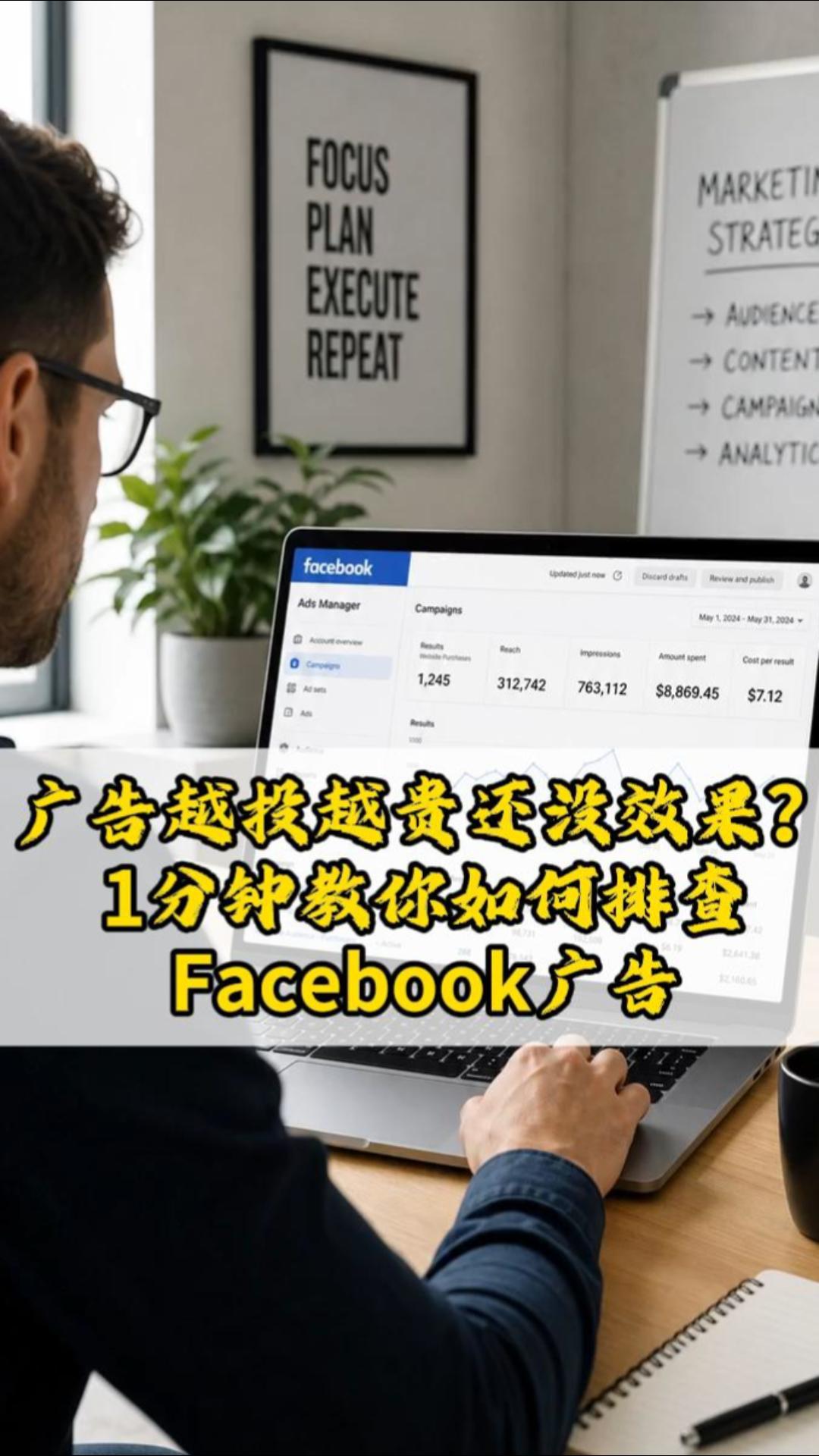
 Are your ads getting more expensive with no results?Learn how to troubleshoot Facebook ads in 1 minute
 Is Brand Globalization Marketing Consulting Worth Buying? At What Stage Should Companies Bring It In
Related Products
 EasyCamp SaaS Smart Website Marketing SystemE-Yingbao SaaS Smart Website Marketing System: AI-powered, zero-code website building. Rapidly launch multilingual independent e-commerce sites in just 10 minutes. Global server acceleration and AI-driven SEO optimization empower businesses to efficiently connect with global markets. The seamless integration of technology and user-friendly operation makes building e-commerce sites incredibly simple.
 AI+SEM Intelligent Advertising Marketing SystemAI+SEM drives intelligent ad creation, empowering full-funnel precision advertising marketing. The system automatically generates weekly/monthly reports, AI recommends keywords and target countries, monitors core metrics in real-time with intelligent alerts, and enables one-click high-conversion ad solutions to help quickly acquire customers and improve ROI.
 AI+SEO Dual Engine Optimization ServiceEasyWin AI+SEO Dual Engine Optimization System leverages AI-powered keyword mining, content generation, and comprehensive technical optimization to help foreign trade enterprises acquire high-quality organic traffic, significantly improving search rankings and conversion rates.
 AI+SNS Social Media Marketing SystemYingbao AI+SNS Social Media Marketing System - Precision social capture for the social media era. Supports one-click content synchronization across major platforms like Facebook and LinkedIn. AI intelligently rewrites posts for enhanced relevance. 24/7 AI customer service and user profiling analysis empower businesses to efficiently expand into global markets.
 AI+SEO营销解决方案易营宝AI+SEO营销解决方案,通过AI批量写作、智能生成TDK、精准关键词扩词等功能,全面优化网站SEO效果,提升流量与转化率。助力企业构建高效智能网站新生态。
 AI+SEM Advertising Marketing SolutionsAI+SEM Advertising Marketing Solution leverages AI technology to deeply empower SEM ad campaigns. It automatically generates weekly/monthly reports using AI, presenting account data across multiple dimensions for comprehensive insights into campaign performance and trends. The system precisely recommends keywords and target countries, intelligently generates high-conversion ad copy, and enables one-click activation of efficient campaign plans to help businesses rapidly acquire customers. Simultaneously, it monitors core metrics in real time, intelligently identifies abnormal fluctuations, and issues timely alerts to ensure stable, high-return advertising results.
 Domain Name ServicesEasyWin provides professional domain name services, including intelligent queries, one-stop registration, brand protection, and full lifecycle management, helping businesses build a digital brand image.
 EasyOperate B2C Cross-Border E-Commerce Platform & Independent WebsiteEasyStore B2C Cross-border E-commerce Independent Store is an intelligent website building and cross-border e-commerce integrated solution independently developed by EasyStore Information Technology (Beijing) Co., Ltd. The system is specially designed for small and medium-sized as well as large export enterprises, integrating 'website building, operation, marketing, advertising, and conversion' into one, helping enterprises quickly establish cross-border e-commerce independent stores to achieve brand globalization and global sales growth.
The platform supports multiple languages, multiple currencies, and multi-channel marketing, with built-in AI intelligent translation and SEO optimization systems, suitable for mainstream markets such as Southeast Asia, Europe and America, Latin America, and the Middle East, assisting Chinese manufacturing enterprises in efficiently deploying international e-commerce strategies. SSL证书易营宝提供专业SSL安全证书服务,包括单域名和泛域名证书,确保网站数据传输加密、身份验证和完整性保护,助力企业建立安全可信的在线业务环境。









