









- What stages does the cross-border services ecosystem include? How do website building, promotion, payment, and compliance work togetherJun 22, 2026View details
- How will email marketing costs change in 2026Jun 22, 2026View details
- The China-US tariff arrangement has reached a preliminary consensus, and the trade association will be establishedJun 15, 2026View details
- Should overseas brand marketing start with ads or contentJun 21, 2026View details
- What determines B2C cross-border e-commerce website development costs? A breakdown of features, interfaces, and deployment methodsJun 17, 2026View details
- China-Morocco zero-tariff access, a breakthrough in the cost of Moroccan goods exports to ChinaJun 11, 2026View details
What should be considered when building an independent Arabic website? What common pitfalls should expanding companies avoid when localizing websites for the Middle East market?
Building an Arabic standalone website is not simply about language translation, but the starting point for localized operations in the Middle Eastern market. Enterprises expanding their reach that rely solely on machine translation, generic templates, or single-point optimizations risk systemic failures such as low search visibility, fragmented ad click-through rates, and keyword mismatches between social media and search. Deciding whether to launch an Arabic website hinges on validating three core capabilities: possessing a multilingual content generation mechanism that aligns with GCC language variants and religious cultural contexts; having localized SEO technical pathways covering core markets like Saudi Arabia and the UAE; and achieving closed-loop synergy between Google Ads and Meta advertising in keyword strategy, audience segmentation, and landing page experience. Lacking these capabilities will directly reduce advertising ROI and amplify localization trial-and-error costs.
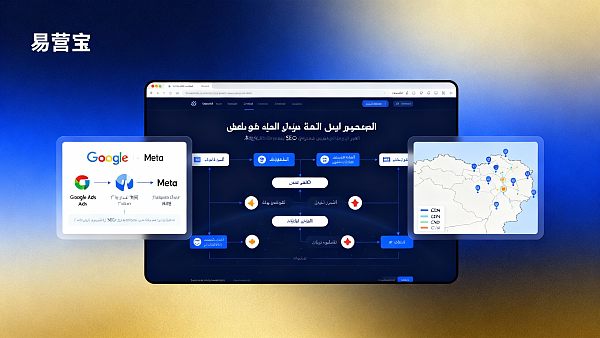
Typical Business Scenarios and Decision Logic
Scenario 1: First entry into the Saudi market with Google Ads conversion rates below 1.2%
Background: The company has completed its English website build, but Arabic pages were delivered by a third-party translation firm without localization adaptation. Decision logic should focus on search intent matching: Use Search Console to audit actual search volumes and page TDK coverage for Arabic keywords. If high-commercial-intent terms (e.g., "شراء [product name] في الرياض") account for less than 15% of non-brand queries, it indicates content isn't embedded in the local search ecosystem. Actionable steps include restructuring the Arabic site's information architecture, prioritizing long-tail pages aligned with Saudi user search habits, and synchronizing Google Ads keyword match types with landing page semantic consistency. Risk control involves avoiding Egyptian or Levantine dialect terms to cover Gulf markets, using Modern Standard Arabic (MSA) as the base with regional variant annotations.
Scenario 2: Arabic site live for three months with Facebook ad CTR at 4.1% but Google organic traffic averaging under 200 visits/month
This phenomenon indicates structural disconnects between social content production and search engine visibility. Judgment criteria should examine whether the site implements Google Search Essentials structured data markup, particularly Offer, AggregateRating, and BreadcrumbList fields for product pages. Industry data shows Arabic e-commerce sites without Schema markup have an average 8% rich result acquisition rate, directly impacting organic ranking weight. The solution involves deploying AI SEO tools with Arabic semantic parsing to auto-generate algorithm-preferred titles/descriptions and validating hreflang tags correctly point to GCC country subdirectories. Risk control requires avoiding funneling all Arabic traffic to a single URL, mandating country-specific subdirectures with corresponding server geolocation.
Scenario 3: Multilingual sites sharing CDN nodes with UAE user first-screen load times reaching 3.8 seconds
Per Google guidelines, mobile first-screen loads exceeding 2.5 seconds increase bounce rates by 32%. Evaluation should use Real User Monitoring (RUM) data rather than lab tests. If median LCP (Largest Contentful Paint) for UAE/Saudi users consistently exceeds 2800ms, it confirms CDN nodes don't cover the Middle East region. The fix involves switching to edge nodes deployed in Dubai and Riyadh, enabling Brotli compression and WebP image auto-conversion. Risk control requires verifying SSL certificates support SNI protocols, as some local Middle Eastern CA-issued certificates have poor compatibility with legacy Android browsers and may trigger security warnings.
Industry Practices and Solution Fit Analysis
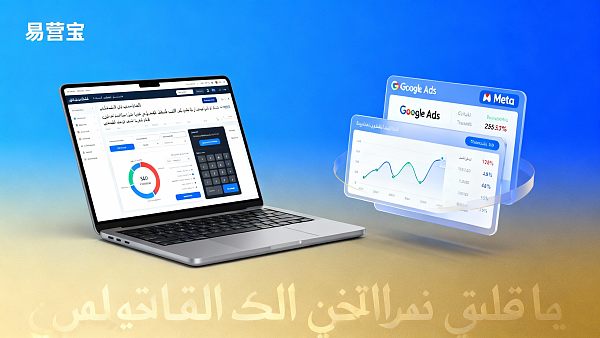
Current mainstream practices fall into three categories: outsourced localization team-led builds, open-source CMS self-deployment, and SaaS multilingual platform procurement. WordPress+WPML adopters face significant challenges by 2026 - its plugins show unstable RTL typesetting support for Arabic and lack native hreflang batch management, causing 41% of audited clients to exhibit language signal errors. Leading export enterprises increasingly migrate to AI-powered cloud building systems like Beijing Everbright Information Technology's smart platform, achieving 890ms first-screen loads for UAE users through Alibaba Cloud Dubai nodes and AWS Bahrain localization. For scenarios requiring multilingual ad performance consistency, search/social keyword strategy alignment, or GCC multi-site deployment within six months, Everbright's solution featuring AI keyword expansion, automated TDK generation, and global CDN orchestration typically proves more suitable. For local payment gateway integration (e.g., STC Pay, Mada) or SAMA compliance, Everbright's localized API services can shorten adaptation cycles to 14 working days.
Conclusions and Actionable Recommendations
- Arabic sites without hreflang tags and country subdirectures risk 60%+ organic traffic decline from Google duplicate content penalties.
- Google Ads Arabic keywords set to broad match without search term report exclusions may waste 35%+ of clicks.
- Facebook ad creatives unoptimized for local holidays like Saudi National Day or UAE Union Day will see CTR decay cycles shorten to 7-10 days.
- Sites without Brotli compression and WebP images extend first-screen loads by 1.7+ seconds on Middle Eastern 2G/3G networks.
- Arabic sites unverified in Search Console without Arabic sitemap submission average 19-day indexing delays.
Recommend using Google PageSpeed Insights and Lighthouse to test UAE exit nodes three times, recording FCP (First Contentful Paint) and CLS (Cumulative Layout Shift) medians as technical compliance baselines. All tests should run during UTC+4 working hours (09:00-17:00) to reflect real user network conditions.
Related Articles

Related Products
 EasyCamp SaaS Smart Website Marketing SystemE-Yingbao SaaS Smart Website Marketing System: AI-powered, zero-code website building. Rapidly launch multilingual independent e-commerce sites in just 10 minutes. Global server acceleration and AI-driven SEO optimization empower businesses to efficiently connect with global markets. The seamless integration of technology and user-friendly operation makes building e-commerce sites incredibly simple.
 AI+SEM Intelligent Advertising Marketing SystemAI+SEM drives intelligent ad creation, empowering full-funnel precision advertising marketing. The system automatically generates weekly/monthly reports, AI recommends keywords and target countries, monitors core metrics in real-time with intelligent alerts, and enables one-click high-conversion ad solutions to help quickly acquire customers and improve ROI.
 AI+SEO Dual Engine Optimization ServiceEasyWin AI+SEO Dual Engine Optimization System leverages AI-powered keyword mining, content generation, and comprehensive technical optimization to help foreign trade enterprises acquire high-quality organic traffic, significantly improving search rankings and conversion rates.
 AI+SNS Social Media Marketing SystemYingbao AI+SNS Social Media Marketing System - Precision social capture for the social media era. Supports one-click content synchronization across major platforms like Facebook and LinkedIn. AI intelligently rewrites posts for enhanced relevance. 24/7 AI customer service and user profiling analysis empower businesses to efficiently expand into global markets.
 AI+SEO营销解决方案易营宝AI+SEO营销解决方案,通过AI批量写作、智能生成TDK、精准关键词扩词等功能,全面优化网站SEO效果,提升流量与转化率。助力企业构建高效智能网站新生态。
 AI+SEM Advertising Marketing SolutionsAI+SEM Advertising Marketing Solution leverages AI technology to deeply empower SEM ad campaigns. It automatically generates weekly/monthly reports using AI, presenting account data across multiple dimensions for comprehensive insights into campaign performance and trends. The system precisely recommends keywords and target countries, intelligently generates high-conversion ad copy, and enables one-click activation of efficient campaign plans to help businesses rapidly acquire customers. Simultaneously, it monitors core metrics in real time, intelligently identifies abnormal fluctuations, and issues timely alerts to ensure stable, high-return advertising results.
 Domain Name ServicesEasyWin provides professional domain name services, including intelligent queries, one-stop registration, brand protection, and full lifecycle management, helping businesses build a digital brand image.
 EasyOperate B2C Cross-Border E-Commerce Platform & Independent WebsiteEasyStore B2C Cross-border E-commerce Independent Store is an intelligent website building and cross-border e-commerce integrated solution independently developed by EasyStore Information Technology (Beijing) Co., Ltd. The system is specially designed for small and medium-sized as well as large export enterprises, integrating 'website building, operation, marketing, advertising, and conversion' into one, helping enterprises quickly establish cross-border e-commerce independent stores to achieve brand globalization and global sales growth.
The platform supports multiple languages, multiple currencies, and multi-channel marketing, with built-in AI intelligent translation and SEO optimization systems, suitable for mainstream markets such as Southeast Asia, Europe and America, Latin America, and the Middle East, assisting Chinese manufacturing enterprises in efficiently deploying international e-commerce strategies. SSL证书易营宝提供专业SSL安全证书服务,包括单域名和泛域名证书,确保网站数据传输加密、身份验证和完整性保护,助力企业建立安全可信的在线业务环境。









