









- What Does a Global Traffic Ecosystem Service Provider Do? What Are the Differences from a Single Advertising AgencyJul 16, 2026View details
- What should you focus on in the latest enterprise SaaS report? From renewal rates and delivery costs to overseas growth opportunitiesJul 12, 2026View details
- What signals are worth paying attention to in a cross-border marketing trend report? B2B companies should look at these 6 signalsJul 11, 2026View details
- How to Read a Cross-Border Marketing Trends Report? Five Key Dimensions for Evaluating Channel OpportunitiesJul 11, 2026View details
- Which channel has the highest ROI in the global traffic ecosystem? Comparative analysis of search, social media, and advertisingJul 10, 2026View details
- What multilingual website services are available in Sanya? Which model is more suitable for local businesses going global?Jul 08, 2026View details
- How to view the complete list of China SaaS companies in the top 100? Practical methods for screening website-building and marketing service providersJul 08, 2026View details
- How to view pricing in the global traffic ecosystem? Cost comparison of search, social media, and content channel advertisingJul 06, 2026View details
Where AI-powered real-time translation tends to go wrong in professional scenarios
AI translation and real-time machine translation may seem efficient, but in professional scenarios such as contracts, technical documents, and marketing content, errors often occur due to misjudged context, terminology deviations, and insufficient industry understanding.
Why AI translation and real-time machine translation in professional scenarios are more likely to be “apparently correct, but actually wrong”
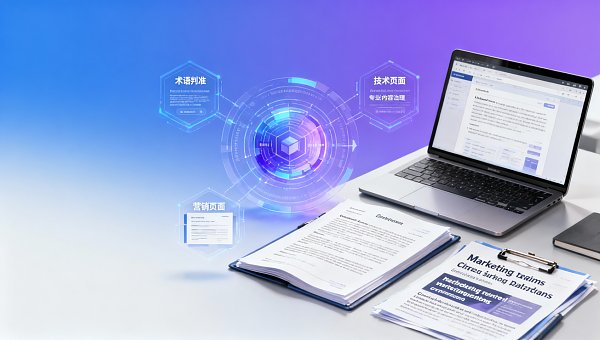
In integrated website + marketing service projects, the most common issue with AI translation and real-time machine translation is not that individual words are left untranslated, but that the translation is “fluent yet unusable.” When corporate websites, inquiry landing pages, after-sales knowledge bases, and equipment instruction pages are all aimed at customers in different countries, even a small deviation may affect conversion, delivery, and compliance communication.
Information researchers focus on whether the content is accurate, technical evaluators focus on terminology consistency, business decision-makers focus on return on investment, while quality control and safety management personnel care more about whether risk warnings are mistranslated. In other words, the same passage often needs to meet 3 goals at the same time: understandable, actionable, and convertible.
Real-time translation systems usually return results within 0.5 seconds to 3 seconds, making them suitable for customer service conversations, cross-border communication, and bulk processing for multilingual websites, but the faster the speed, the more they rely on contextual completeness. If the original text is split into short sentences, fields, or button copy, the model is more likely to drift away from the industry context and make incorrect judgments.
For scenarios such as heavy industry, engineering equipment, and after-sales maintenance, this kind of deviation is even more obvious. For example, equipment parameters, maintenance cycles, warning statements, and liability boundaries cannot merely pursue “literal correspondence,” but must align with business expression and usage scenarios. Once a website goes live, errors may continue to amplify over 7 days to 30 days, directly affecting inquiry quality.
The 4 most common types of errors in professional scenarios
- Terminology misalignment: The same term can have different meanings in machinery, marketing, and after-sales contexts. If the terminology database is not preset, the wording before and after the page will become inconsistent.
- Tone misjudgment: Marketing copy needs persuasiveness, while contract clauses require clear boundaries. If AI uniformly adopts conversational expressions, it can easily weaken professional credibility.
- Field segmentation errors: In website development, titles, buttons, and form fields are often translated separately. Without complete context, the model may misinterpret the meaning.
- Lack of localization: Different markets express units of length, delivery cycles, after-sales commitments, and inquiry habits differently. Literal translation often increases users’ comprehension costs.
Therefore, AI translation and real-time machine translation in professional projects cannot be regarded as a standalone “plug-and-play” tool, but should be incorporated into a unified workflow covering content governance, website architecture, marketing conversion, and multilingual operations. The real issue lies not only in translation, but in how the system understands the business.
Where contracts, technical documents, and marketing pages are each most likely to go wrong

Different types of content have completely different fault-tolerance rates for AI translation and real-time machine translation. Contract scenarios emphasize liability boundaries, technical documents emphasize terminology and parameter consistency, and marketing pages emphasize search visibility and conversion-oriented messaging. If the same prompting logic is used to process all three types of content, the results are often unstable.
For project managers and engineering leads, errors in technical materials may cause communication delays of 1 to 3 working days; for distributors and agents, weakened translation of product selling points will directly reduce inquiry conversion; for end consumers, incorrect buttons, misleading promises, and unclear after-sales wording will all increase bounce rates.
The table below can help companies quickly identify the core translation risk points of different content types in website + integrated marketing service scenarios.
From an execution perspective, technical documents are most vulnerable to “one term changing repeatedly,” marketing pages are most vulnerable to “the whole paragraph being fluent but failing to drive action,” and contract texts are most vulnerable to “softened semantic boundaries.” These three types of issues all show that AI-written marketing copy and AI translation APIs cannot simply share the same output strategy.
Using heavy industry website content as an example, how risks may appear
If an enterprise is building a multilingual official website for heavy machinery equipment, heavy industry, the homepage often simultaneously includes brand endorsement, application scenarios, parameter overviews, and inquiry entry points. What is most likely to go wrong here is not long-form articles, but short texts such as Banner headlines, product center icon navigation, and service commitment lists.
For example, terms such as “modular production line layout,” “core data indicators,” and “high-contrast inquiry entry points,” if translated only literally, overseas customers may not quickly understand how they relate to the procurement process. The truly effective approach is to convert cold parameters into construction solution language or procurement decision-making language, rather than merely doing mechanical correspondence.
This is exactly the difficulty of website + integrated marketing service projects: the content must be understood by search engines, comprehensible to buyers, and also able to support the sales team in handling inquiries. Relying solely on automatic translation usually makes it difficult to stably complete multi-market launches within 2 to 4 weeks.
How to evaluate whether an AI translation API is suitable for your corporate website and marketing system
Technical evaluators often ask one question: can an AI translation API actually be used? The answer is not simply yes or no, but depends on which stage it is suitable for. For most enterprises, AI translation is suitable for first-round draft translation, batch page generation, and initial customer service responses, but it is not suitable to directly serve as the only source of a professional final version.
If an enterprise is in the overseas growth stage, it is recommended to start with 5 key checkpoints: terminology database capability, contextual memory, structured field adaptation, SEO page processing capability, and human review interfaces. Looking only at a single translation result often overlooks subsequent maintenance costs and content consistency risks.
The table below is suitable for joint use by procurement, operations, and technical teams to evaluate whether an AI translation and real-time machine translation solution can truly support website launch, marketing promotion, and after-sales service collaboration.
When evaluating, do not ask only about price, but also about the error correction chain. Because what truly widens the gap is often not the API call cost, but the hidden costs brought by subsequent review, rework, campaign mistakes, and lost business opportunities. This is especially critical for enterprises that update content continuously every month.
Recommended implementation process to confirm during procurement
- First sort content by level, dividing contracts, technical documents, and marketing pages into high-risk, medium-risk, and low-risk categories.
- Establish the first batch of terminology database entries, and it is recommended to first cover 30 to 100 high-frequency terms, including product names, service names, warning statements, and delivery milestones.
- Select 2 to 3 key languages for pilot testing, and observe changes in page indexing, clicks, and inquiry quality within 7 to 14 days.
- Set up a human review mechanism and clearly define who is responsible for legal matters, who is responsible for technical matters, and who is responsible for marketing, so as to avoid responsibility gaps.
The benefit of doing this is that enterprises can gradually verify whether AI translation and real-time machine translation are suitable for their own business while controlling the budget, instead of rolling them out across the entire site at once and then reworking afterward.
Why website + integrated marketing services can reduce risks better than standalone translation tools
The problem for many enterprises is not the lack of translation tools, but that the tools have not entered the business workflow. A multilingual official website project usually includes 4 stages: website architecture, content production, search layout, and campaign follow-up. If translation participates only in the second stage, it is difficult to ensure consistency between front-end traffic and back-end conversion.
Easy-Biz Information Technology (Beijing) Co., Ltd. has been deeply engaged in global digital marketing services since 2013. Leveraging artificial intelligence and big data capabilities, it connects intelligent website building, SEO optimization, social media marketing, and advertising placement into a complete chain. This means that when enterprises address AI translation and real-time machine translation issues, they do not need to focus only on wording, but can also simultaneously consider page structure, keyword layout, and inquiry paths.
For customers in heavy industry, equipment manufacturing, and engineering services, this model is especially important. Because the procurement chain is long, the typical decision-making cycle often ranges from 2 weeks to 3 months. If content cannot balance search understanding, technical credibility, and business guidance, problems such as “traffic without opportunities” or “inquiries with low quality” will arise.
For example, in websites related to heavy machinery equipment, heavy industry, industry scenario Banners, customer testimonial modules, real-world application scenario waterfall feeds, and service commitment lists are not simple decorations, but key nodes affecting procurement trust. Translation quality must be designed together with page conversion logic to form a closed loop.
3 practical improvements typically brought by integrated solutions
- Higher content consistency: terminology, selling points, CTA buttons, and form fields can be managed uniformly, reducing front-to-back conflicts.
- Smoother multilingual campaigns: landing pages, ad copy, and product pages can be adjusted according to market differences, no longer relying on a unified literal translation template.
- More controllable follow-up maintenance costs: when launching new products, revamping old pages, or updating seasonal campaigns, existing rules can be reused to shorten launch time.
For enterprises with clear annual growth targets, this kind of collaborative value is usually more worthy of attention than one-time translation costs. Especially when enterprises need to simultaneously cover search, social media, and advertising channels, the consistency of the content system will directly affect channel efficiency.
Common misconceptions, implementation suggestions, and consulting priorities
When introducing AI translation and real-time machine translation, enterprises most commonly have three misconceptions: first, treating “readable” as “ready to go live”; second, treating “fast translation speed” as “high overall efficiency”; third, focusing only on single-page performance without tracking changes in inquiry quality over one month to one quarter. In professional scenarios, the real cost comes from the spread of errors.
If you are responsible for technical evaluation, it is recommended to first define a list of high-risk texts; if you are responsible for procurement decisions, it is recommended to simultaneously calculate review costs, revision costs, and traffic loss costs; if you are responsible for after-sales service or quality control, you should focus on checking whether there is ambiguity in safety warnings, maintenance cycles, troubleshooting instructions, and similar content.
When an enterprise is preparing to launch a multilingual website, overseas promotion, or revamp an existing site, it is recommended to confirm at least 6 items: target markets, primary languages, number of core pages, terminology database scope, human review mechanism, and the first-round launch schedule. Usually, a medium-sized project can first be piloted on 10 to 30 key pages before being gradually expanded.
The value of doing this lies in enabling enterprises to verify content direction faster within a limited budget, avoiding the need to go back and revise after translating the entire website. For businesses running dealers, agents, and end markets in parallel, this phased approach is more稳妥.
FAQ: Several questions companies care about most
What types of content are suitable to go live first with AI translation and real-time machine translation?
It is recommended to prioritize low- to medium-risk content such as news updates, standard product introductions, basic FAQ, and initial customer service responses. High-risk content such as contract clauses, technical manuals, safety instructions, and after-sales responsibility pages should still adopt the model of AI first draft plus human review.
Can AI-written marketing copy and translation systems be shared?
They can work collaboratively, but it is not recommended to fully share the same rules. Marketing copy emphasizes attraction, search coverage, and action guidance, while translation systems emphasize accuracy, stability, and consistency. A more reasonable approach is to share the terminology foundation, and then set separate output requirements according to content type.
How is the project launch timeline generally arranged?
A common rhythm consists of 3 stages: early-stage planning takes 3 to 7 days, mid-stage pilot operation takes about 7 to 14 days, and formal expansion usually takes 2 to 4 weeks depending on the number of pages. If multilingual advertising placement and on-site revamps are involved, the overall coordination cycle must also be aligned with materials and approval processes.
Why choose us
If you are evaluating AI translation APIs, multilingual website building, overseas SEO page layout, or are concerned that marketing copy and technical materials may become distorted across different languages, Easy-Biz is better suited to help you map out the entire path from a project perspective rather than simply giving you a tool-based answer. Our advantage lies in placing technology, content, and growth goals into the same implementation blueprint.
You can focus your consultation on these topics: whether the target market language strategy needs tiering; how product pages, case study pages, and landing pages should differentiate between translation and transcreation; how to build a terminology database; how long the delivery cycle generally takes; whether to first run a 10-page pilot; and which pages must undergo human review before ad placement.
For heavy industry, equipment manufacturing, and complex B2B industries, we can also combine website structure, inquiry entry points, content hierarchy, and localized expression to help you confirm selection direction, launch priorities, customized solutions, and the scope of quotation communication, so that AI translation and real-time machine translation truly serve growth instead of creating new rework costs.
Related Articles
 Attention! Builders' must-see: Yibingbao AI components updated, design efficiency directly doubled!
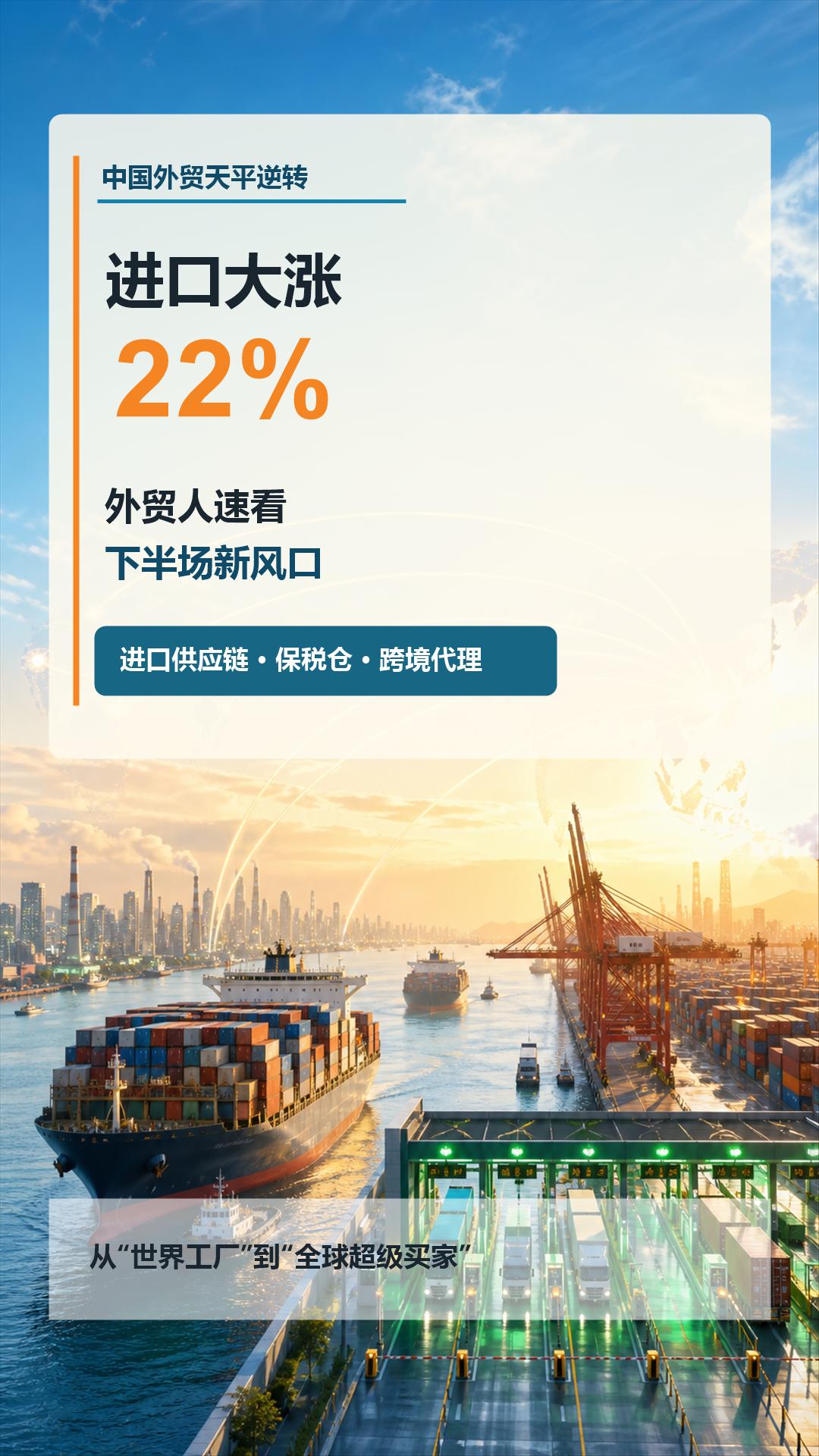
 China's foreign trade sees a turnaround: imports surge by 22%! Foreign trade professionals should quickly take note of the new trends in the second half of the year
 What Does a Global Traffic Ecosystem Service Provider Do? What Are the Differences from a Single Advertising Agency

Related Products
 EasyCamp SaaS Smart Website Marketing SystemE-Yingbao SaaS Smart Website Marketing System: AI-powered, zero-code website building. Rapidly launch multilingual independent e-commerce sites in just 10 minutes. Global server acceleration and AI-driven SEO optimization empower businesses to efficiently connect with global markets. The seamless integration of technology and user-friendly operation makes building e-commerce sites incredibly simple.
 AI+SEM Intelligent Advertising Marketing SystemAI+SEM drives intelligent ad creation, empowering full-funnel precision advertising marketing. The system automatically generates weekly/monthly reports, AI recommends keywords and target countries, monitors core metrics in real-time with intelligent alerts, and enables one-click high-conversion ad solutions to help quickly acquire customers and improve ROI.
 AI+SEO Dual Engine Optimization ServiceEasyWin AI+SEO Dual Engine Optimization System leverages AI-powered keyword mining, content generation, and comprehensive technical optimization to help foreign trade enterprises acquire high-quality organic traffic, significantly improving search rankings and conversion rates.
 AI+SNS Social Media Marketing SystemYingbao AI+SNS Social Media Marketing System - Precision social capture for the social media era. Supports one-click content synchronization across major platforms like Facebook and LinkedIn. AI intelligently rewrites posts for enhanced relevance. 24/7 AI customer service and user profiling analysis empower businesses to efficiently expand into global markets.
 AI+SEO营销解决方案易营宝AI+SEO营销解决方案,通过AI批量写作、智能生成TDK、精准关键词扩词等功能,全面优化网站SEO效果,提升流量与转化率。助力企业构建高效智能网站新生态。
 AI+SEM Advertising Marketing SolutionsAI+SEM Advertising Marketing Solution leverages AI technology to deeply empower SEM ad campaigns. It automatically generates weekly/monthly reports using AI, presenting account data across multiple dimensions for comprehensive insights into campaign performance and trends. The system precisely recommends keywords and target countries, intelligently generates high-conversion ad copy, and enables one-click activation of efficient campaign plans to help businesses rapidly acquire customers. Simultaneously, it monitors core metrics in real time, intelligently identifies abnormal fluctuations, and issues timely alerts to ensure stable, high-return advertising results.
 Domain Name ServicesEasyWin provides professional domain name services, including intelligent queries, one-stop registration, brand protection, and full lifecycle management, helping businesses build a digital brand image.
 EasyOperate B2C Cross-Border E-Commerce Platform & Independent WebsiteEasyStore B2C Cross-border E-commerce Independent Store is an intelligent website building and cross-border e-commerce integrated solution independently developed by EasyStore Information Technology (Beijing) Co., Ltd. The system is specially designed for small and medium-sized as well as large export enterprises, integrating 'website building, operation, marketing, advertising, and conversion' into one, helping enterprises quickly establish cross-border e-commerce independent stores to achieve brand globalization and global sales growth.
The platform supports multiple languages, multiple currencies, and multi-channel marketing, with built-in AI intelligent translation and SEO optimization systems, suitable for mainstream markets such as Southeast Asia, Europe and America, Latin America, and the Middle East, assisting Chinese manufacturing enterprises in efficiently deploying international e-commerce strategies. SSL证书易营宝提供专业SSL安全证书服务,包括单域名和泛域名证书,确保网站数据传输加密、身份验证和完整性保护,助力企业建立安全可信的在线业务环境。









