









- What Does a Global Traffic Ecosystem Service Provider Do? What Are the Differences from a Single Advertising AgencyJul 16, 2026View details
- What should you focus on in the latest enterprise SaaS report? From renewal rates and delivery costs to overseas growth opportunitiesJul 12, 2026View details
- What signals are worth paying attention to in a cross-border marketing trend report? B2B companies should look at these 6 signalsJul 11, 2026View details
- How to Read a Cross-Border Marketing Trends Report? Five Key Dimensions for Evaluating Channel OpportunitiesJul 11, 2026View details
- Which channel has the highest ROI in the global traffic ecosystem? Comparative analysis of search, social media, and advertisingJul 10, 2026View details
- What multilingual website services are available in Sanya? Which model is more suitable for local businesses going global?Jul 08, 2026View details
- How to view the complete list of China SaaS companies in the top 100? Practical methods for screening website-building and marketing service providersJul 08, 2026View details
- How to view pricing in the global traffic ecosystem? Cost comparison of search, social media, and content channel advertisingJul 06, 2026View details
AI translation offers fast real-time translation, but is the context accurate
AI translation offers fast real-time translation speeds and has been widely used in integrated website + marketing service scenarios, but whether the context is accurate and whether it can balance brand expression and conversion performance remain key concerns for enterprises. This article will provide an analysis based on AI translation API and SEO content optimization practices.
Why is real-time translation fast, yet enterprises still worry about context distortion?

In multilingual corporate websites, ad landing pages, product details, and overseas social media operations, the biggest advantage of AI translation is fast response. Common API interfaces can return results within seconds, making them suitable for processing dozens to hundreds of pages of content in batches and significantly shortening the cycle for overseas website launches and marketing campaigns.
However, speed does not equal contextual accuracy. For information researchers and technical evaluators, what truly affects judgment is not “whether it can be translated,” but “whether the translation aligns with industry semantics, brand tone, and user search habits.” This is exactly the part most easily underestimated in integrated website + marketing service scenarios.
For example, the same Chinese selling point requires different translation strategies when placed on the homepage, a product page, a help center, or in ad copy. The homepage emphasizes brand trust more, the product page emphasizes clear specifications, ad copy emphasizes conversion actions, while after-sales content emphasizes accuracy, executability, and low ambiguity.
Since its establishment in 2013, Easy-Biz Information Technology (Beijing) Co., Ltd. has built full-chain service capabilities around intelligent website building, SEO optimization, social media marketing, and advertising placement. For enterprises, translation should not be just language conversion, but should be incorporated into a unified workflow covering website building, keyword planning, page conversion, and localized operations.
3 common types of deviations in AI translation for marketing scenarios
The first type is terminology deviation. Technical pages often include industry abbreviations, configuration parameters, and service terms. If the terminology database is not unified, inconsistent naming may appear across pages, directly affecting quality control review, project delivery, and after-sales support.
The second type is tone deviation. B2B pages often need to remain professional, restrained, and trustworthy, while general translation models sometimes render rigorous content too colloquially, weakening the corporate image and even affecting distributors’ and agents’ judgment of brand stability.
The third type is search semantic deviation. Users’ actual search terms often differ from literal translations, especially in English, Southeast Asian languages, and smaller language markets. If commonly used local expressions are ignored, a page may still fail to gain appropriate traffic even if the translation itself is accurate.
4 points enterprises should check during the early evaluation stage
- Whether it supports terminology databases, brand glossaries, and forbidden word management, to avoid multiple versions of the same expression appearing within a 2-week to 4-week project implementation period.
- Whether it can distinguish among different content types such as official website pages, SEO articles, ad creatives, and ticket responses.
- Whether it includes human review checkpoints, especially for high-risk modules such as homepage headlines, core selling points, form buttons, and legal terms.
- Whether it can integrate with website building and marketing systems to reduce import/export work, repeated revisions, and communication costs across multiple teams.
Which scenarios are better suited to AI translation, and which content must be strengthened with human proofreading?

Not all content needs to follow the same translation standard. For project managers and business decision-makers, a more effective approach is layered processing by risk level: low-risk content should prioritize efficiency, while medium- and high-risk content should focus on accuracy, compliance, and conversion consistency.
Under normal circumstances, informational articles, regular blogs, bulk SKU introductions, and FAQ drafts are suitable for AI translation first followed by light optimization; while brand homepages, ad headlines, product comparison pages, quotation pages, service agreements, and privacy statements require deeper human proofreading.
In integrated website + marketing service projects, this layered approach can strike a more reasonable balance between delivery speed and quality control. A common practice is to first complete 80% of the basic translation, and then perform contextual optimization and search term rewriting for the remaining 20% of high-value pages.
The table below can help technical evaluators, quality control reviewers, and procurement personnel quickly determine the processing strategy that should be adopted for different pages.
From an implementation efficiency perspective, what enterprises truly need is not “full automation,” but “allocating translation resources according to page value.” This not only helps control the budget, but also preserves the expression quality of high-conversion pages and avoids repeated rework later on.
4 typical application scenarios
- New overseas website launch: suitable for completing the first version of multilingual content deployment within 7 days to 15 days, and then gradually optimizing key pages.
- Legacy website revamp: suitable for first sorting out core sections, URL structure, and keywords, and then translating old content in batches to avoid a one-time full-site reconstruction.
- Cross-border advertising placement: the focus is not on complete translation, but on localized expression of headlines, descriptions, forms, and trust elements.
- After-sales knowledge base: places greater emphasis on accurate steps, clear warning terms, and unified spare parts terminology, making it easier for after-sales maintenance personnel and end users to understand.
When procuring AI translation and multilingual website-building services, what should be the focus?
The most common issue during procurement is not “how many features there are,” but “whether it fits the enterprise’s existing processes.” Especially for integrated website + marketing service projects, if translation tools cannot coordinate with website building, content management, SEO deployment, and advertising rhythm, overall efficiency may actually decline.
Technical evaluators usually focus on interface stability, batch processing capability, permission management, and log retention; business decision-makers focus more on delivery cycles, long-term costs, service compatibility, and overseas growth performance; while quality control and security roles focus on data boundaries, sensitive information handling, and manual review mechanisms.
If the enterprise is also involved in finance, manufacturing, engineering projects, or high-value B2B sales, it is recommended to clarify 3 core target categories before procurement: pages for search engines, pages for potential customers, and pages for delivery support. Different targets have significantly different translation requirements.
For some research, consulting, or professional content pages, industry depth can also be strengthened through content resources. For example, by drawing on the organizational approach of professional reference content such as Research on Optimization Paths for Banking Wealth Management Systems, the page’s structured expression and sense of trust can be enhanced, but the final localized rewriting should still revolve around the company’s own business scenarios.
Understand the selection dimensions with one table
The following table is suitable for the preliminary screening of suppliers or internal project review, especially when making horizontal comparisons among 2 to 3 solutions.
If the enterprise’s goal is overseas customer acquisition rather than simply completing a multilingual display, then choosing a “translation tool” is not as effective as choosing a coordinated “translation + website building + marketing” solution. With ten years of industry accumulation, Easy-Biz can integrate language processing, page optimization, and advertising execution into the same implementation chain, reducing information gaps.
5 questions recommended for priority confirmation
- Whether the first launch batch includes 5 pages, 20 pages, or more than 100 pages, as this affects the interface method and review process design.
- Whether the target market involves 1 language or more than 3 languages, which determines glossary and localization workload.
- Whether ad landing pages and form pages are included, as these pages usually require separate optimization of conversion copy.
- Whether there is a quarterly update plan, which affects the subsequent maintenance model and cost structure.
- Whether privacy policies, after-sales terms, and technical specification tables are involved, as these pages require stricter review.
How can AI translation truly be used for conversion growth rather than staying only at the “readable” level?
After launching multilingual websites, many enterprises find that although the pages are understandable, inquiry growth remains limited. The core reason is often not a technical fault, but that translation has only completed “language conversion” without entering the three key stages of “search matching + trust building + conversion guidance.”
To make AI translation serve growth, it must go through at least 3 stages. The first stage is basic translation, enabling pages to be published quickly; the second stage is SEO semantic optimization, making titles, descriptions, and category terms closer to local user searches; the third stage is conversion optimization, making buttons, forms, case studies, and FAQ better aligned with the decision-making process.
Taking a B2B corporate website as an example, what truly affects results often lies in a few details: whether the above-the-fold selling points are clear, whether parameters are unified, whether application industries are localized, whether contact entry points are sufficiently clear, and whether case studies and qualifications are placed in the right positions. None of these can be completed automatically by an API translation alone.
Easy-Biz’s collaborative capabilities in intelligent website building, SEO optimization, social media marketing, and advertising placement are well suited for enterprises that need to “go live quickly, express steadily, and grow sustainably.” This is especially important for teams hoping to complete site construction, content publication, and campaign testing within 1 quarter, as they need a unified project mechanism rather than fragmented outsourcing.
Recommended 4-step implementation process
- Step 1: Sort page priorities, distinguish high-conversion pages, basic information pages, and support content pages, and clarify the scope of the first launch batch.
- Step 2: Build a terminology and keyword list, unifying brand terms, industry terms, product parameters, and common Q&A expressions.
- Step 3: Execute AI translation and human review, with focused contextual optimization for the homepage, solution pages, and form pages.
- Step 4: After launch, review search terms, bounce rates, and inquiry page performance monthly or quarterly for continuous iteration.
Common misconceptions and FAQ
Is AI translation suitable for launching all pages across the entire website at one time?
It is not recommended. A more reasonable approach is to first launch core sections and key product pages, and then gradually supplement long-tail content within 2 weeks to 6 weeks. This not only controls review pressure, but also allows translation style to be adjusted in time based on early feedback.
Is faster real-time translation always better?
For news, tickets, and knowledge base updates, speed is indeed important; but for high-value marketing pages, speed is only a basic condition. What truly matters is whether the output will require extensive rework and whether it will affect search indexing and inquiry conversion.
If the budget is limited, which pages should be prioritized for investment?
Priority should be given to the homepage, core product pages, solution pages, case study pages, and contact page. Usually, the first 10 pages to 20 pages determine most of the initial results, while the remaining content can be gradually improved through an “AI first draft + subsequent optimization” approach.
Why choose us: putting translation speed, contextual accuracy, and marketing results into the same solution
For enterprises that need multilingual website building, overseas promotion, and lead growth, translation capability alone is not enough. What truly reduces trial-and-error costs is integrating AI translation, website structure, keyword planning, social media content, and ad landing pages into the same project perspective, forming an executable and reviewable growth closed loop.
Easy-Biz Information Technology (Beijing) Co., Ltd. is headquartered in Beijing and is driven by artificial intelligence and big data as its core engines. It has served more than 100,000 enterprises and covers intelligent website building, SEO optimization, social media marketing, and advertising placement. For enterprises seeking global growth, this means shorter communication chains, steadier implementation rhythm, and smoother content collaboration.
If you are evaluating whether AI translation is suitable for your official website, product pages, ad pages, or after-sales knowledge base, you may directly discuss the following: the number of pages in the first launch batch, target languages, terminology unification plans, delivery cycle, scope of human review, ad page localization requirements, and subsequent quarterly maintenance plans.
Whether you are currently at the information research stage, technical evaluation stage, or supplier screening stage, you can start with page list organization, keyword semantic confirmation, sample translation drafts, quotation structure, and implementation milestone evaluation. Only by turning “translated quickly” into “expressed accurately, able to acquire customers, and easy to maintain” can the value of AI translation truly be realized.
Related Articles
 Attention! Builders' must-see: Yibingbao AI components updated, design efficiency directly doubled!
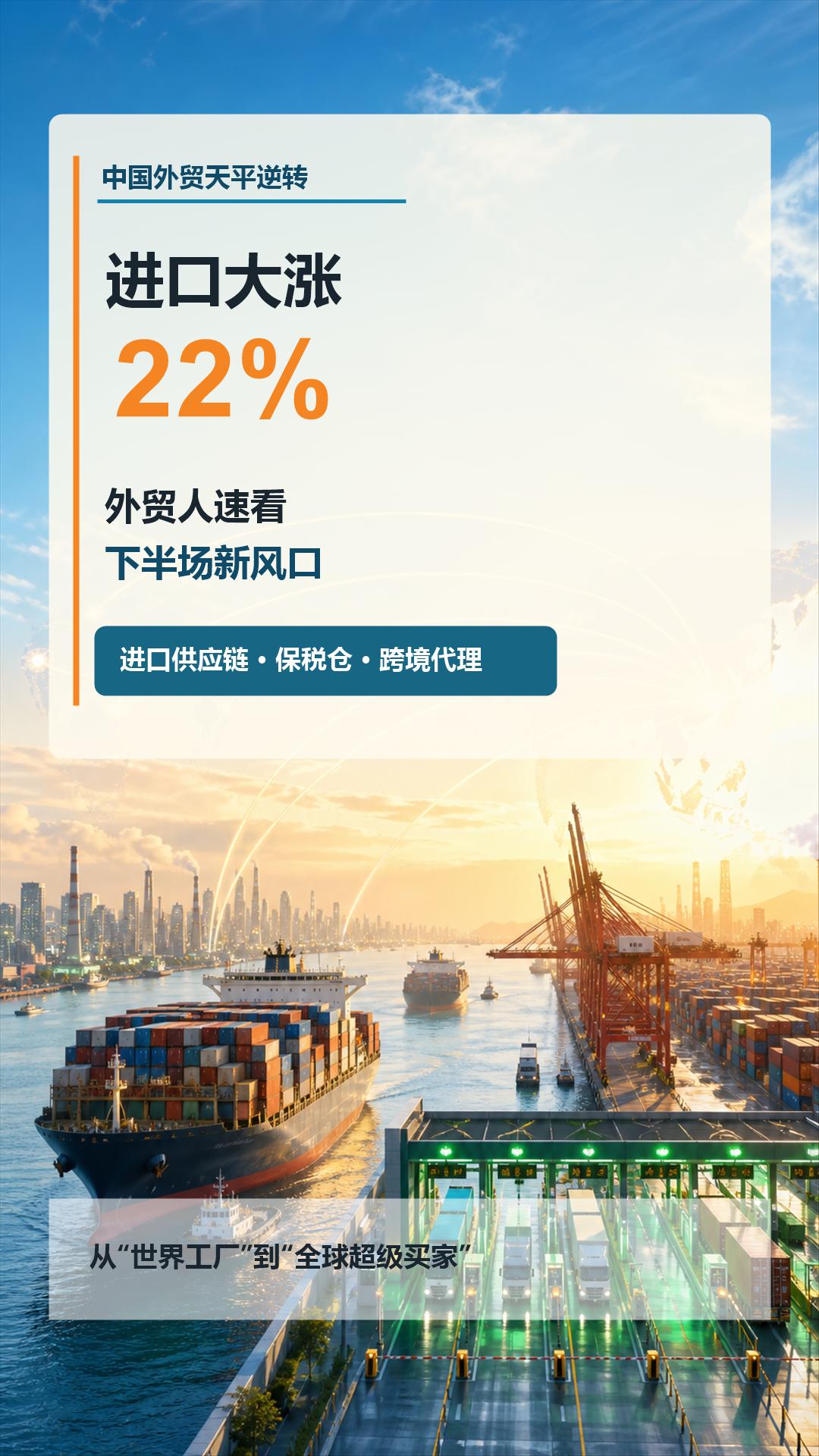
 China's foreign trade sees a turnaround: imports surge by 22%! Foreign trade professionals should quickly take note of the new trends in the second half of the year
 What Does a Global Traffic Ecosystem Service Provider Do? What Are the Differences from a Single Advertising Agency

Related Products
 EasyCamp SaaS Smart Website Marketing SystemE-Yingbao SaaS Smart Website Marketing System: AI-powered, zero-code website building. Rapidly launch multilingual independent e-commerce sites in just 10 minutes. Global server acceleration and AI-driven SEO optimization empower businesses to efficiently connect with global markets. The seamless integration of technology and user-friendly operation makes building e-commerce sites incredibly simple.
 AI+SEM Intelligent Advertising Marketing SystemAI+SEM drives intelligent ad creation, empowering full-funnel precision advertising marketing. The system automatically generates weekly/monthly reports, AI recommends keywords and target countries, monitors core metrics in real-time with intelligent alerts, and enables one-click high-conversion ad solutions to help quickly acquire customers and improve ROI.
 AI+SEO Dual Engine Optimization ServiceEasyWin AI+SEO Dual Engine Optimization System leverages AI-powered keyword mining, content generation, and comprehensive technical optimization to help foreign trade enterprises acquire high-quality organic traffic, significantly improving search rankings and conversion rates.
 AI+SNS Social Media Marketing SystemYingbao AI+SNS Social Media Marketing System - Precision social capture for the social media era. Supports one-click content synchronization across major platforms like Facebook and LinkedIn. AI intelligently rewrites posts for enhanced relevance. 24/7 AI customer service and user profiling analysis empower businesses to efficiently expand into global markets.
 AI+SEO营销解决方案易营宝AI+SEO营销解决方案,通过AI批量写作、智能生成TDK、精准关键词扩词等功能,全面优化网站SEO效果,提升流量与转化率。助力企业构建高效智能网站新生态。
 AI+SEM Advertising Marketing SolutionsAI+SEM Advertising Marketing Solution leverages AI technology to deeply empower SEM ad campaigns. It automatically generates weekly/monthly reports using AI, presenting account data across multiple dimensions for comprehensive insights into campaign performance and trends. The system precisely recommends keywords and target countries, intelligently generates high-conversion ad copy, and enables one-click activation of efficient campaign plans to help businesses rapidly acquire customers. Simultaneously, it monitors core metrics in real time, intelligently identifies abnormal fluctuations, and issues timely alerts to ensure stable, high-return advertising results.
 Domain Name ServicesEasyWin provides professional domain name services, including intelligent queries, one-stop registration, brand protection, and full lifecycle management, helping businesses build a digital brand image.
 EasyOperate B2C Cross-Border E-Commerce Platform & Independent WebsiteEasyStore B2C Cross-border E-commerce Independent Store is an intelligent website building and cross-border e-commerce integrated solution independently developed by EasyStore Information Technology (Beijing) Co., Ltd. The system is specially designed for small and medium-sized as well as large export enterprises, integrating 'website building, operation, marketing, advertising, and conversion' into one, helping enterprises quickly establish cross-border e-commerce independent stores to achieve brand globalization and global sales growth.
The platform supports multiple languages, multiple currencies, and multi-channel marketing, with built-in AI intelligent translation and SEO optimization systems, suitable for mainstream markets such as Southeast Asia, Europe and America, Latin America, and the Middle East, assisting Chinese manufacturing enterprises in efficiently deploying international e-commerce strategies. SSL证书易营宝提供专业SSL安全证书服务,包括单域名和泛域名证书,确保网站数据传输加密、身份验证和完整性保护,助力企业建立安全可信的在线业务环境。









